
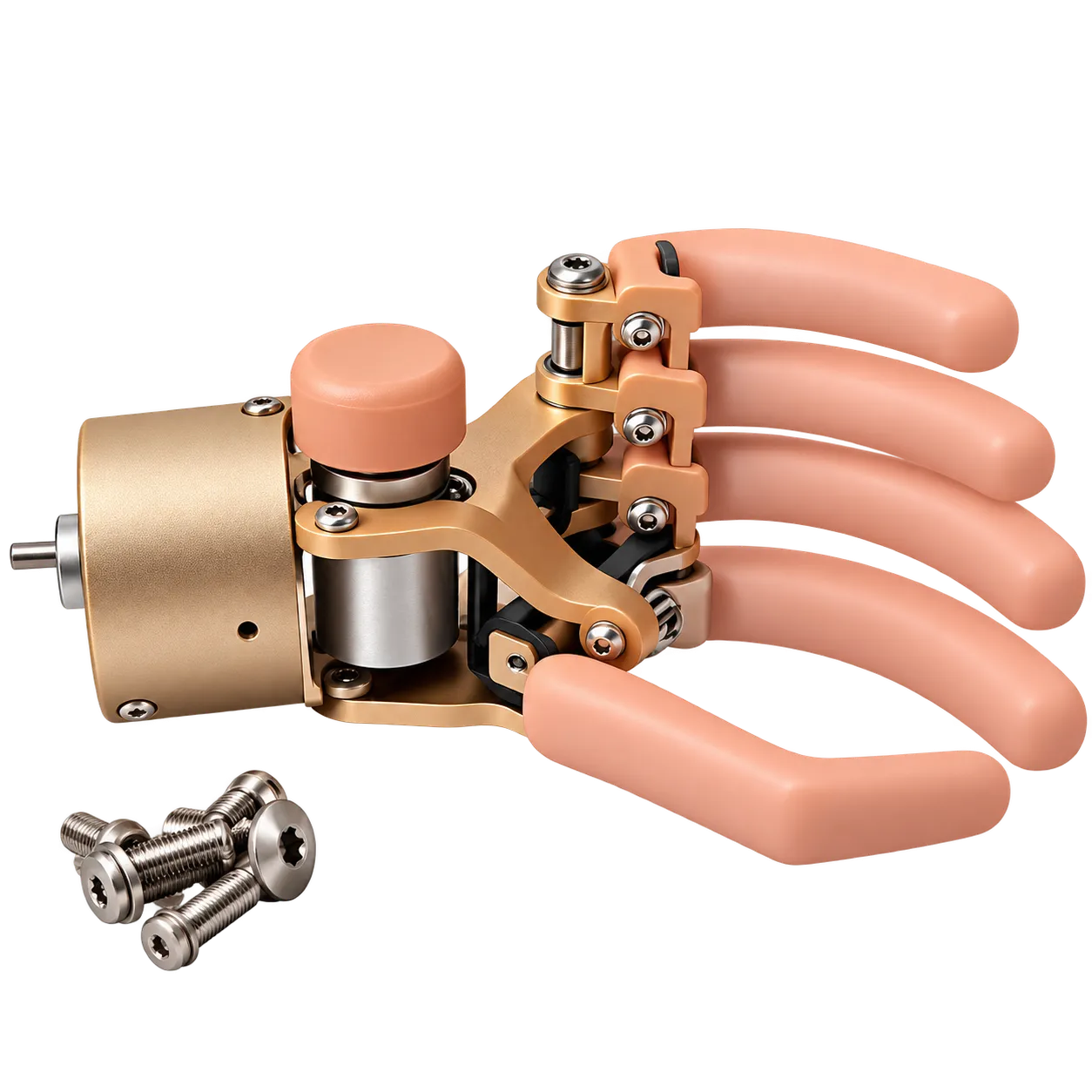
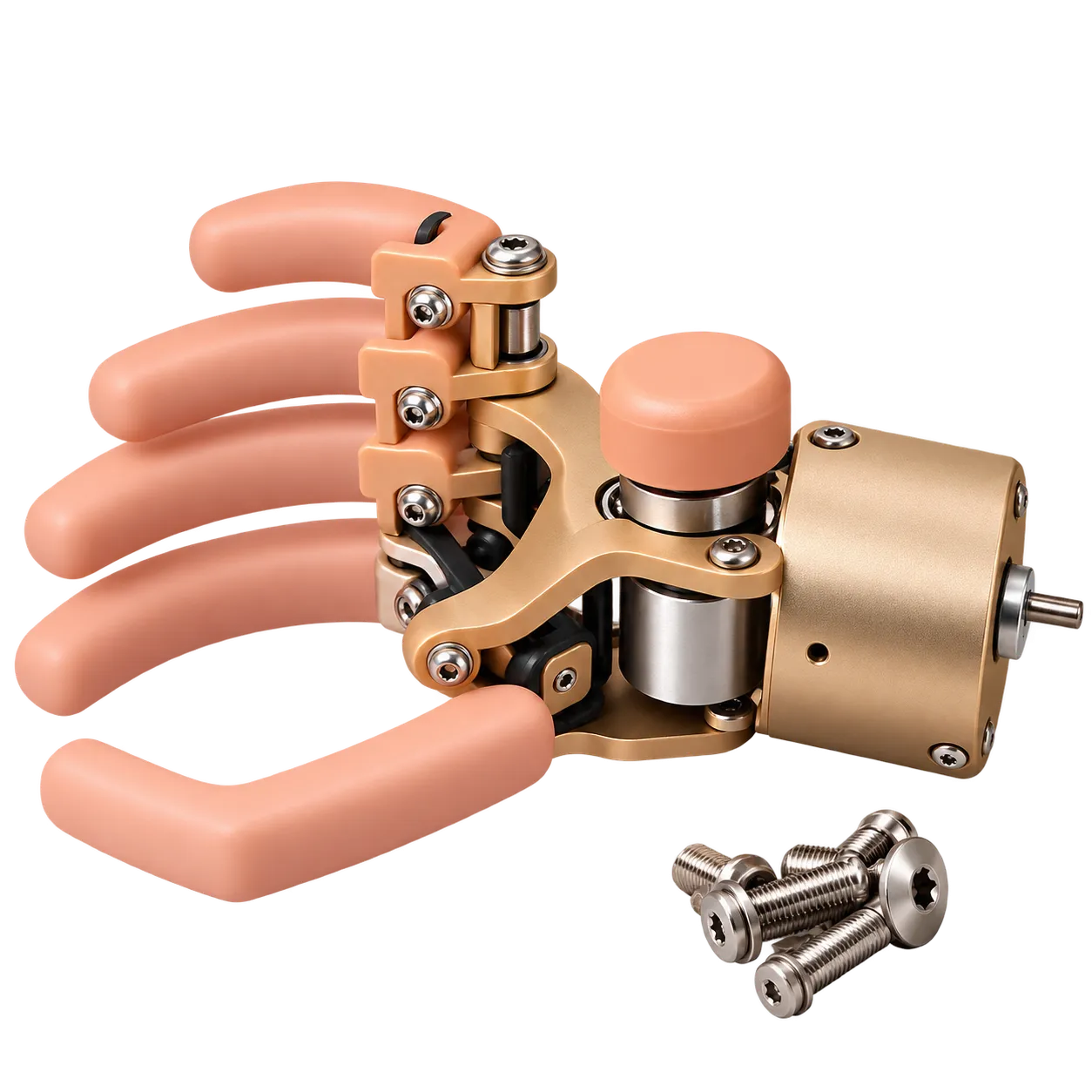
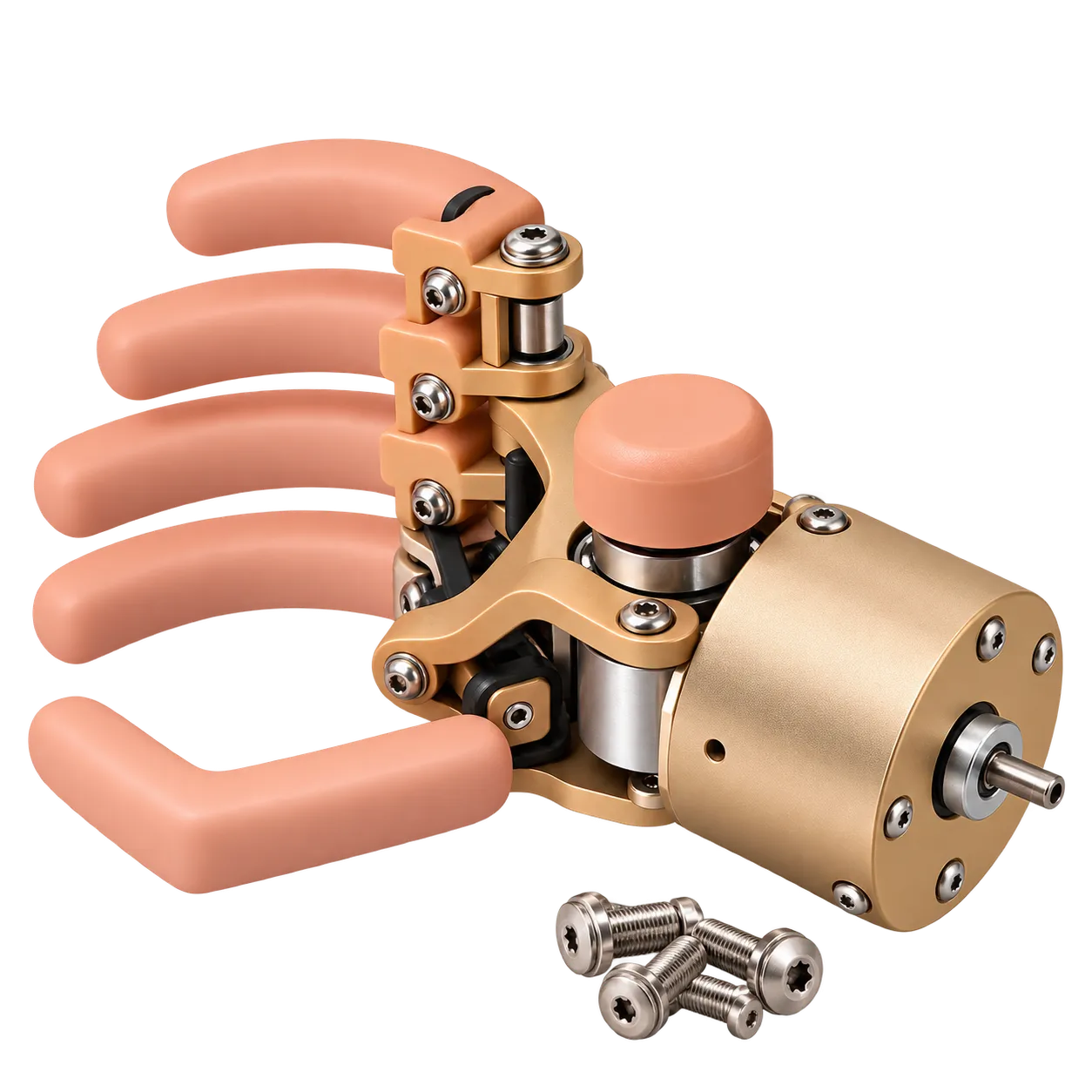
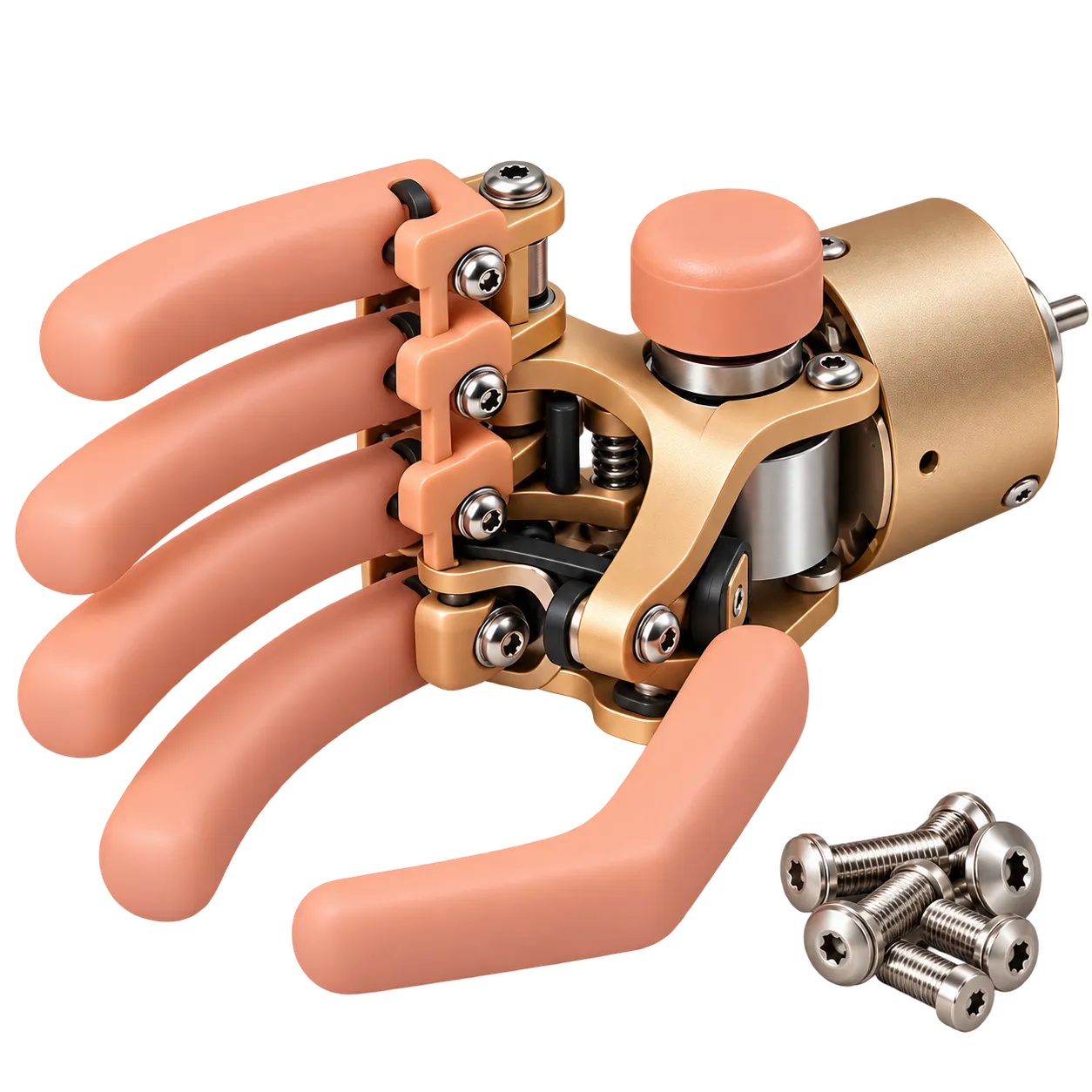
Prosthetic and orthotic clinics, limb-fitting centres and upper-limb rehabilitation services are the settings the MBEH-4 is built for. Its users are the people who wear a forearm prosthesis after a below-elbow limb difference, and the prosthetists, technicians and occupational therapists who fit the hand, train its use and look after it between appointments.
The manufacturer lists the hand for middle, short and long forearm stumps. That range means a clinic can keep one myoelectric hand model in mind for wearers whose residual limbs differ considerably in length, and choose between the three-finger and five-finger versions according to what each wearer wants from the hand.
Because the battery is built into the hand, the terminal device is a self-contained powered unit at the end of the arm. In a fitting room this keeps the component count down: the prosthetist unpacks one hand, fits it to the prepared forearm prosthesis and begins myoelectric training with a device that already holds its own power. In a technician's workshop, the hand can be handled and stored as a single item, which keeps the stores shelf orderly when several wearers are being fitted at once.
Myoelectric control suits wearers who can produce usable muscle signals in the residual forearm and want the hand's actions driven by those signals. The passive wrist lets the wearer or therapist set the hand's orientation for a task such as holding a cup or steadying paper, and the 0.28 kg weight keeps the load at the end of the arm modest.
The optional functions widen where the hand can go. A waterproof version suits wearers whose day brings the hand near water, the anti-EMI option suits wearers who spend long periods around mobile phones and similar devices, and the two-dimension function is a further option at specification.