
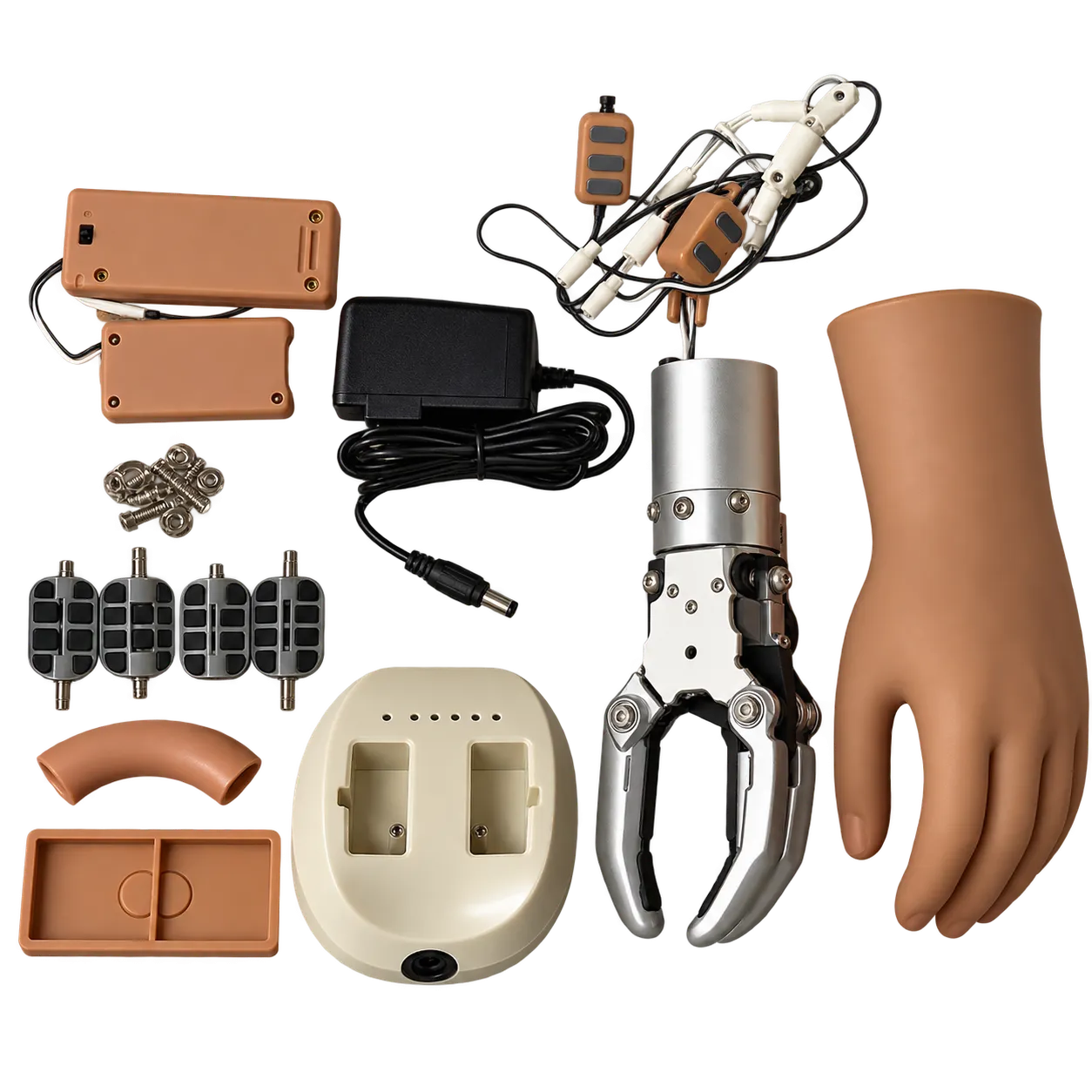
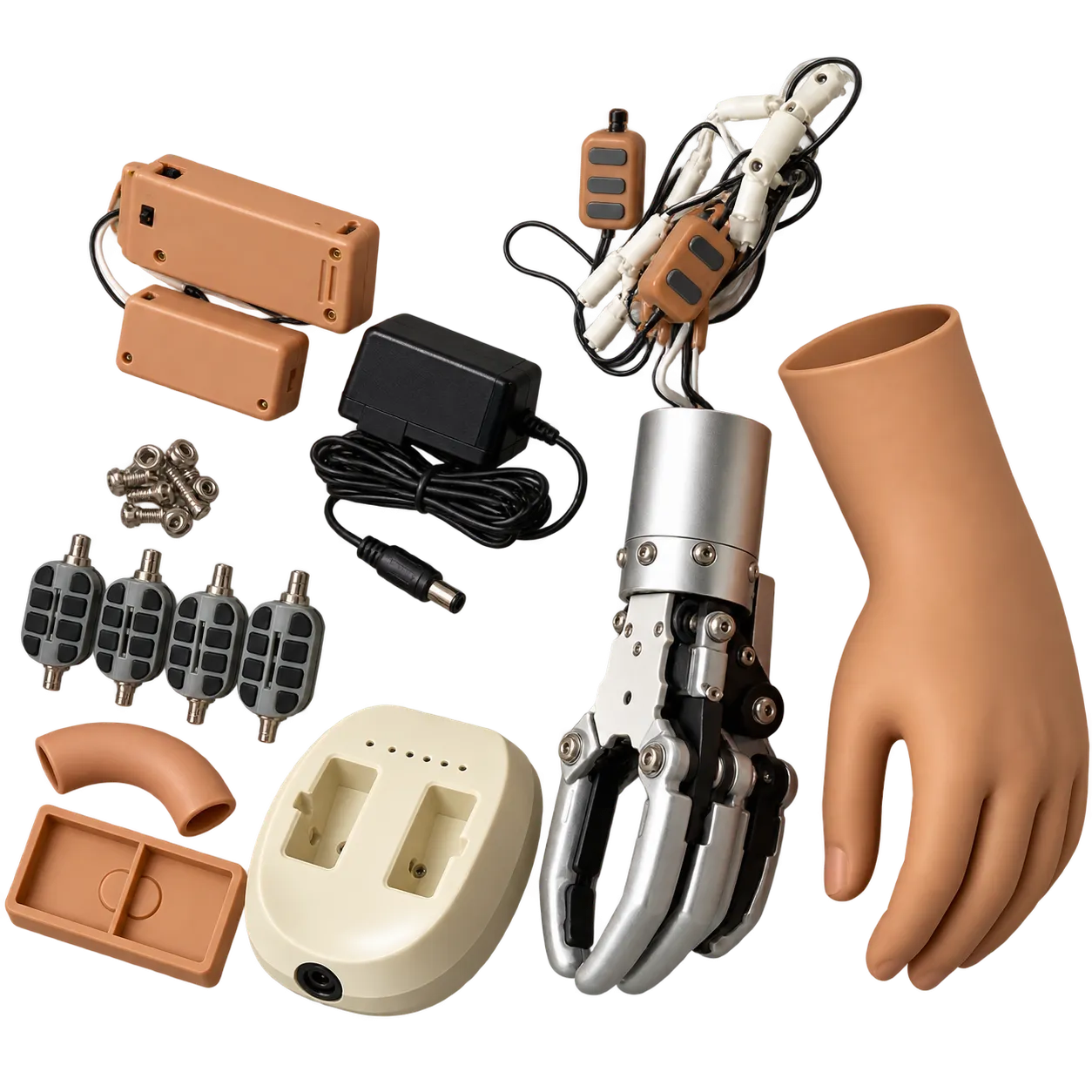
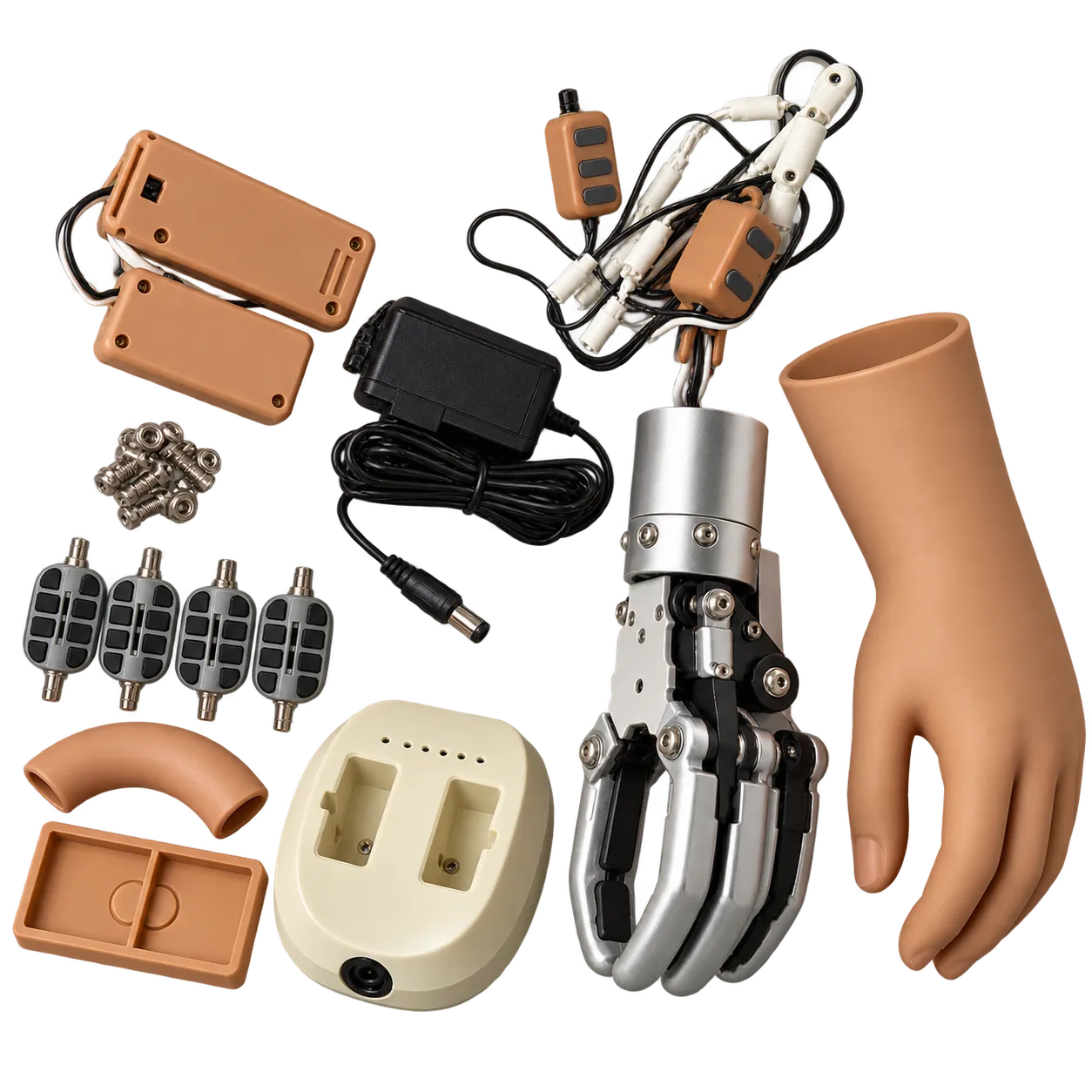
The MBEH-2 belongs in prosthetic and orthotic clinics, limb-fitting centres and upper-limb rehabilitation services that fit powered hands to people with a short stump of the arm. Prosthetists build it into the wearer's prosthesis, technicians handle the assembly at the bench, and occupational therapists work with the wearer as they learn the muscle contractions that open the fingers and turn the wrist.
Its place in a fitting programme comes from the wrist. Because the hand rotates through 360° under myoelectric control, therapy sessions can centre on the turning tasks of a normal day. Typical examples are pouring water from a jug into a glass, turning a key in a front door, twisting the lid of a jar, and bringing a spoon to the mouth at a comfortable angle. Each of these asks the hand to rotate while the arm holds its position, which is the movement the MBEH-2 is built to provide.
For wearers with a short residual limb, a light hand matters at every stage, from first fitting to daily wear. At 0.28 kg the hand adds little mass at the end of a short lever, and the aluminium and carbon fibre frame accounts for that low figure. The three-finger form suits wearers who favour a simple, functional grip, while the five-finger form gives a fuller hand shape for those who want it.
The options let a clinic tailor the hand to a person's routine. Waterproofing suits kitchen and washroom work, anti-EMI protection suits wearers who carry a mobile phone close to the limb, and the two-dimension function can be added to the hand where the fitting calls for it. Rehabilitation teams can then plan training around the tasks a given wearer cares about most.