
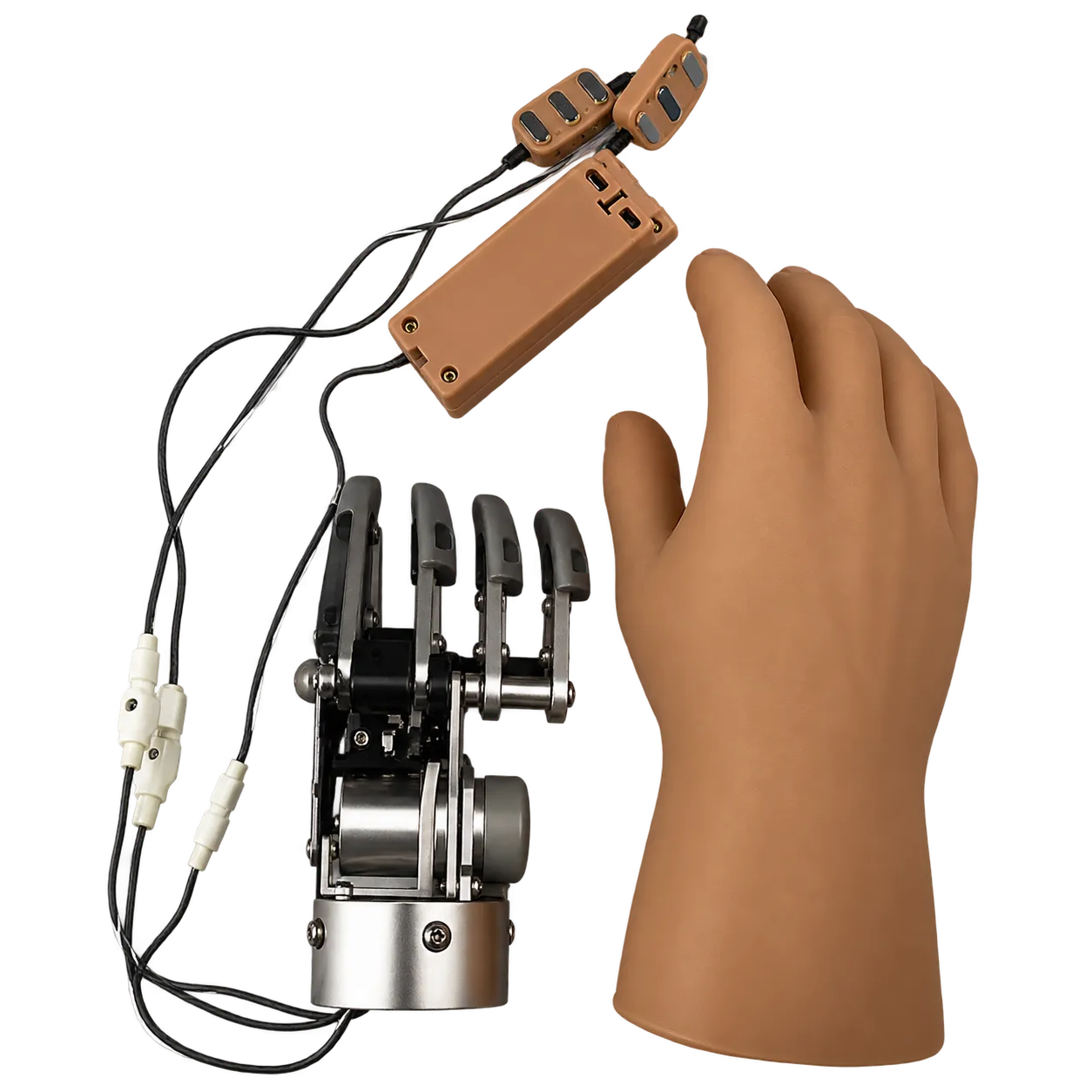
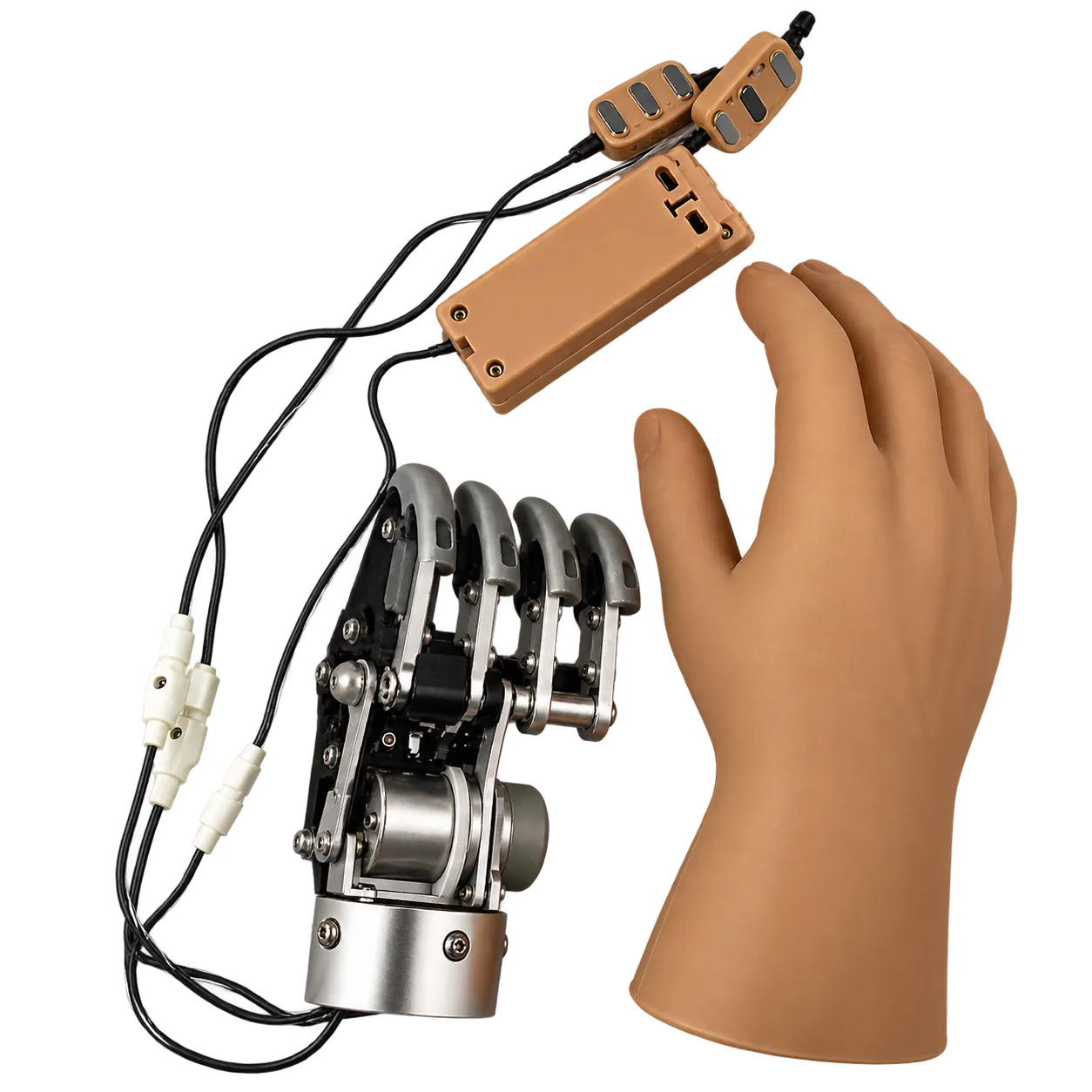
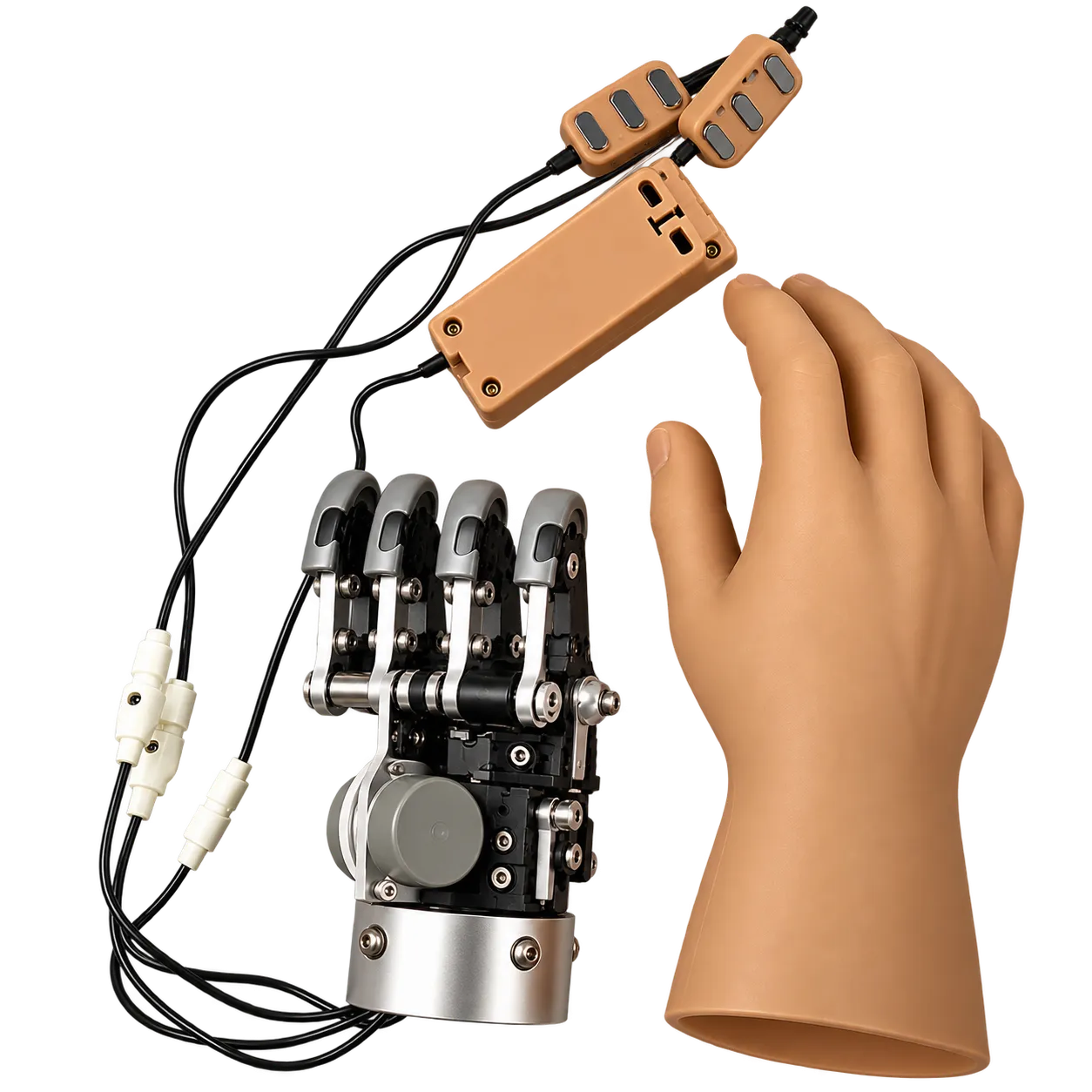
The MBEH-1 belongs in prosthetic and orthotic clinics, limb-fitting centres and upper limb rehabilitation services that fit below-elbow users. Its population is precise: people with a transradial limb difference whose forearm residual limb is short, middle or long, and who want one powered grip action they can learn quickly and trust.
Prosthetists use it when building a myoelectric forearm prosthesis around a socket made for the individual. Because one model suits all three residual lengths, a fitting team can plan a short stump close to the elbow and a long stump on the same hand. The socket and the finger count are what vary from person to person.
Occupational therapists working on upper limb training get a control task that stays the same from the first session onwards. A user contracts the forearm muscles and the grip responds. Practice then moves straight to real objects: lifting a mug, holding a plate while the other hand washes it, pinning a sock to a line or carrying a folded towel to a drawer. The passive wrist lets the therapist set the hand at an angle for each task, so one grip covers tabletop and side-on reaches.
At home and at work, the hand serves the routine two-handed jobs where a steady second grip matters most: kitchen tasks, laundry, opening packaging and holding paperwork. Users who keep a mobile phone in a shirt pocket or on a desk beside the prosthesis can be fitted with the anti-EMI option, and those whose days bring the hand near water can have the waterproof build. The three or five finger choice lets the fitting follow the person's preference between a focused pinch and a full hand shape.