
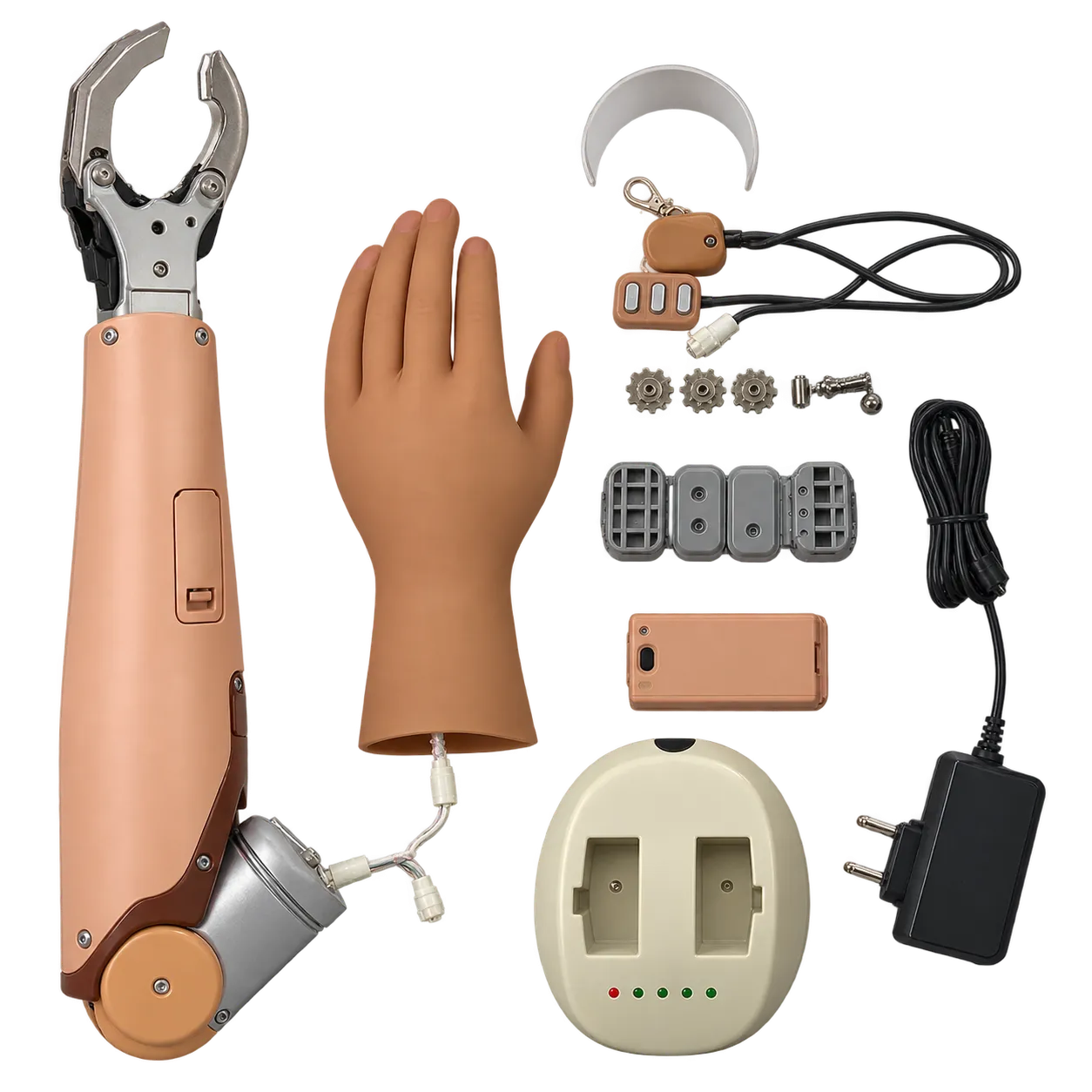
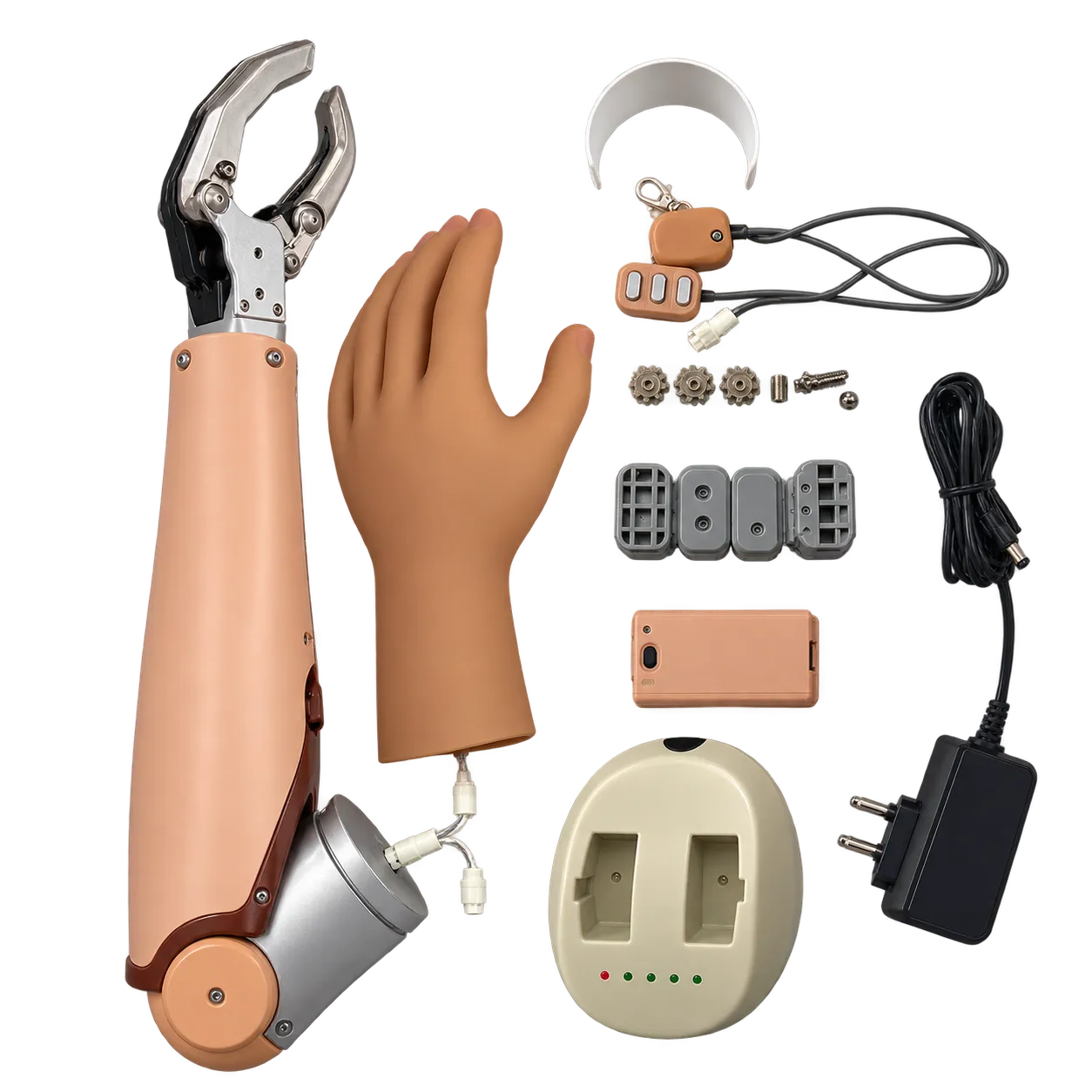
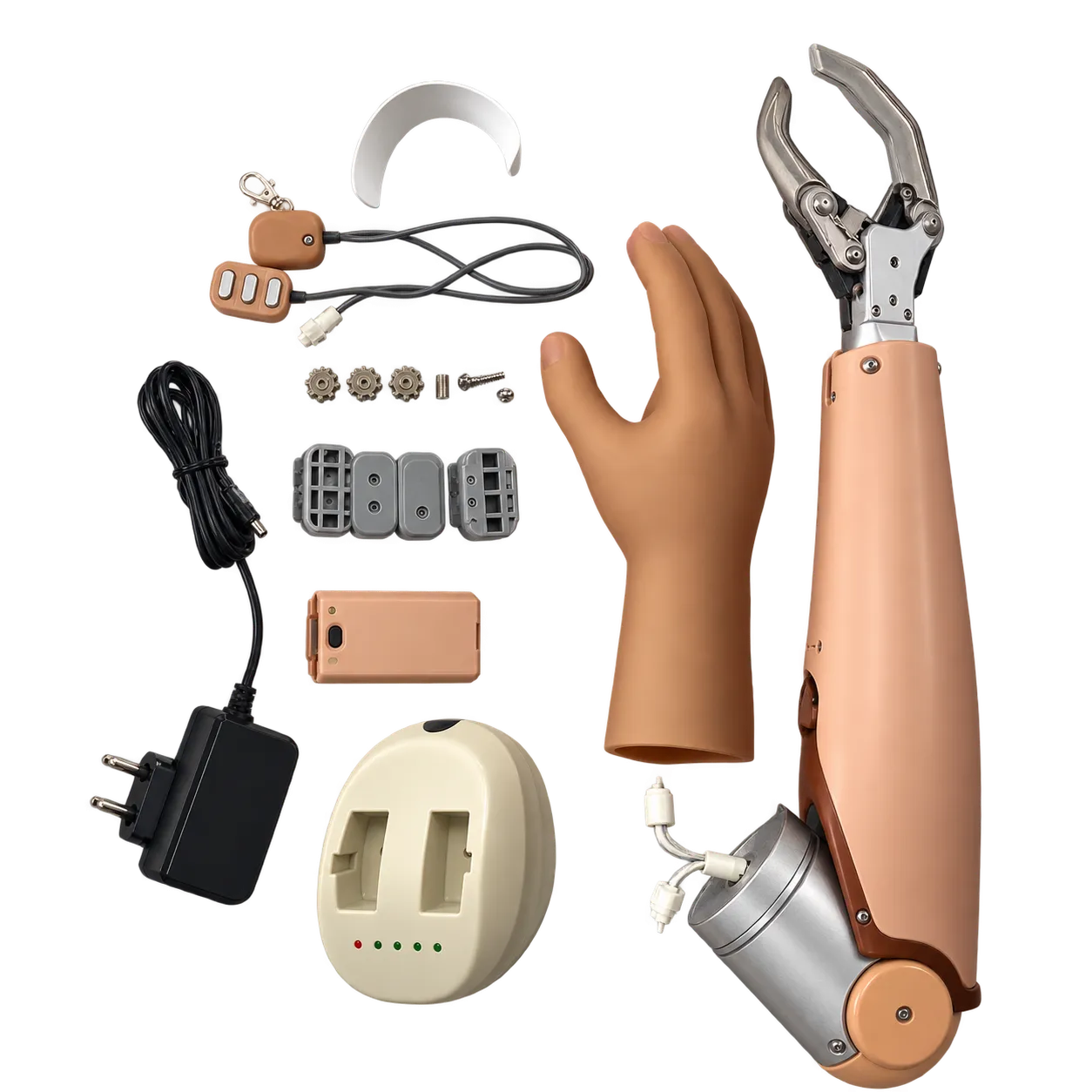
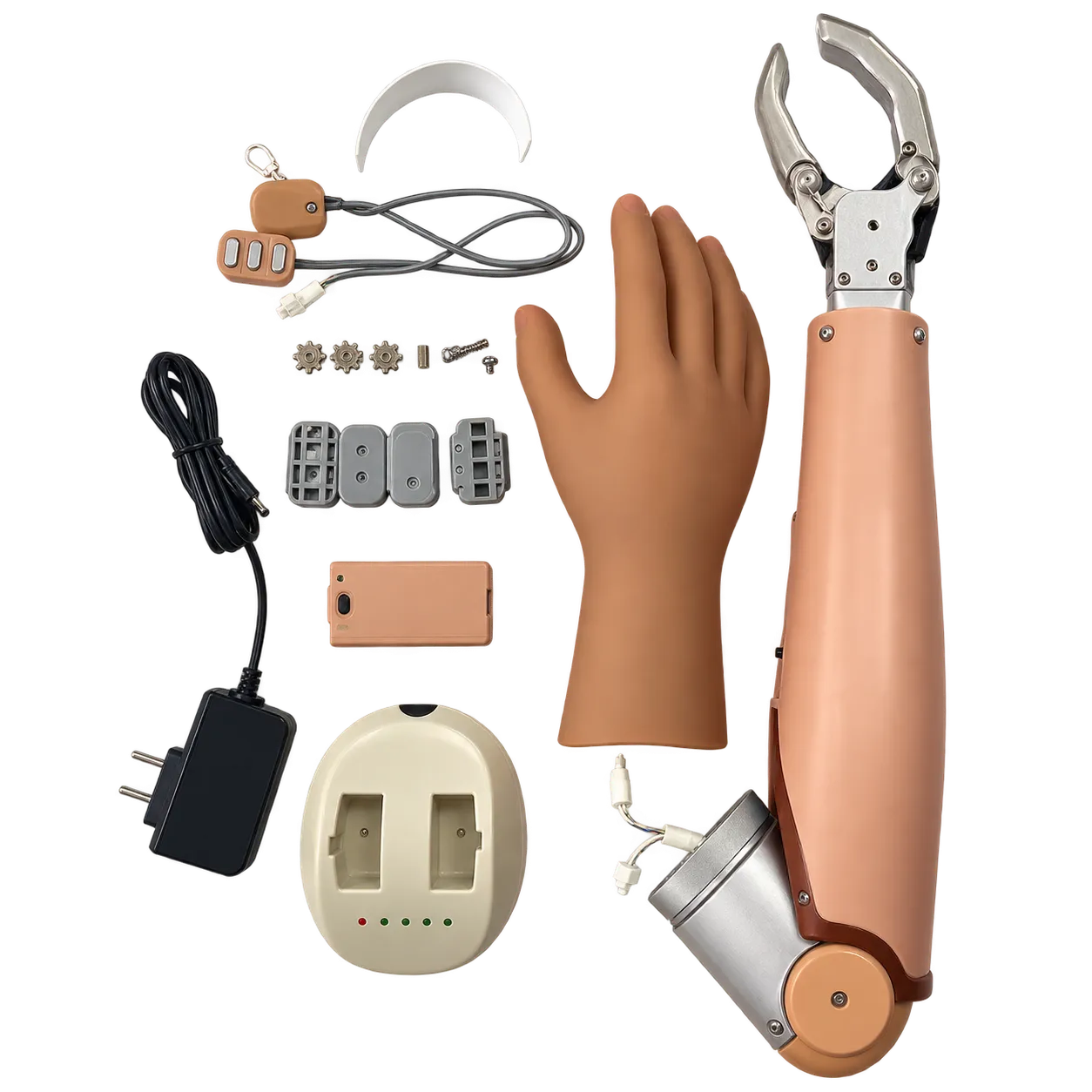
Prosthetic and orthotic clinics, limb-fitting centres and upper-limb rehabilitation services fitting at elbow level and above are where the MAEH3 is used. Its wearers have an elbow disarticulation or a middle or long stump of the upper arm, and at those levels the prosthesis has to recreate the reach of the whole forearm. Powered hand, wrist and elbow movement gives the fitting team three joints to work with, each one answering to the wearer's muscles.
Much of the value shows up in the movements people make toward their own face. Occupational therapists can build training around the moments of the day that bring the hand to the head. Typical ones are lifting a cup for a sip of tea, carrying a forkful from plate to mouth, wiping the lips with a napkin and passing a comb through the hair before going out. Each task combines elbow flexion, a turn of the wrist and a closing grip, so practising it also teaches the wearer to sequence the three myoelectric movements.
At home, these are the routines a person usually wants to keep private and unhurried. A wearer can sit down to breakfast and manage a cup and a fork with the prosthesis while the sound hand butters toast or holds the newspaper. In the bathroom, the arm can hold a comb or brush at the head while the other hand steadies the parting or reaches for a mirror. Shaving, applying cream and adjusting glasses draw on the same reach toward the face.
Clinics fitting both elbow disarticulation and longer upper-arm residual limbs can keep one arm for both groups, offering three or five fingers per wearer. Workplaces and homes full of phones and electronics suit it too, because anti-electromagnetic interference is part of every MAEH3.