
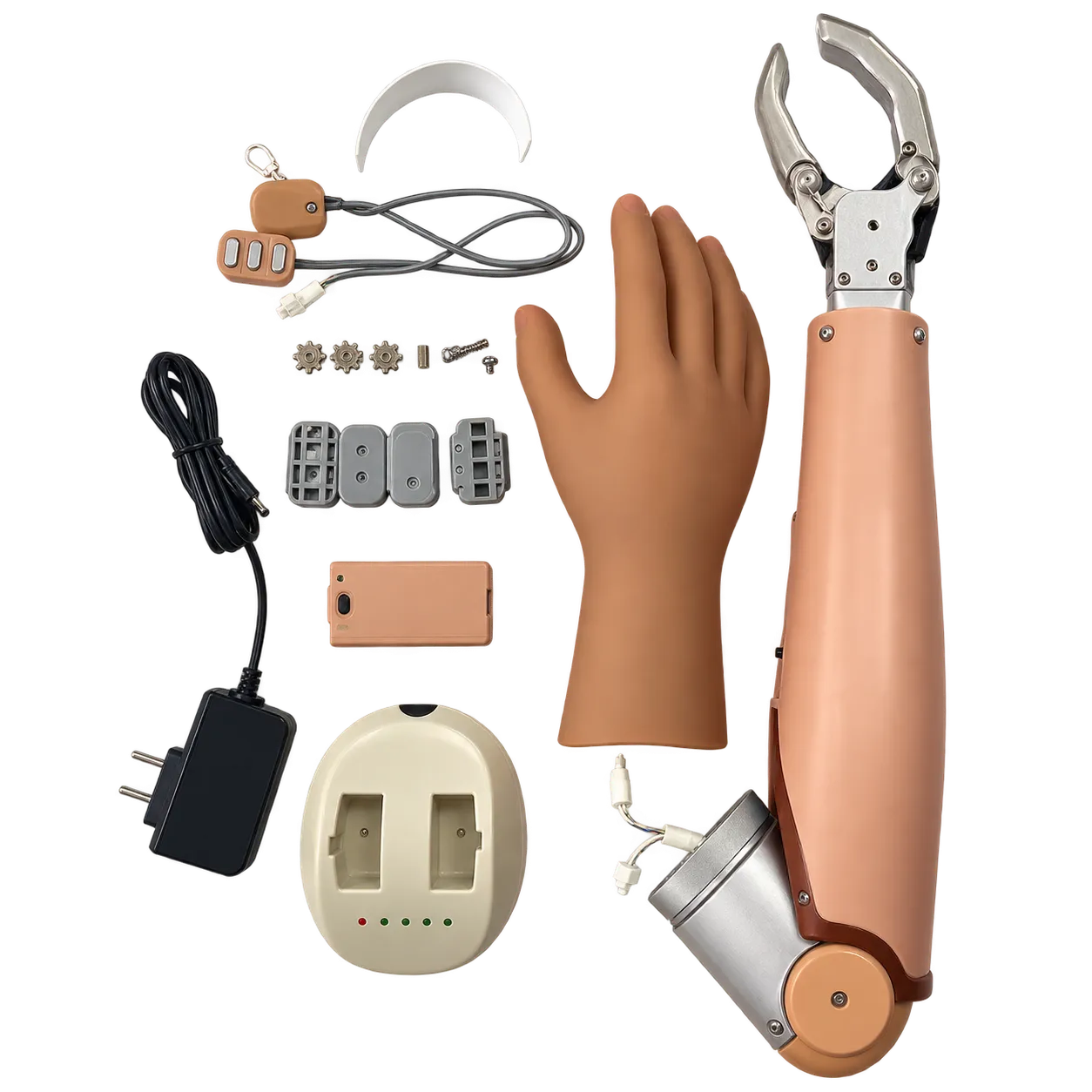
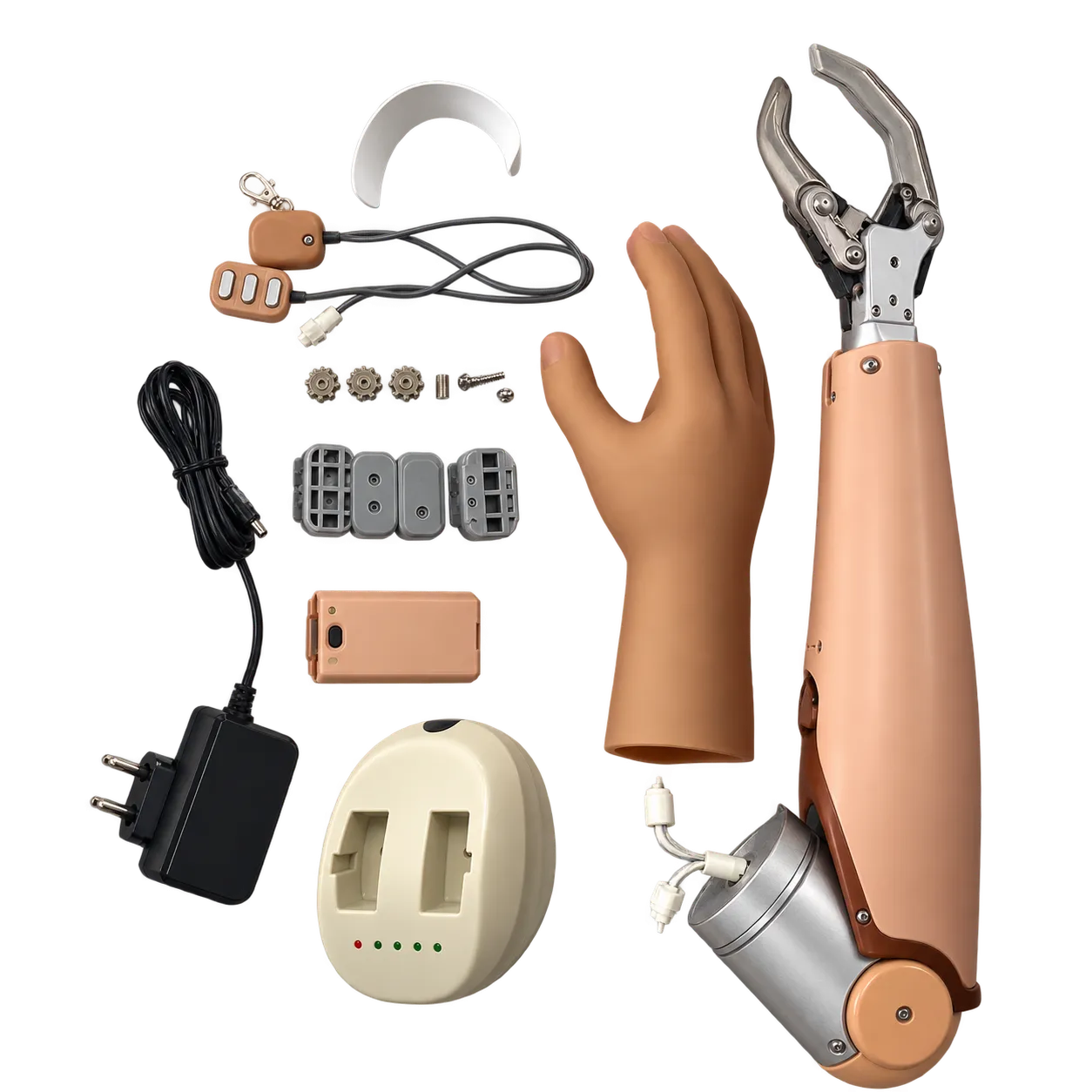
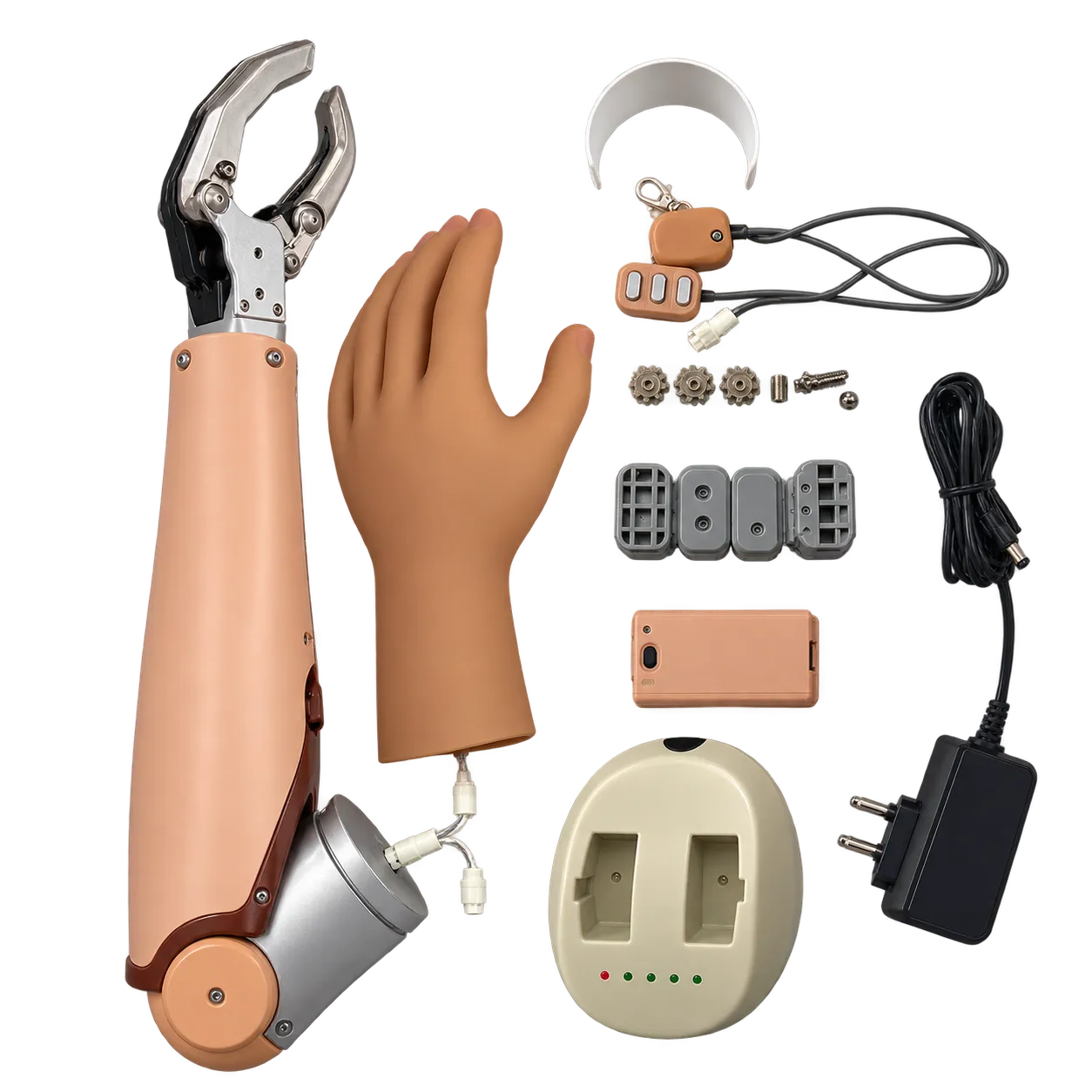
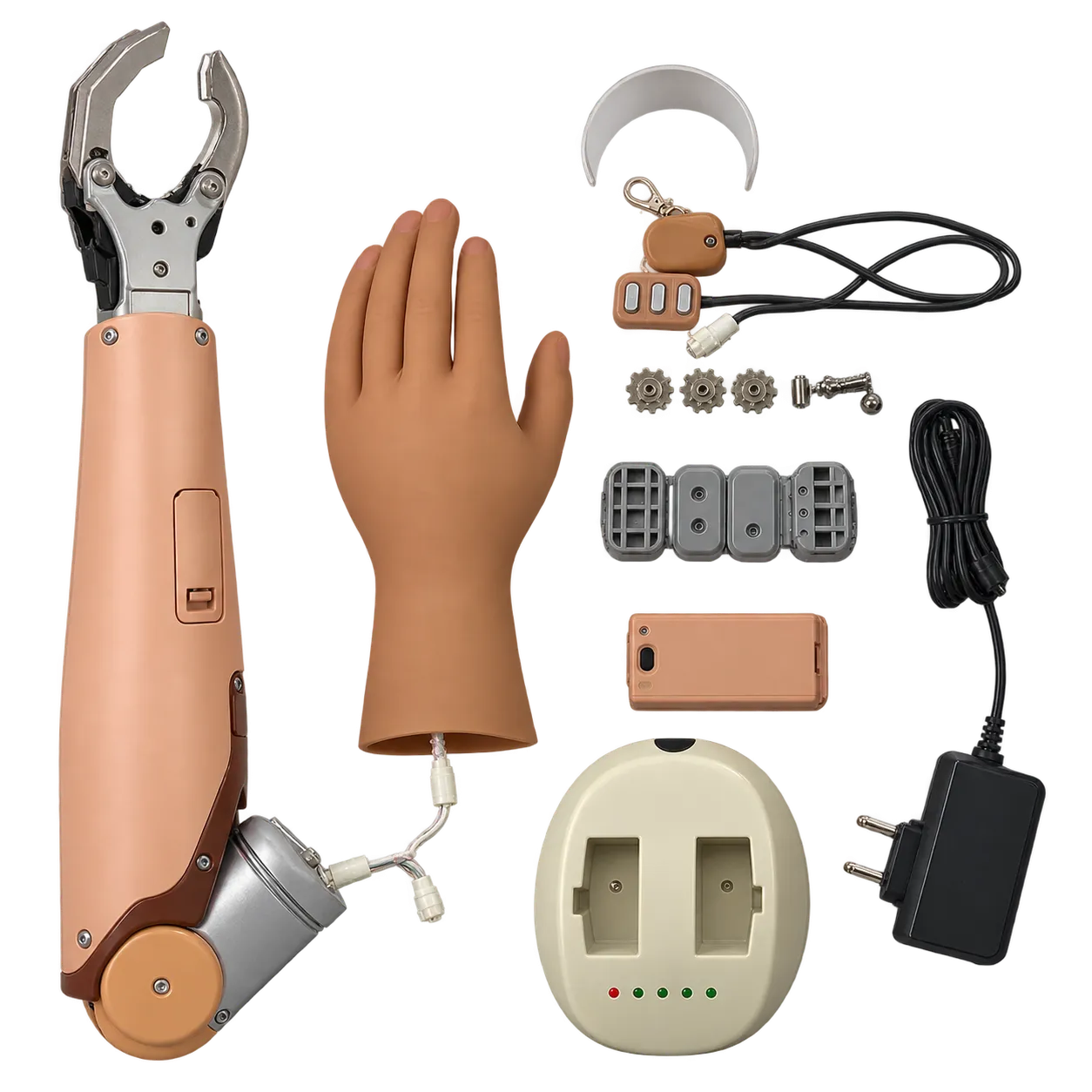
Prosthetic and orthotic clinics fitting at the highest upper-limb levels are where the MAEH2 belongs. Its intended wearers have a shoulder joint disarticulation or a middle or short upper-arm stump, levels at which the prosthesis must provide the elbow and the positioning of the whole arm as well as the grip. The arm meets that need with two kinds of joint: myoelectric hand and elbow for movement, and passive, self-locking wrist and upper-arm rotation for orientation.
Prosthetists use the rotation joints to prepare the arm before each session of training. With the upper arm and wrist locked at a starting angle, therapists can concentrate on teaching the separate muscle contractions that bend the elbow and those that open and close the hand. As the wearer gains control, the locked angles are adjusted to match the tasks practised, so the orientation joints become part of the training plan.
At home, the pattern is set and then act. A wearer preparing a meal turns the upper arm outward and pitches the wrist, then raises the forearm under muscle control to reach a cupboard shelf and close the hand on a packet. For lifting a shopping bag or carrying a box against the body, the upper arm is turned inward so the forearm comes across the trunk. Holding a jar while the sound hand twists the lid works the same way, with the hand locked at the angle the job needs.
Workplaces with phones, computers and other electronics suit the arm too, since its anti-electromagnetic interference keeps the control signal steady. Clinics that serve both shoulder-level and short upper-arm wearers can fit one component across both groups, choosing three or five fingers per person.