
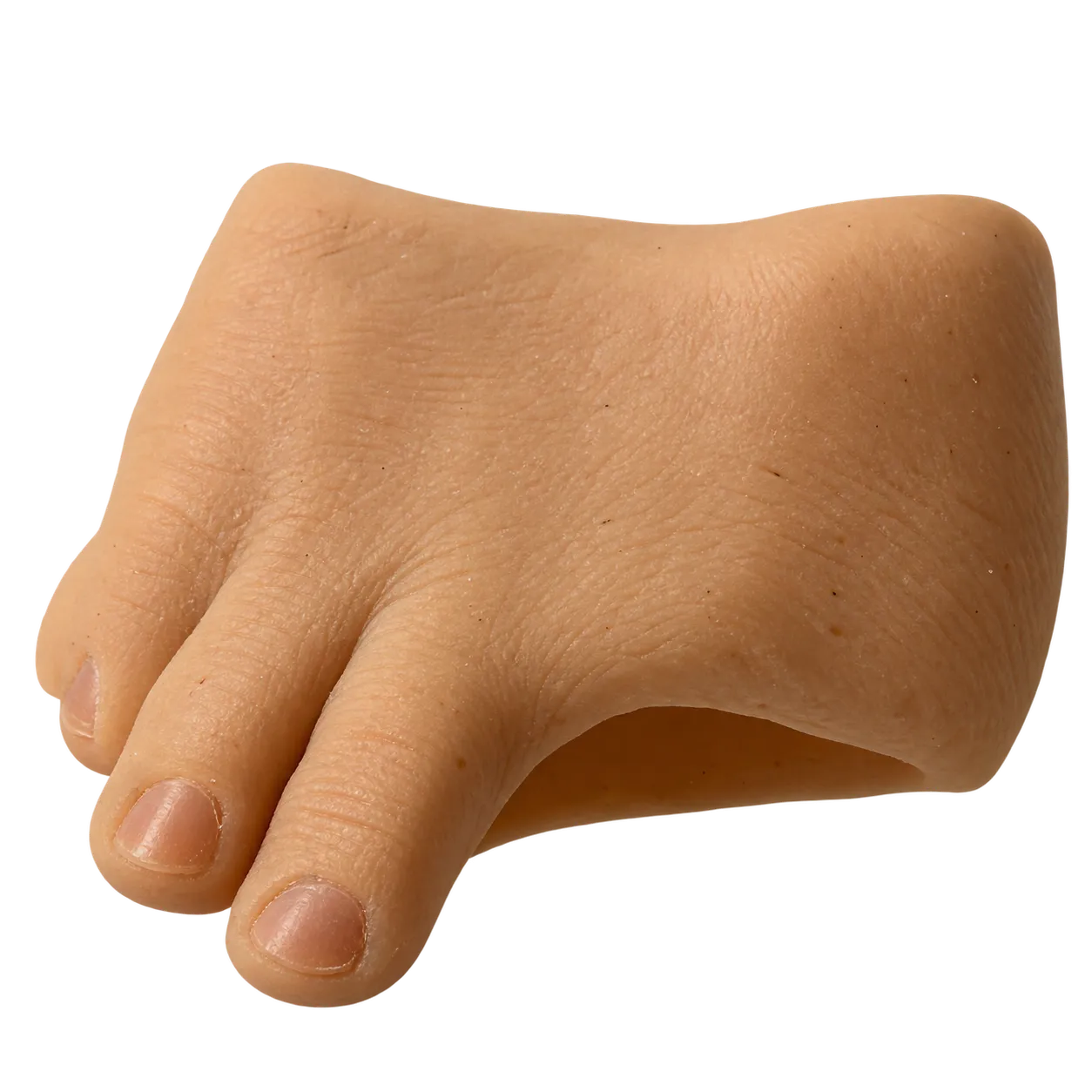
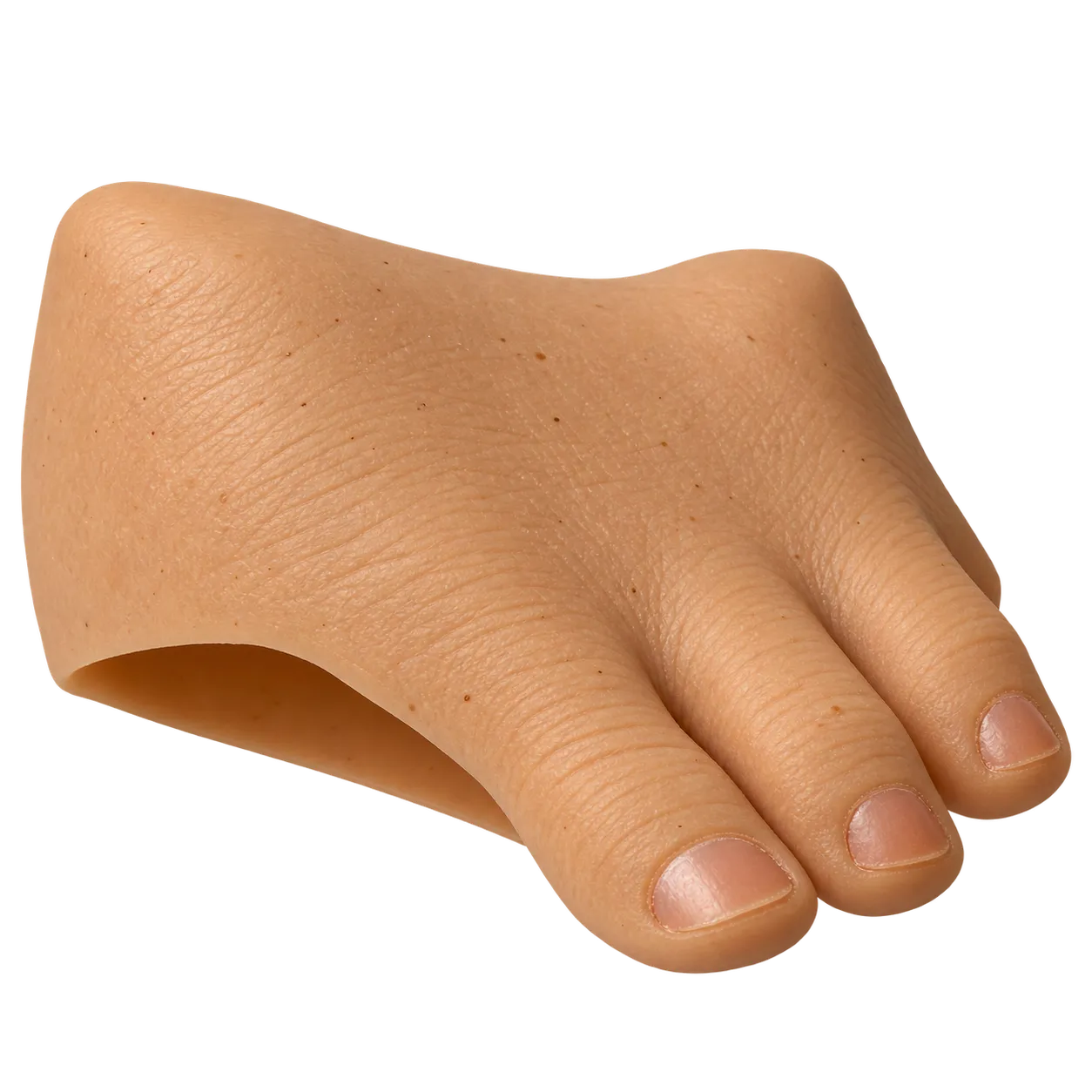
The FSHF is used in prosthetic and orthotic clinics, diabetic foot and podiatry services, vascular and orthopaedic surgery departments and rehabilitation centres that care for people after partial foot amputation. Its users are people who have lost the toes or forefoot through diabetes complications, vascular disease, trauma or frostbite, and people born with a partial foot.
The mechanism shapes the clinical workflow. The clinician either measures the residual foot or takes a plaster mould of it, records the skin colour, and sends both to Wonderful, which makes the half foot to that limb's shape, size and loading. At the fitting, the silicone is placed on the residual foot and checked for how closely it follows the contours, how the foot sits in the wearer's shoe and how the skin looks after a first period of walking.
That close, individual fit is why services choose it. Skin on a residual foot is often fragile, and in people with diabetes or poor circulation, pressure and rubbing are real concerns. Wonderful designs the FSHF fit to reduce pressure and friction damage and to improve stability, which suits wearers who walk on the partial foot through the day. Tear-resistant and wear-resistant silicone, cleaned with a wipe of water, keeps daily care within the reach of older wearers.
Typical uses include restoring the shape of the foot after transmetatarsal or toe amputation, filling out a shoe so the wearer can walk with confidence, and replacing a worn half foot from the same record. Prosthetists, orthotists and podiatrists handle the order and the fitting. In each case, the half foot starts from the residual limb itself.