
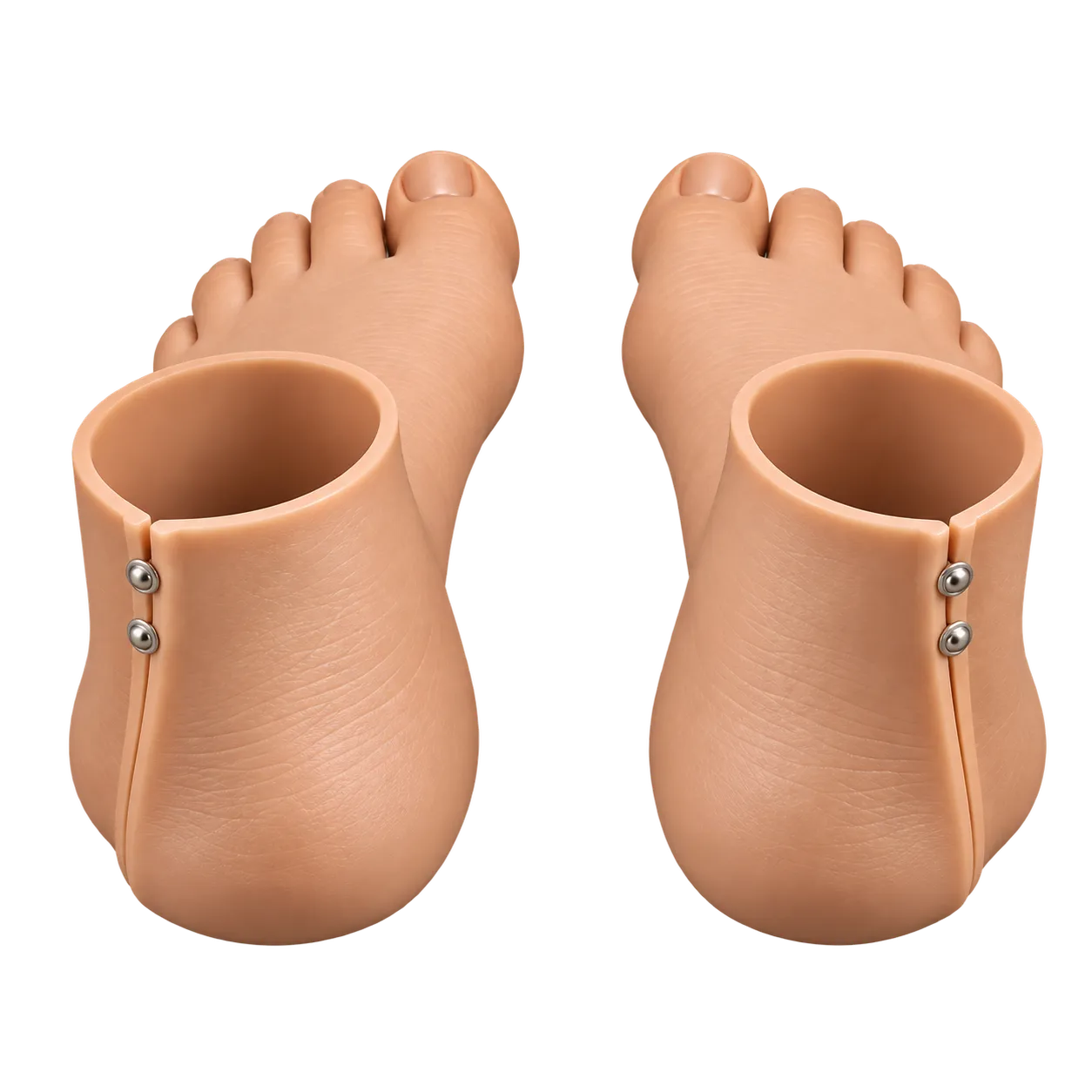
.webp)
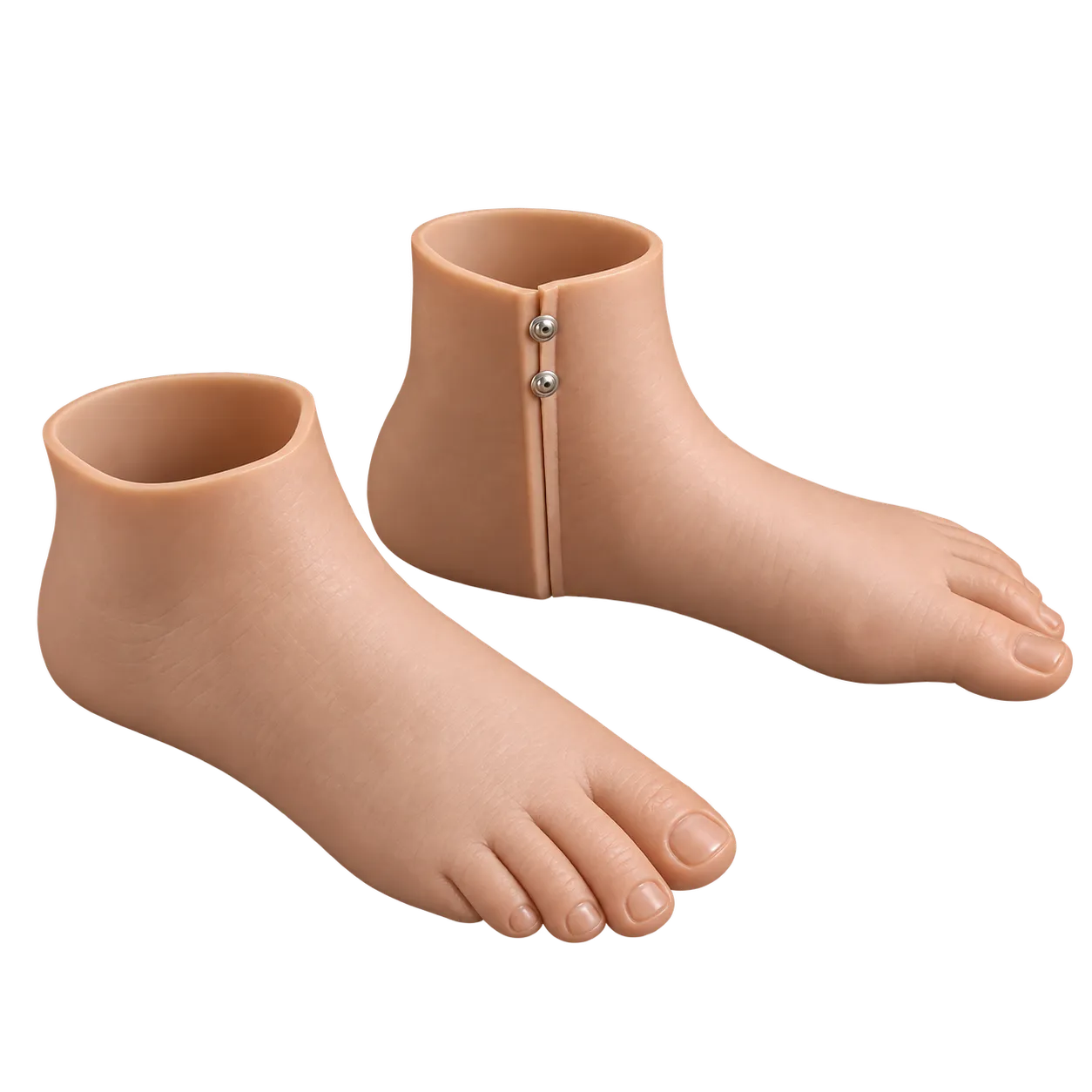
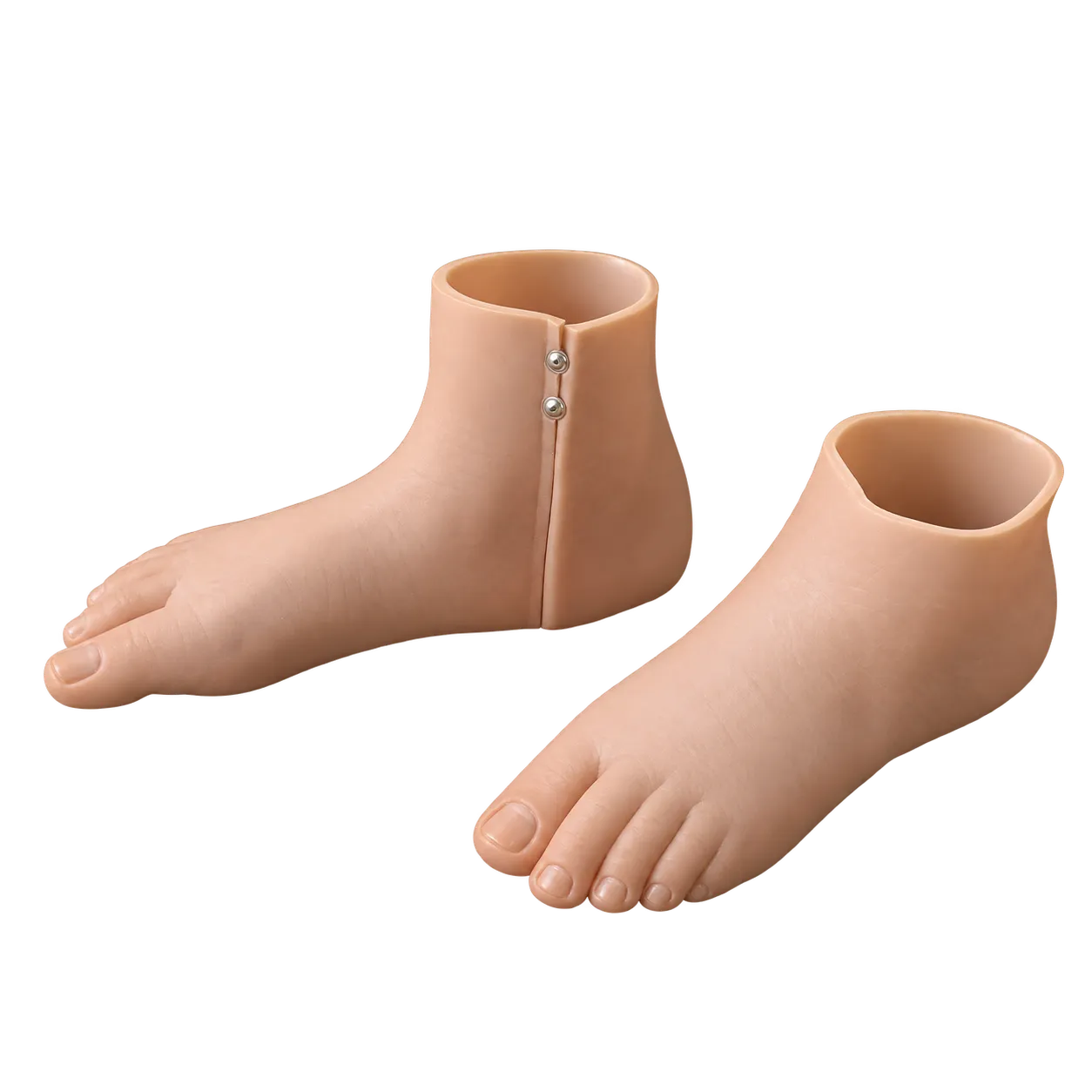
The FSF is used in prosthetic and orthotic clinics, podiatry and diabetic foot services, vascular and orthopaedic surgery departments and anaplastology practices that restore the appearance of the foot. Its users are people who have lost toes or part of the forefoot through diabetes, vascular disease, trauma or frostbite, and people born with a partial foot.
Patient experience is what the FSF offers these services. For people living with partial foot loss, the moments of being seen can be the hardest: open shoes, bare feet at home, swimming, intimacy, a child's question. A silicone foot made to the wearer's dimensions, with toes and toenails formed, restores the outline of the foot so the two feet look like a pair. That restored outline also improves the way socks, hosiery and shoes sit, which matters on every day of the year.
Clinicians record the dimensions of the residual foot, often with reference to the other foot, and send them to Wonderful, which produces the FSF to that record. At the fitting, the silicone foot is placed over the residual forefoot and checked for how it follows the foot, how the toes line up with the other foot and how it sits inside the wearer's usual footwear.
Typical uses include restoring the appearance of the foot after toe or transmetatarsal amputation, giving a wearer the confidence to wear sandals again, and replacing a worn silicone foot to the same dimensions. Podiatrists, prosthetists and orthotists handle the order and the fitting. In each case, the FSF gives back the outline of the front of the foot, shaped for one person.