
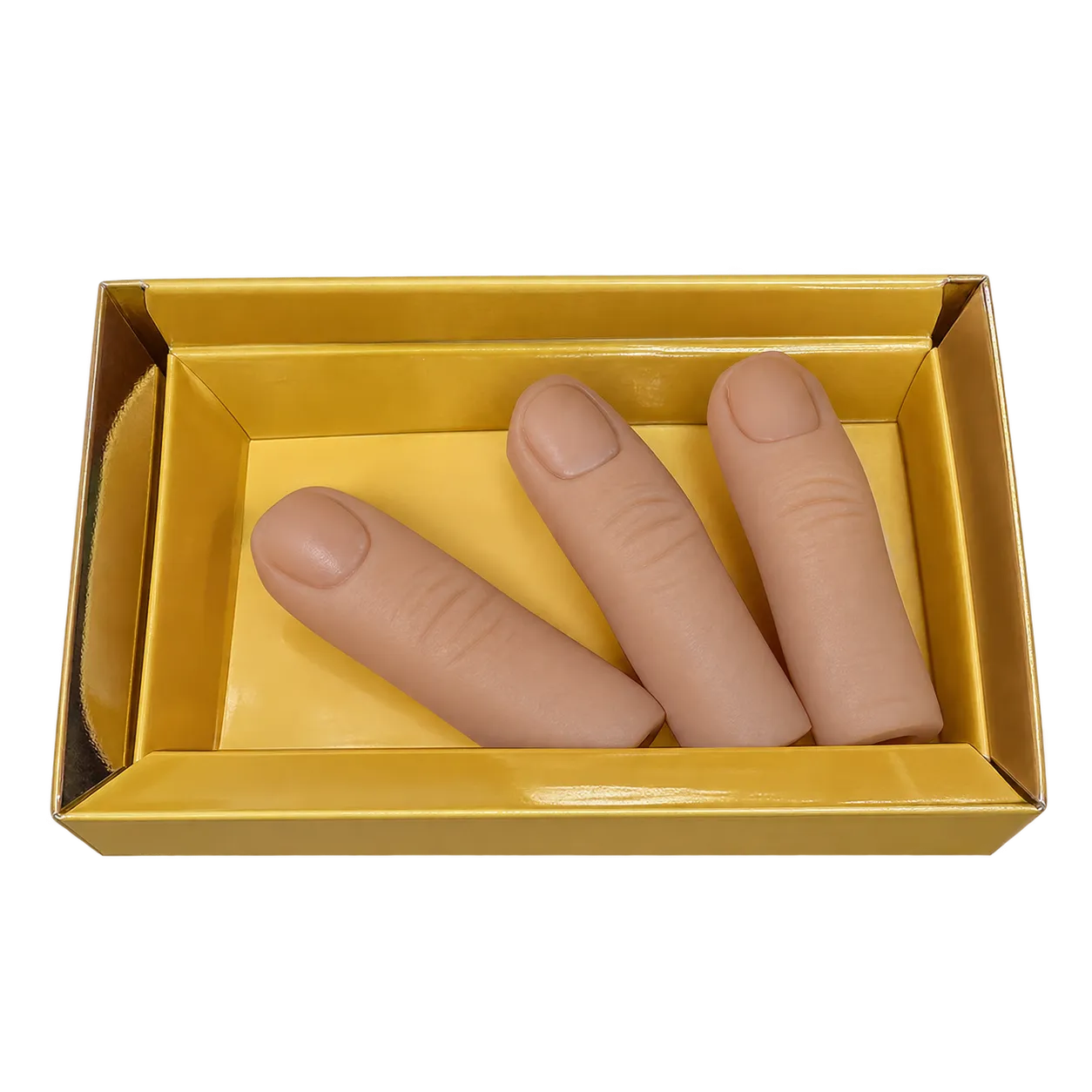
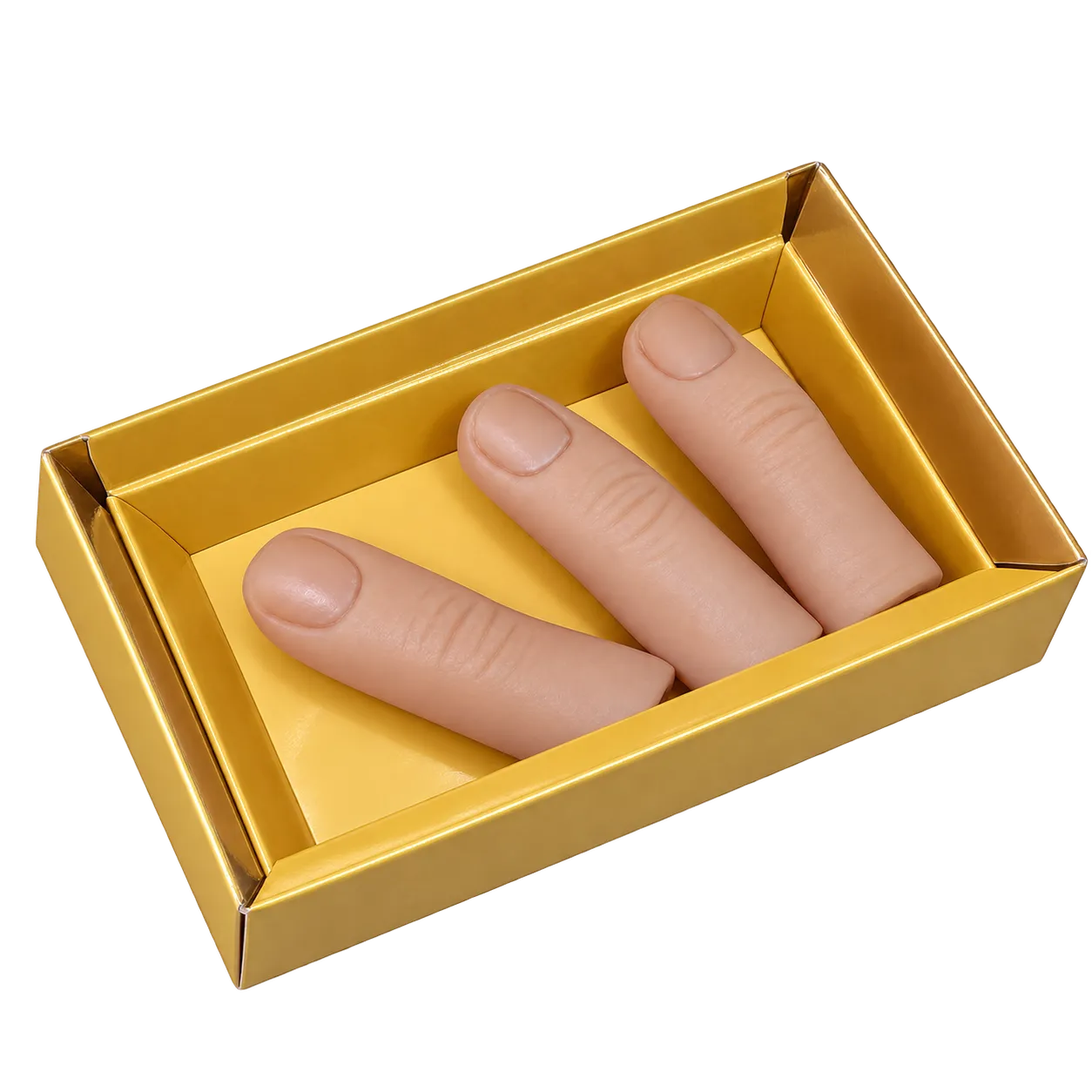
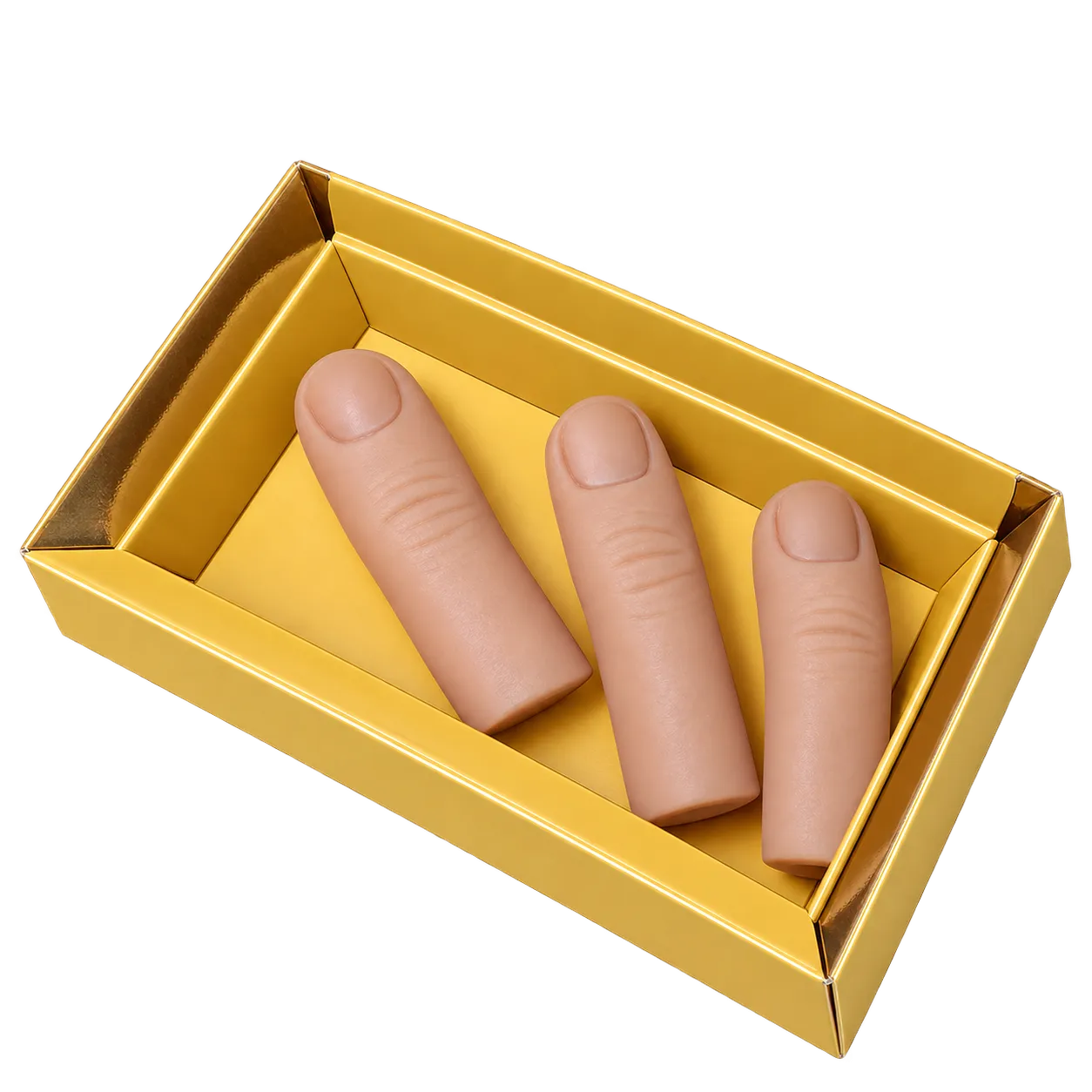
The FNSF is used in prosthetic clinics, hand therapy services, plastic and reconstructive surgery departments and anaplastology practices that restore the appearance of the hand. Its users are people who have lost all or part of a finger through a workplace or domestic injury, surgery or a congenital difference.
Workflow is where the FNSF suits a clinical service. Finger restorations are individual by nature, which can make them slow to order and hard to repeat. The FNSF turns the process into a clear sequence. A referral arrives, the clinician measures the residual finger and its neighbours, the dimensions are recorded, and the order goes to Wonderful. The finger comes back made to that record, and the record stays on file as the template for the future.
That template matters over the years. Silicone fingers are replaced as they wear, and a wearer may also want a spare. With dimensions already recorded, the clinic can reorder to the same specification, and the wearer receives a finger that matches the first in length and outline. Only a change in the hand calls for new measurements.
Clinicians, prosthetic technicians and anaplastologists handle the measuring, ordering and fitting. At the fitting, the finger is checked for length against its neighbours, for alignment and for how it sits on the residual finger. Typical uses include restoring appearance after a traumatic amputation, completing the hand after partial surgical removal of a finger, and providing a finger for people born with a digit difference. In every case, the FNSF gives the clinic a finger made from one clear set of figures.