
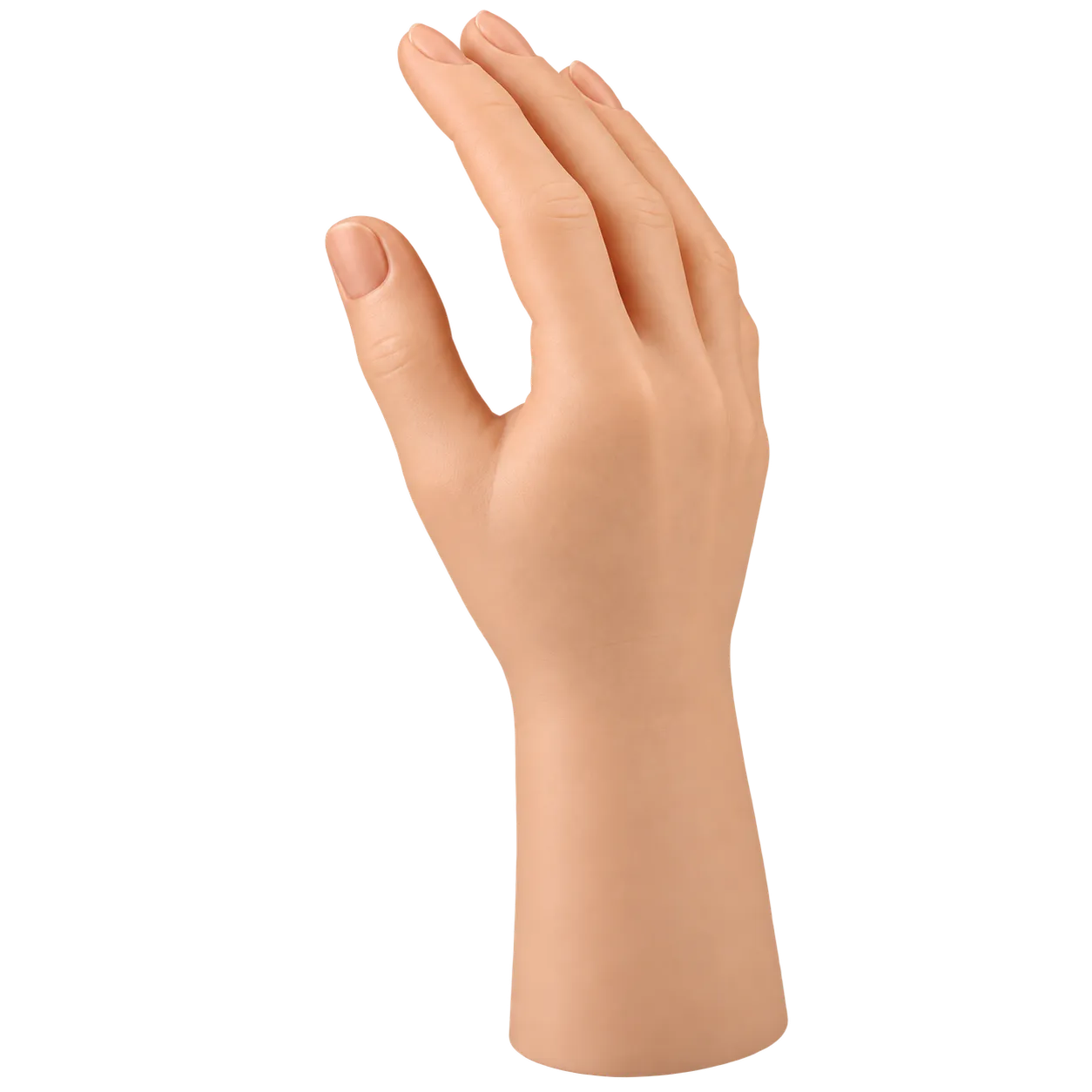
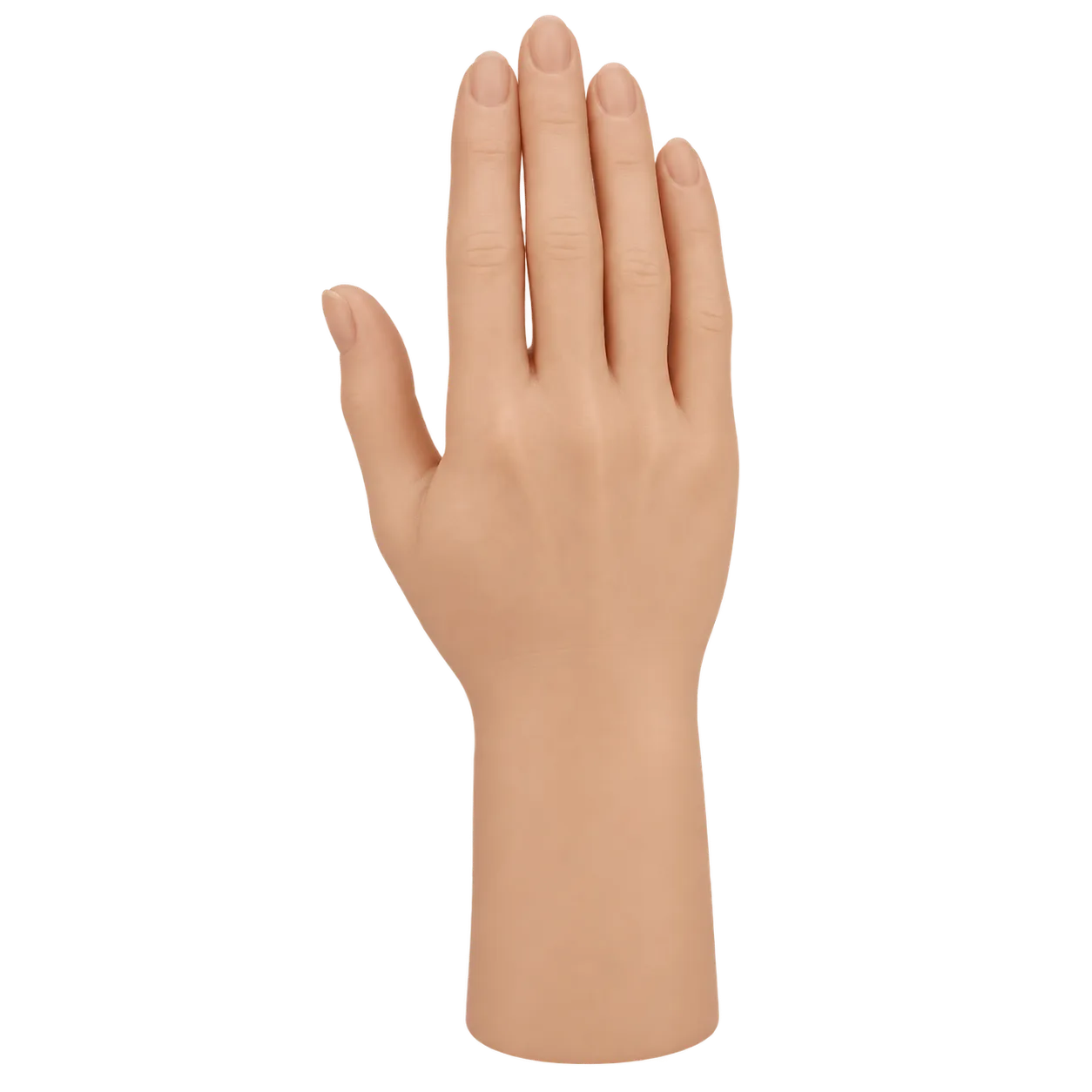
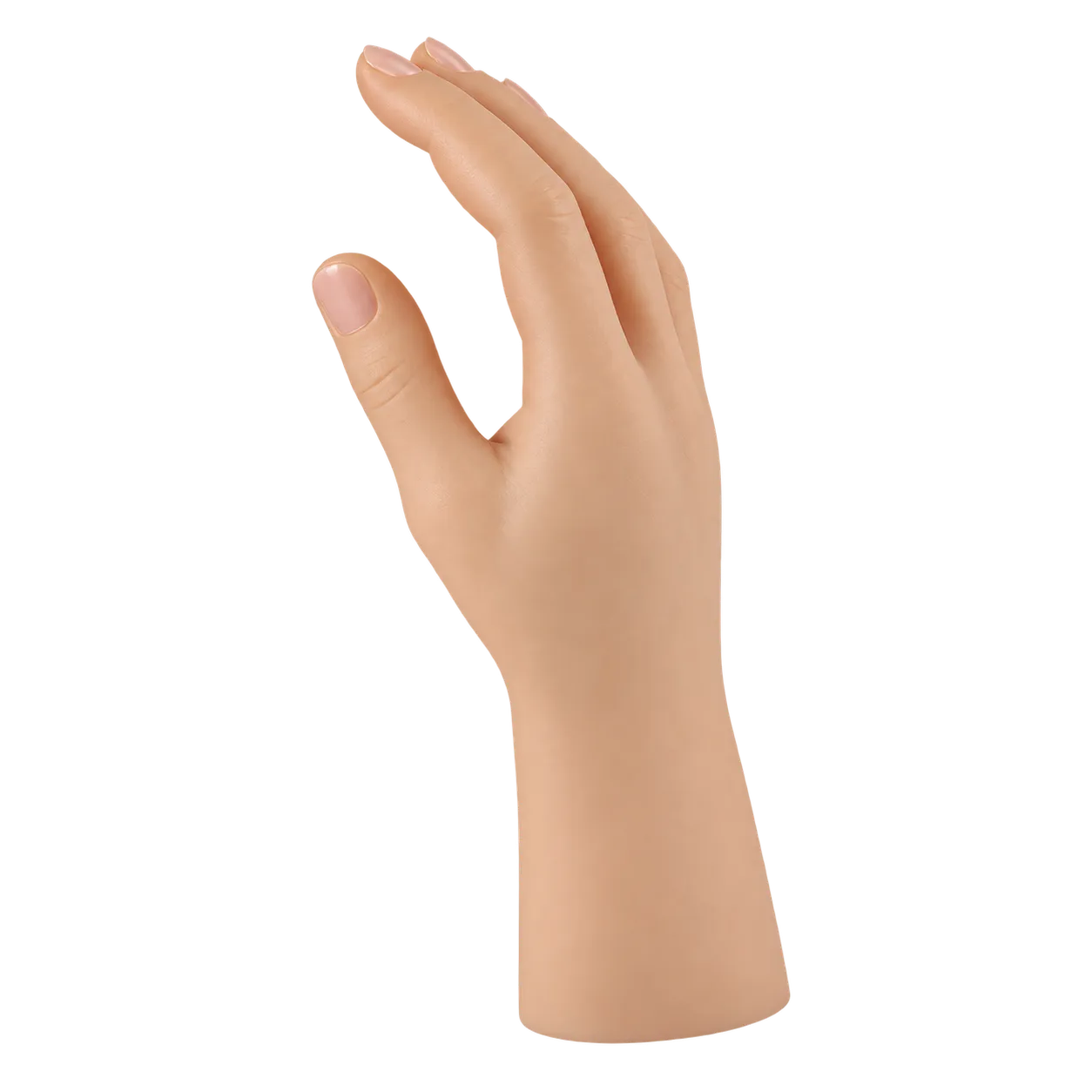
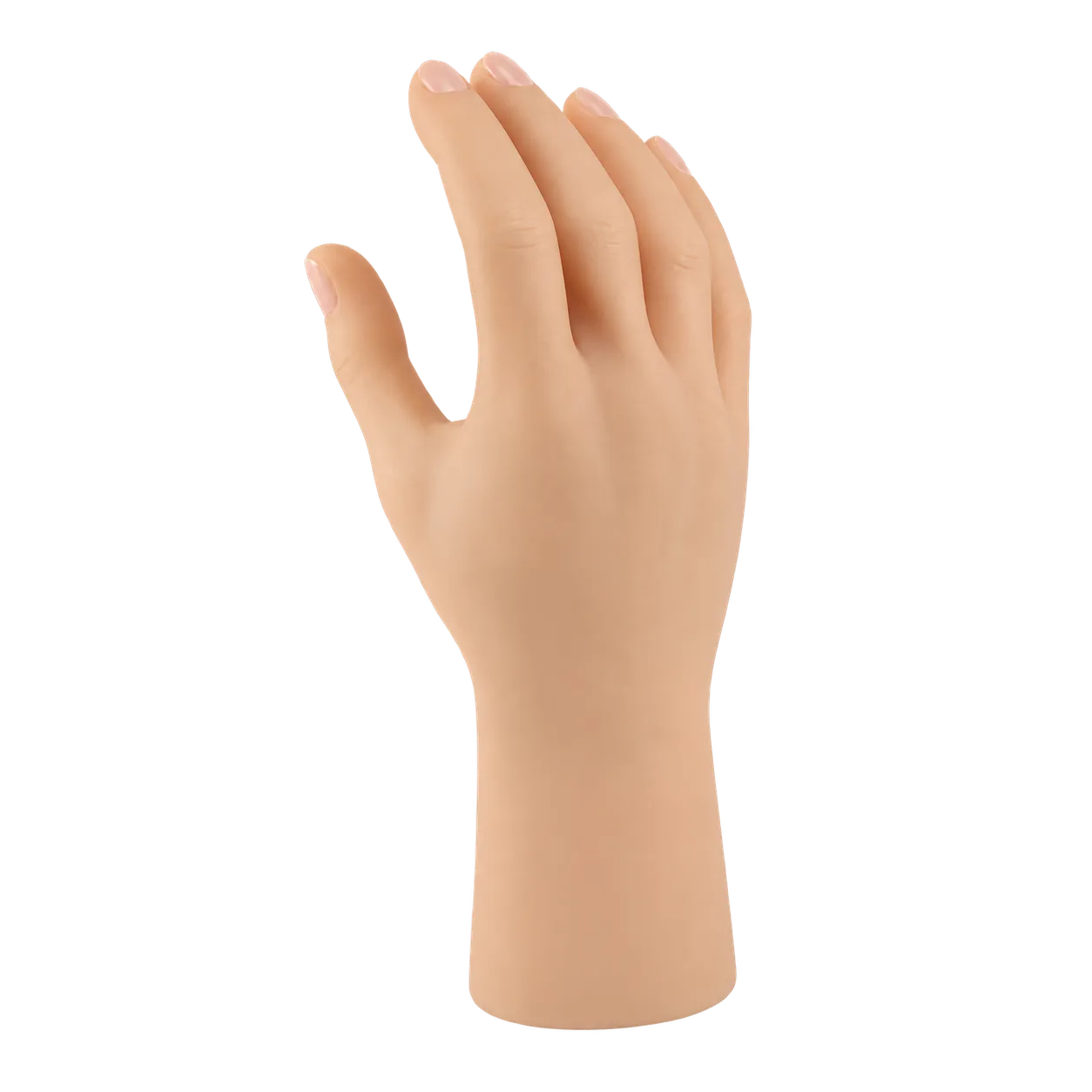
Limb-fitting centres and prosthetic and orthotic clinics are the main settings for the FMHGS, since their caseloads rarely stop at one kind of wearer. A morning list can bring a child with a new mechanical hand, a woman returning for a replacement cover and a man being fitted for the first time. Because the glove is made in S for children, M for women and L for men, the prosthetist reaches for the same product each time and changes only the size.
Paediatric limb services use size S. A child fitted with a mechanical prosthetic hand receives a short silicone glove of the same pattern adults wear, and when the hand is later rebuilt for a bigger arm, the glove moves up the size list with it. Families and therapists deal with one glove design throughout those years.
Adult services split the work between M and L. Female wearers take the M glove and male wearers the L glove, so a department serving both groups stocks one product for the pair. Where a wearer's arm carries a larger mechanical hand, the XL size covers that device, extending the range to the biggest hands the glove is made for.
Rehabilitation and occupational therapy teams meet the glove once the mechanical hand is on the arm. The short, wrist-high cut covers the hand itself, and the pull-on fit means the glove is put on as the final step of the build, after the hand has been mounted and adjusted.
Outreach clinics and community limb services benefit in the same way. A practitioner travelling between sites can carry four sizes of one silicone glove and meet whichever wearer the appointment brings: a child, a woman, a man or a larger hand.