
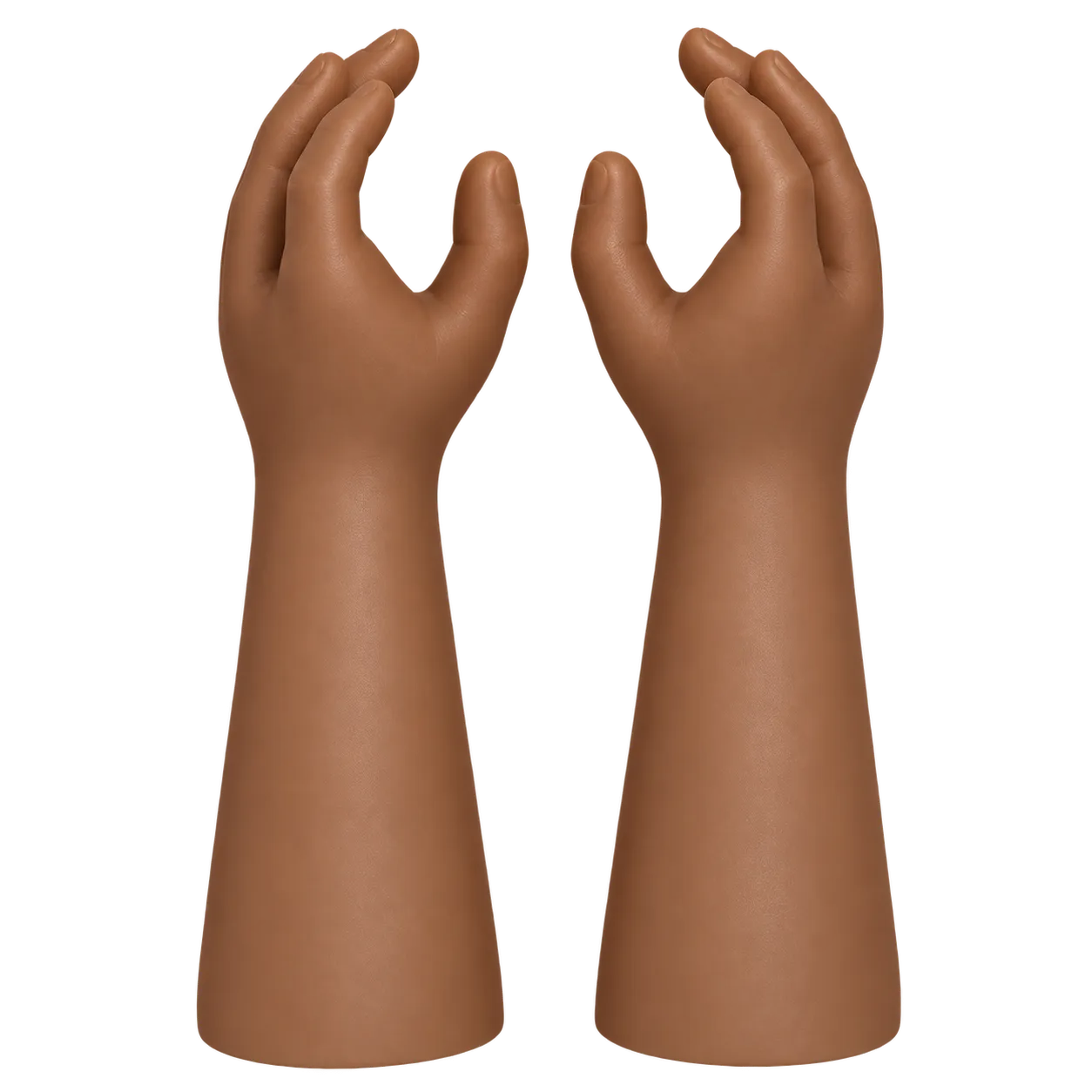
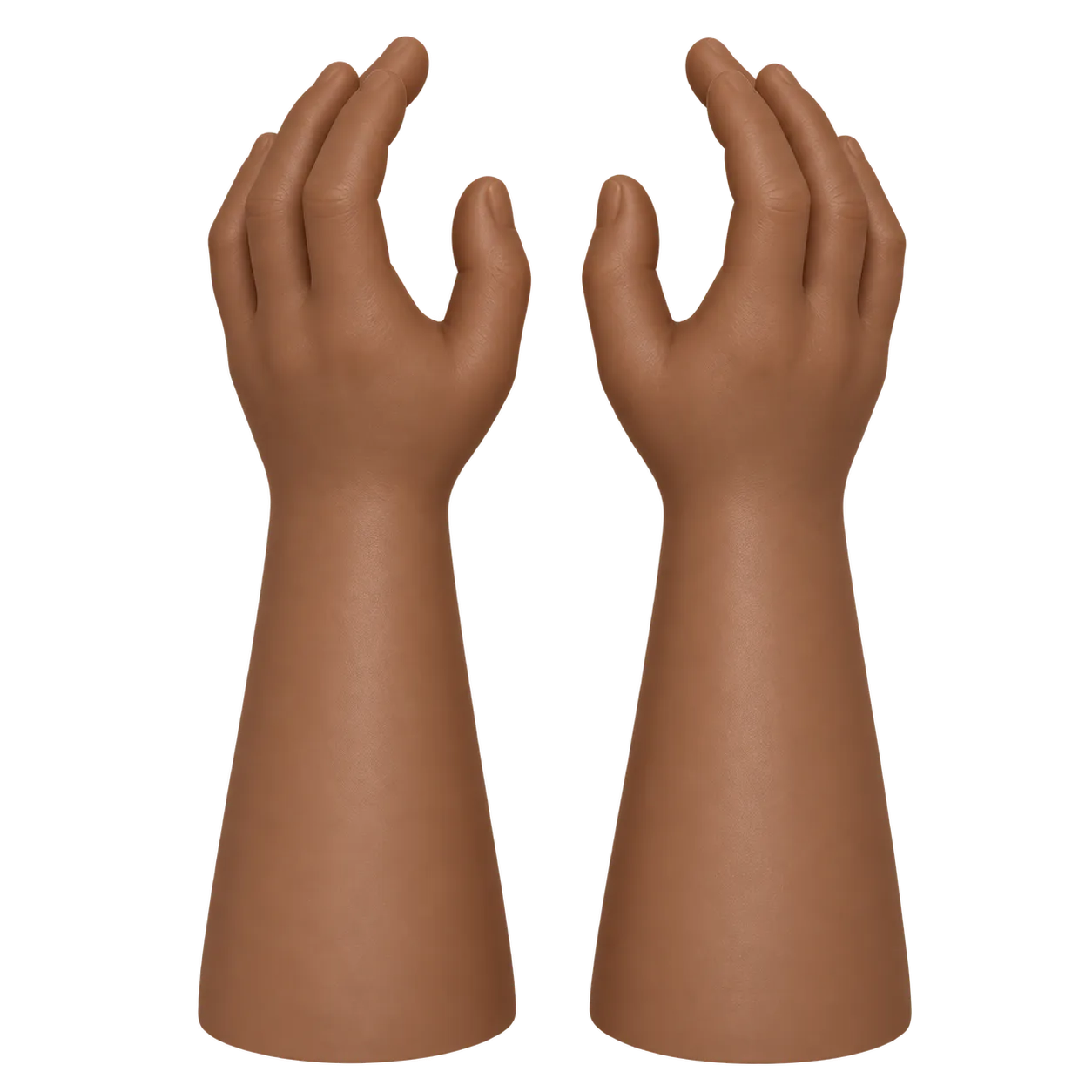
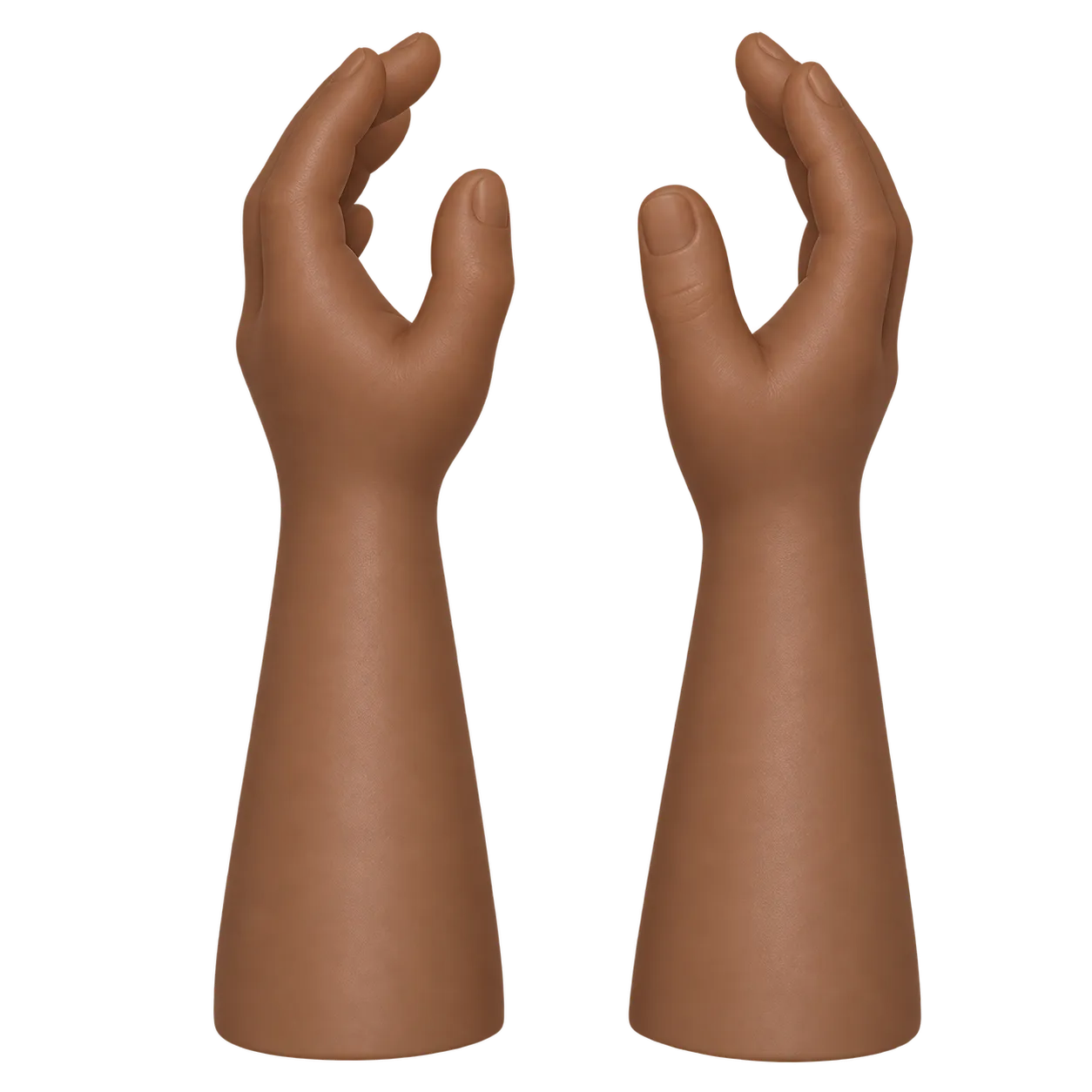
Prosthetic and orthotic clinics fitting mechanical hands are where the FMHGL earns its place, at the stage when the wearer thinks about how the arm will look as well as how it will work. Prosthetists dress the fitted hand with the glove so that the cover carries on above the wrist, and the forearm takes on the same skin tone as the fingers. For a wearer who dreads the moment a sleeve rides up, that continuity changes how the prosthesis feels in company.
Daily life is where the long pattern shows its value. An office worker in a short-sleeved shirt can rest both forearms on a desk in a meeting with one even surface on show. Someone serving in a café or working a shop counter keeps the arm in view for hours, and the cover reads as part of the person throughout. At weddings, on holiday and in the garden on a hot afternoon, the wearer chooses clothes to suit the weather and the day.
Children and teenagers are a particular group. The S size dresses a child's mechanical hand, and a forearm in a school polo shirt or a football kit then shows the skin-tone cover all the way from the cuff. A young wearer can join in at school and on the pitch with the arm looking like every other arm in the line-up.
Female and male wearers each have a size of their own, M and L, and XL suits a larger mechanical hand. Clinics that fit mechanical hands across a wide age range can therefore offer the same long cover to adults and children alike, with the size following the hand.