
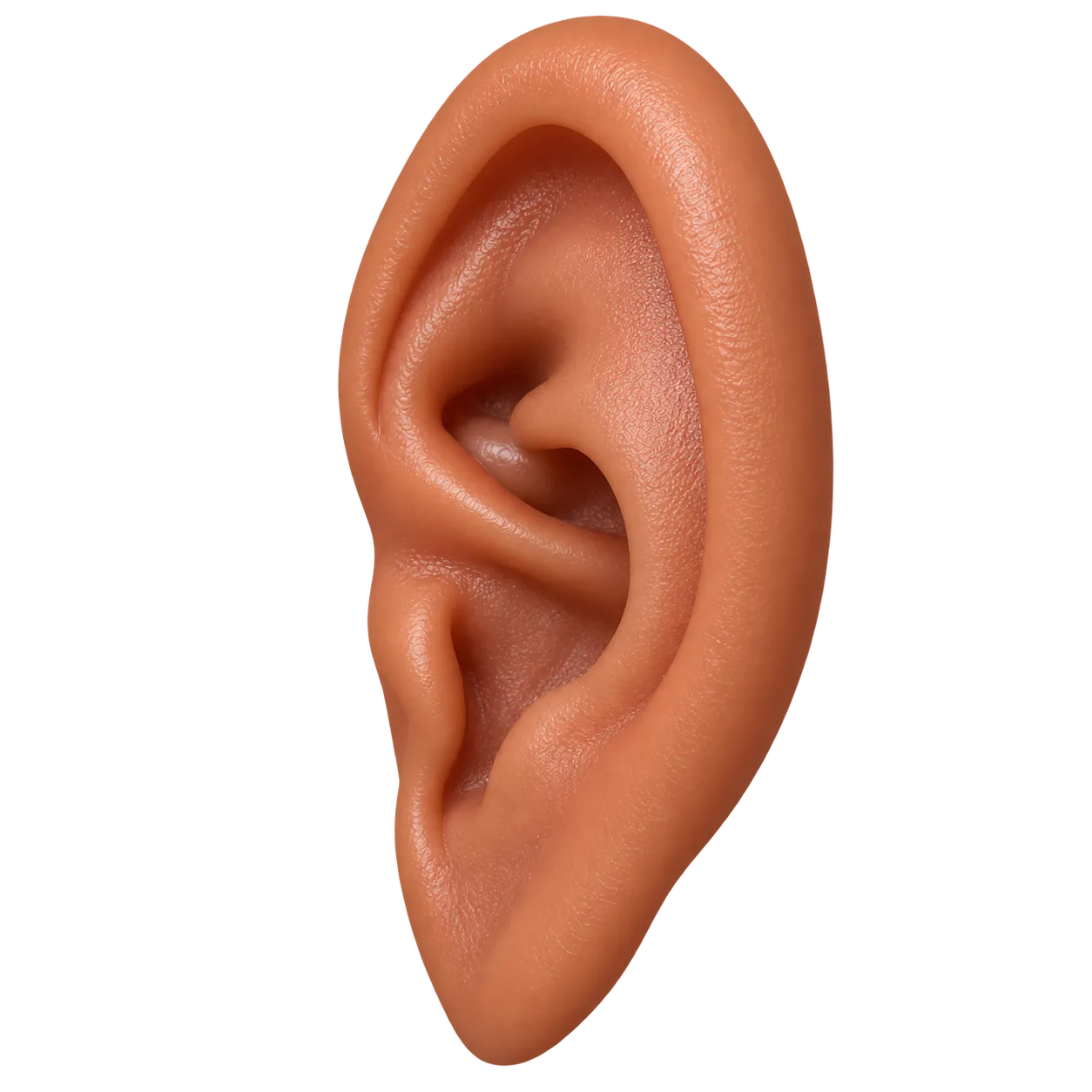
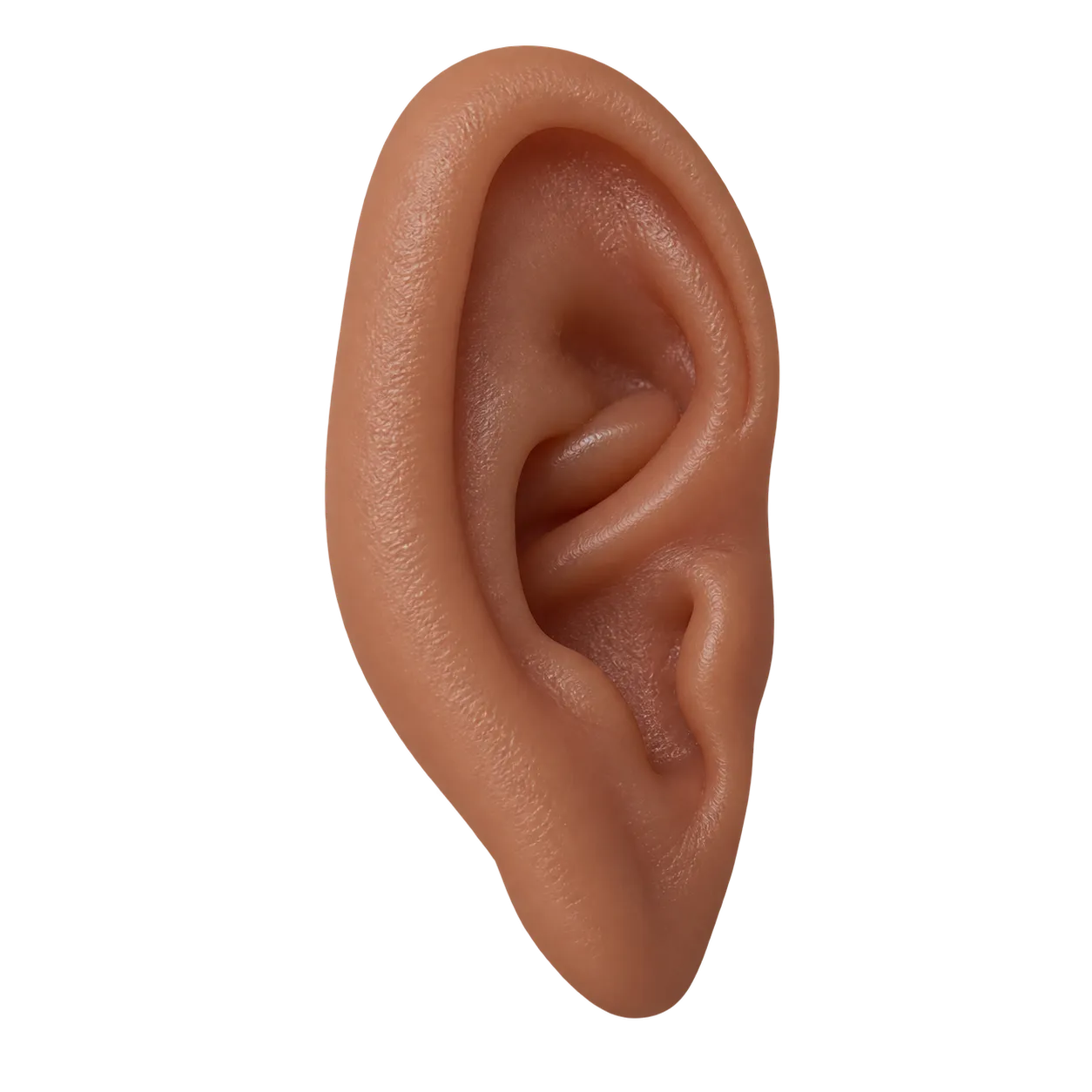
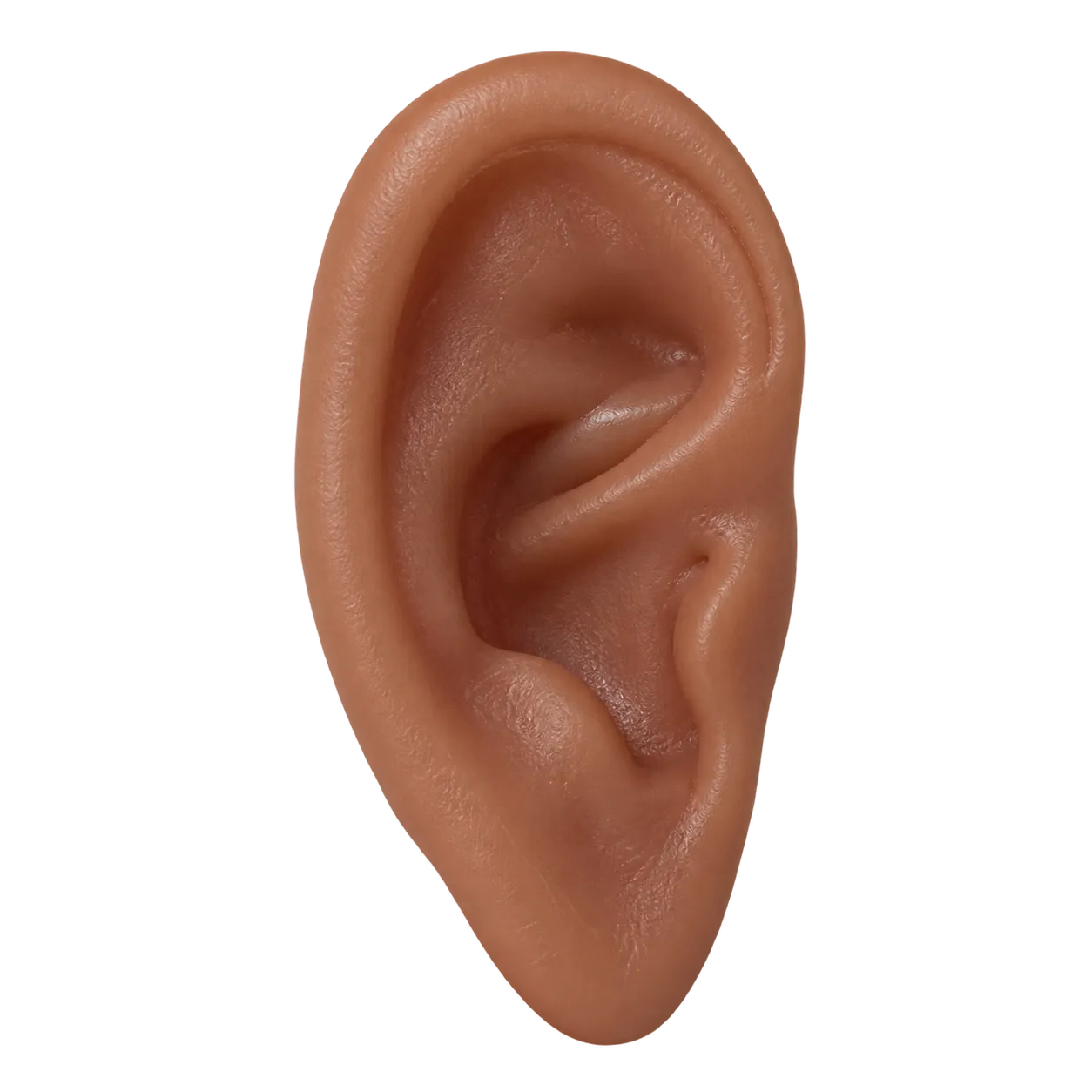
The FCSE is used in anaplastology practices, maxillofacial prosthetics units, ear, nose and throat departments, plastic and reconstructive surgery services and burns units. Its users are children and adults with microtia or other congenital ear differences, and people who have lost all or part of an ear through trauma, dog bites, burns or surgery for skin cancer.
Patient experience is at the centre of the work. An ear is noticed in profile, in photographs, when hair is cut short or tied back, and when someone turns to listen. People without a full outer ear often grow their hair long to cover the side of the head or avoid being photographed from one side. A silicone ear made to mirror the other ear and coloured to the surrounding skin restores the outline of the head and gives the wearer the choice to stop hiding it.
The clinical team records the size and shape of the ear to be restored, usually with reference to the ear on the other side, along with the skin shade. Wonderful produces the ear to those details. At the fitting, the clinician checks position, symmetry with the other ear and colour match in natural light, and the wearer learns how to put the ear on and care for it.
Typical uses include providing an ear for a child or adult with microtia, restoring the ear after trauma or burns, and completing the face after surgery that removed part or all of the ear. The FCSE also serves people waiting for, or choosing against, surgical reconstruction. In each case, the aim is an ear that looks like the wearer's own, seen from any side.