
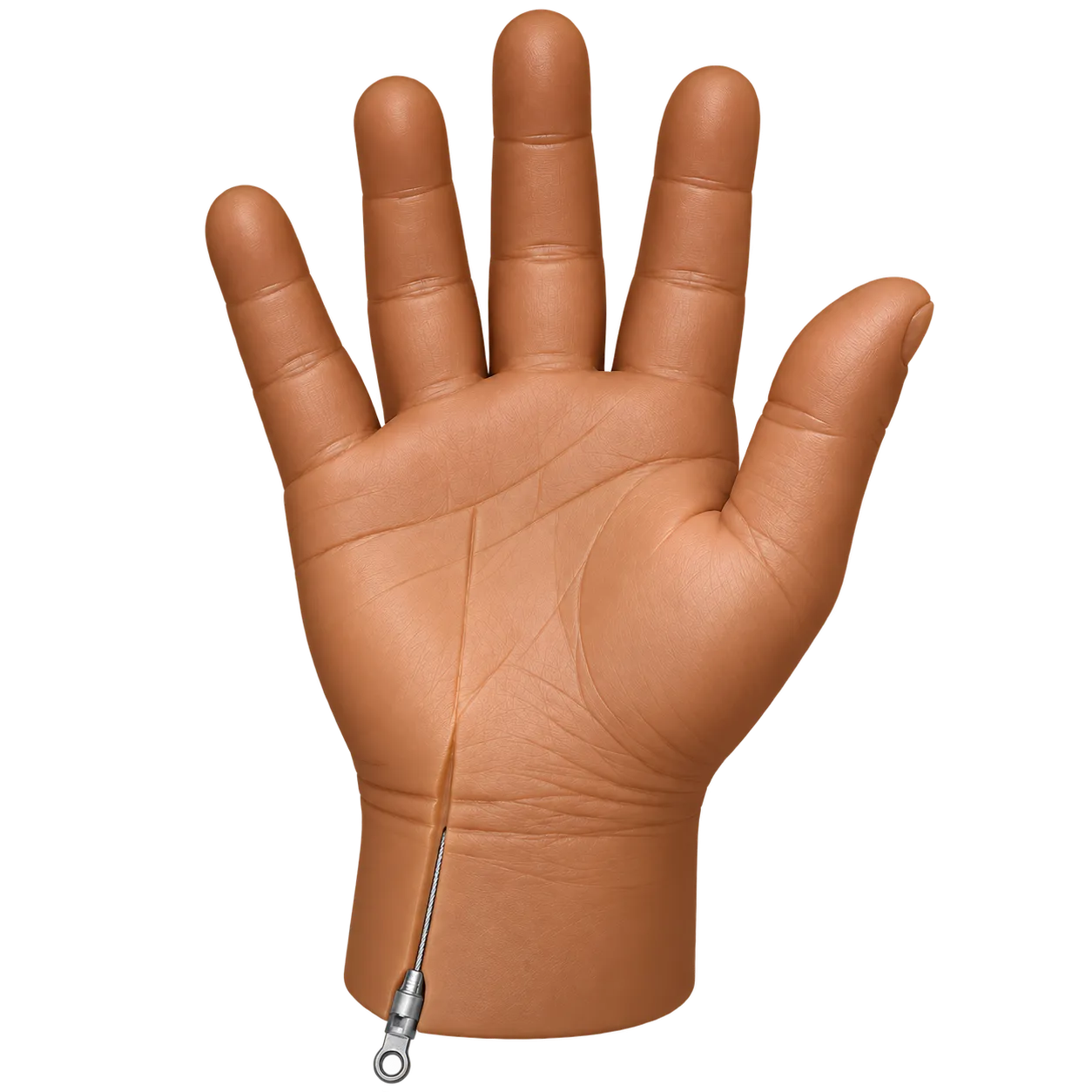
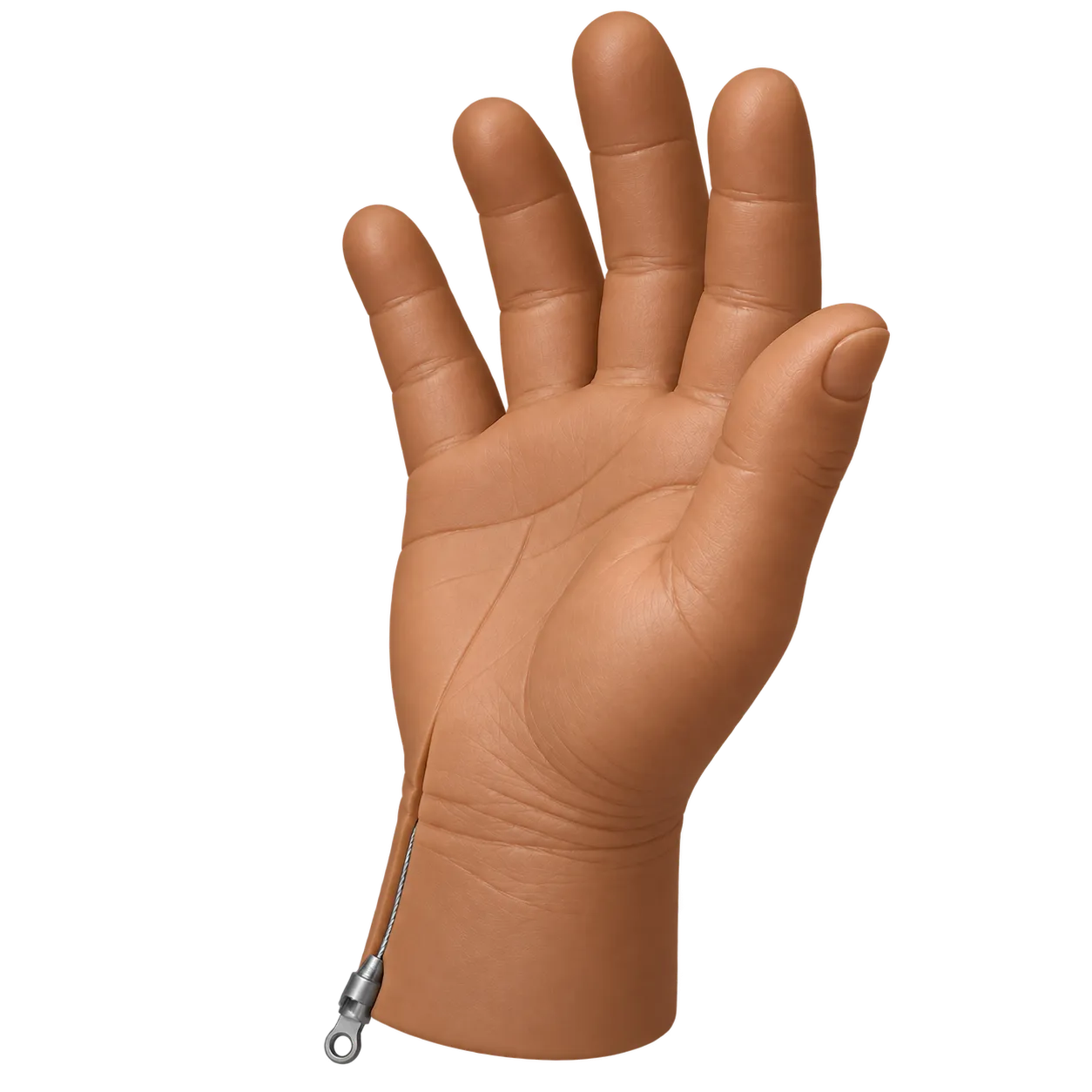
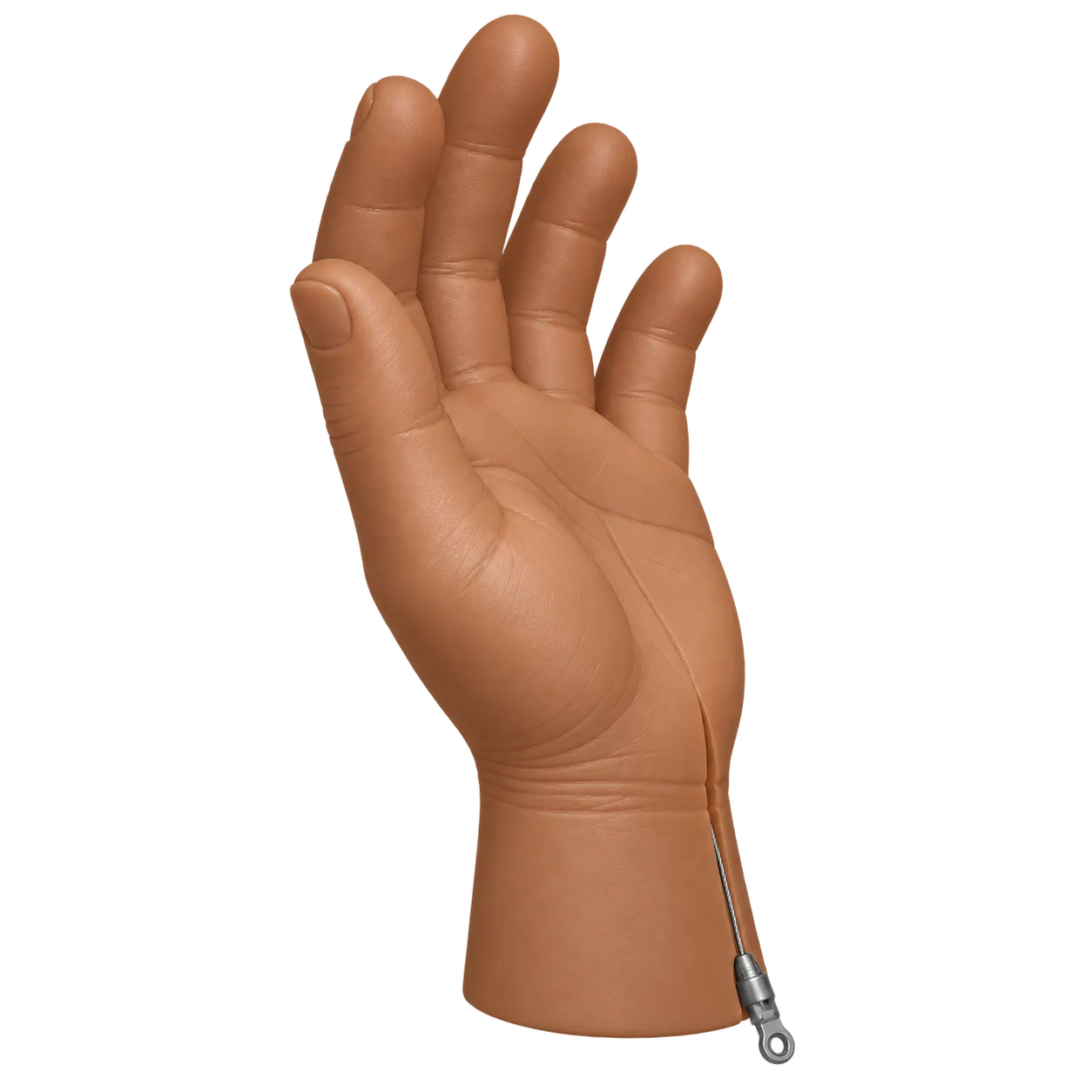
Prosthetic and orthotic clinics, limb-fitting centres and the workshops that assemble upper-limb prostheses are where the FCGZS does its work. Each of those settings dresses prosthetic hands in cosmetic gloves, and each meets the same moment in the job: getting a close-fitting silicone glove onto the hand. The FCGZS meets that moment with its zip, which opens the glove for the hand to enter and closes it again into a fitted cover.
Prosthetists use it at the final stage of a fitting, once the prosthetic hand is set on the socket and ready to be covered. With the zip open at the cuff, the glove goes over the hand in one guided movement, and fastening the zip completes the cover. Technicians in a prosthetic workshop use it in the same way when they finish a hand before it leaves the bench, because the open zip gives them room to seat the glove before the closed zip draws the silicone in.
Glove changes are the other part of its working life. When a cover is replaced during a review appointment, the zip lets the clinician open the old glove, slide it free and dress the hand in a new one without wrestling the silicone at the cuff. For the wearer, that keeps the appointment focused on the prosthesis.
Patients who wear a prosthetic hand for appearance in daily life are the people the glove serves. The silicone gives the hand its cosmetic outer form, and the zipped closure keeps that form snug on the hand once it is fastened.
Three sizes let a clinic or workshop hold small, medium and large on the shelf and pick the one that closes neatly over each hand it fits. The short length suits fittings that call for a compact glove on the hand.