
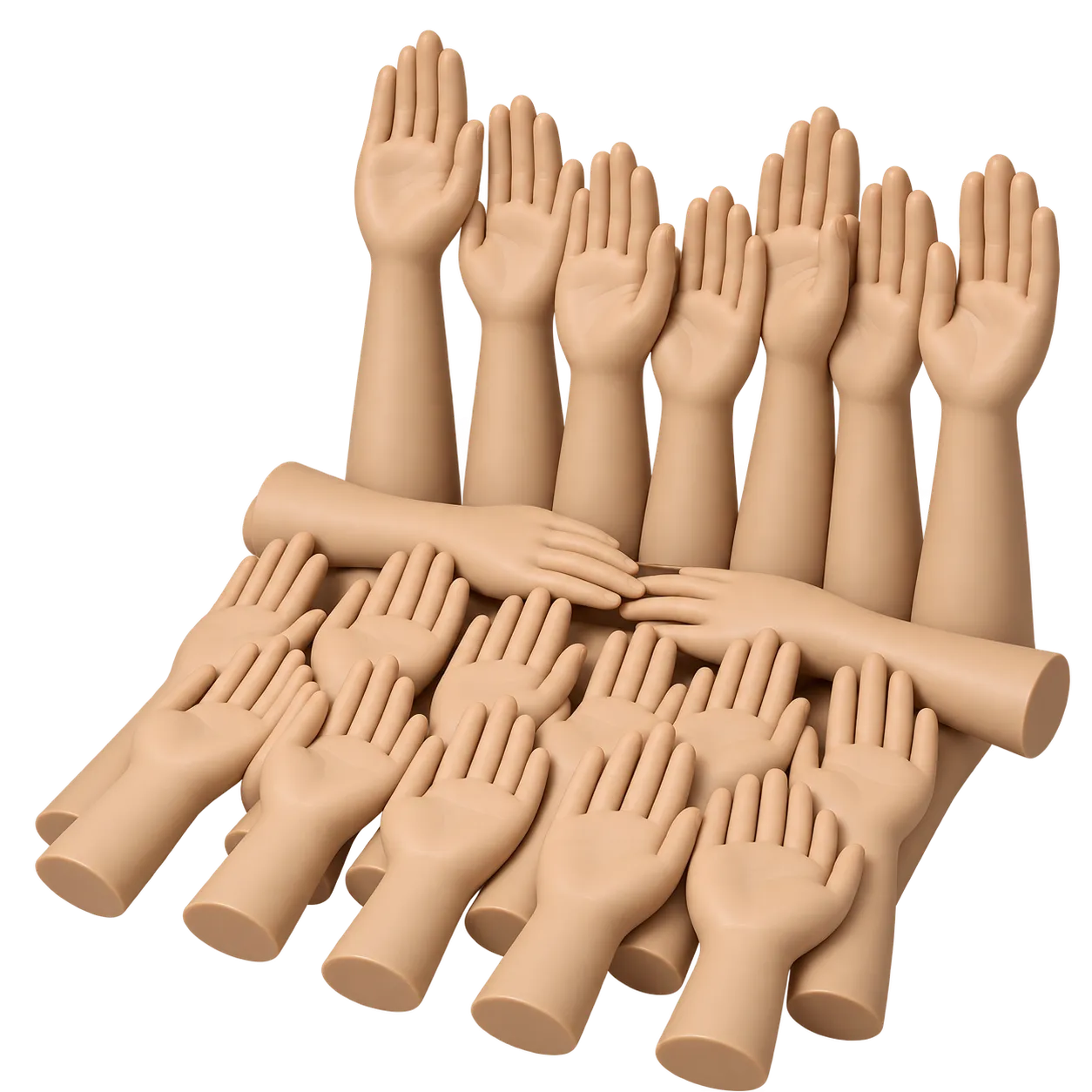
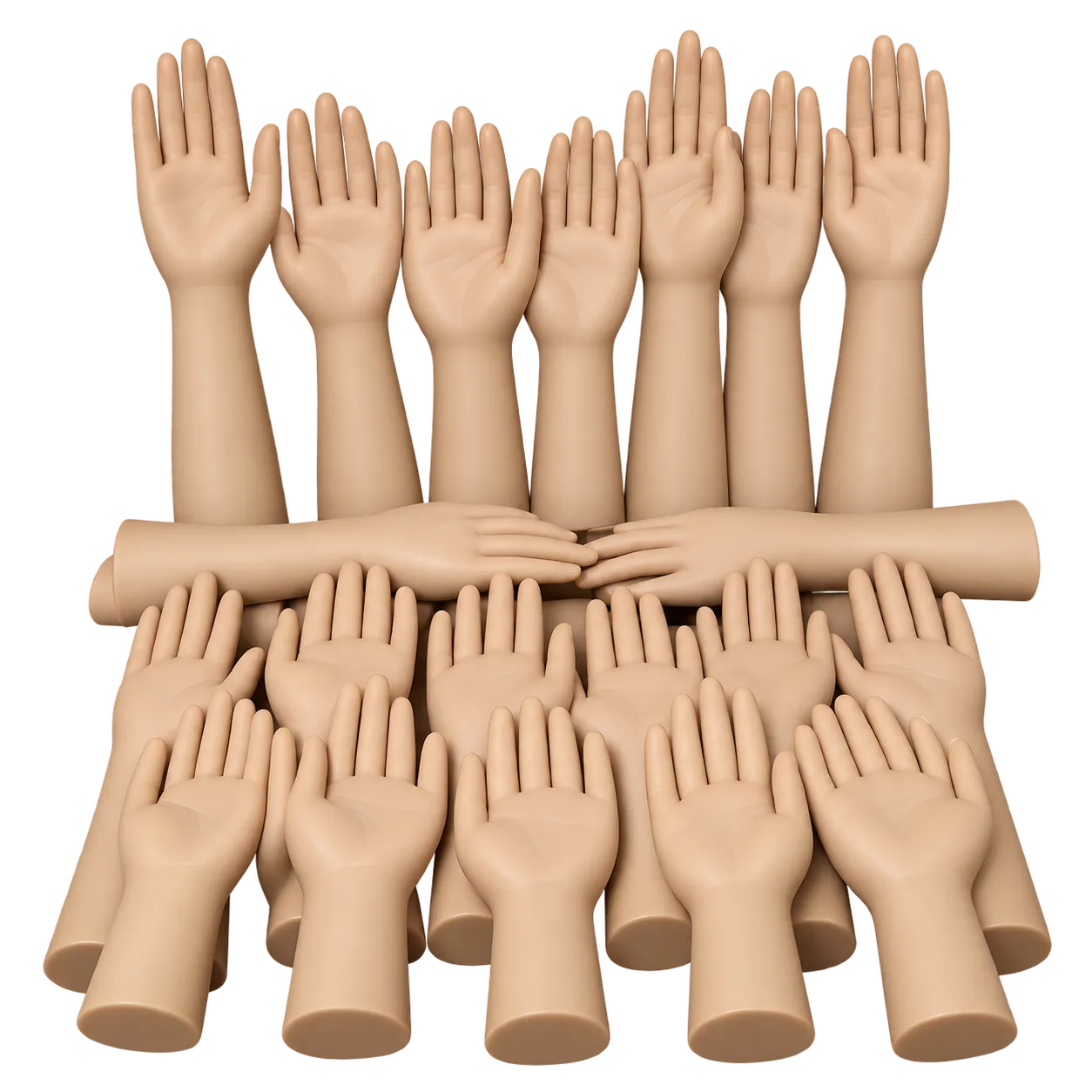
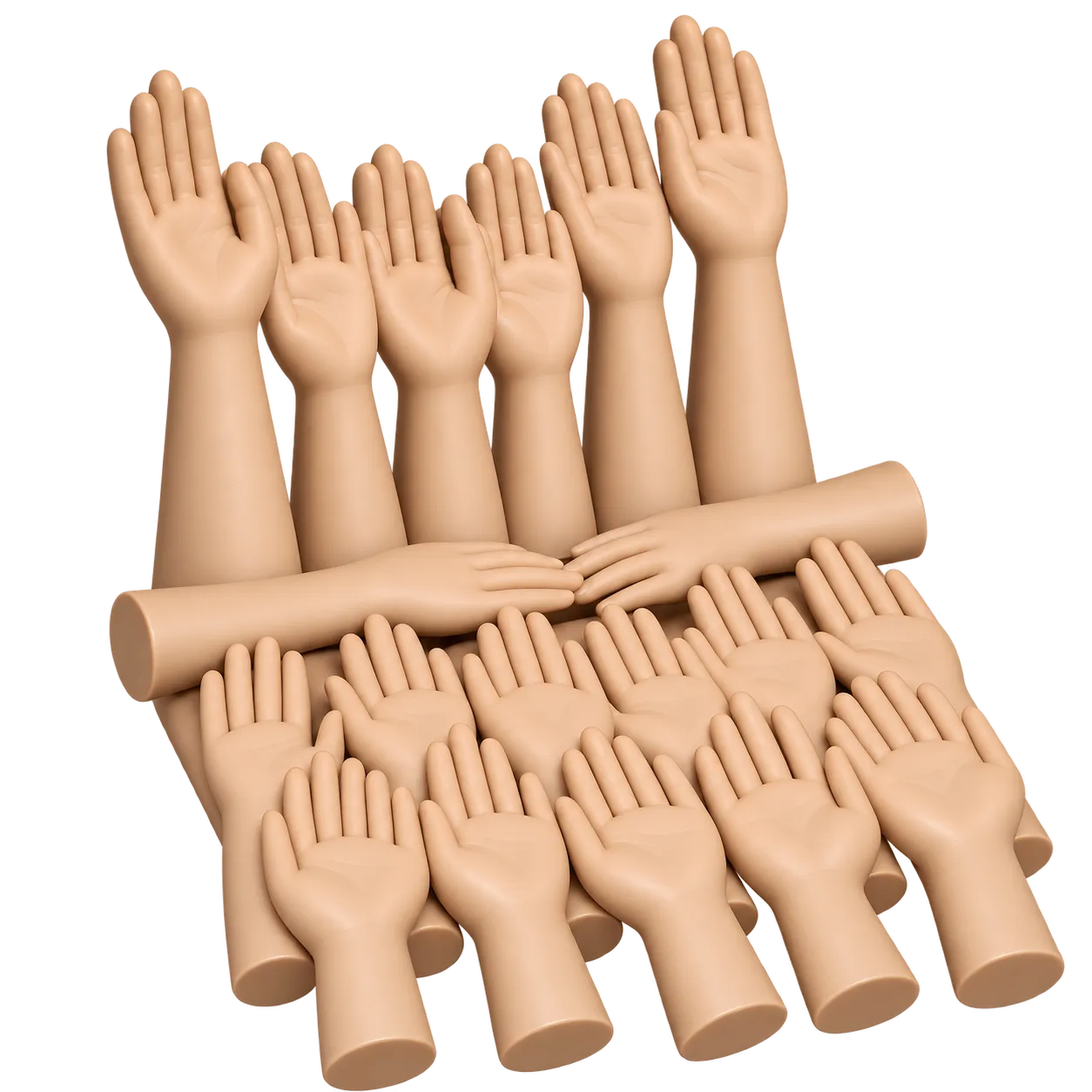
The FCGL belongs in prosthetic and orthotic clinics, limb-fitting centres and the technical workshops where upper limb prostheses are finished. Prosthetists and prosthetic technicians fit it as the final cosmetic layer, drawing the long silicone glove over the prosthetic hand and along the forearm once the arm is assembled. The three sizes, L, M and S, let a clinic hold a glove in proportion with the arms it fits.
The people it serves are wearers of a prosthetic hand whose clothes leave the lower arm in view. Summer is the obvious case. Short sleeves, sleeveless dresses and linen shirts with the cuffs turned back all expose the forearm, and a cover running past the wrist keeps the prosthesis looking whole in those clothes. Working life brings the same need: a teacher at a whiteboard, a chef with sleeves pushed up, or an office worker who rolls up a shirt by mid-afternoon.
Occasions matter to wearers as much as the weather does. Weddings, graduations and family celebrations tend to involve formal clothes, close company and cameras, and a long cosmetic glove lets a wearer choose a fitted blouse or a short-sleeved dress for the day. For many people, being able to dress for the event without arranging the outfit around the prosthesis is the point of the glove.
Rehabilitation teams meet this need too. Once a wearer has settled into daily use of a prosthetic hand, talk often turns to appearance, clothing and confidence in public, and the FCGL gives the clinic a direct answer for anyone who wants the forearm covered as well. Its two versions widen the choice within the same long, ready-sized pattern.