
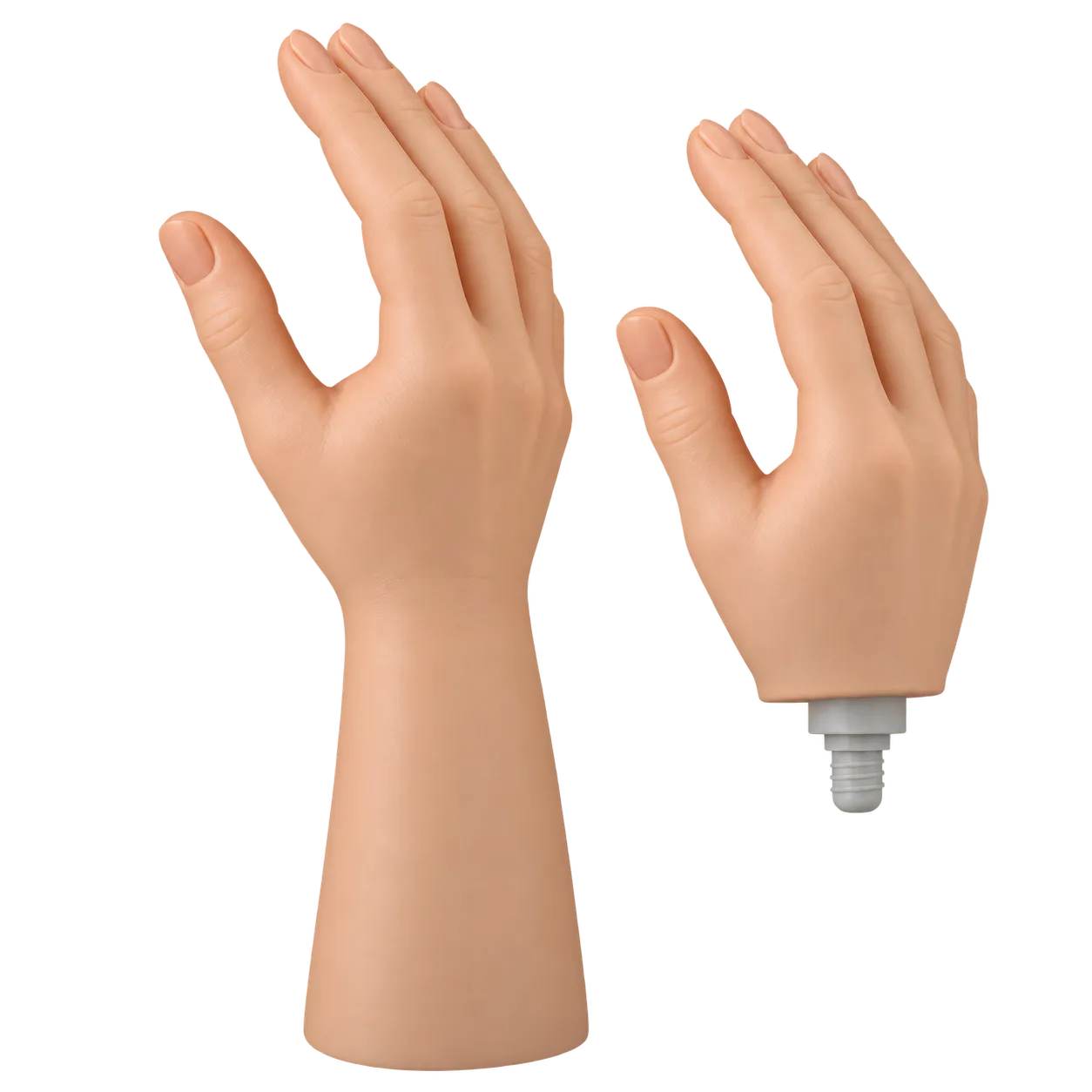
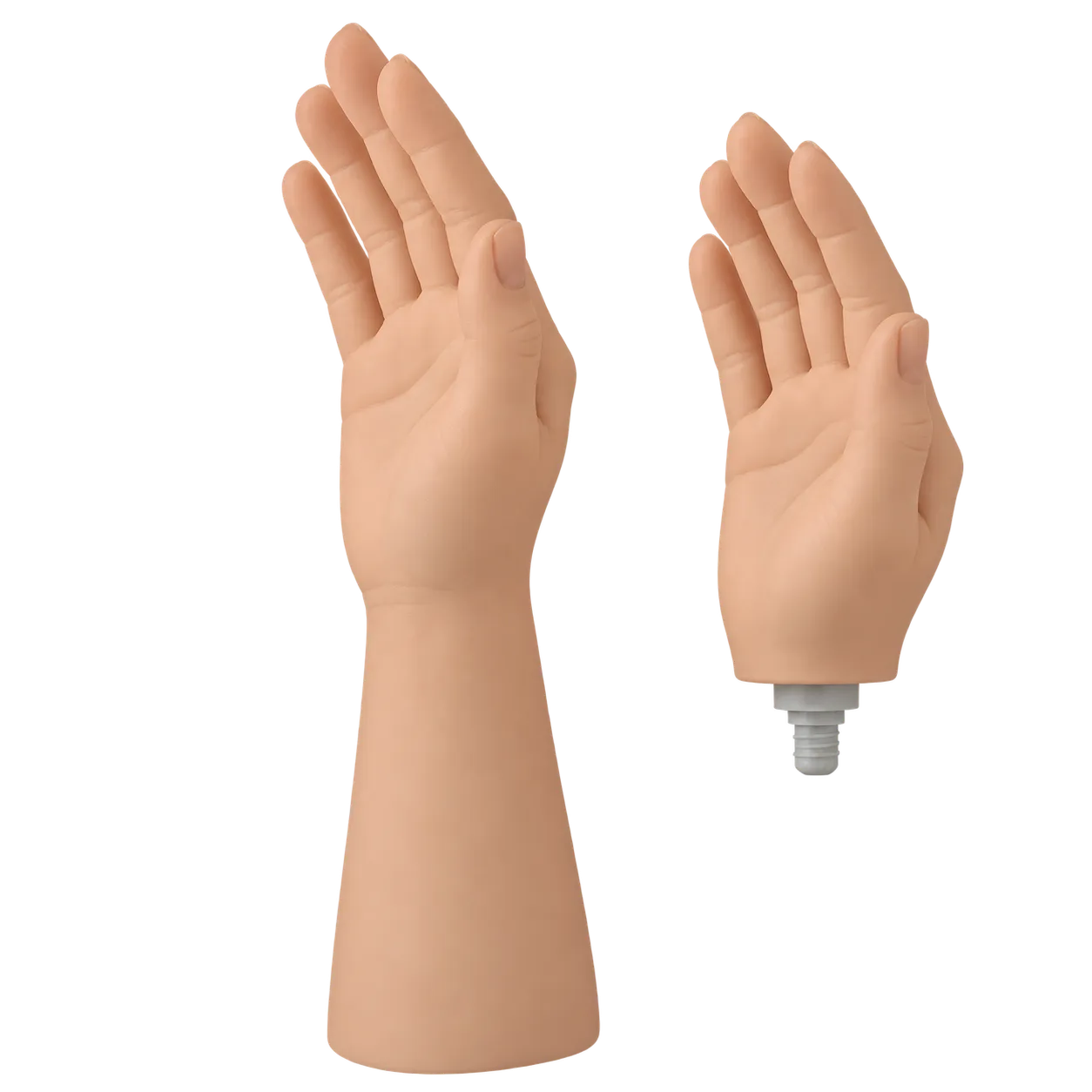
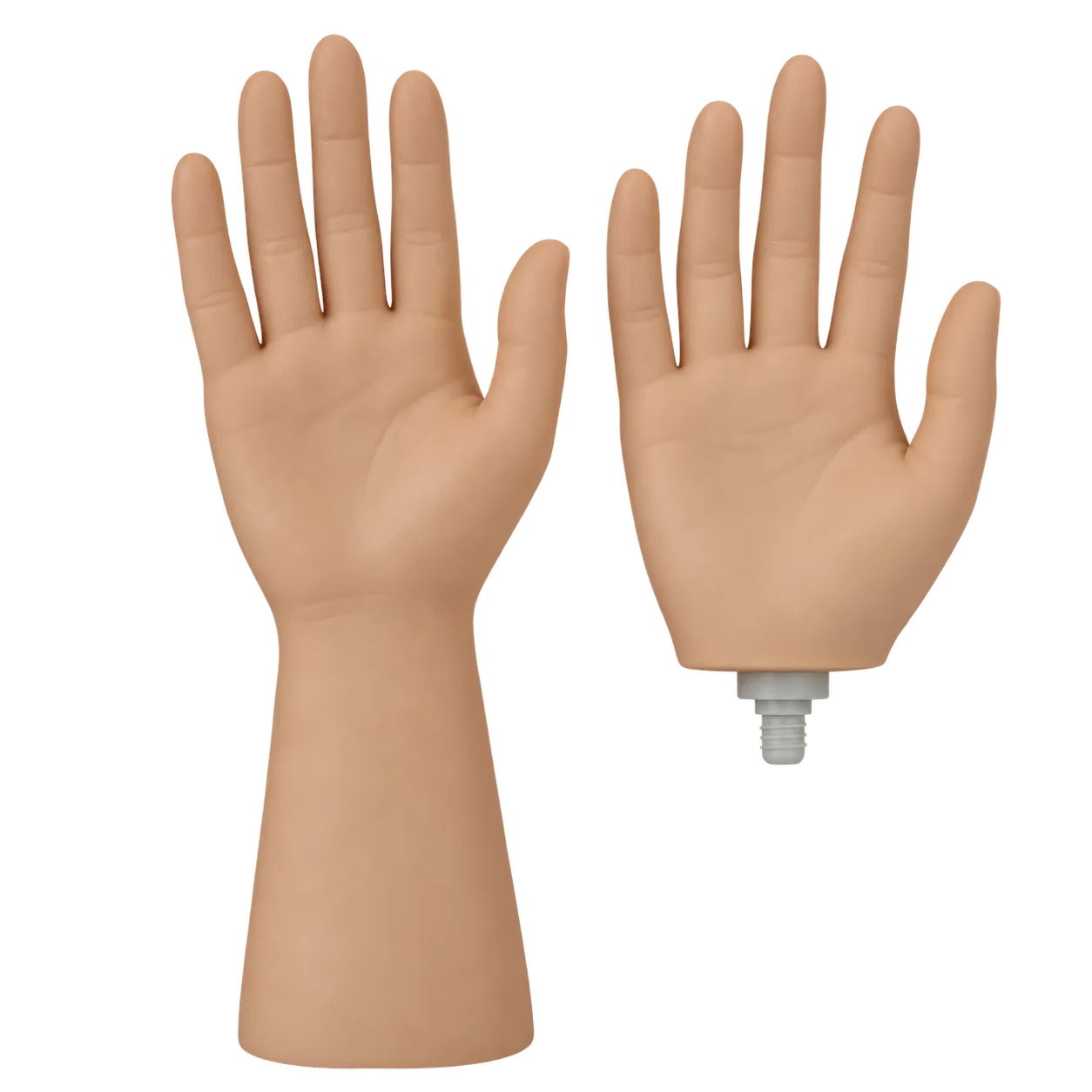
Prosthetic and orthotic clinics that look after upper-limb wearers over many years are the setting for the FCGFS. In that work the glove is the recurring item: the hand inside it may stay in service for a long time, while its outer surface is renewed again and again. A ready-made glove in standard sizes L, M and S turns each renewal into something the clinic can supply from its own stores.
Prosthetists use the glove at routine reviews. When the outer surface of a hand is due for renewal, the clinician selects the size that suits the wearer, takes it from the shelf and completes the change in the same appointment. Technicians in the clinic workshop draw on the same stock when a prosthetic hand is prepared for a new wearer or returned to service after work on the limb.
Stores and administrative staff carry the other half of the job. Because the glove has one item number and three sizes, the stores list has three lines, and a reorder is the code plus a size letter. Tracking how many of each size leave the shelf over a quarter shows which size moves fastest and how many to hold, so restocking follows the clinic's own caseload.
Rehabilitation centres and limb-fitting services with a steady upper-limb caseload benefit in the same way. A wearer arriving for a planned change leaves with a fresh glove that day, and the clinic keeps the stock level steady from one cycle to the next. For services that issue the glove regularly, a short silicone glove held in all three sizes becomes a fixed line on the stores list, renewed as predictably as the appointments that use it.