
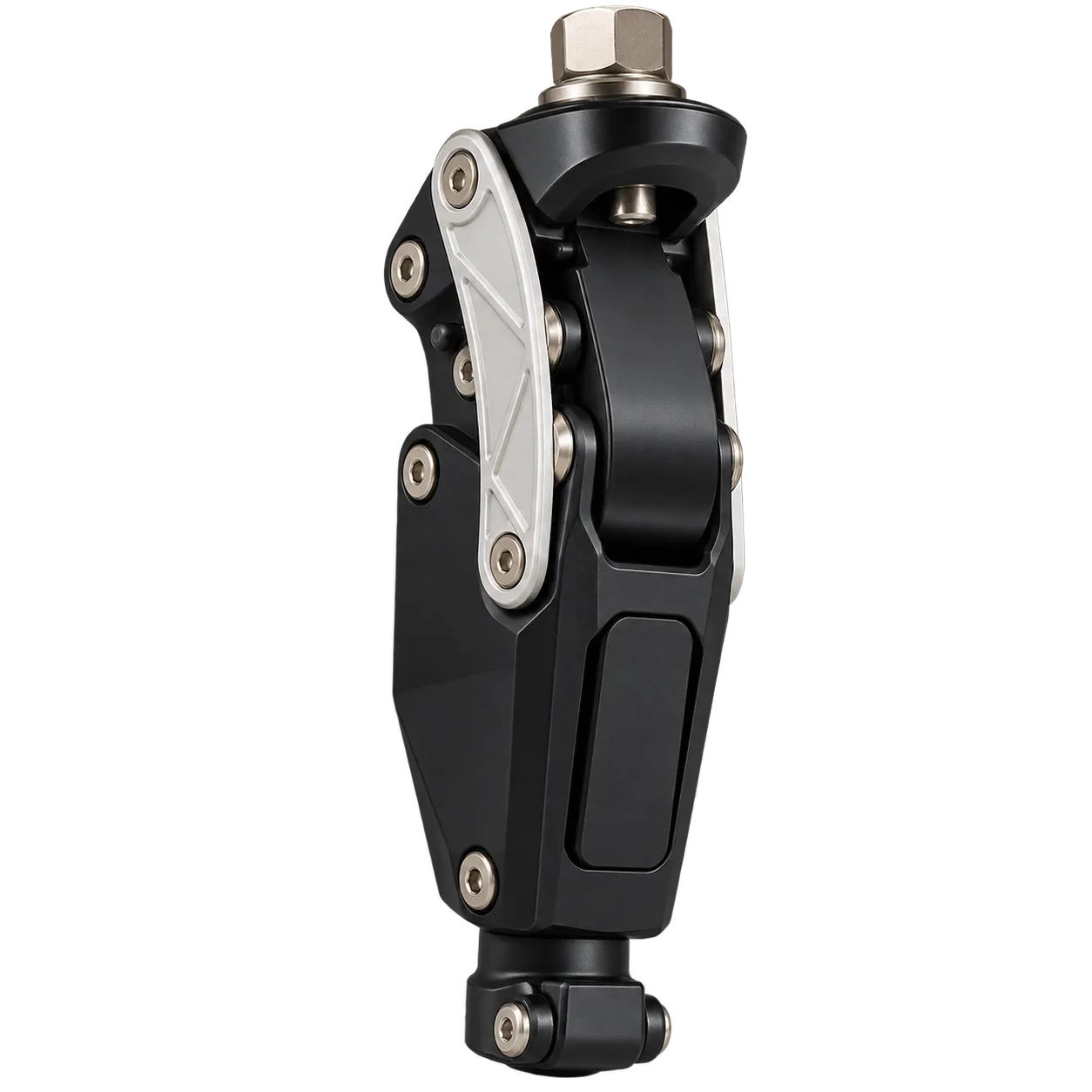
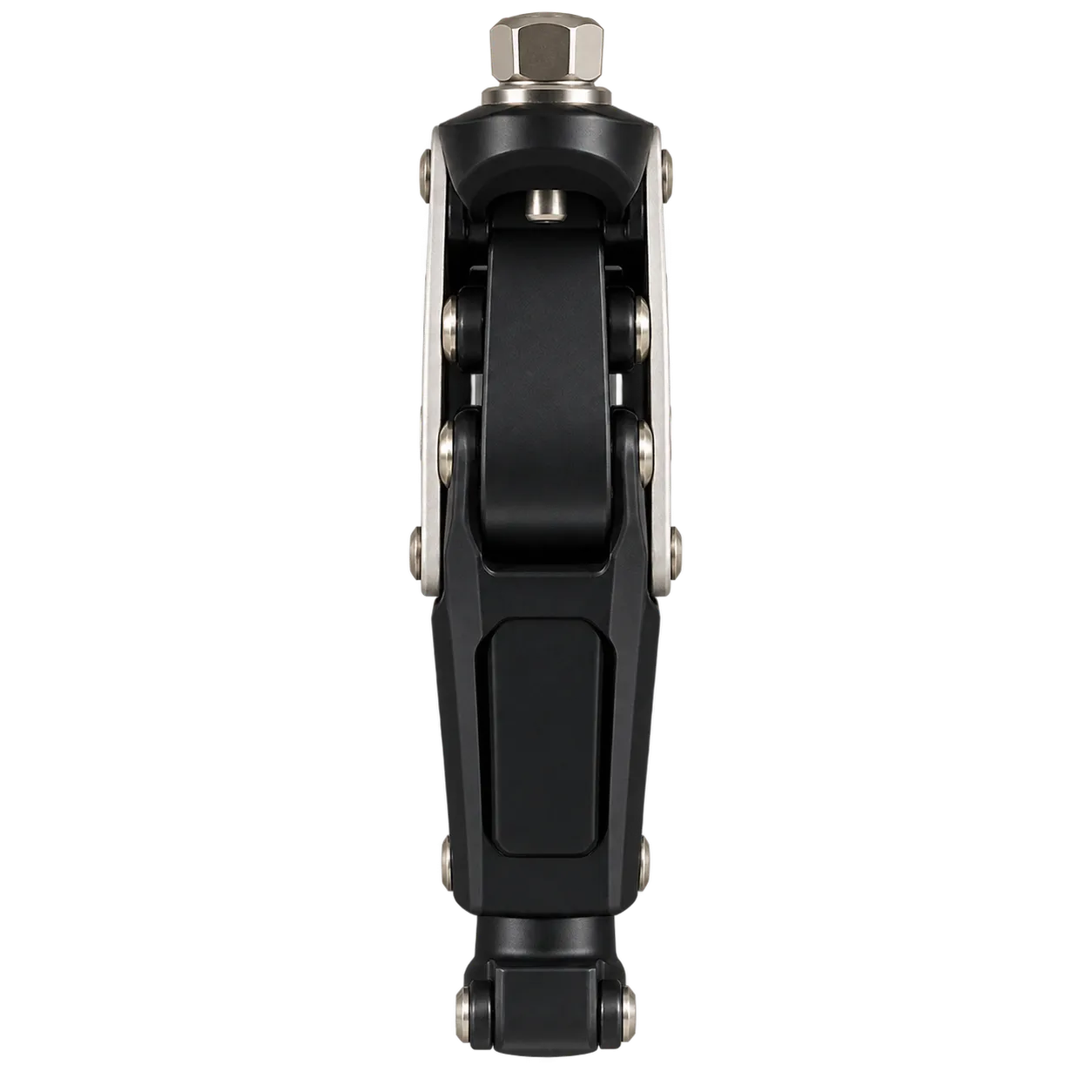
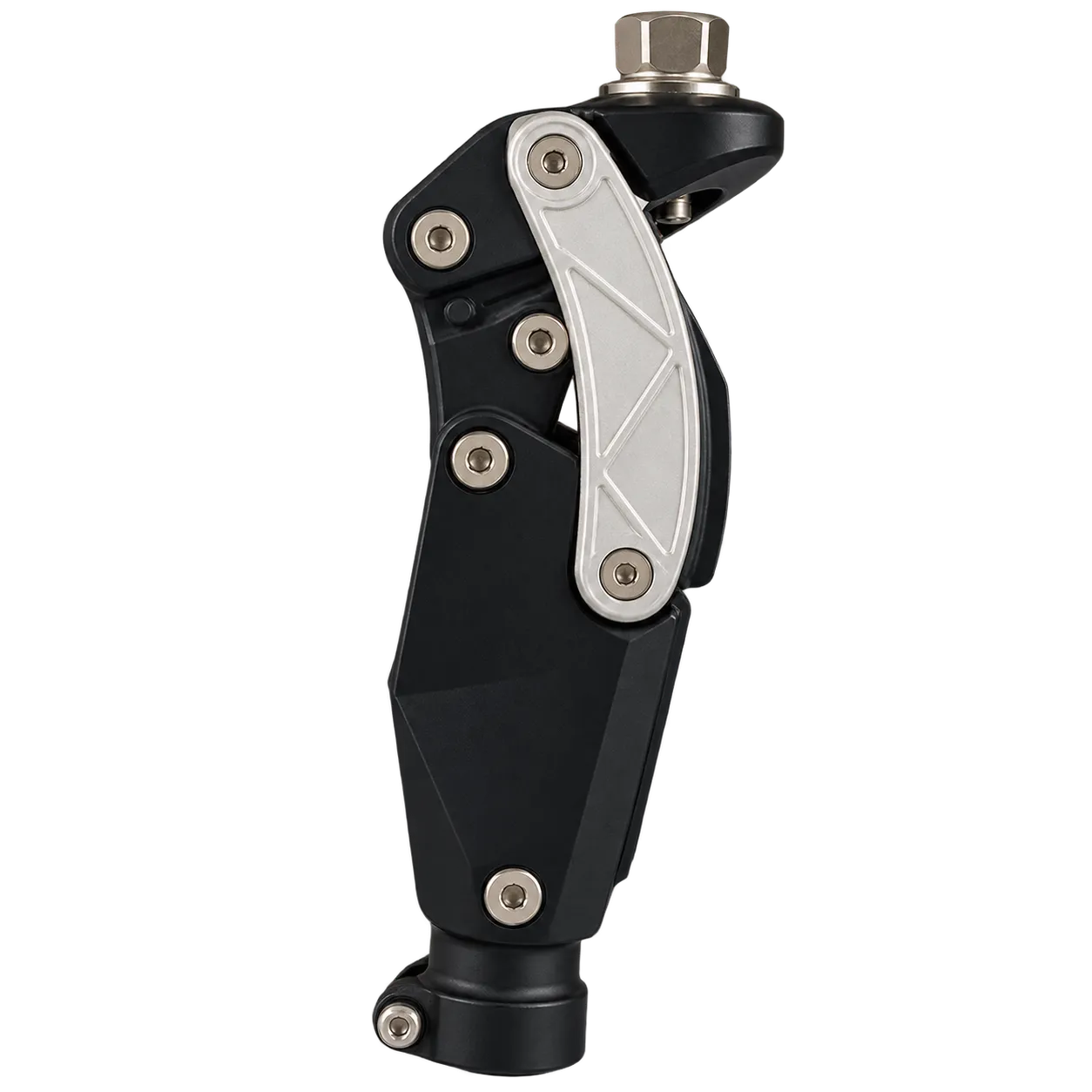
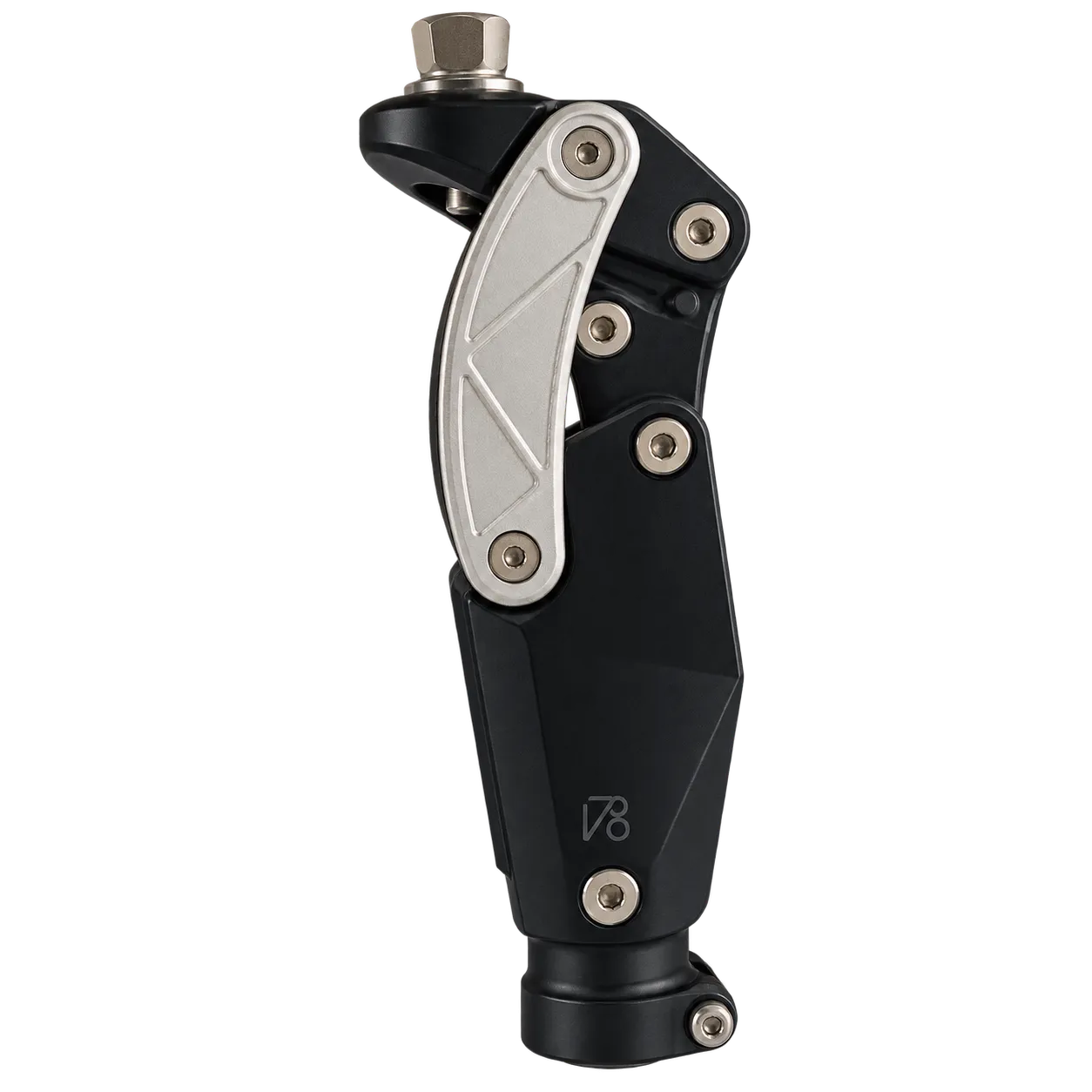
The FBK-62G is for transfemoral and knee-disarticulation users who walk at more than one pace and whose prosthetist wants to choose stance behaviour from a drawing. A four-link knee is prescribed by matching the path of its centre of rotation to the person.
Radcliffe's 1994 paper in Prosthetics and Orthotics International gives the method. It sorts four-bar knees into three classes. One raises the centre for stability at heel contact and suits less active users. A second holds the centre well behind the load line, so the knee is close to locked in extension. The third places it about 100 mm above and 6 mm behind the reference line, for active users who steady the knee with the hip. The paper analyses linkage types and reports nothing about this product.
That gives the fitting team a sequence. First, plot from the drawing where the centre sits at full extension and in early bend. Second, test hip extensor strength and forefoot loading. Third, align the socket on the bench so the load line falls where the instructions for use place it. On the walkway, watch three moments: the landing, the roll onto the toe and the clearance of the foot as the shin tucks.
The air cylinder is tuned last, at the user's slow, usual and fast speeds. In one crossover trial of 28 transfemoral users, 19 preferred pneumatic swing control, although walking at 2 and 3 km/h cost more energy with it.
Limb-fitting centres, private prosthetic workshops, rehabilitation units and export fitting programmes are the usual settings. NHS trusts in England order through the mandated NHS Supply Chain framework, and equivalent public procurement elsewhere follows its own approved route. The conformity documentation those procurement routes require is issued by the manufacturer and shared by the enquiry team.