
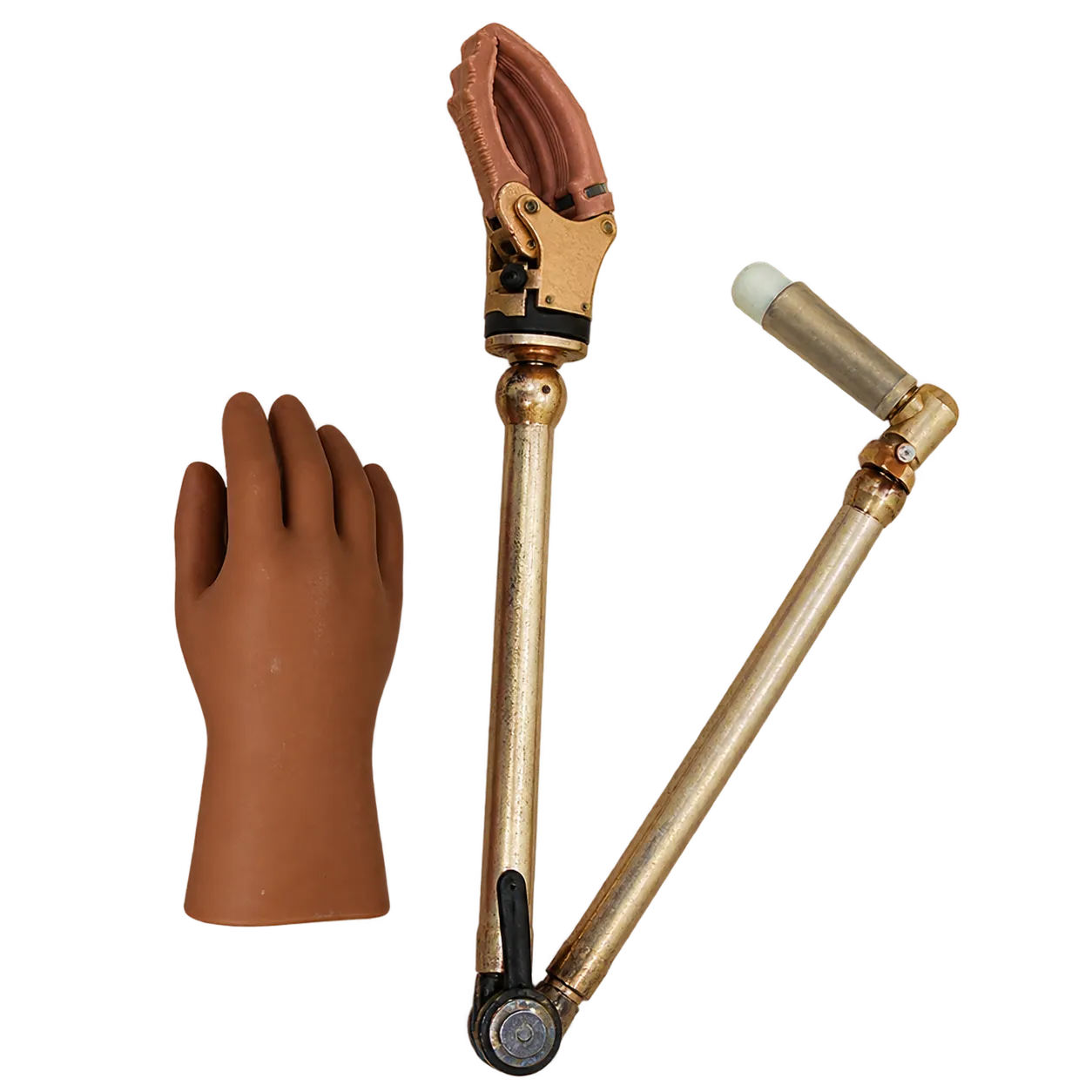
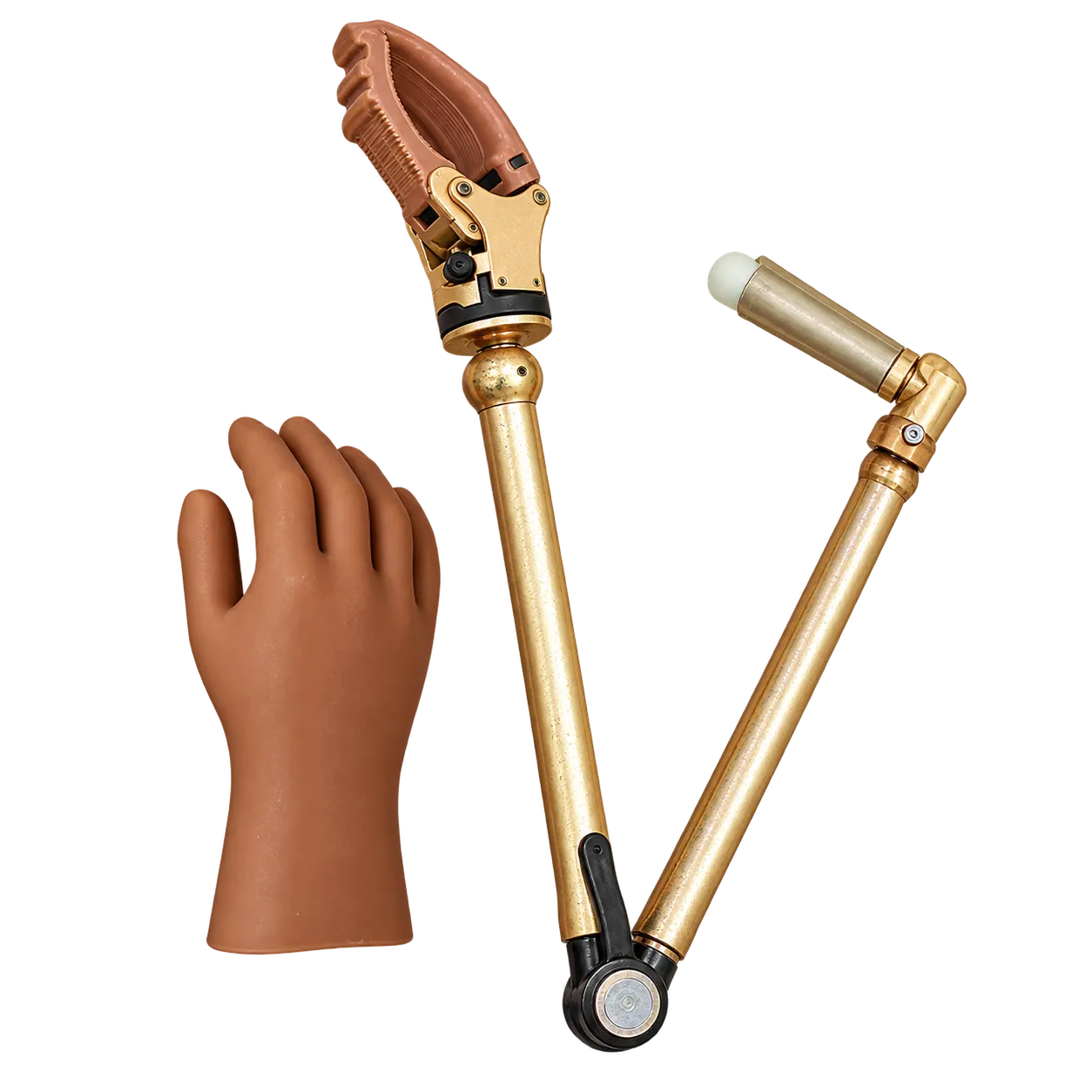
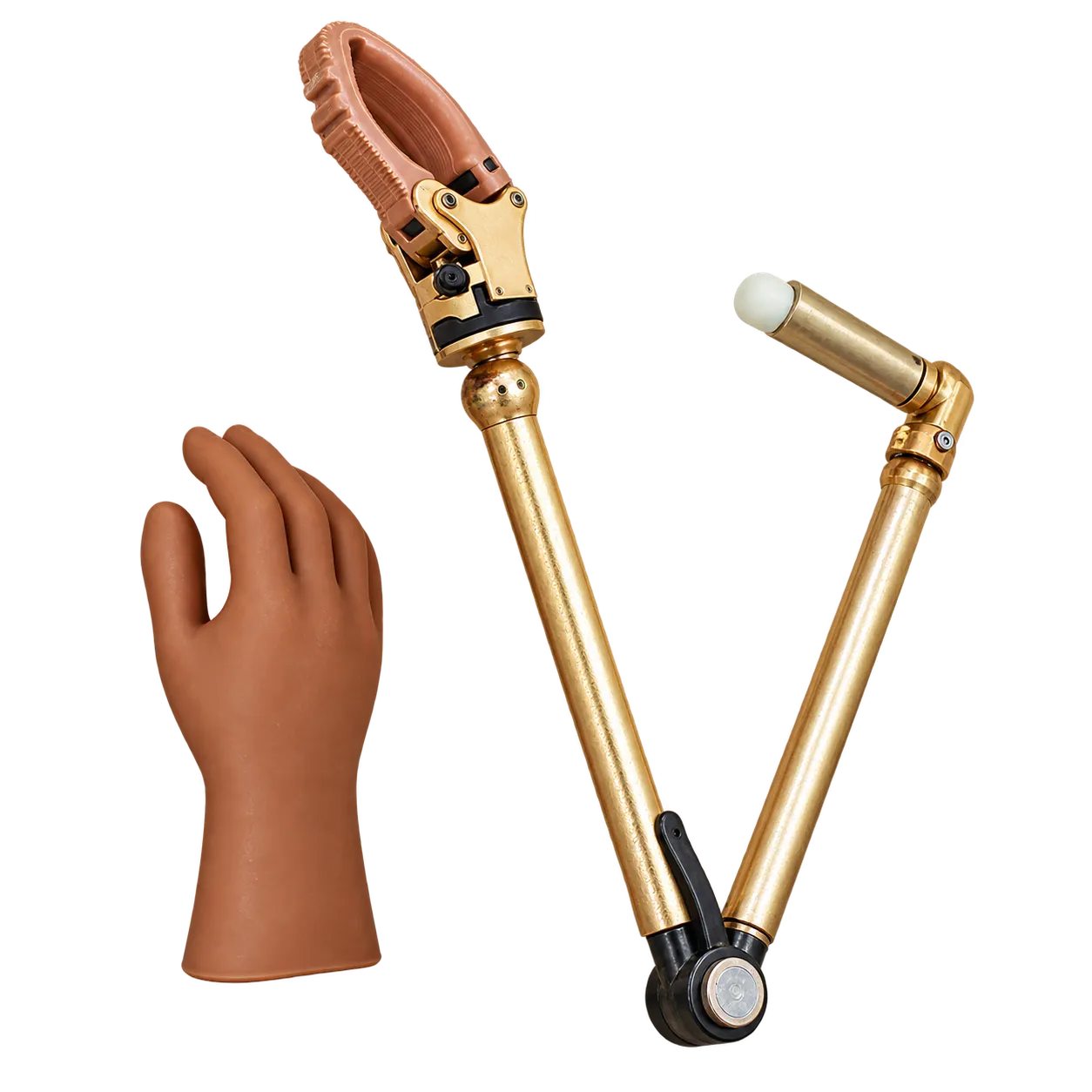
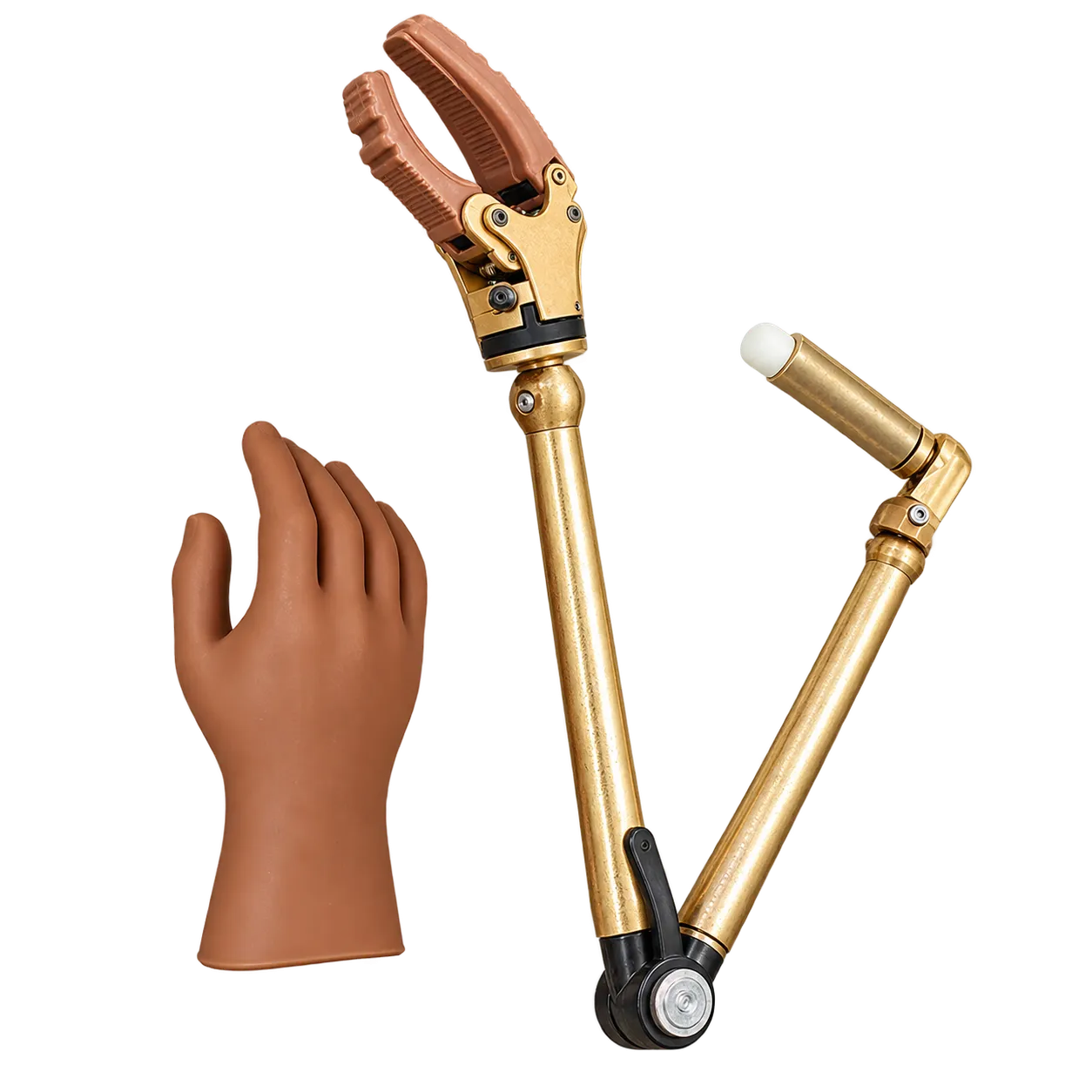
Shoulder disarticulation leaves no residual upper arm, so the prosthesis has to rebuild the whole limb from the shoulder outward. The CSDH does that in one aluminium frame, and its main work happens in daily life after the fitting: the arm is there whenever the wearer is dressed and out among other people.
Prosthetic and orthotic workshops fitting upper limb patients are the natural home for it. Prosthetists building a passive arm for a shoulder-level amputation can choose the three or five-finger hand to suit the wearer, then lay out the elbow and wrist positions with them during fitting. Rehabilitation centres working with amputees after shoulder-level surgery or trauma can use it where the person's priority is a restored outline and a natural presence when walking, sitting or standing among others.
The free-swinging upper arm shapes where the CSDH earns its place. Someone walking to a shop, waiting at a bus stop or crossing a room at a family gathering keeps an arm that moves with their stride, and a jacket or coat sleeve hangs from a filled shoulder line. Seated at a dinner table or in a meeting, the elbow can be set to a bend so the forearm rests across the lap, and the wrist turns the hand inward to sit quietly.
Limb fitting services that see adults returning to work or social routines will find the light 0.6 kg weight relevant for a full-length arm worn through the day. Charities and community prosthetic programmes fitting cosmetic arms also benefit from a frame with no electrical parts, because it asks nothing of the wearer between fittings beyond setting the joints by hand.