
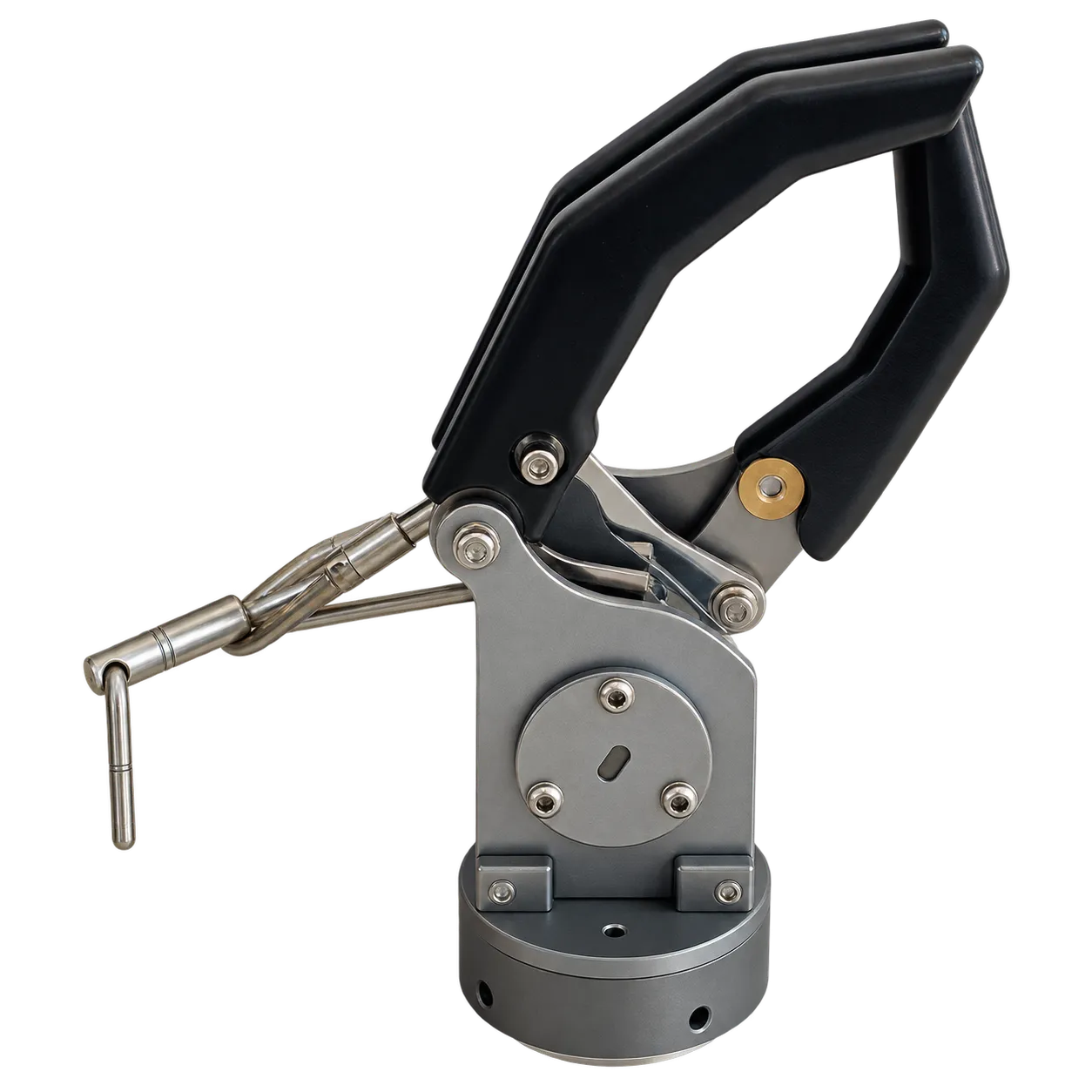
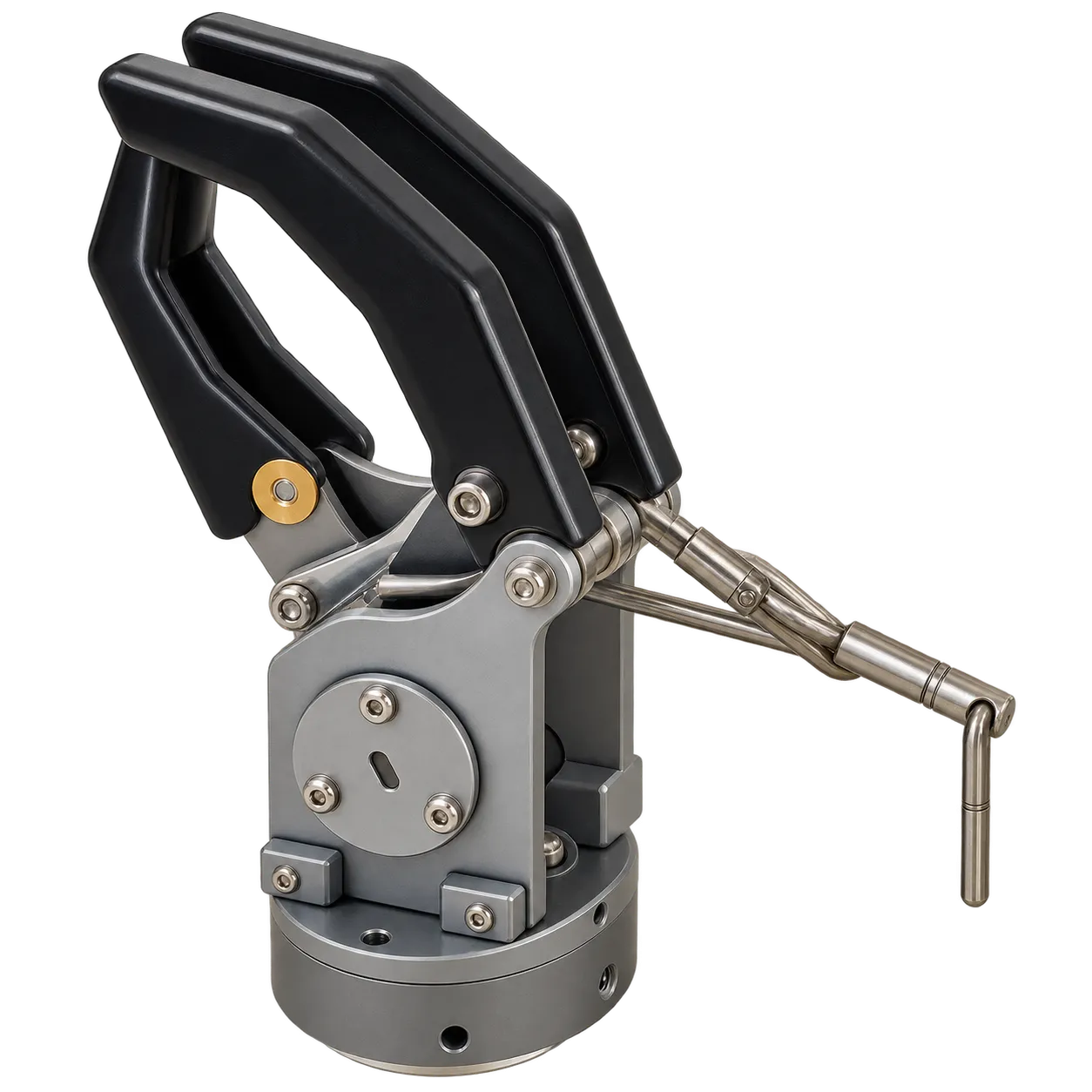
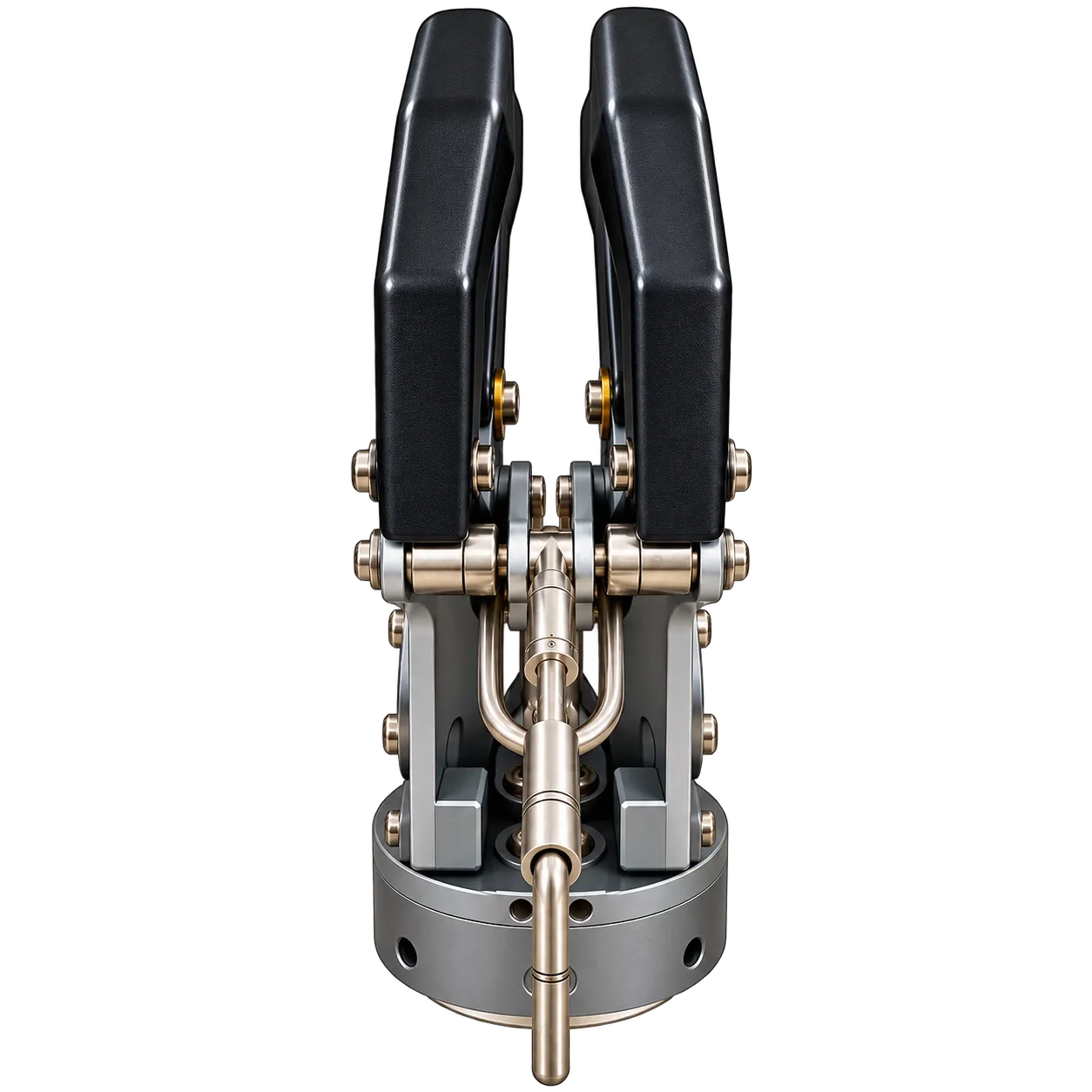
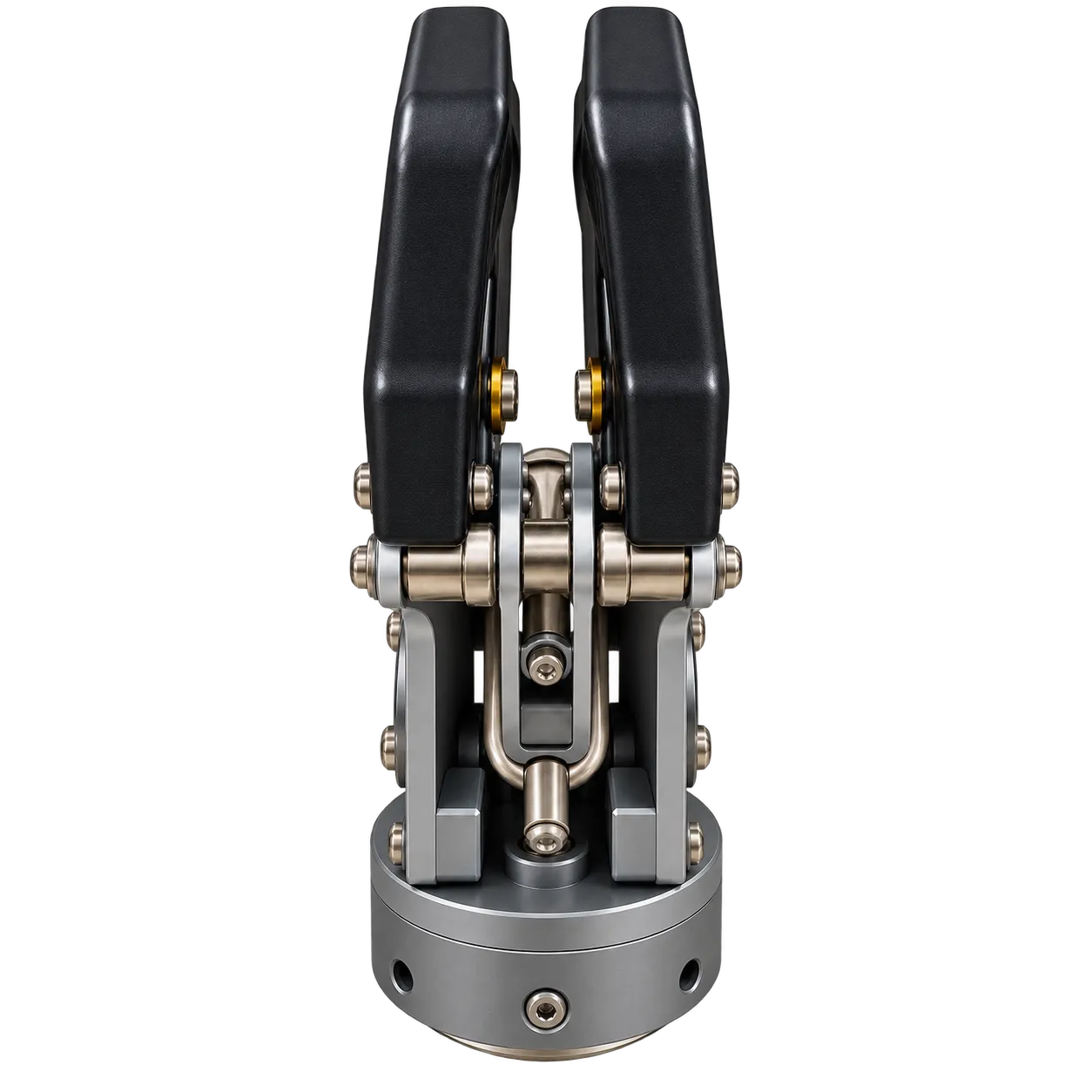
The CEDH-3 belongs at the end of a forearm or full-arm prosthesis whose wrist unit matches its adaptor connector, under a cosmetic glove that its three or five fingers fill. Its case rests on handling: a hand that comes off at one interface is quicker to service, and a wearer with more than one terminal device can change between them at that point.
Interchange is an established idea in upper-limb practice. A 1982 technical note in Orthotics and Prosthetics described an activity device whose steel rod was threaded 1/2 x 20 at its upper end. It fitted a standard quick-change wrist insert, so it could be exchanged with a hook or hand. A 2019 review of prosthetic wrist design in IEEE Transactions on Robotics noted that some passive wrists offer a quick disconnect so users can easily switch terminal devices. Neither source describes this hand, and the CEDH-3 interface is defined by its own drawing.
Wear time sets the stakes. A 2007 review in Prosthetics and Orthotics International reported mean rejection rates of 26% for body-powered and 23% for electric prostheses in adults, and 45% and 35% in children. A Delft review of 38 peer-reviewed papers, published in the same journal, found that passive prostheses receive little research attention although many people use them. Neither review isolates hands with interchangeable adaptors, so no wear benefit is claimed here.
Limb-fitting centres, independent prosthetic practices and charitable export programmes fit hands of this kind as social and work arms. NHS limb services in England buy prosthetic products through a mandated national framework, and public buyers elsewhere ask for similar traceability. The conformity documentation those procurement routes require is issued by the manufacturer and shared by the enquiry team.