
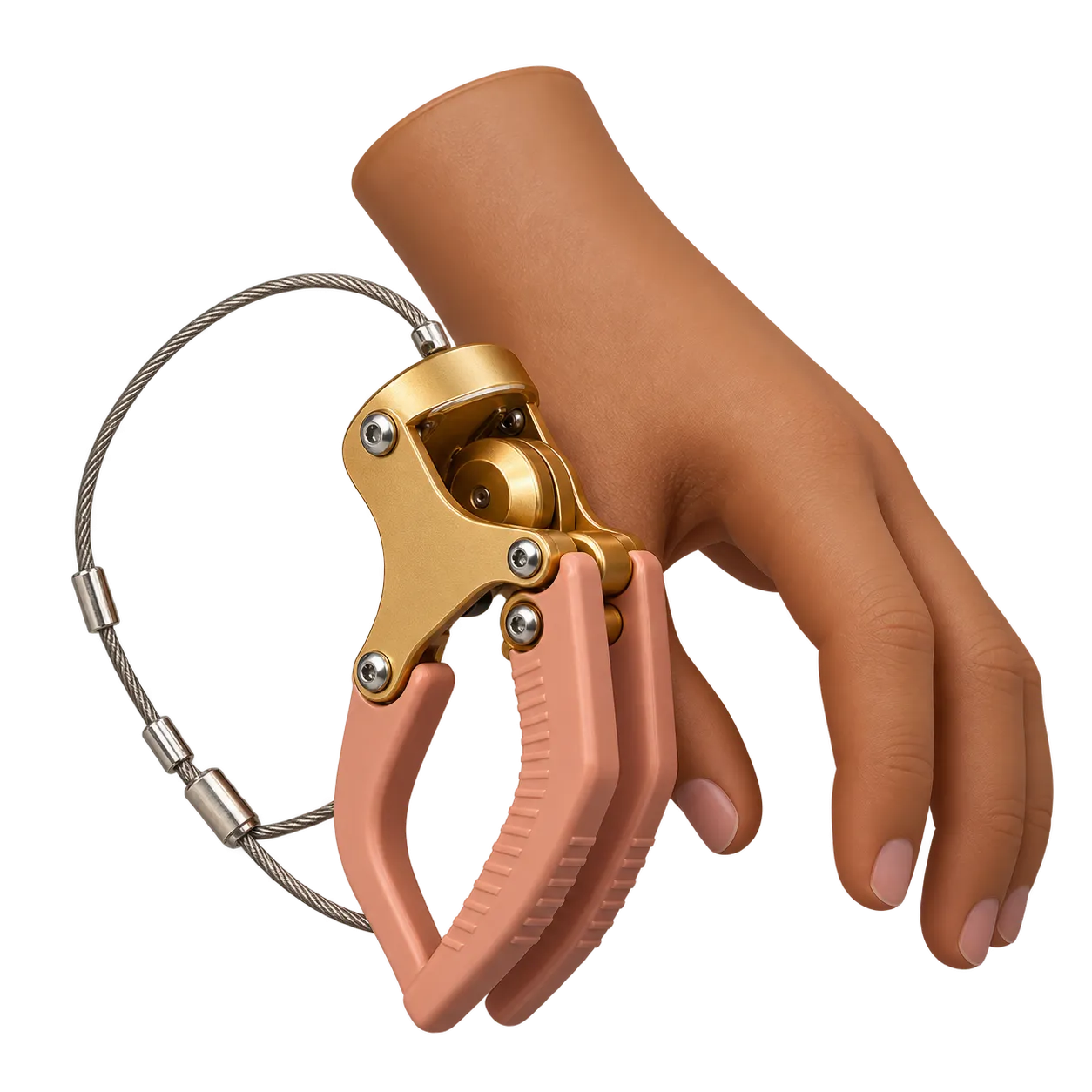
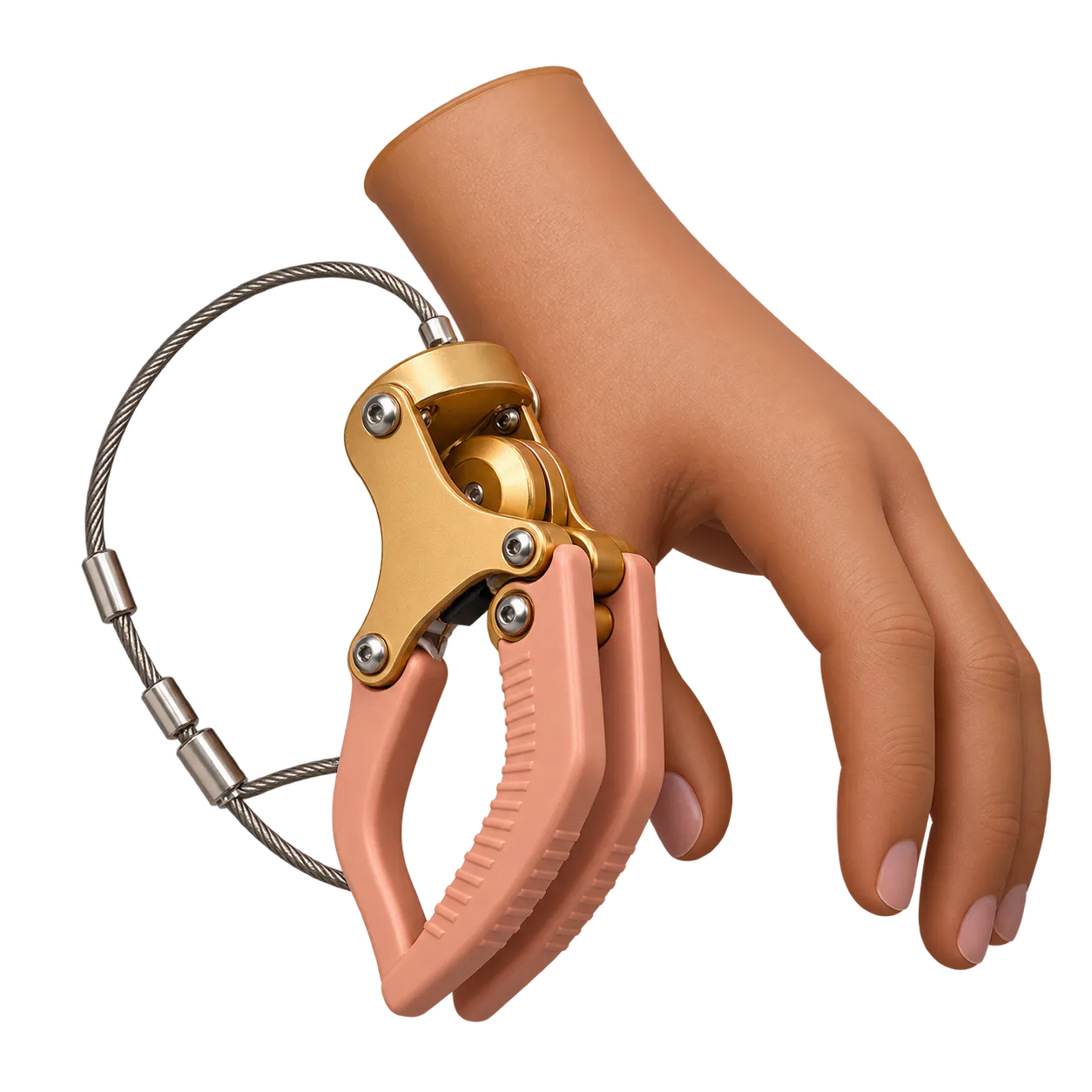
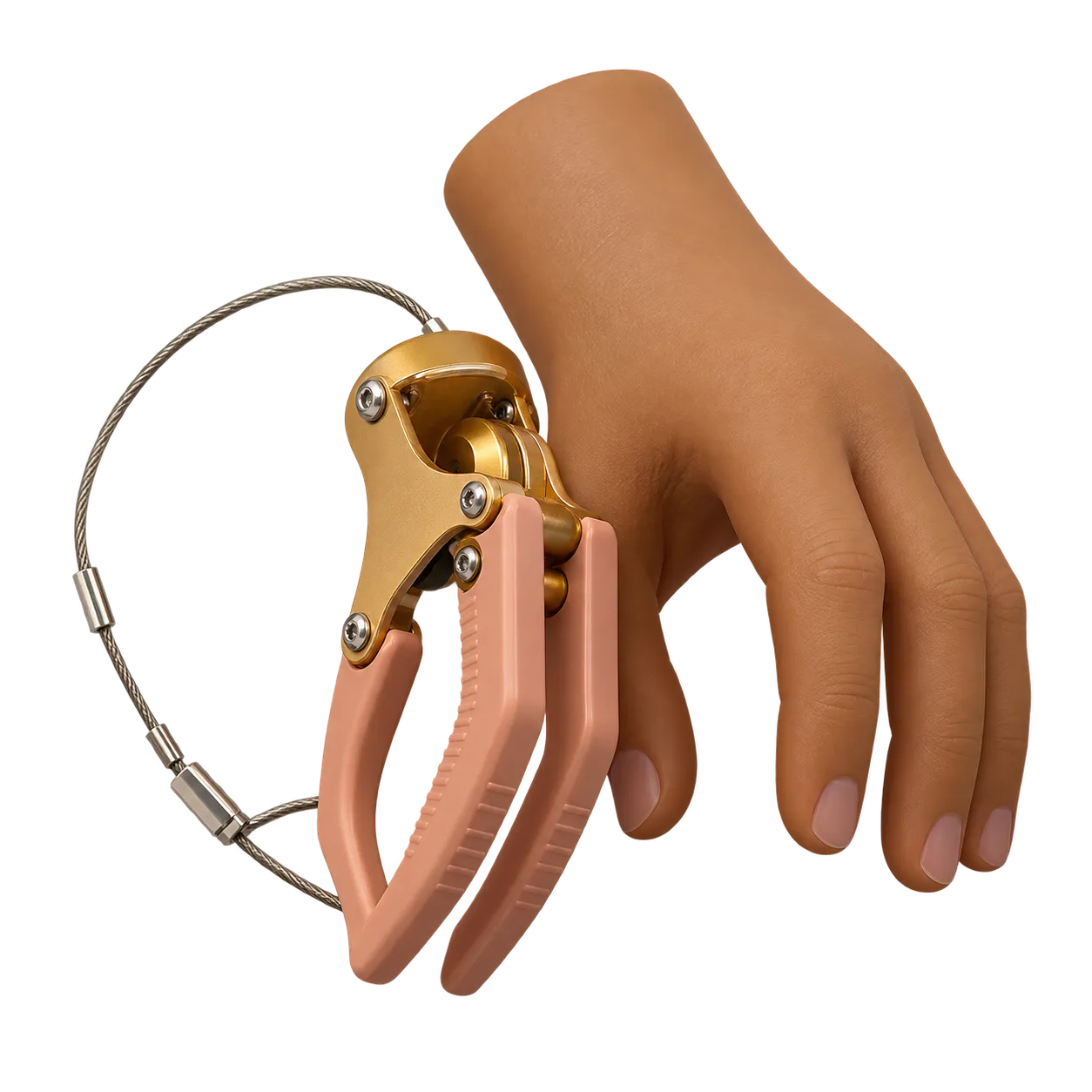
Limb-fitting centres and prosthetic and orthotic clinics are the main settings for the CCMH, because its job is to complete a below-elbow arm at whatever residual length the wearer presents with. Wonderful names four levels: wrist disarticulation and short, middle and long forearm residual limbs. A prosthetist building arms across that range can specify one terminal device and one cable action for every case, which keeps fitting, adjustment and wearer instruction on a single pattern.
Rehabilitation and occupational therapy departments use the hand during use training, the stage at which a new wearer learns to open the fingers with a cable pull and let the spring close them on an object. Training tasks follow the uses Wonderful lists: lifting, holding, eating with a spoon, writing with a pen and simple daily activities such as cycling. The resting pinch of thumb, index finger and middle finger gives therapists a ready grip shape for small items from the first session.
Wearers with a wrist disarticulation have a long residual limb and those with a short forearm have much less, yet both sit within the hand's stated range. The passive wrist joint lets each of them turn the hand to the angle a task needs before the grip opens, whether that is a spoon held level at the table or a pen angled to the page. A choice of three or five fingers lets the clinic match the build to the wearer's preference and the grip shape their daily tasks call for.
Services that review wearers over time also benefit from the mechanical design. The cable, spring and finger linkage are the parts to inspect, so upkeep fits into routine prosthetic reviews in clinics, outreach sessions and community limb services.