
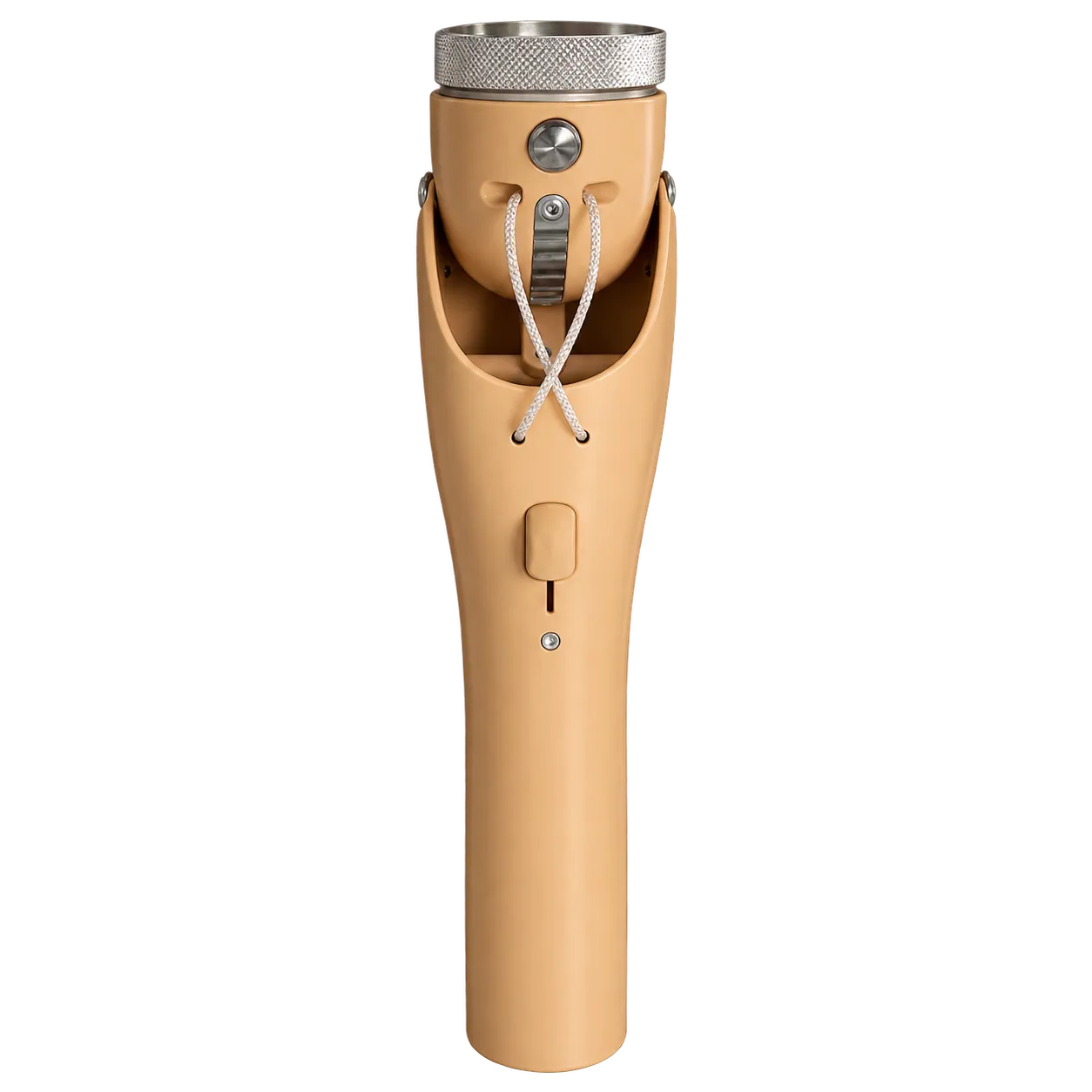
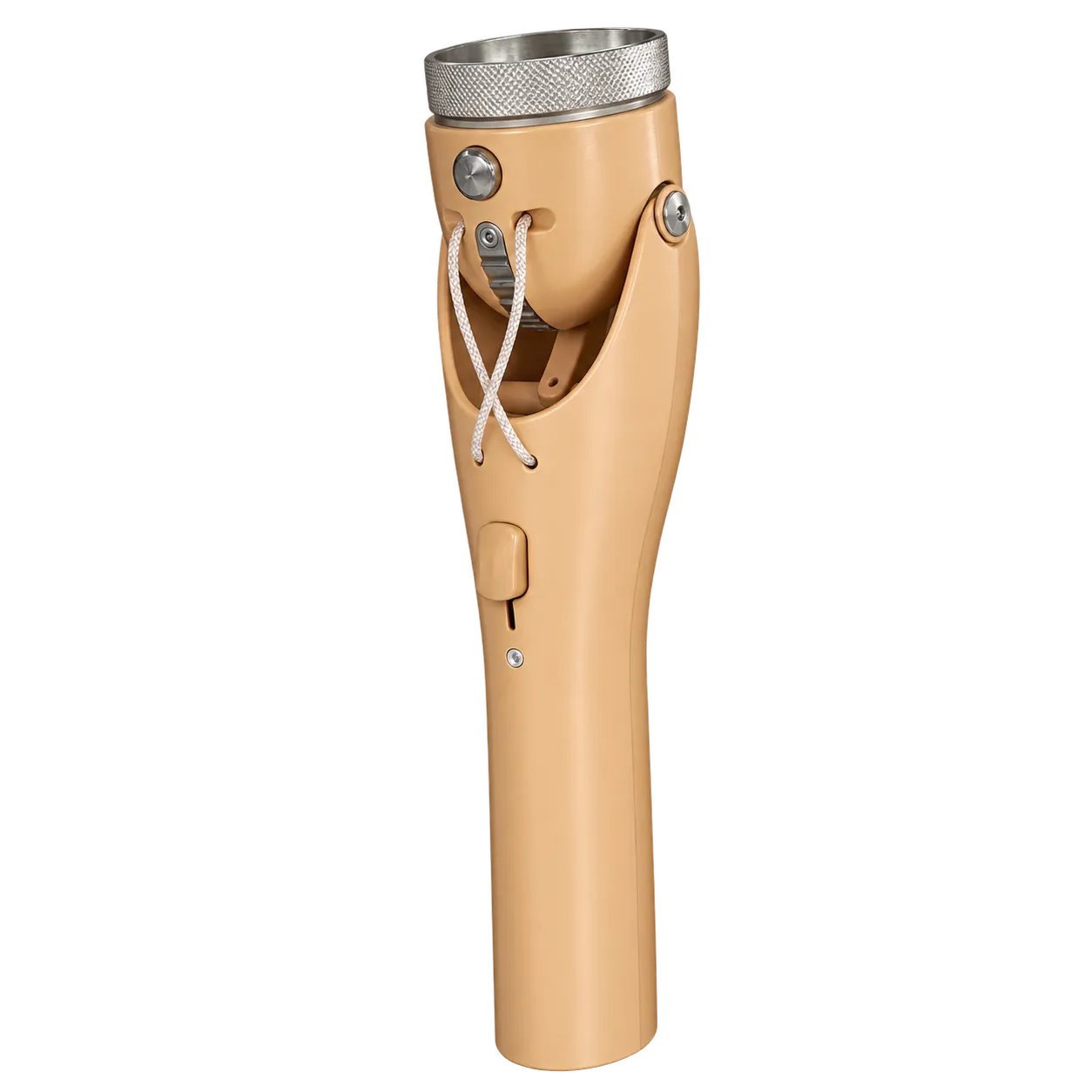
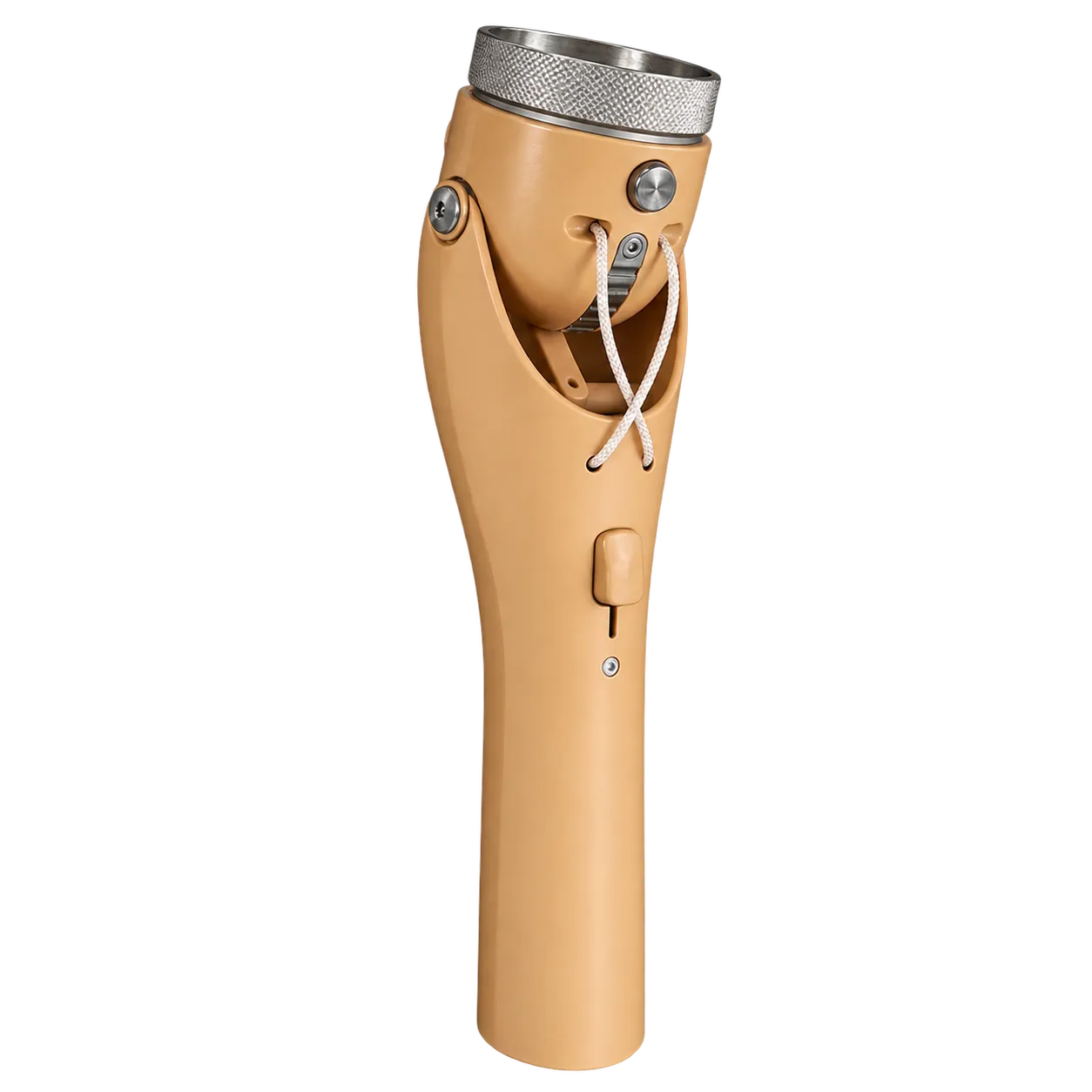
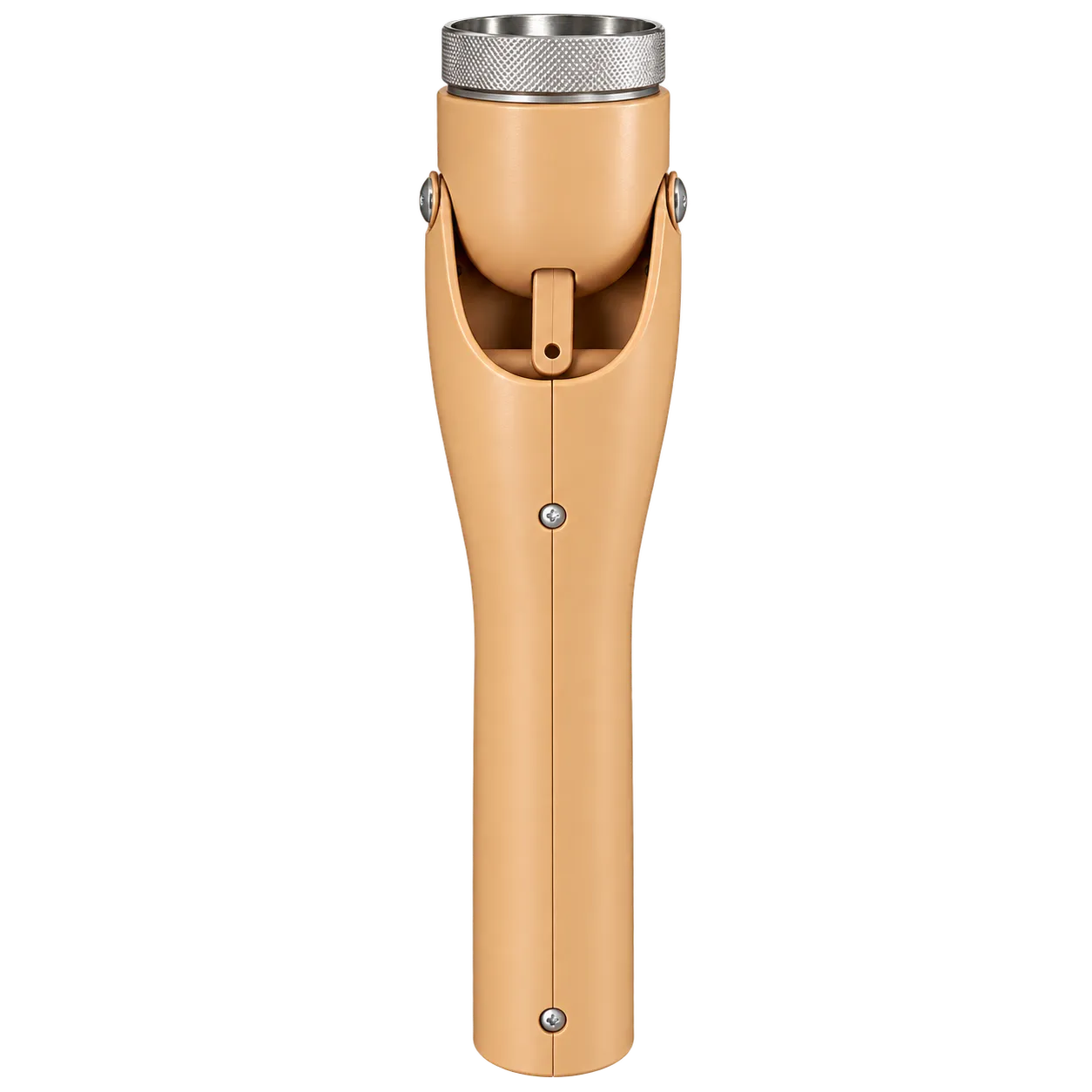
The CCAES belongs in prosthetic and orthotic workshops, limb fitting centres and rehabilitation departments where upper limb prostheses are assembled for people with an above elbow amputation. Prosthetists and prosthetic technicians mount it as the elbow and forearm section of the limb, with the upper arm socket above it and the chosen hand below.
Its switch suits wearers who want to set arm position with one clear action. A person lifting a bag onto a table, holding a document against the body or bringing the hand toward the mouth can press the switch on the forearm cylinder to move into flexion, then press again to return to extension. That single control point keeps the sequence easy to teach during early training sessions, when the wearer is still learning to coordinate the prosthesis with the shoulder and trunk.
Adjustable tightness at the elbow lets the fitting team match joint resistance to the individual. A newer wearer with limited shoulder strength may start on a lighter setting, while an experienced user doing steady desk or kitchen work may prefer a firmer hold that keeps the forearm where it was placed. The setting can be revisited at review appointments as strength and routine change.
Free swing serves the time between tasks. Walking through a ward, a home or a workplace, the wearer can let the forearm hang and move with the stride, which keeps the shoulder relaxed and the arm's movement natural.
Hand choice widens the range of cases the unit covers. A cosmetic hand suits a wearer whose priority is appearance, a cable-controlled mechanical hand suits one who wants body-powered grip, and an electric hand suits one moving toward powered grasp, all on the same elbow and forearm assembly.