
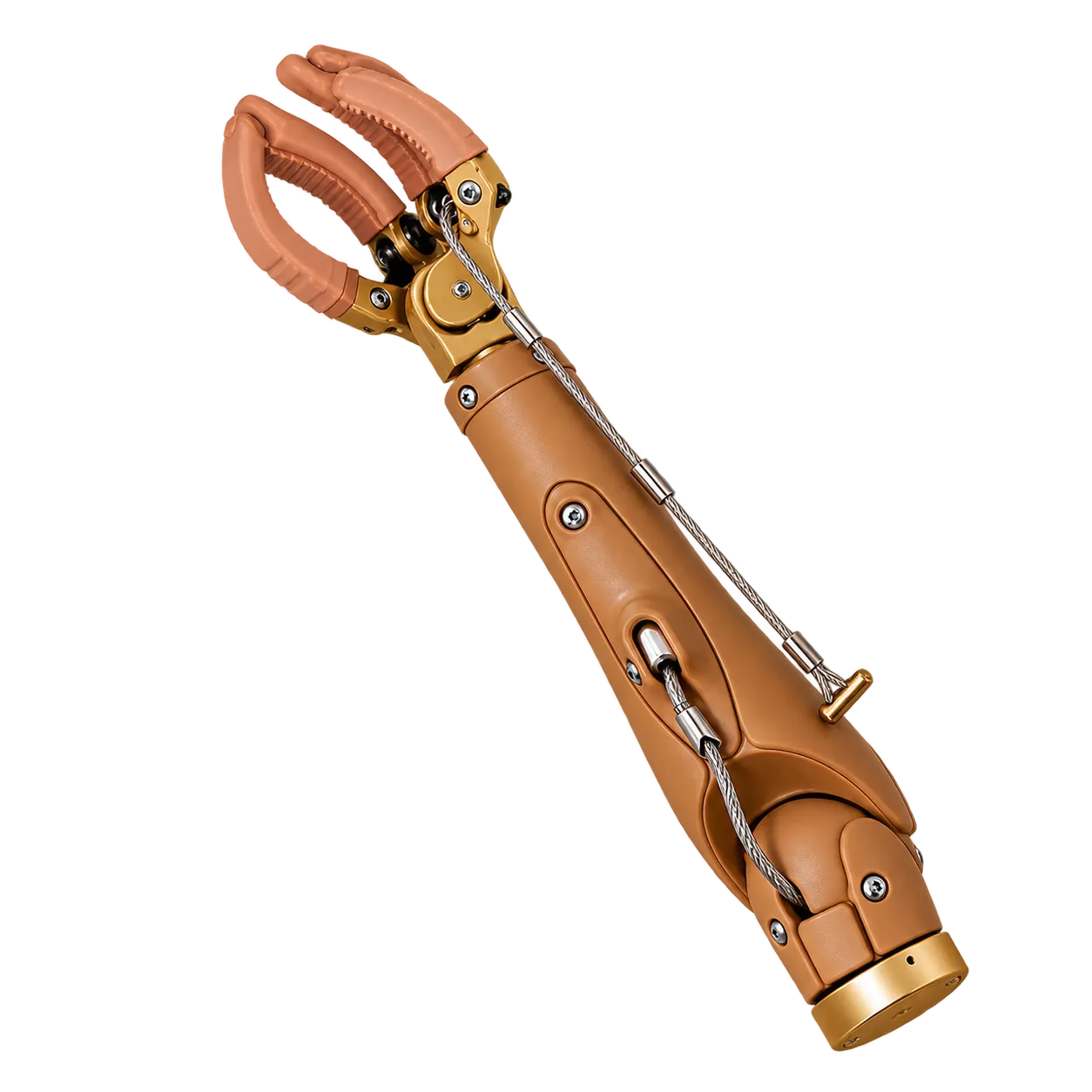
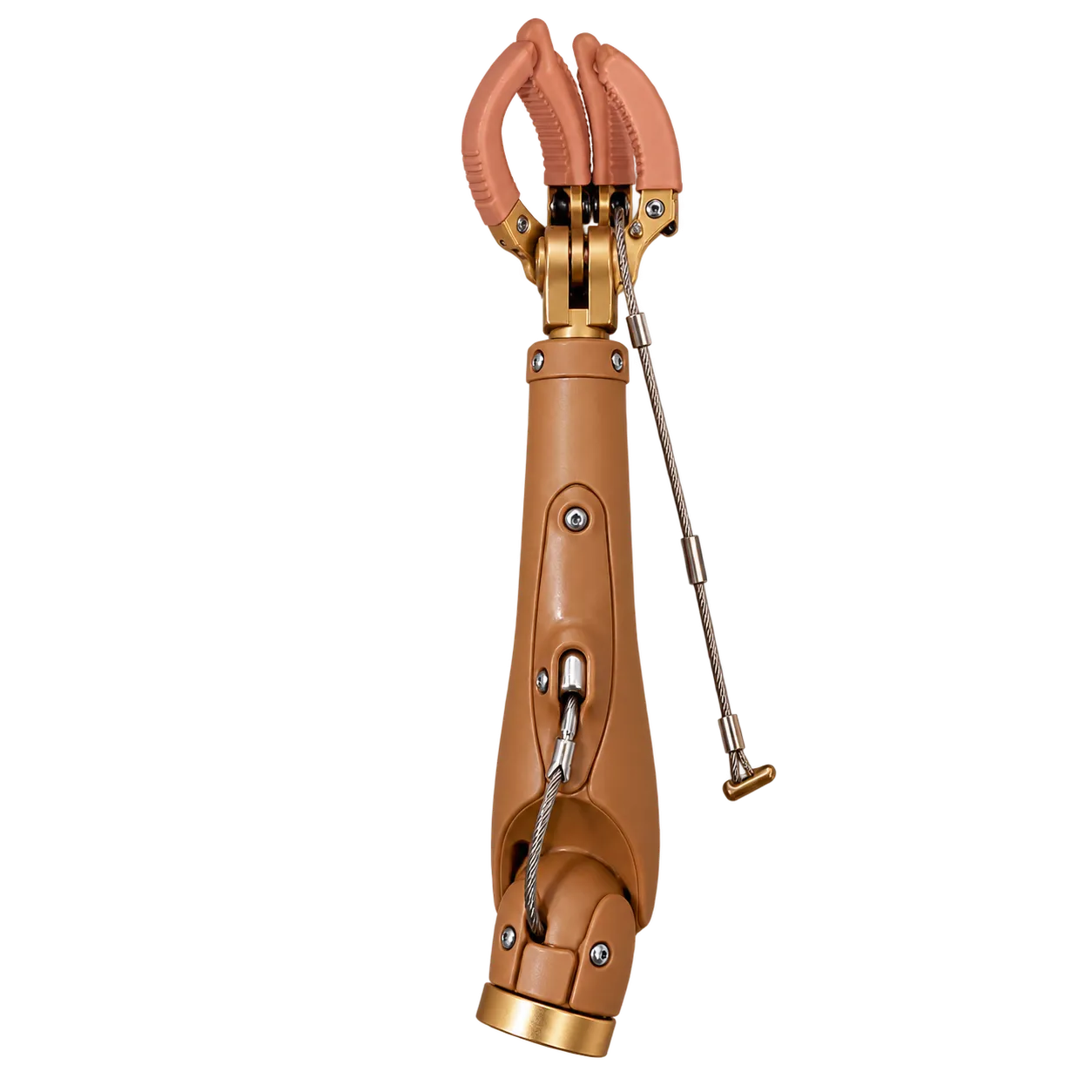
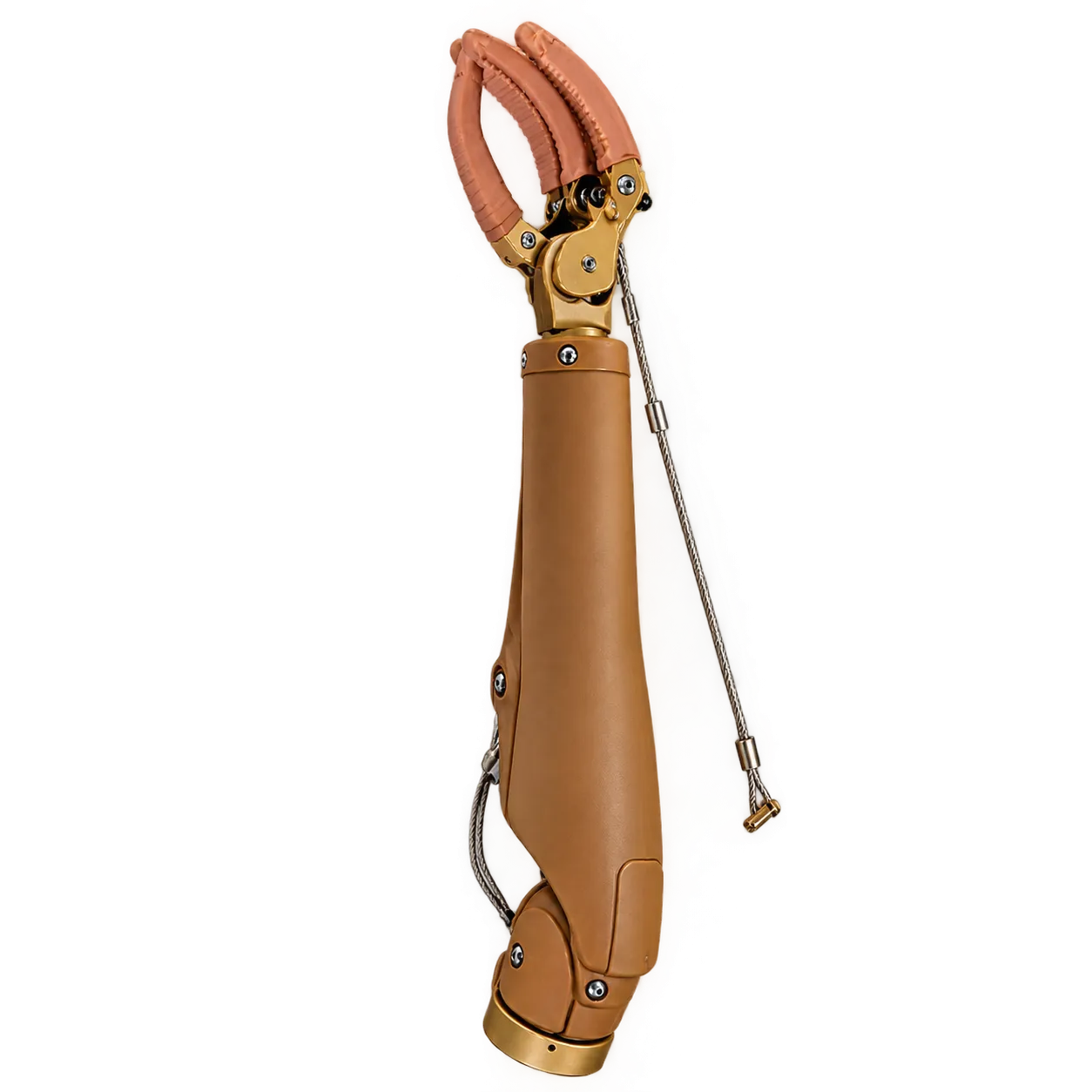
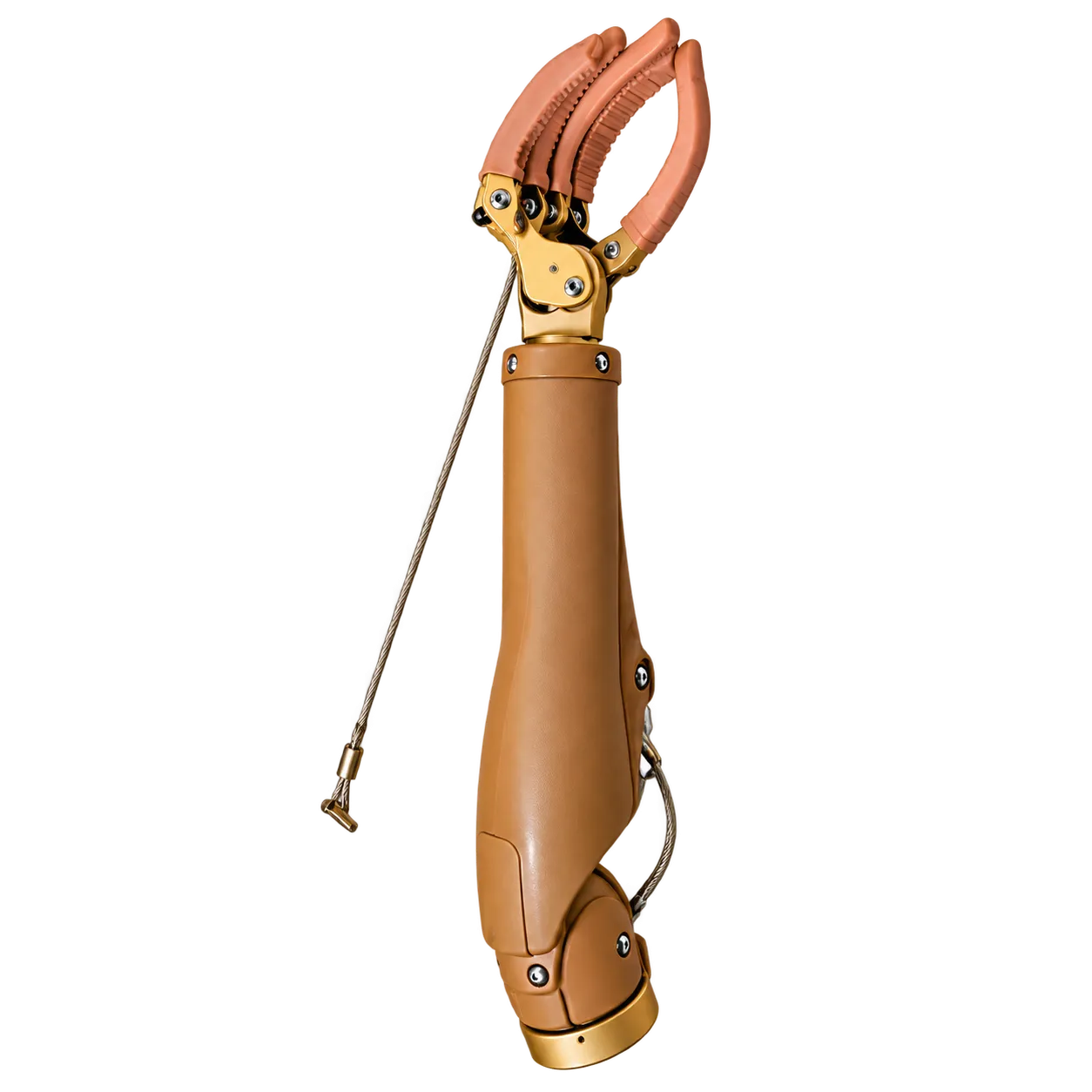
The CCAEH belongs in prosthetic clinics, limb-fitting centres and rehabilitation units that look after adults with limb loss above the elbow. Its users are transhumeral wearers who want a mechanical arm with a working hand, and the prosthetists and technicians who fit, adjust and maintain it.
Because the hand, cable control and both rotating joints come as one prosthesis, the CCAEH suits services that want a single item to specify for an above-elbow case. A workshop can hold the three-finger and five-finger versions as two clear choices and match each wearer to one at assessment. The clinical team then spends the session on cable set-up, wear time and training.
In daily use, the cable-worked hand handles the grasp-and-release tasks that fill a day: carrying a bag, steadying a jar for the other hand to open, holding paper flat while writing, or gripping a handrail. Passive wrist rotation turns the hand to meet each object at a workable angle, and passive upper-arm rotation brings the hand in towards the body for eating or desk work, or out to the side for reaching.
Rehabilitation programmes can use the CCAEH from early training onwards. A mechanical hand gives clear feedback through the cable, which helps a new wearer link the control movement to what the fingers do. Therapists can practise pre-positioning drills with the wrist and upper arm before each grasp.
The 1.05 kg aluminium build suits wearers who will use the arm through a full working day, in offices, workshops, kitchens and around the home. With no batteries in the design, the arm also fits wearers who live or work far from a charging point or a service centre.