
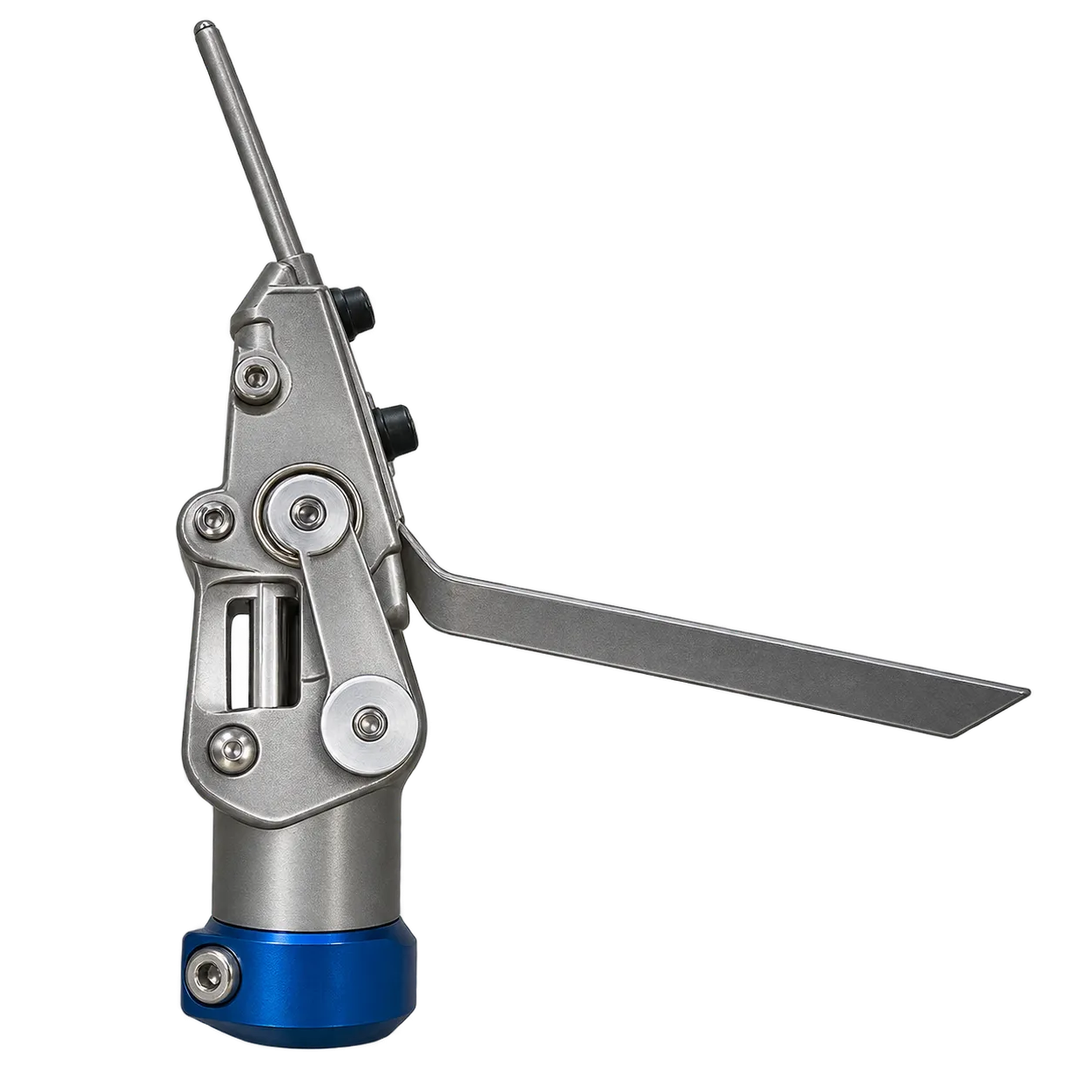
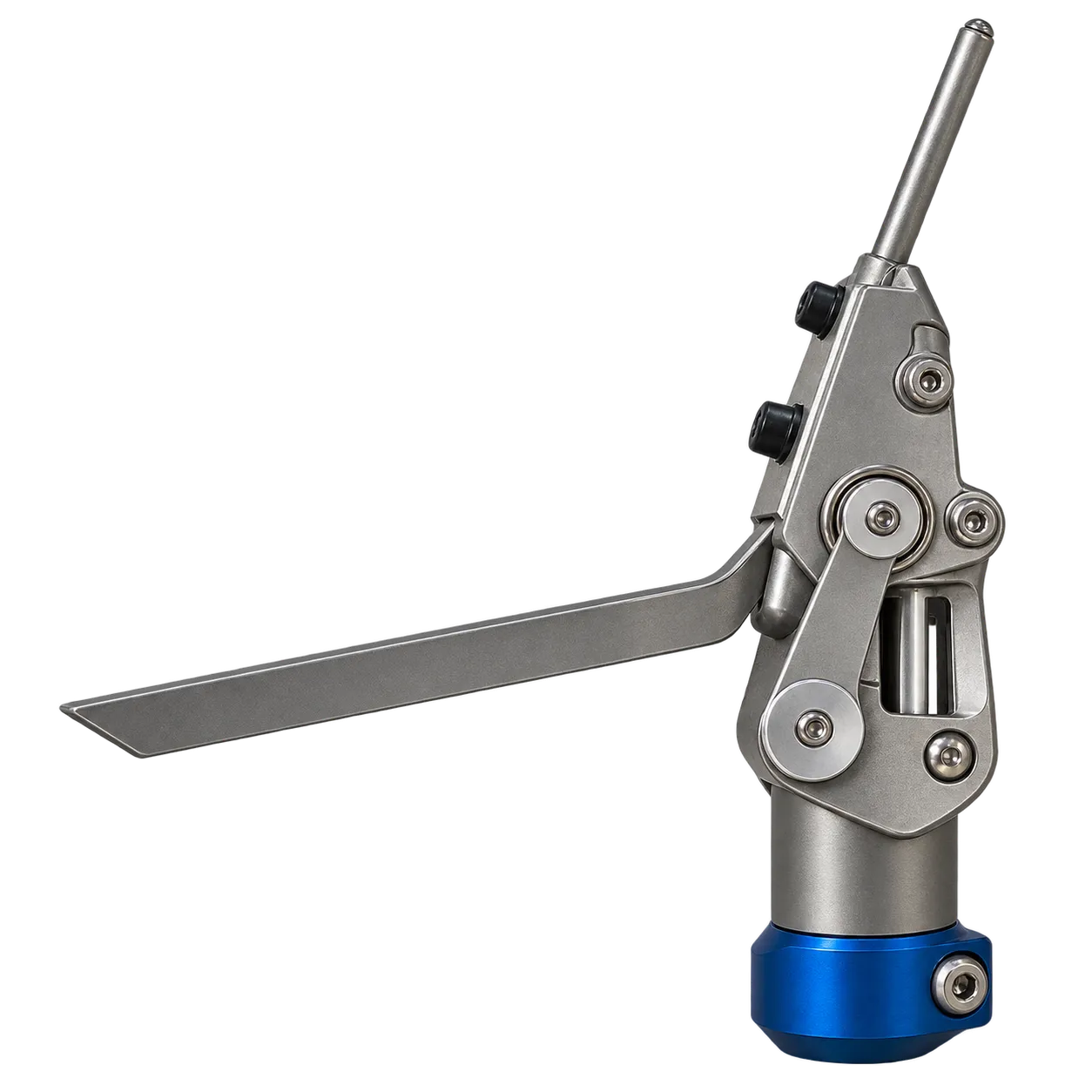
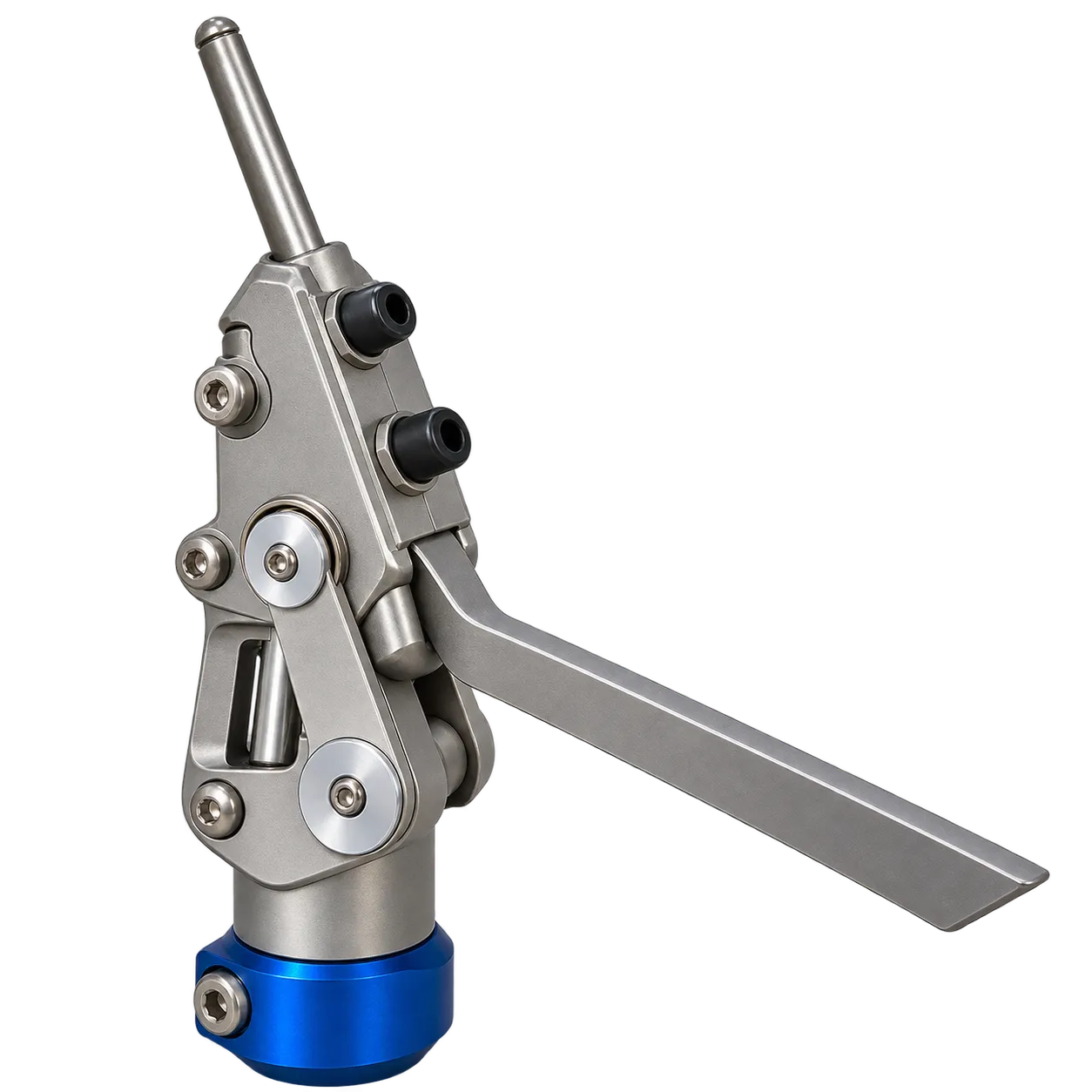
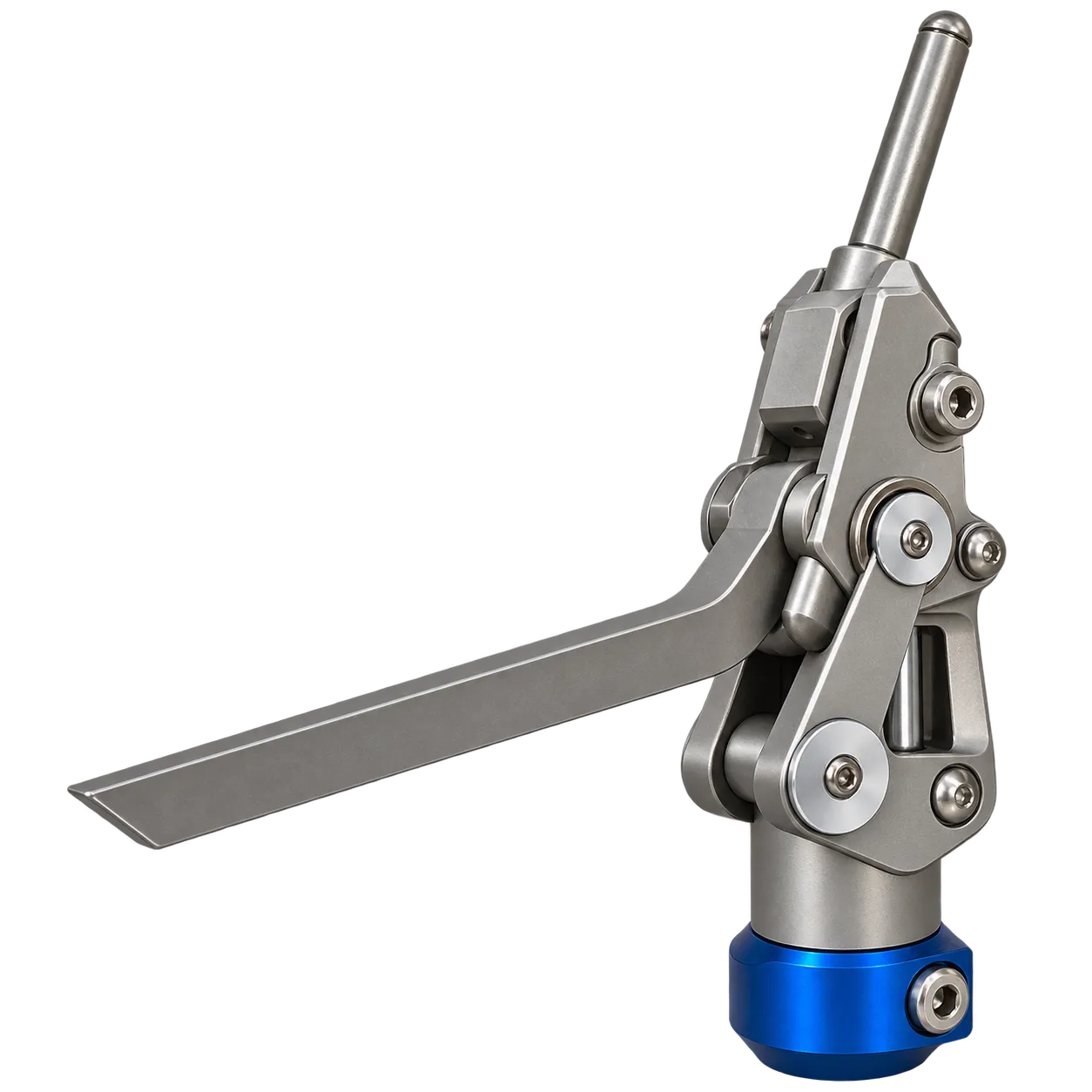
The 7E6 belongs in limbs for people who have lost the whole leg at the hip or part of the pelvis. These are rare levels, under 1% of all amputations in published reviews (Stark, 2001, and Huffman and colleagues, 2022), and US data from 1988 to 1996 put hip disarticulation at 0.4% of lower-limb amputations. Causes are mainly tumour and infection: a 2023 German series of 15 patients recorded six sarcomas or other tumours, seven infections, one trauma case and one vascular case.
The prosthesis is a pelvic socket, often called a basket, with this joint fixed to its front, then a knee and a foot. Walking at this level is costly. One review cites energy use 82% above normal for hip disarticulation (Tang and colleagues, 2008), and a 2024 meta-analysis found average daily wear of about six hours. Socket comfort is the most frequent reason for limited use.
That cost is why the four-axis mechanism matters clinically. A user who trusts the hip to hold in stance spends less effort guarding each step, and a thigh that shortens slightly in swing lowers the risk of catching the toe. Michael's 1988 review reported both claimed benefits for reversed polycentric joints at the hip, while noting doubts that they always justify the extra build effort.
Sitting is the other daily test. The joint folds at the front of the socket, so chair height, car seats and reclining positions are all worth trying on a trial limb.
Limb-fitting centres, sarcoma rehabilitation units and specialist prosthetic workshops are the usual settings. NHS services in England buy through a mandated national framework, and equivalent public procurement elsewhere asks for the same traceable supply. The conformity documentation those procurement routes require is issued by the manufacturer and shared by the enquiry team.