
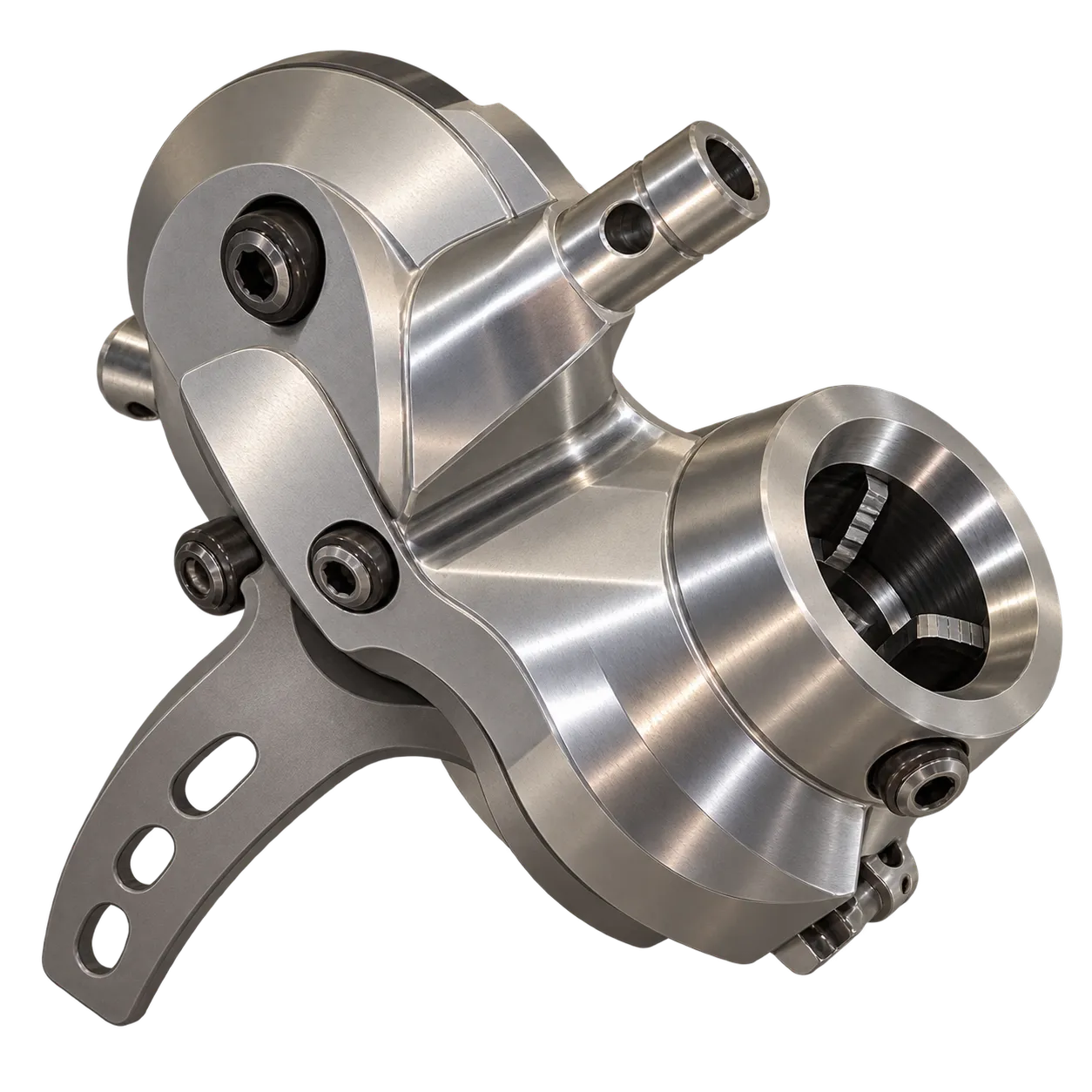
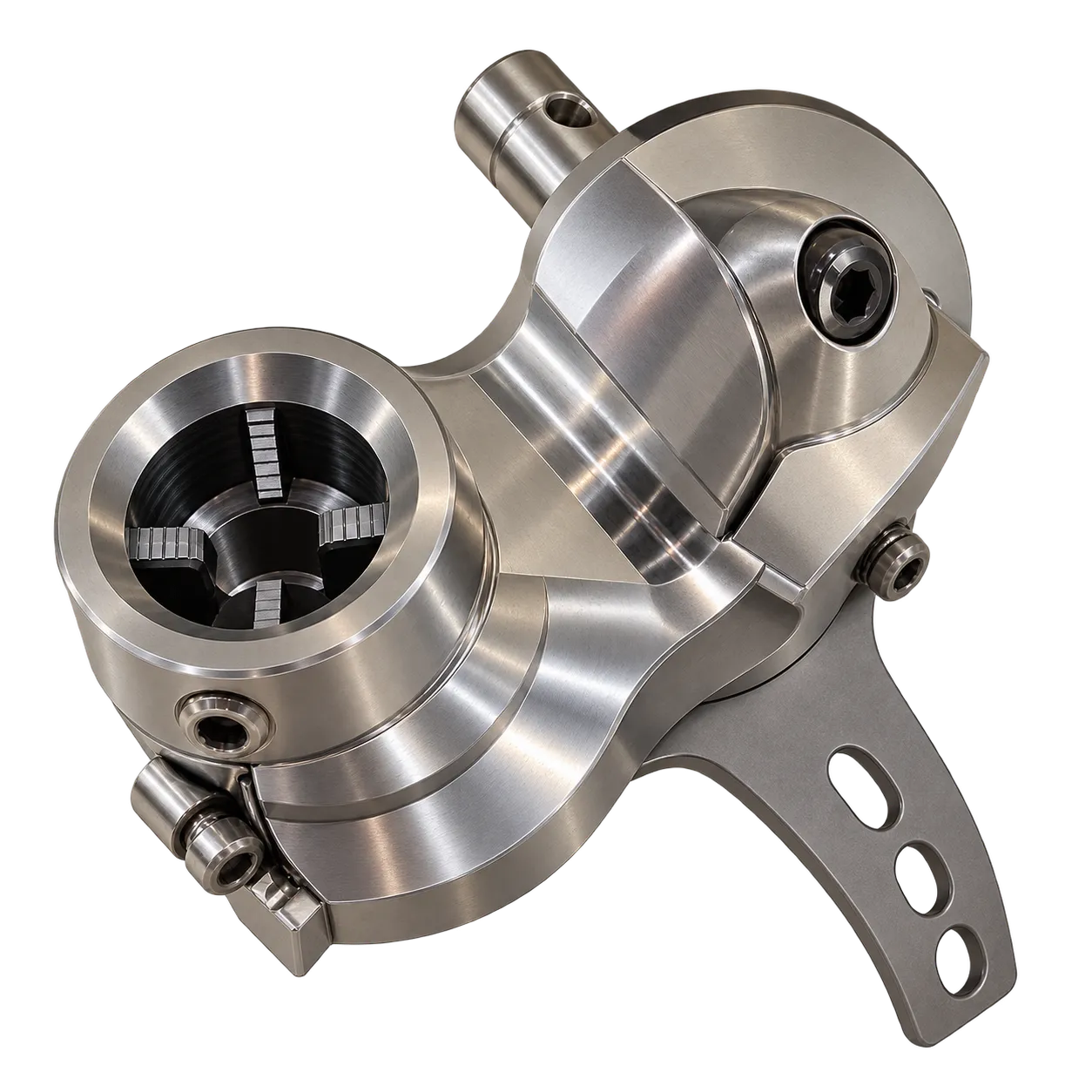
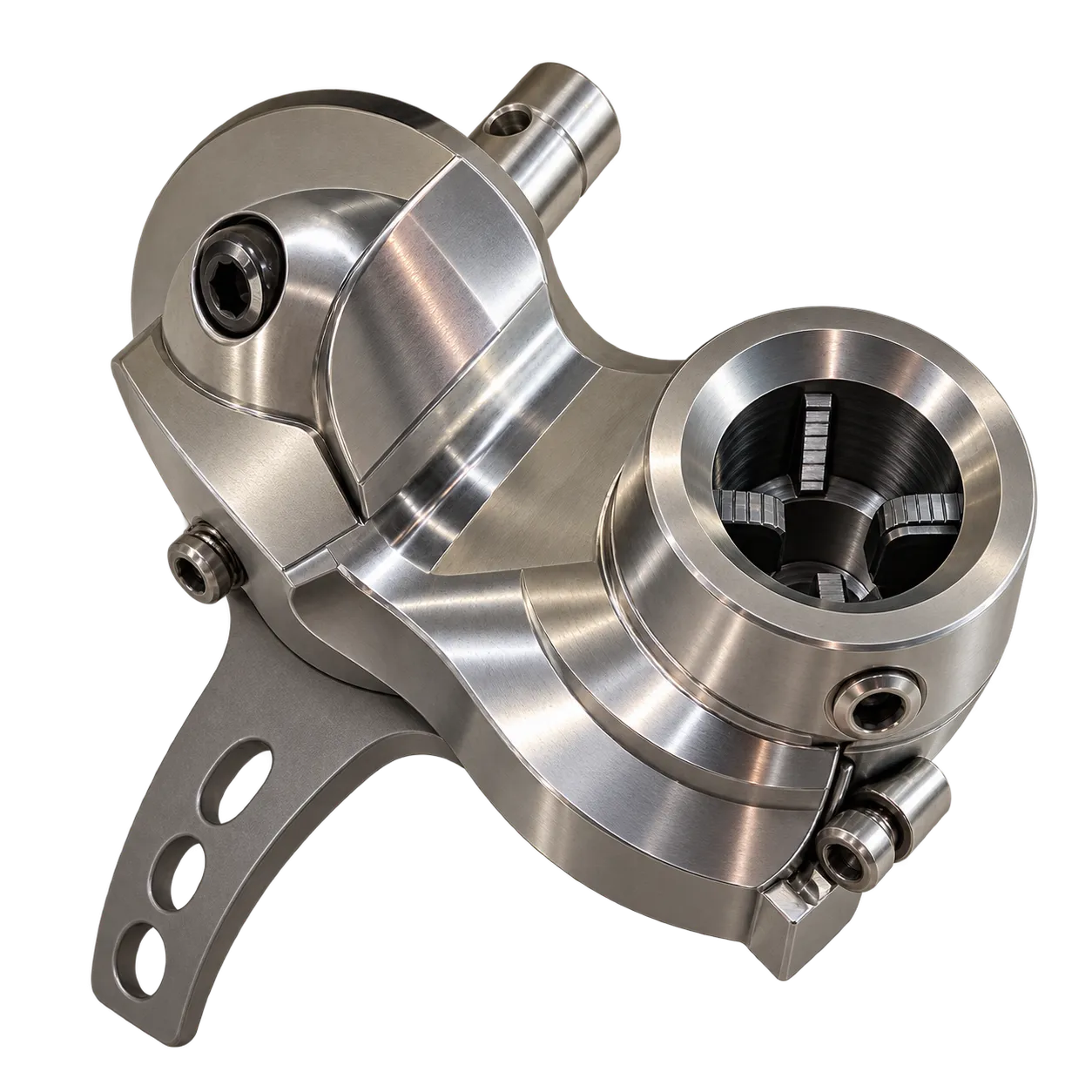
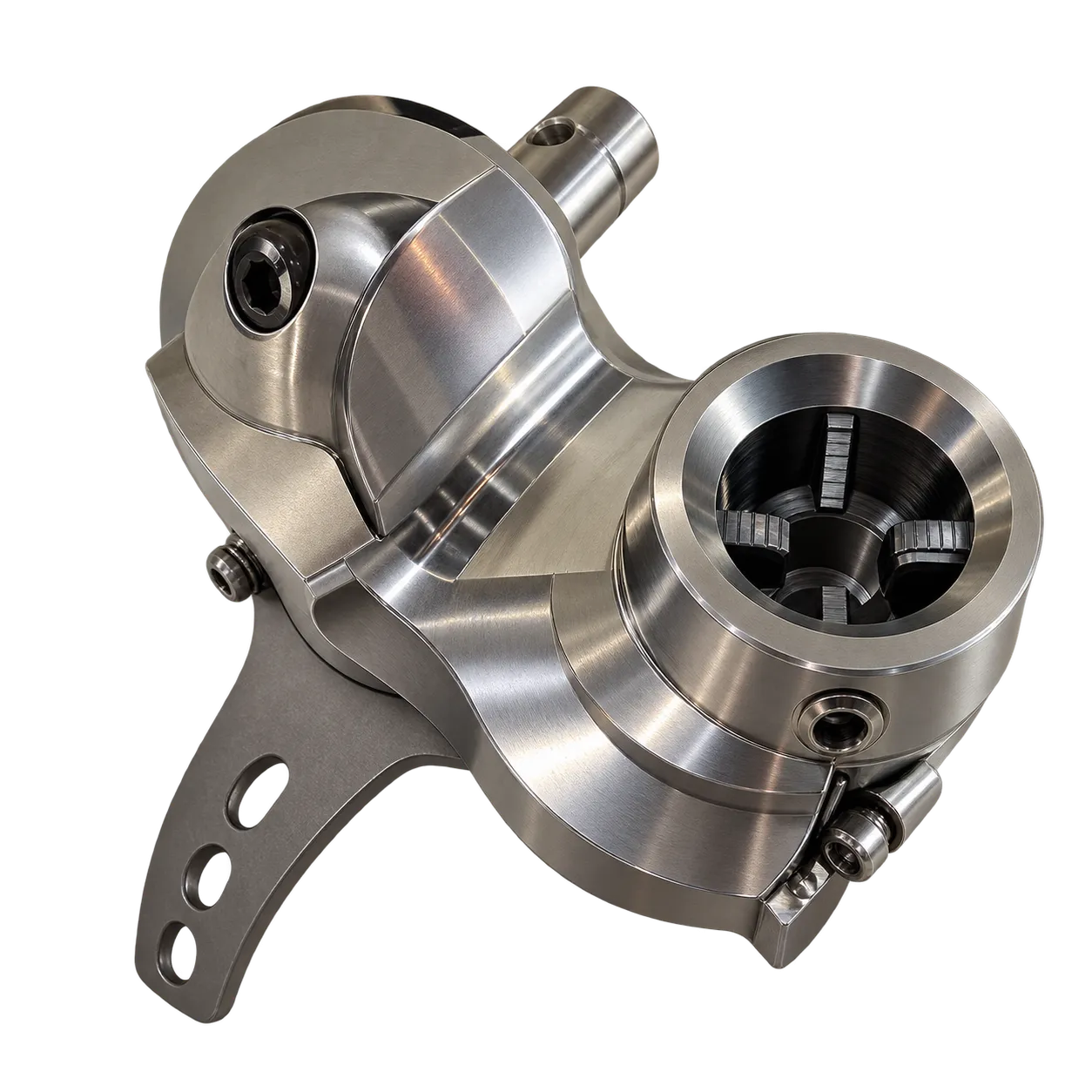
Pin-liner suspension is a standard way to hold a transtibial prosthesis on, and it also appears in transfemoral builds. The 4F42-ML belongs in those sockets for users up to 125 kg, where the prosthetist wants the lock itself angled to the limb. Its irregular, offset body carries both the lock and the connection, so the line of the pin can be set during the build.
That setting earns its place with limbs that do not sit vertically in the socket. Flexion contractures, short residual limbs and sockets built with initial flexion all tilt the path a liner pin takes. Pin-lock reference guidance notes that locks bonded after a first lamination suit flexion contractures, since the socket can be angled in the jig before the lock is fixed. For this model, the instructions for use show how its own angle adjustment fits into that sequence.
The evidence on pin-lock suspension cuts both ways. A 2014 systematic review of 22 studies found pin-lock systems in total surface bearing sockets were favoured by most transtibial users, largely for ease of donning. A cross-sectional study of 48 transtibial users, published in 2021, found socket comfort scored a median of 8 out of 10 with suction and 5 with pin-lock suspension, while perceived mobility and balance confidence showed no significant difference. Pistoning, the vertical movement of the limb inside the socket, is the measure reviewers use to judge suspension quality, and prescription remains an individual decision.
Limb centres, independent prosthetic practices and charity workshops all fit pin-lock sockets. NHS services in England buy through a mandated framework, and equivalent public procurement elsewhere asks for the same documented supply. The conformity documentation those procurement routes require is issued by the manufacturer and shared by the enquiry team.