
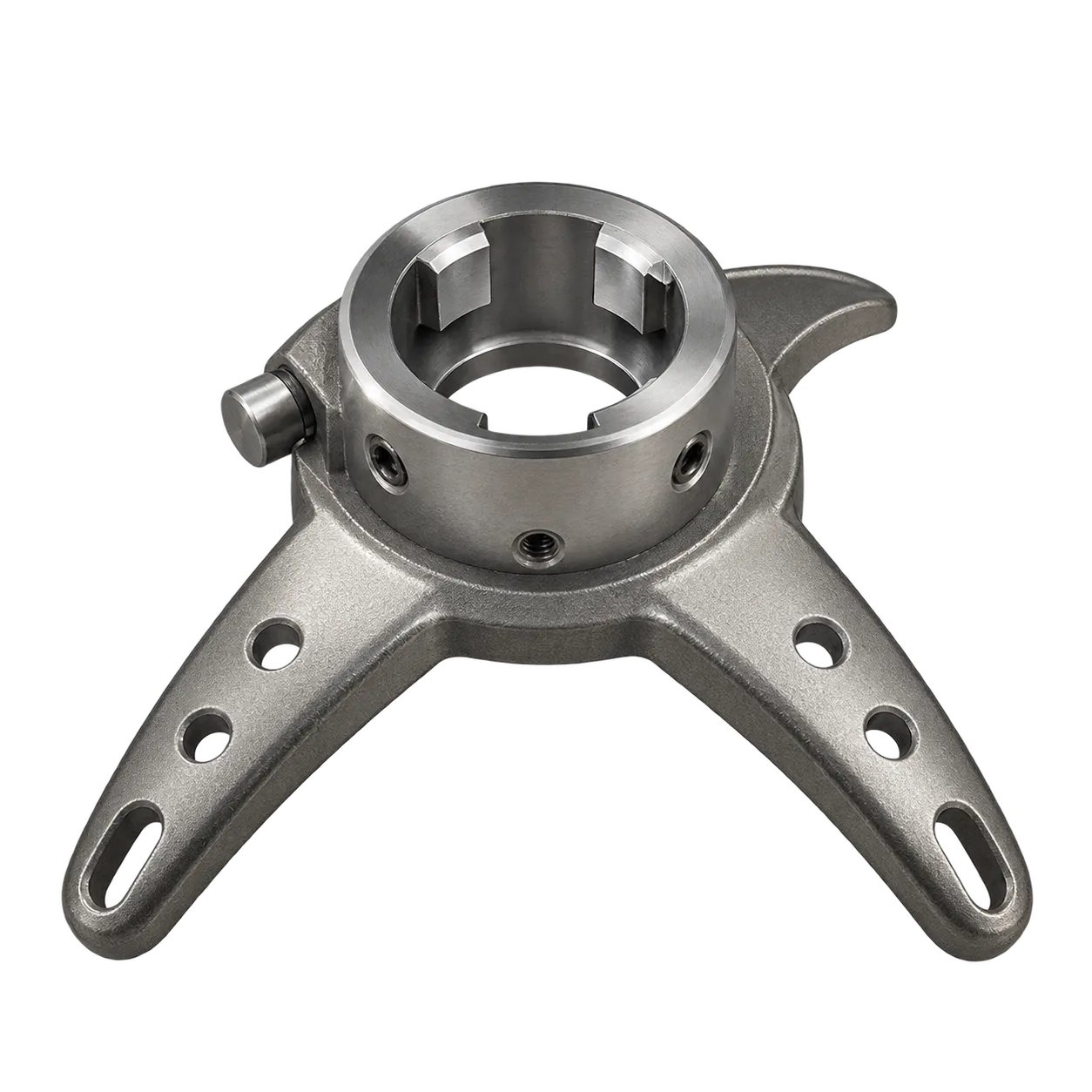
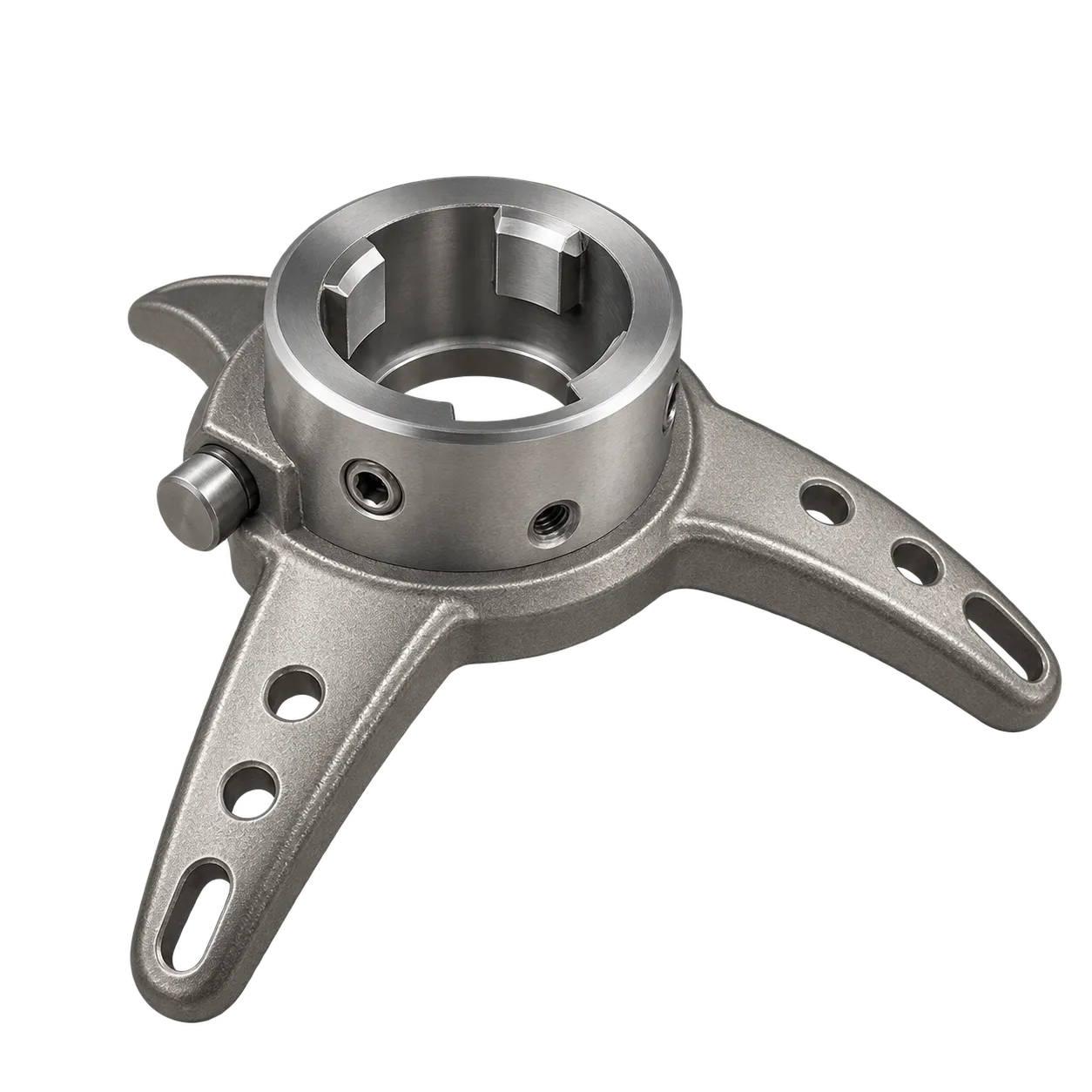
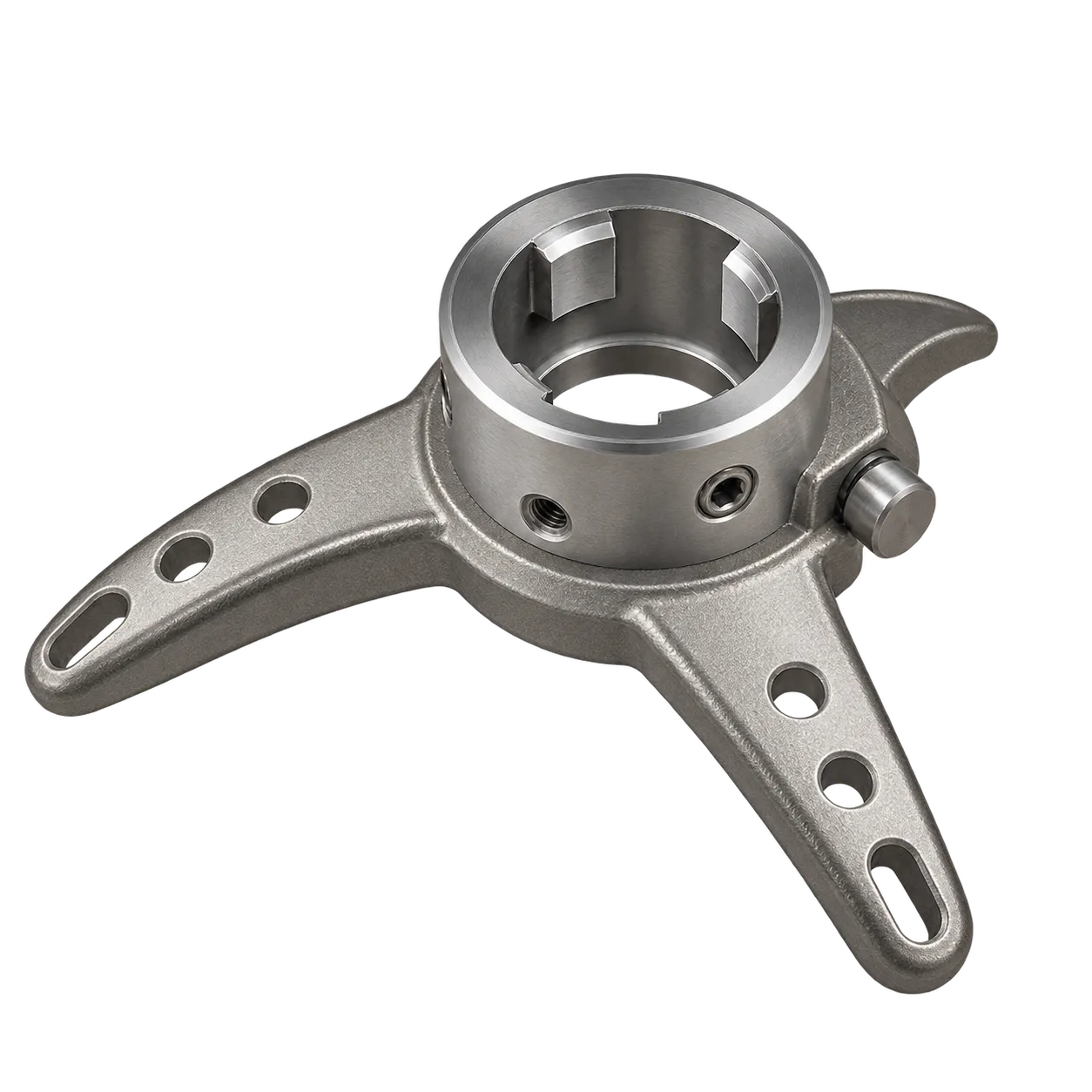
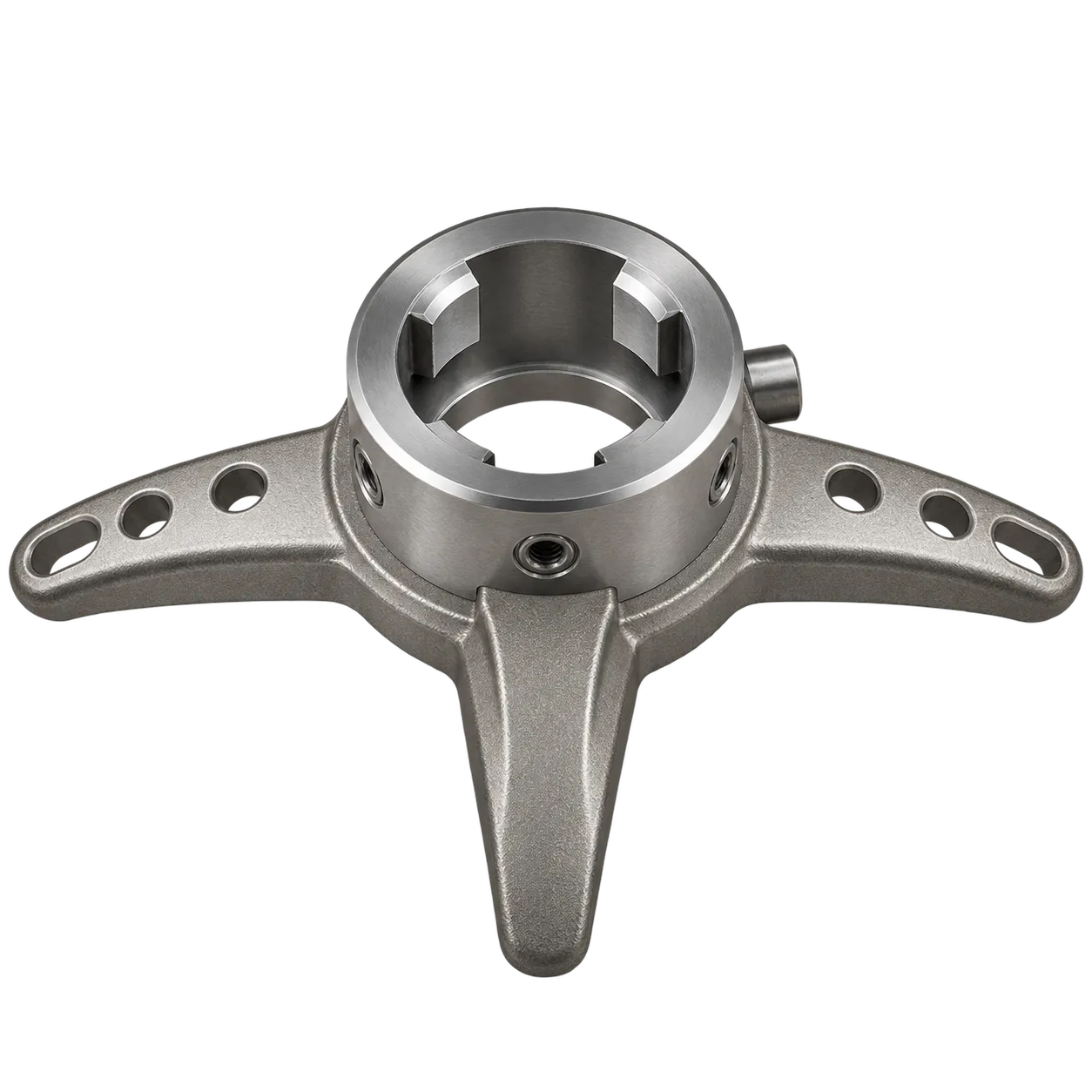
Prosthetic workshops and limb-fitting services that laminate their own sockets are the main users. The anchor is built into the socket during lamination and gives the limb a female pyramid receiver, so the service needs lamination equipment, resins, reinforcement materials and trained technicians. The intended amputation levels are not stated, so confirm them before adding the part to a build protocol.
Services building for users up to 125 kg can use it within its rating, provided every other component in the limb is rated at least as high and the socket layup is designed for the load. For heavier users, the anchor's rating limits the whole limb, so a higher-rated anchor is needed.
The choice between stainless steel and titanium affects weight, cost and possibly the load rating. Titanium is usually chosen where weight matters, and stainless steel where cost matters, but the sheet does not publish weights or prices. Confirm both, and the rating for each material, at quotation.
Charitable limb programmes and export buyers building sockets locally can stock the anchor alongside their lamination materials. Confirm the lamination instructions, torque values, receiver dimensions and material-specific ratings before placing an order, since the part cannot be tested once it is embedded.
Workshops should also decide how the anchor's position is recorded. Writing the material, batch and orientation on the build sheet means a replacement socket can be made to the same pattern, and any field safety notice can be traced to the users affected.
The anchor is not suited to users above 125 kg, to limbs whose other components are not compatible with its receiver, or to workshops without lamination capability. The conformity documentation those procurement routes require is issued by the manufacturer and provided by the seller.