

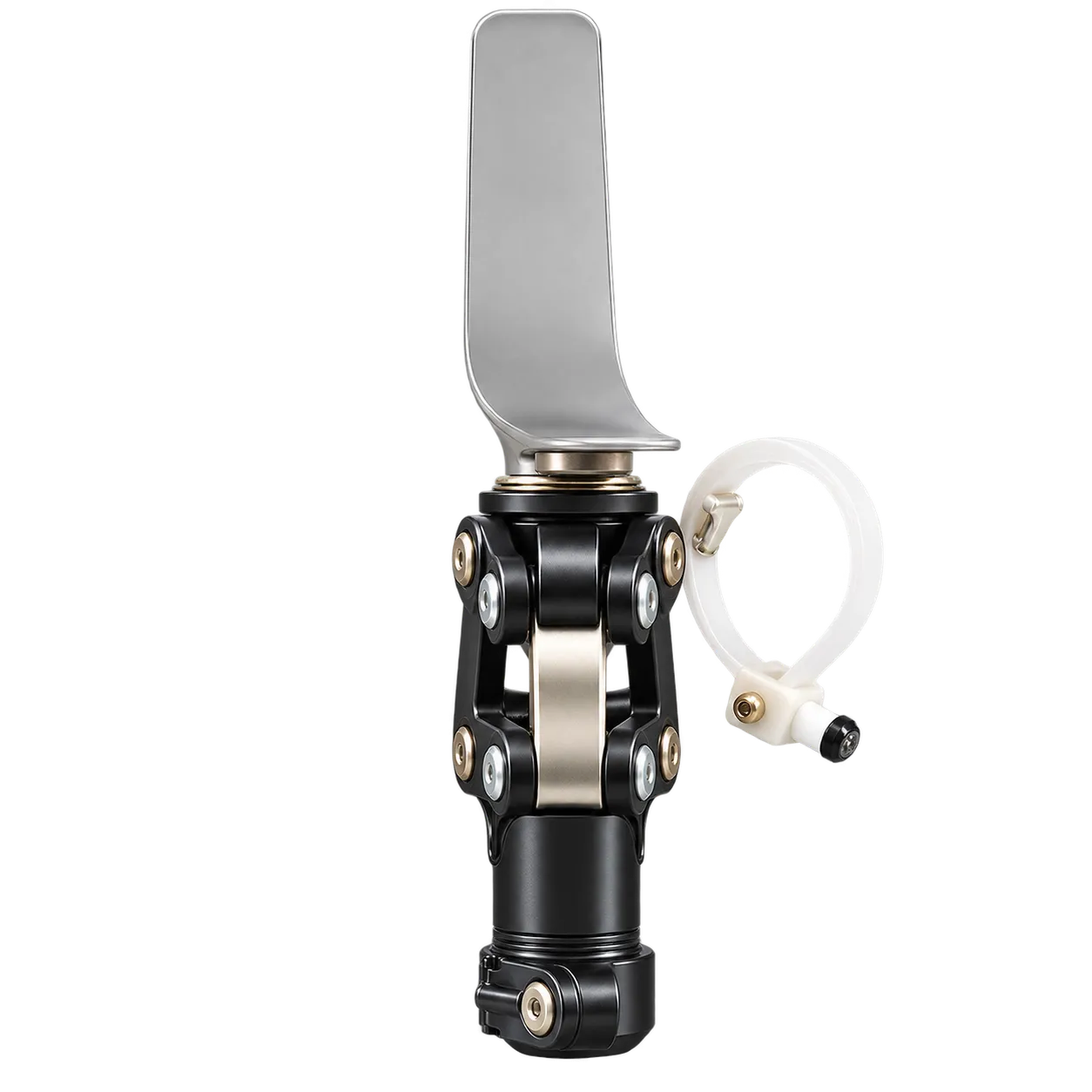
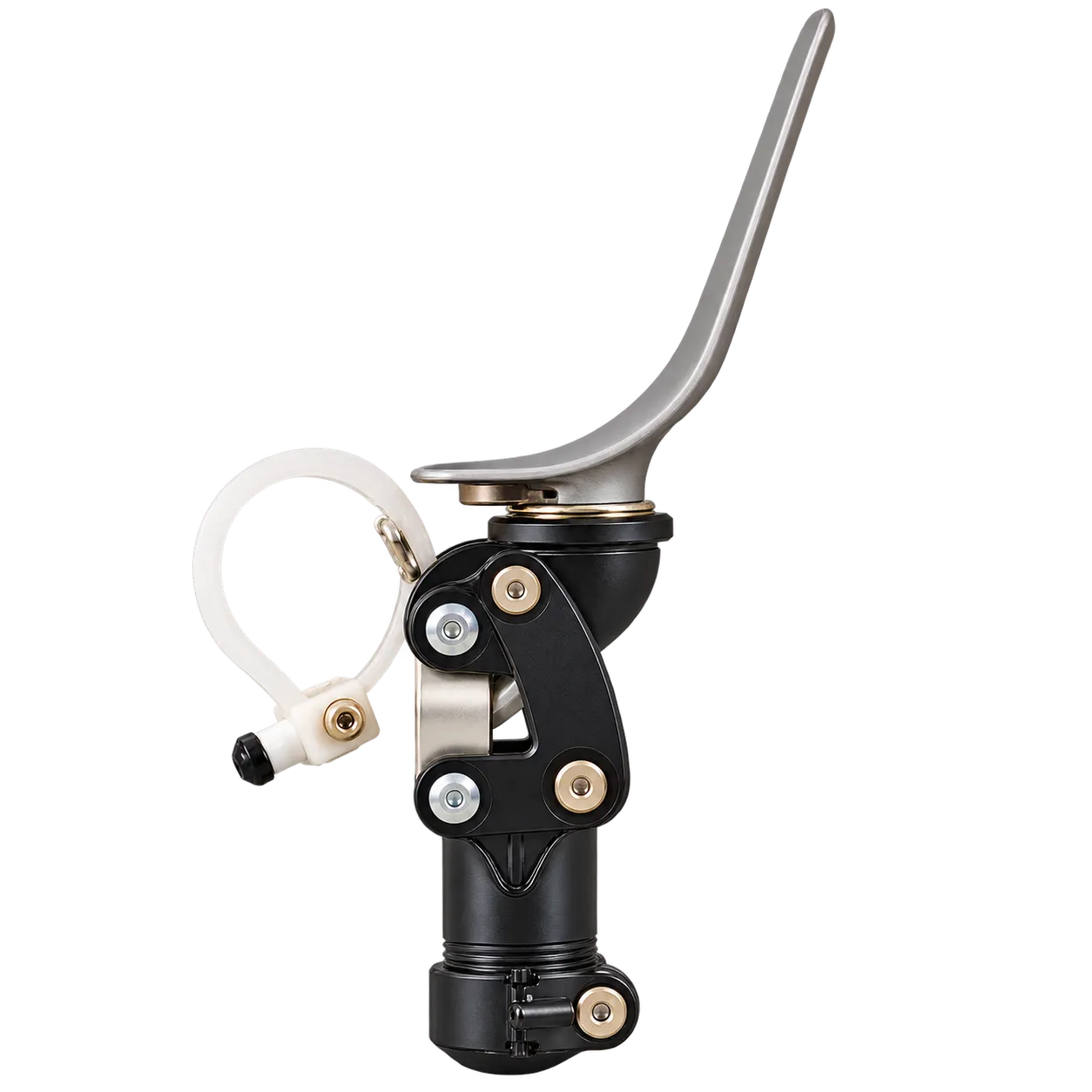
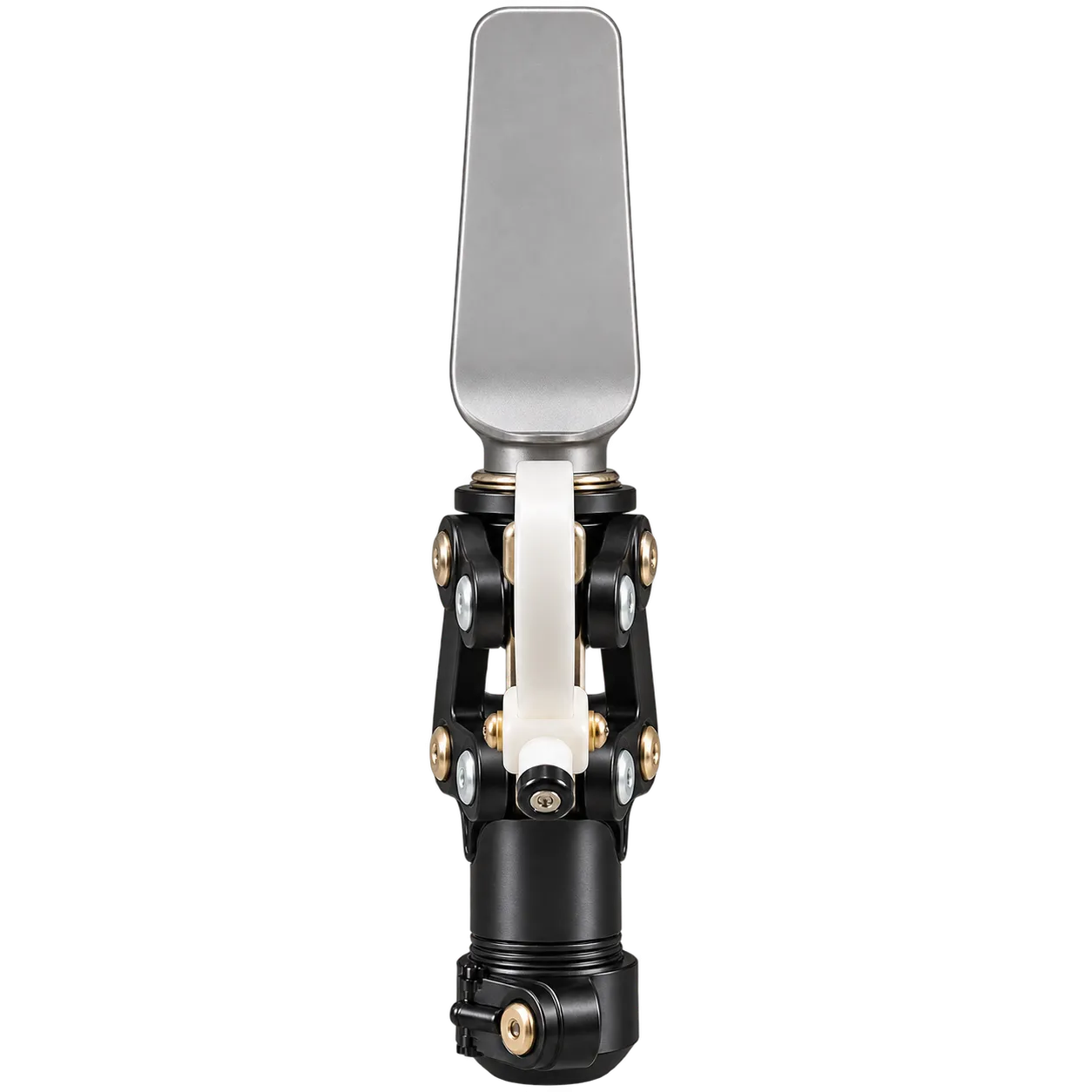
The 3FM12A-1 belongs in knee disarticulation limbs for people who spend real time on their feet without walking anywhere: cooking, washing up, ironing, working at a bench or serving behind a counter. A long through-knee residual limb bears weight well at its end, and a lock adds certainty that the joint below it will stay straight while the hands are occupied. Transfers are the second use, because the leg is loaded at an awkward angle as the user pivots.
Falls give the context. In a 2001 survey of 435 people living in the community with a lower-limb amputation, 52.4% had fallen in the past year and 49.2% feared falling. Amputation above the knee carried an odds ratio of 2.78 for falling. A 2020 study of 52 unilateral amputees in Portugal reported 36.5% with one or more falls in twelve months, all with minor injury. On locked walking, a 2002 crossover study of 14 older transfemoral amputees found 11 preferred a locked knee and walked 21% faster over two minutes with it. These samples are small or mixed, and none shows what any one joint does.
So the lock is a trade, and the service takes on its upkeep. A prosthetist decides where the pull runs and writes it down. At each review the pull and its fitting are examined, and replaced when wear shows. The user is taught to release before sitting and to feel for engagement on rising, then asked a week later how it went at home. Limb centres, rehabilitation wards and independent clinics can all carry that routine. NHS services in England buy through a mandated NHS Supply Chain framework, and equivalent public procurement elsewhere sets its own conditions. The conformity documentation those procurement routes require is issued by the manufacturer and shared by the enquiry team.