
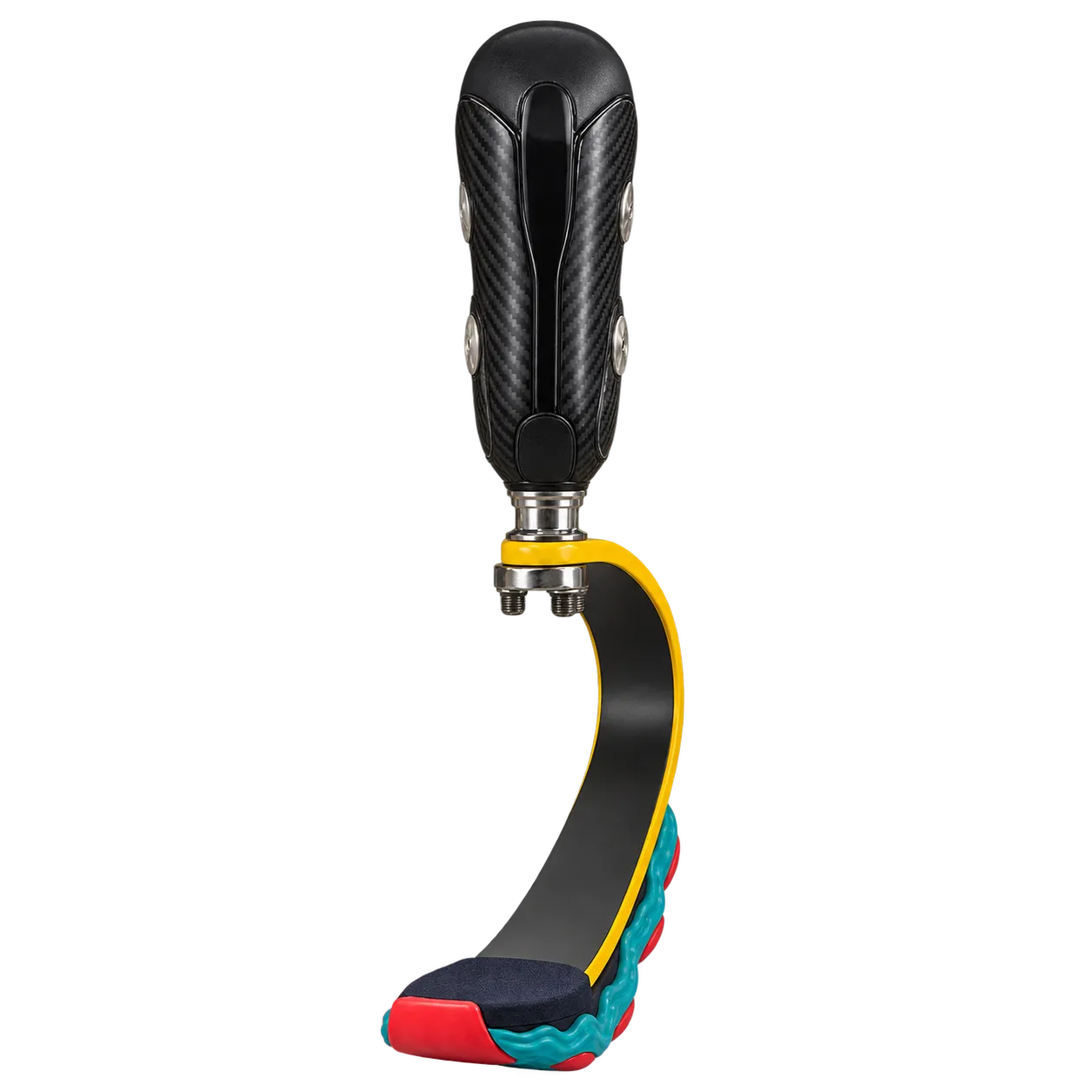
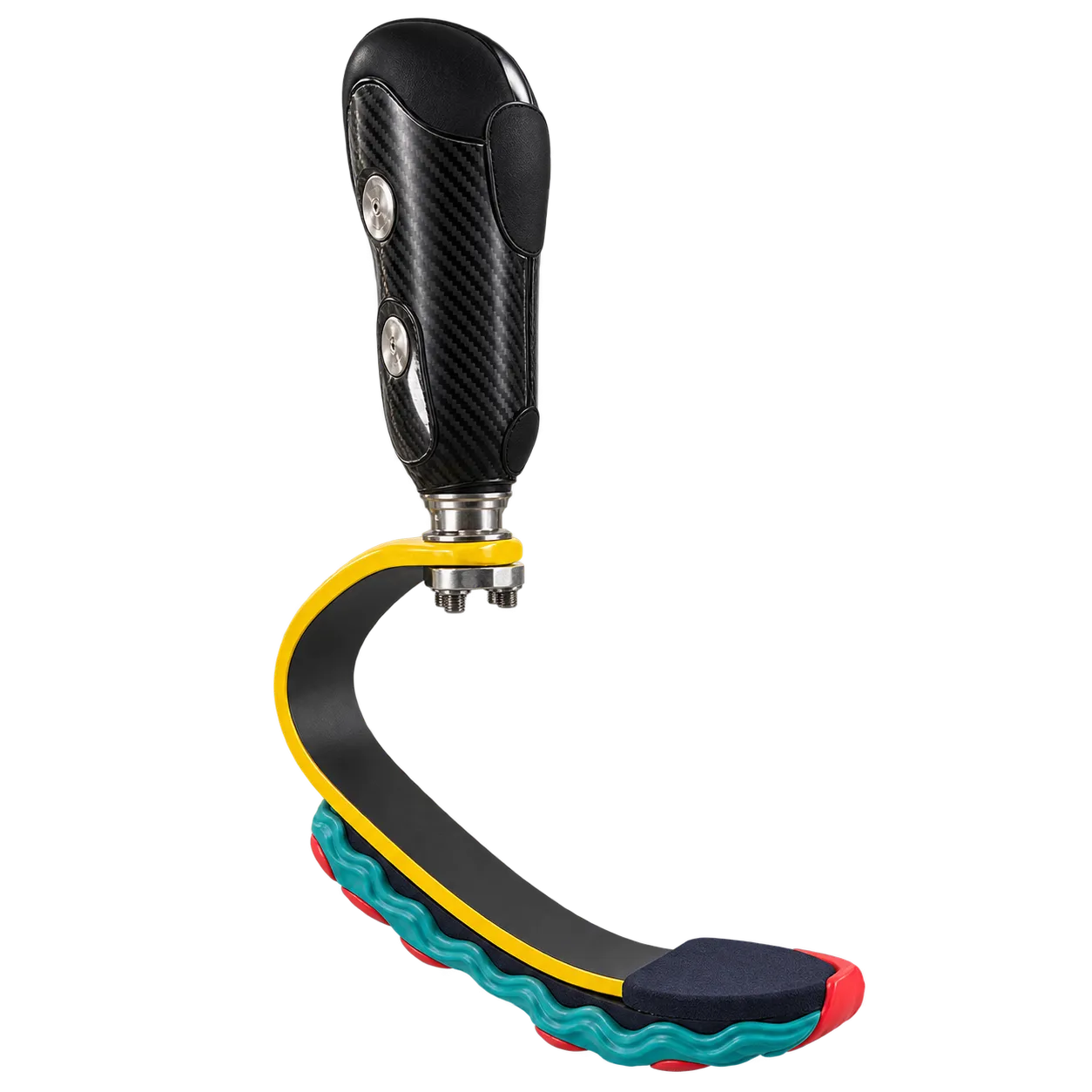
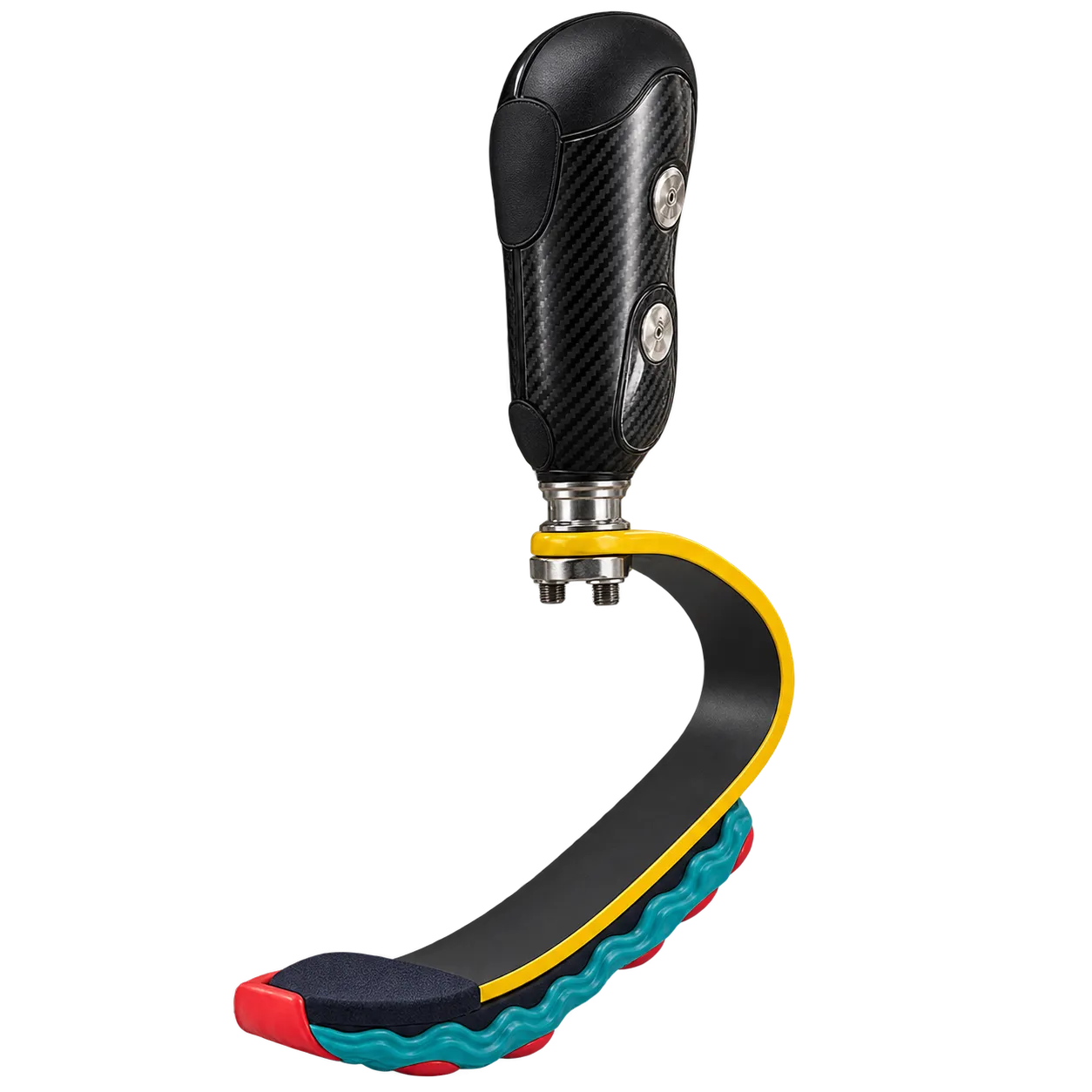
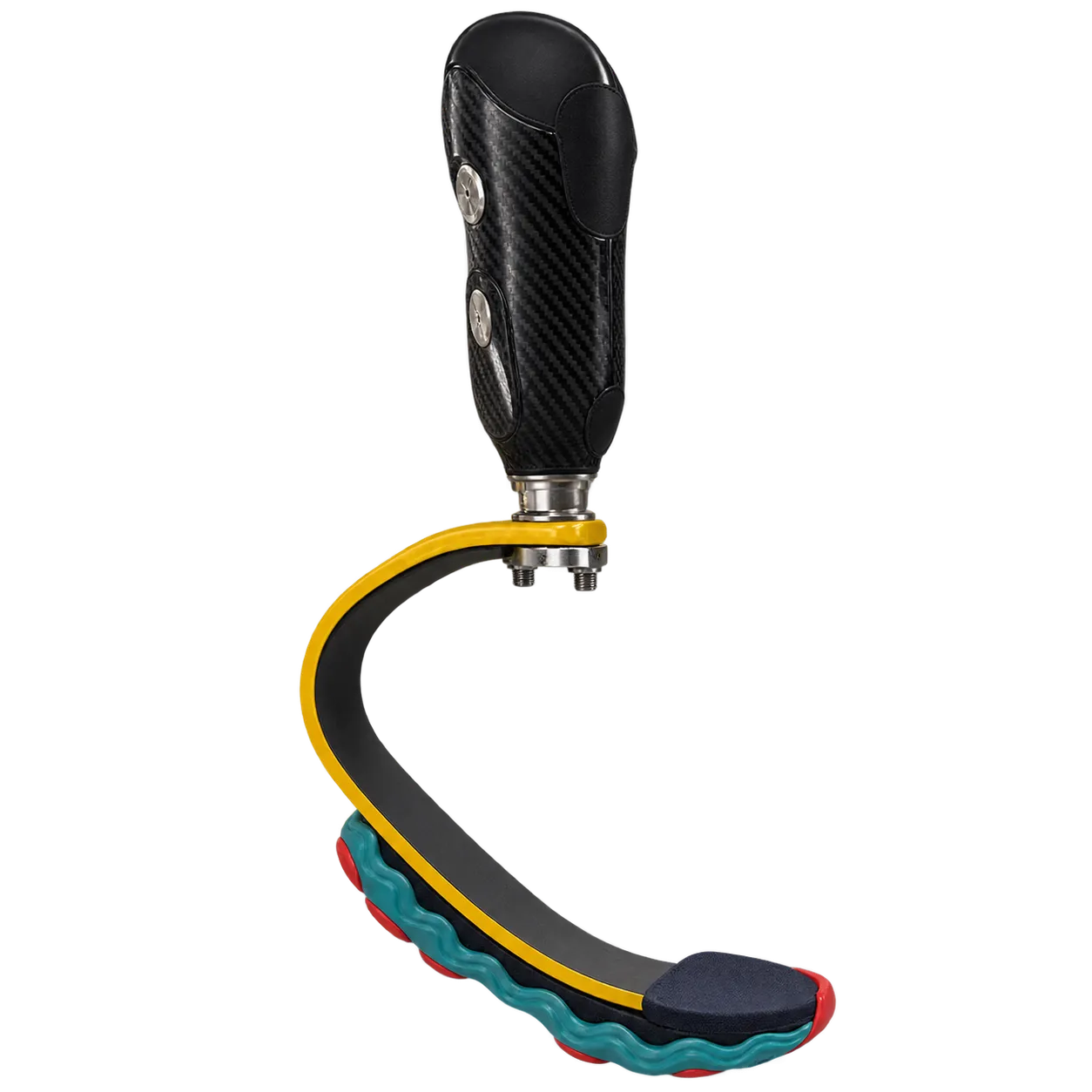
Prosthetic centres and limb-fitting services with a sport pathway are the main users. The assembly suits adults from 70 to 110 kg assessed as ready for high-impact activity, provided the socket can be made or adjusted to fit their residual limb. The amputation level is not stated, so confirm it before adding the assembly to a fitting protocol.
Adaptive sport programmes and clubs can use the assembly to equip athletes with a dedicated sport limb in one order. The prosthetist still fits the socket, aligns the assembly and supervises a trial, and the athlete keeps a separate daily walking prosthesis.
Rehabilitation services running return-to-sport programmes can use it at the later stages, once the user walks confidently and the residual limb volume is stable enough for a sport socket. Record the trial and the socket fit before the limb is released for training. A written note of liner, suspension and alignment settings makes later socket adjustments quicker and more consistent.
Charitable programmes supporting amateur sport for amputees can use a single-order assembly where local socket-making capacity is limited, provided the seller's sizing method works with the measurements the programme can take. Export buyers should confirm the socket specification, sizing method, lead time and liner before placing an order.
The assembly is not suited to users above 110 kg or below 70 kg, to children, to household walkers, or to anyone whose limb the supplied socket type cannot fit. The conformity documentation those procurement routes require is issued by the manufacturer and provided by the seller.