
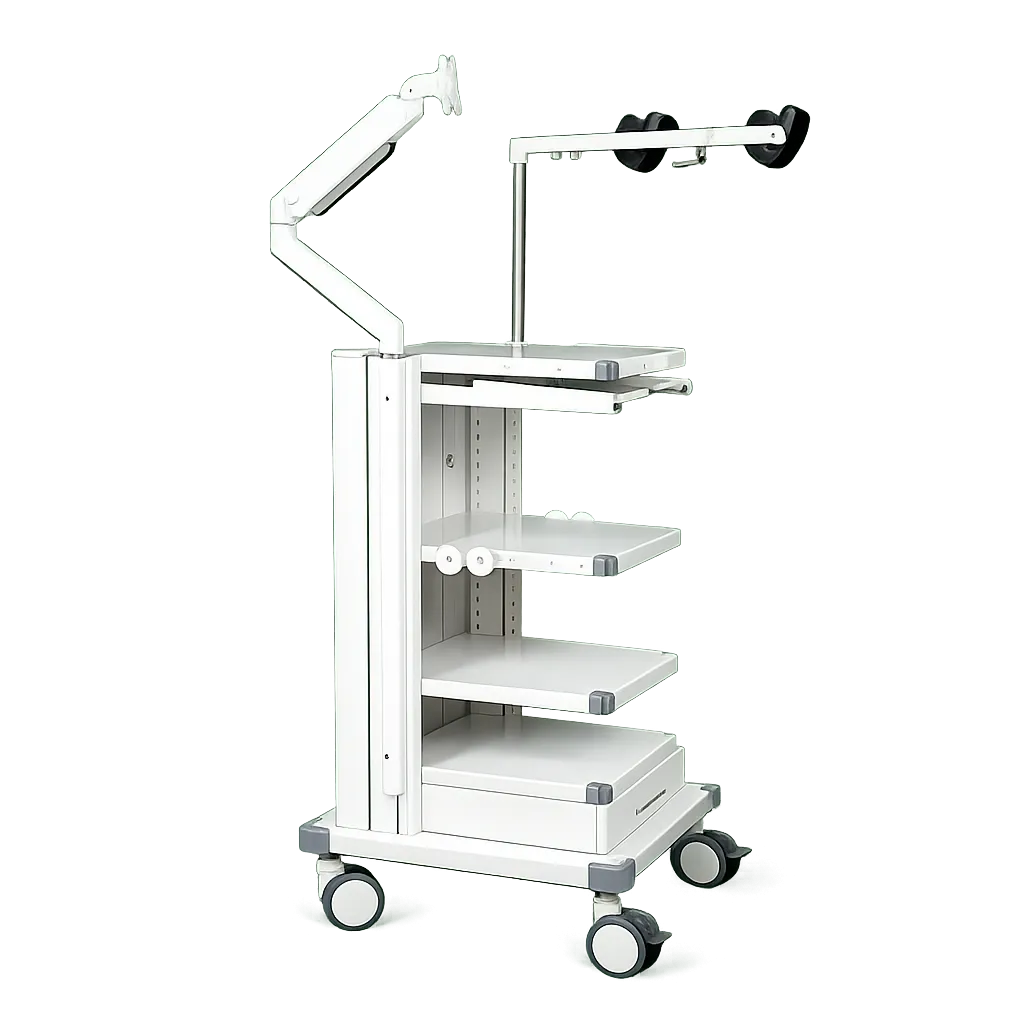
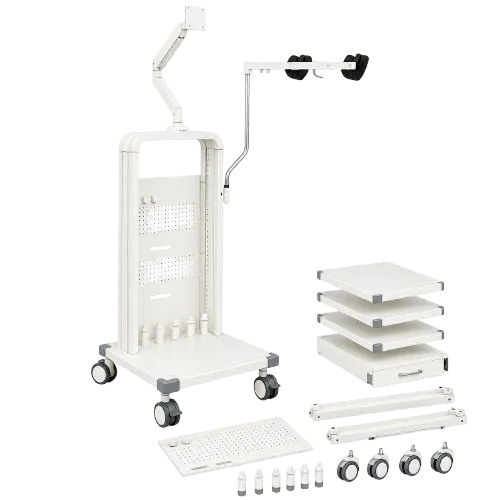
The procedure and treatment rooms suit a cart that can be stored in two ways at once. Devices sit on open shelving where they can be reached, ventilated, and cabled, while consumables, small instruments, and paperwork go into the drawer, where they stay contained and out of sight. Departments running carts with open shelving alone almost always add a box or tray to compensate, which then has nowhere secure to sit. Medigear.uk supplies the CA-07 on the basis that certification, load ratings and manufacturer identity are established before any clinical procurement decision.
Areas where carts are left unattended between uses benefit if the drawer locks, since that determines whether anything of value or sensitivity can travel on the trolley at all. This is a specification question rather than an assumption, and on a multi-cart order, der whether locks are keyed alike matters as much as whether they exist. Medigear.uk confirms the locking provision and key arrangement at the time of enquiry.
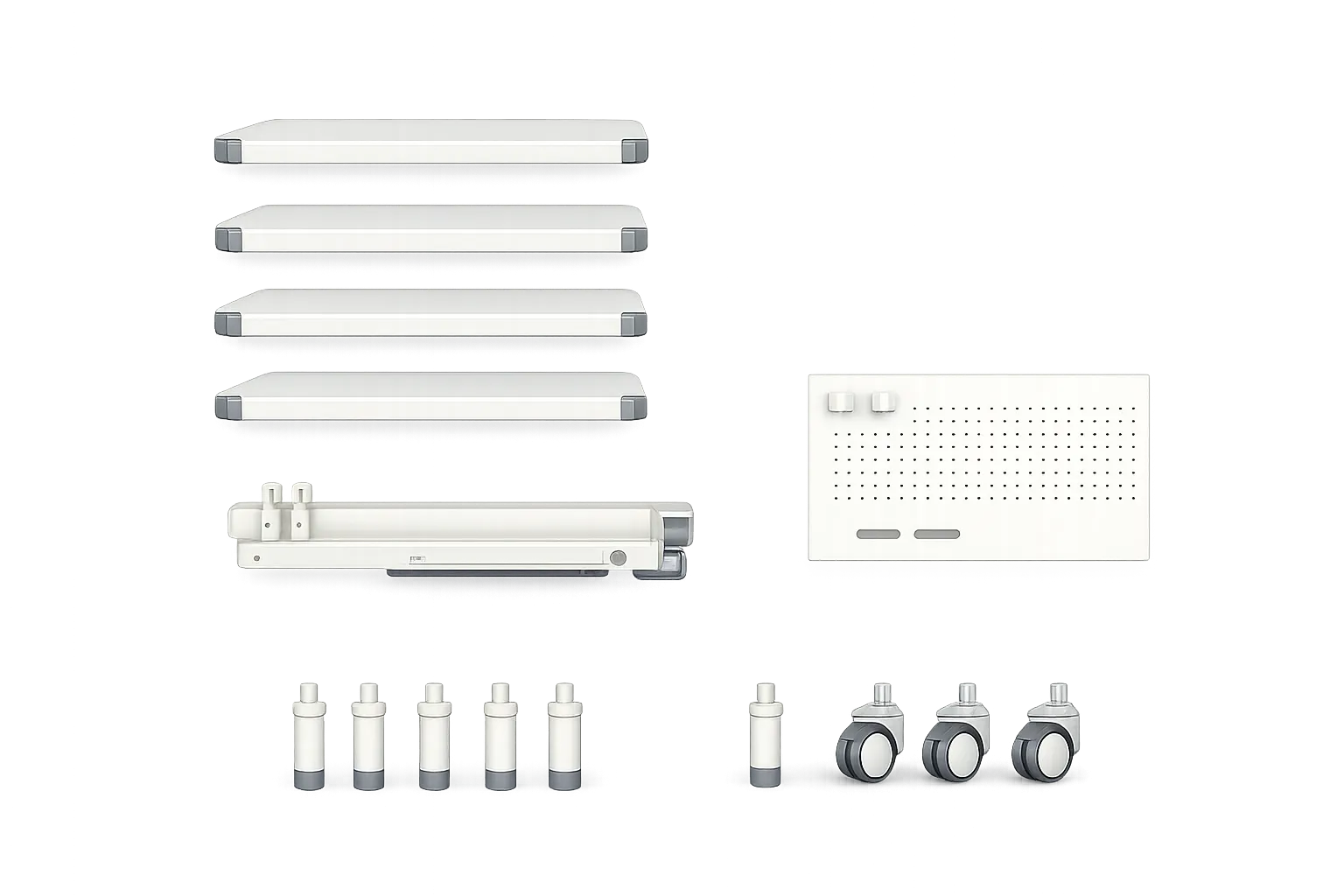
Departments consolidating several devices onto one platform depend on the slotted column and clamp brackets, which allow shelf heights to be set around the equipment rather than the equipment being chosen to fit fixed gaps. Placing the drawer at the base also keeps the heaviest contents low, which matters for stability when a loaded cart is pushed across thresholds. Adjustment range and increment are confirmed with the manufacturer.
Speciality applications cannot be stated until the padded cradles on the upright post are identified. Depending on its intended function, this cart may be configured for a specific procedural discipline rather than general equipment transport, which would change both its positioning and the departments to which it should be offered. Medigear.uk establishes that with the manufacturer before listing.