
Intraocular Pressure Measurement
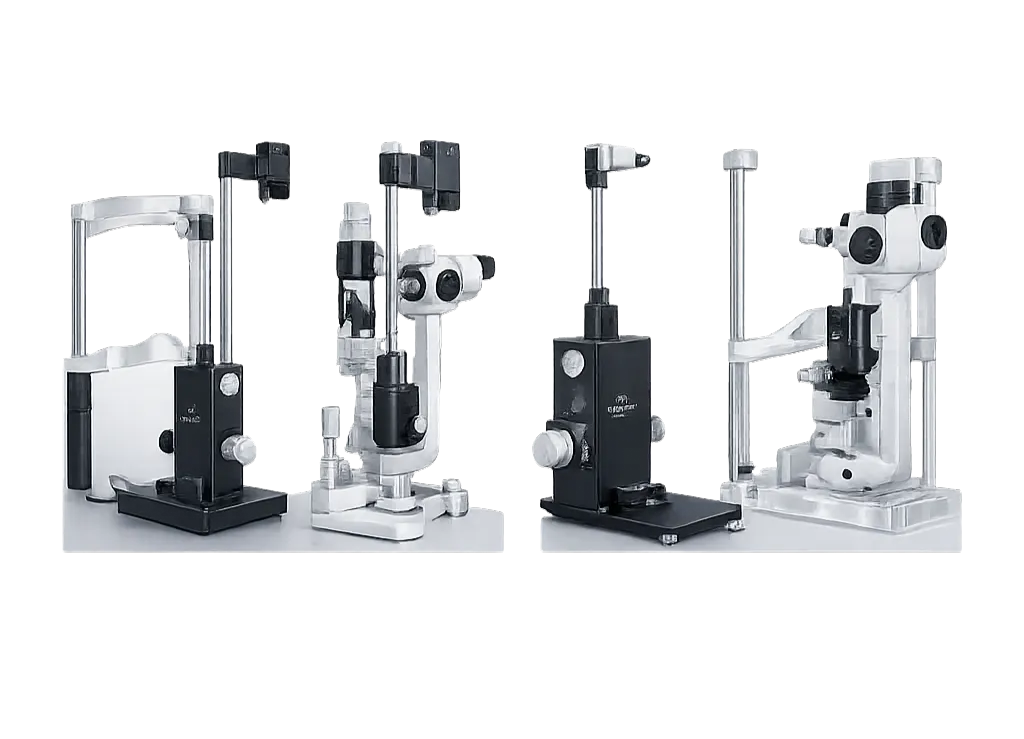
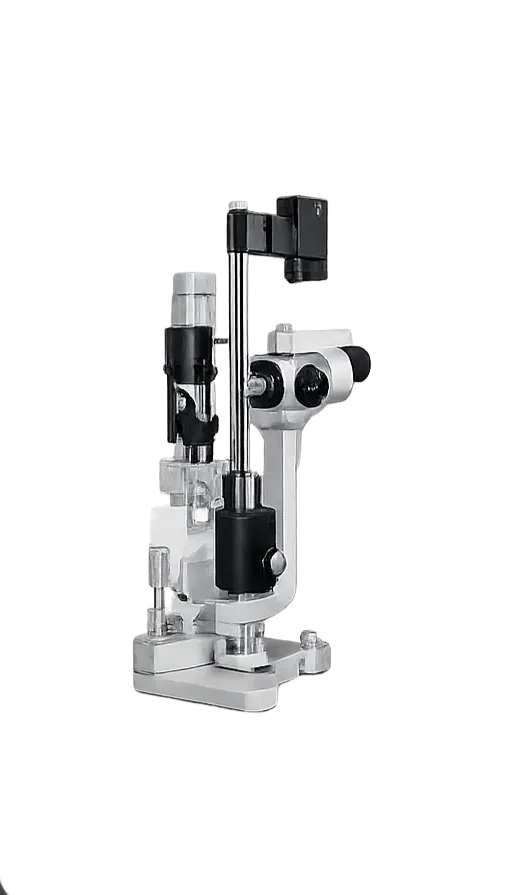
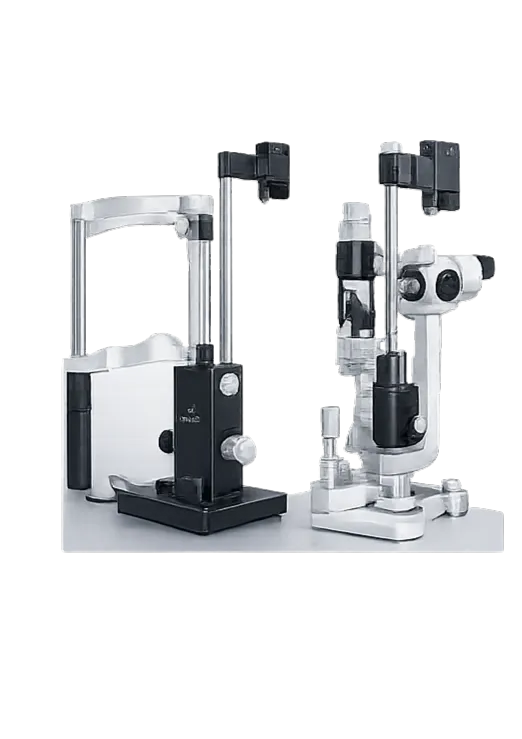
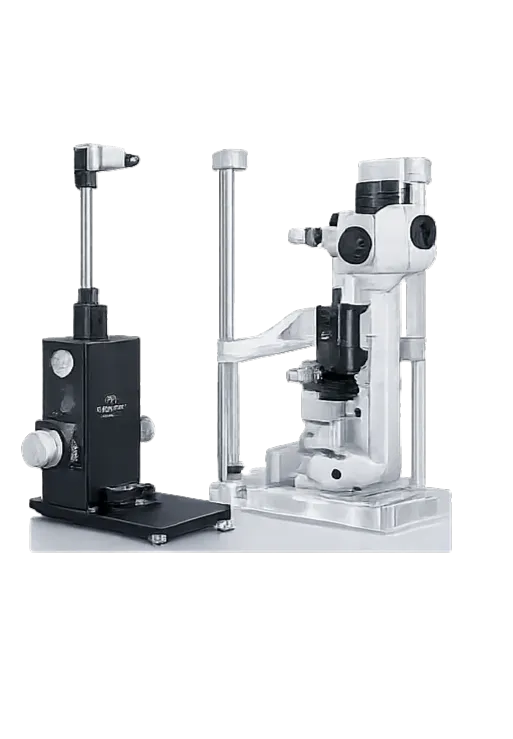
Applanation measures pressure by flattening a defined area of cornea and recording the force required, with the prism brought into contact under slit lamp illumination. Readings inform clinical assessment; how they are interpreted and what follows from them rests entirely with the clinician performing the examination. The instrument measures; the clinician decides what follows. Illumination and magnification come from the lamp itself. Force required to flatten the area gives the reading.
Glaucoma Assessment and Monitoring
Pressure measurement forms part of glaucoma assessment alongside examination of the optic disc, visual field testing and corneal thickness. No single measurement determines management, and a tonometer contributes one input to a picture the clinician assembles from several sources over time. Several inputs assemble into a picture over time. Corneal thickness and disc appearance both enter that picture. Management follows from the whole picture rather than one figure.
Departments With Existing Slit Lamps
Because the instrument mounts rather than standing alone, it suits departments already equipped with a slit lamp. Compatibility between the tonometer fitting and the particular lamp is the practical question to settle, and Medigear.uk will confirm it against the equipment in use. Existing equipment determines whether it can be fitted. Compatibility is the practical question to settle first. Adding pressure measurement to an existing lamp stays contained.
Services Reviewing Infection Control
Any instrument contacting the cornea of successive patients falls within a department's decontamination policy. What the prism is made of, whether it is reused and how it is disinfected all need answering before the instrument enters service rather than afterwards. Policy questions belong at the outset rather than later. Successive patients make the question a real one. Decontamination policy covers every instrument touching the eye.