
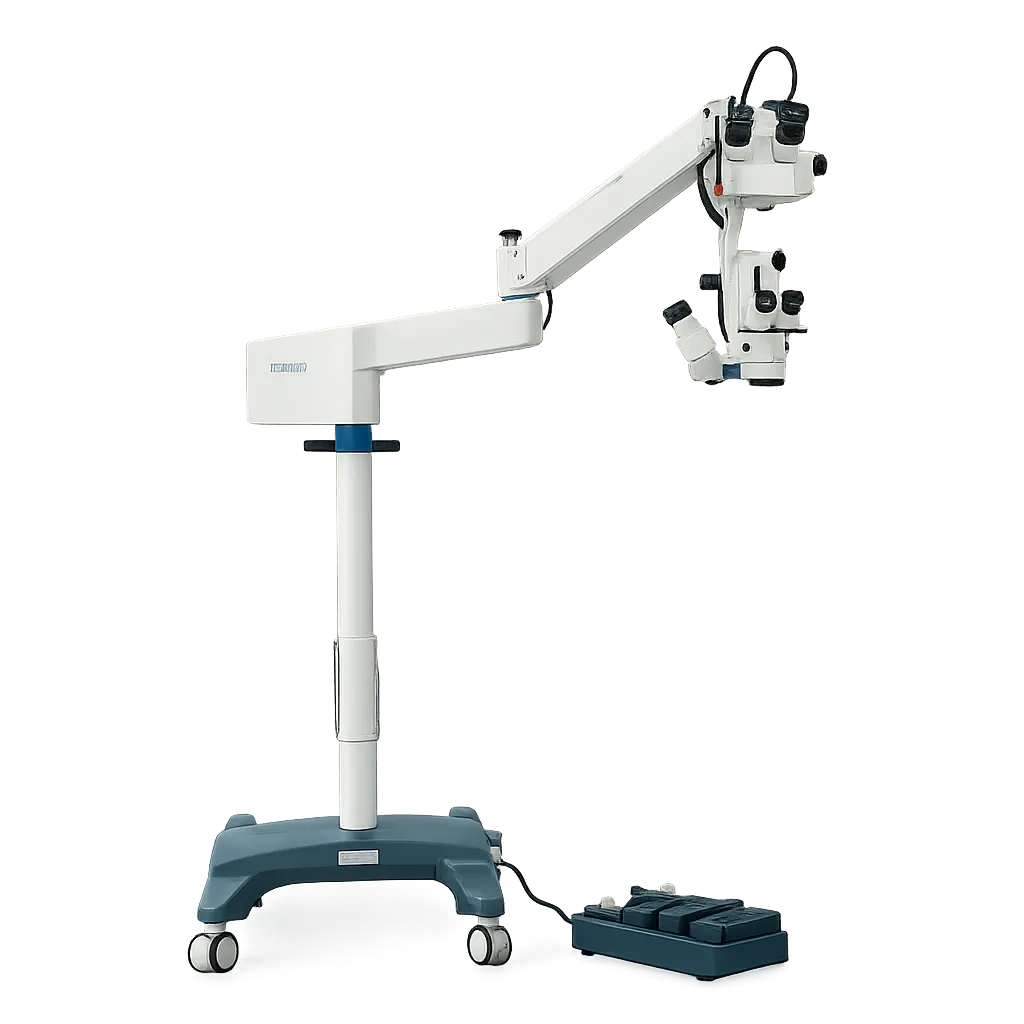
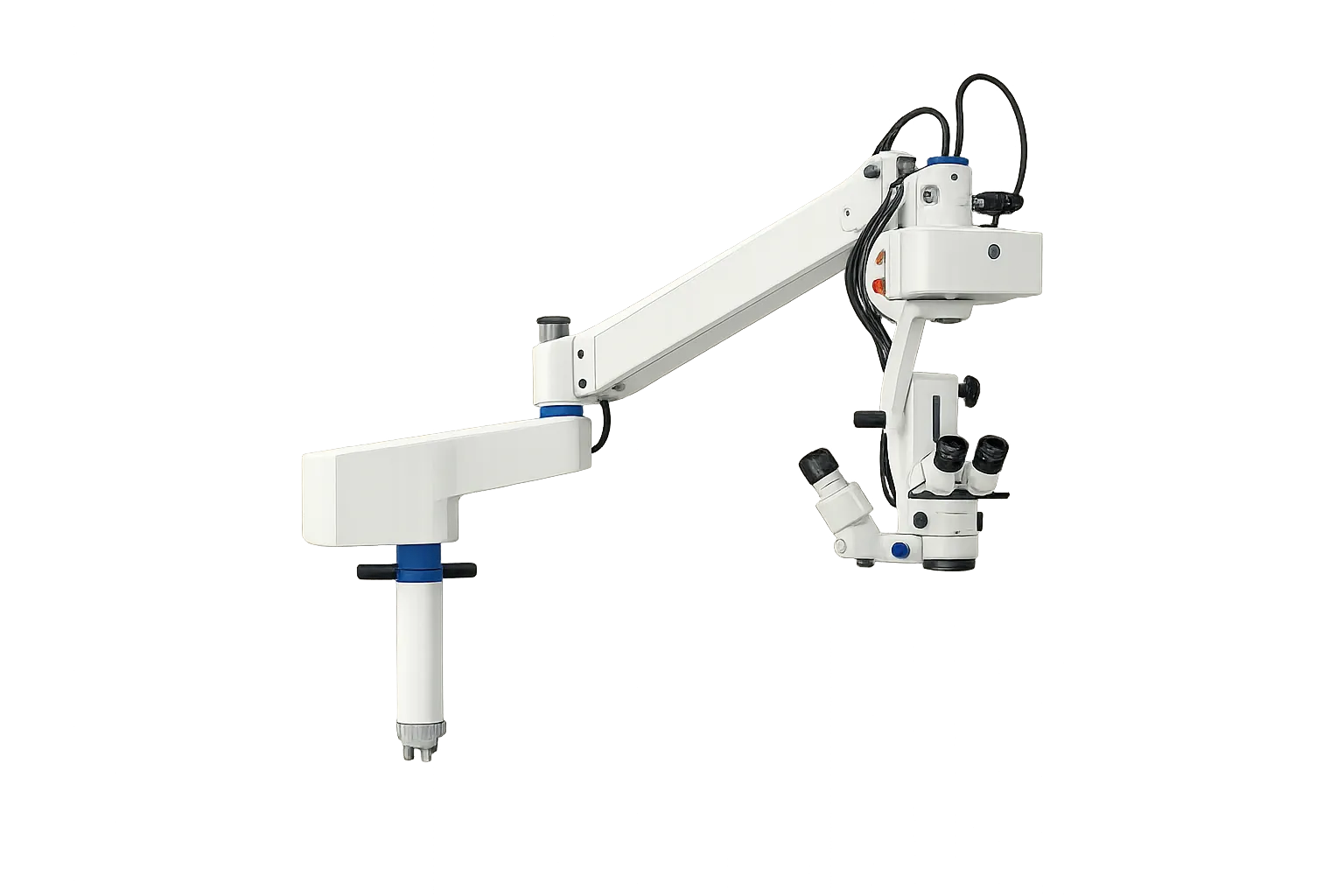
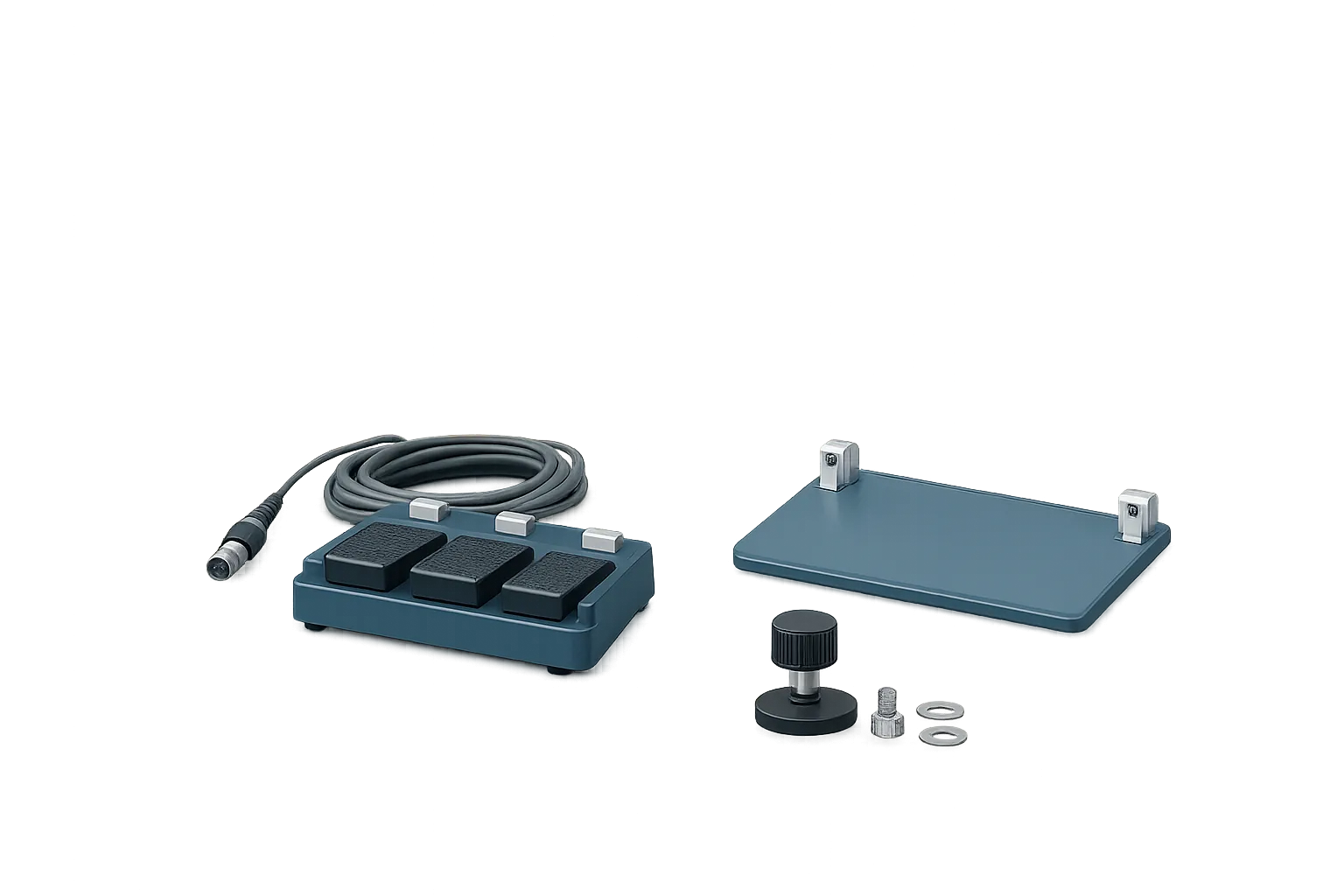
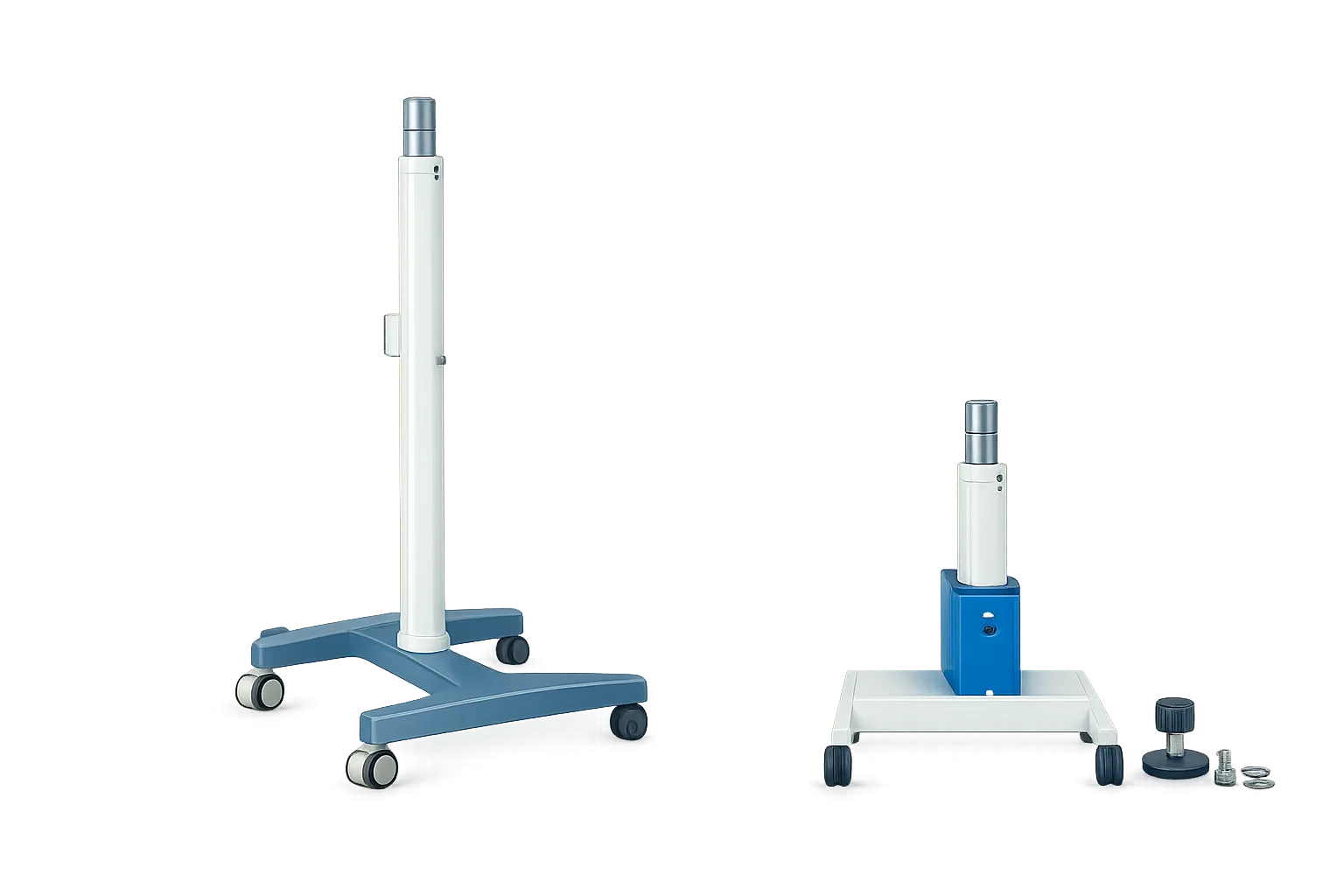
High-volume cataract services are where the fatigue argument earns its place. A surgeon working through eight or ten cases in a session accumulates optical strain from any mismatch between the two eyepiece paths, because the visual system continuously fuses images that do not quite correspond. The manufacturer states that balanced optics improve binocular fusion and reduce fatigue, and the underlying optical principle is sound. Medigear.uk supplies the manufacturer's optical documentation with the unit, and all surgical technique and clinical judgement remain with the operating surgeon.
Services where an assistant scrubs regularly benefit most from the independent fine focus beneath the assistant binocular. Surgeon and assistant rarely share the same refractive state, and where only one focus exists, the assistant either accepts a soft image or the surgeon compromises theirs. A separate adjustment removes that entirely, which matters more the more the assistant actively participates rather than observes.
Teaching units gain from the same feature for a different reason. A trainee who cannot focus for their own eyes learns from a degraded image, and no amount of explanation compensates. Combined with 119 LP/mm resolution and the option of an LCD, the instrument supports teaching that shows detail rather than approximating it.
Services documenting procedures can connect a CCD or video camera taking the image from the primary optical path. Interface type and accessory supply are confirmed in the quotation against what a unit already owns, so a service is not paying twice for a camera it already has and cannot use, or discovering at installation that a coupler is missing.