
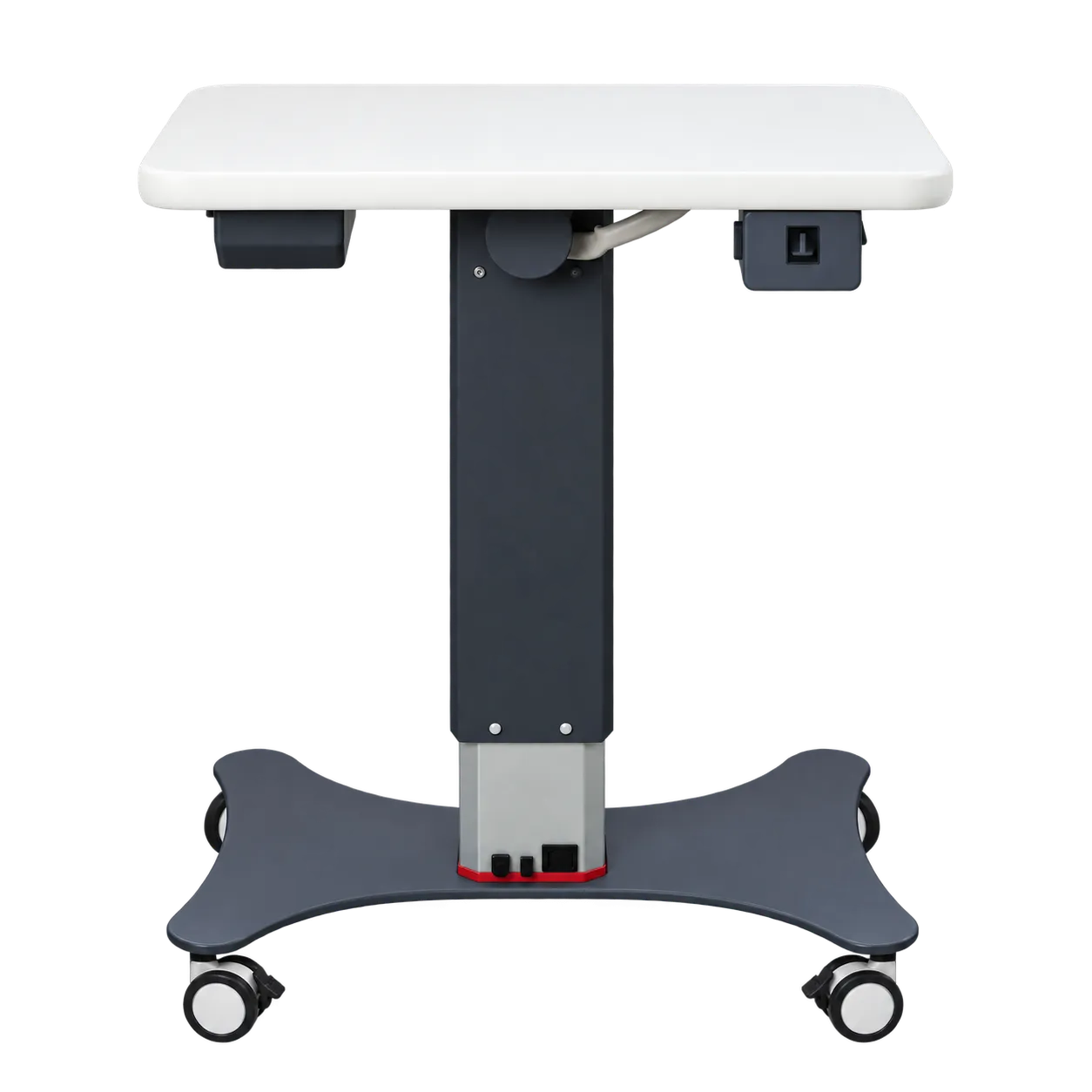
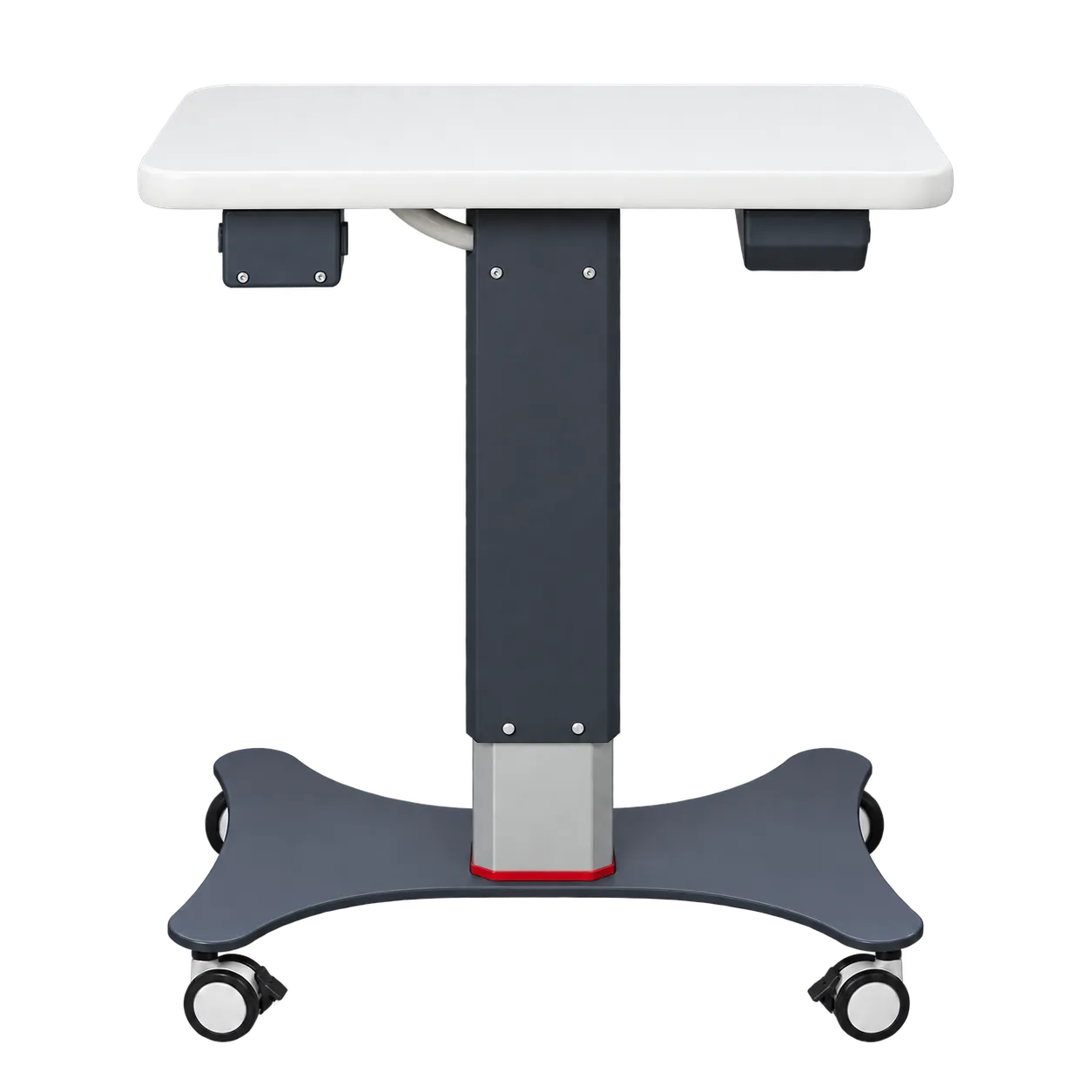
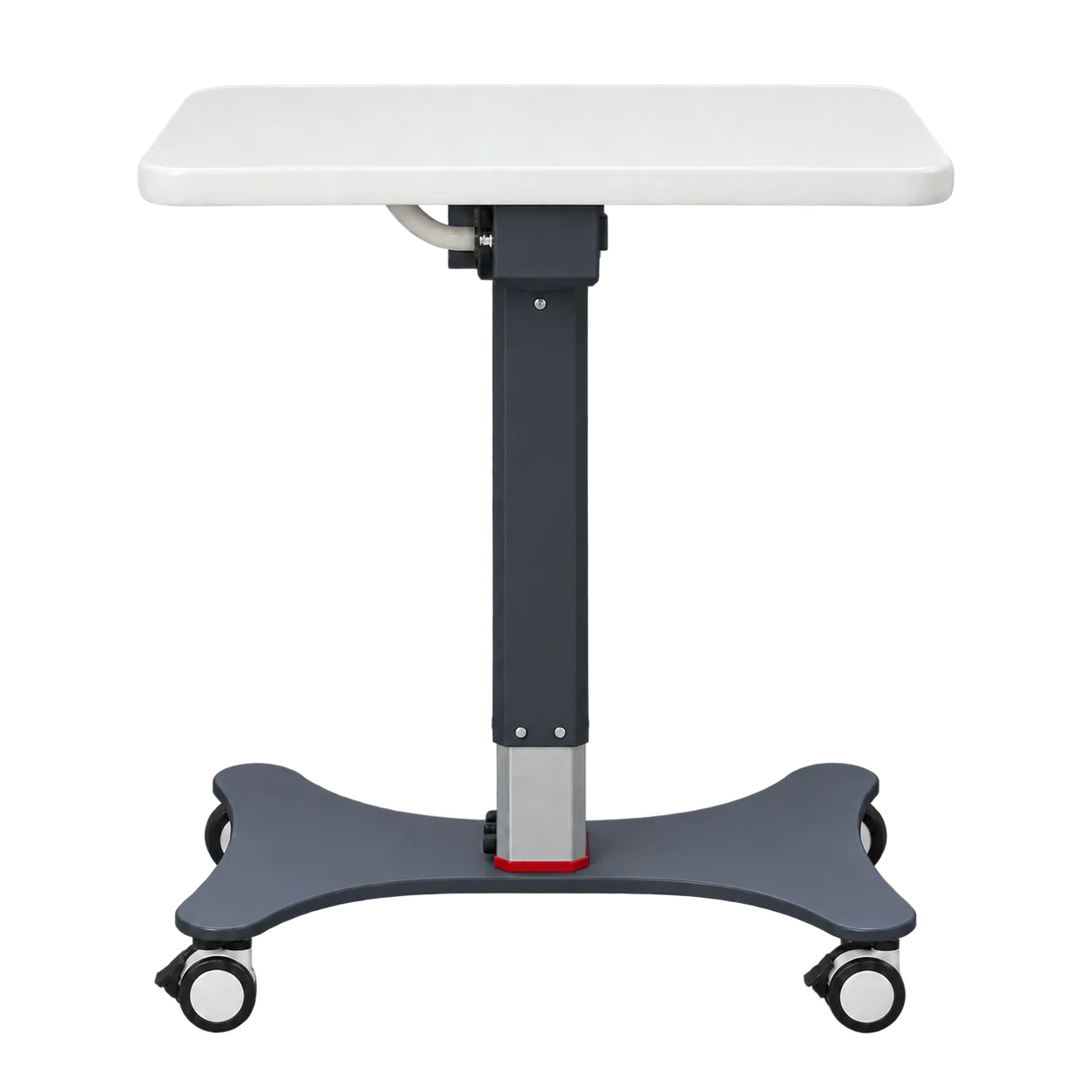
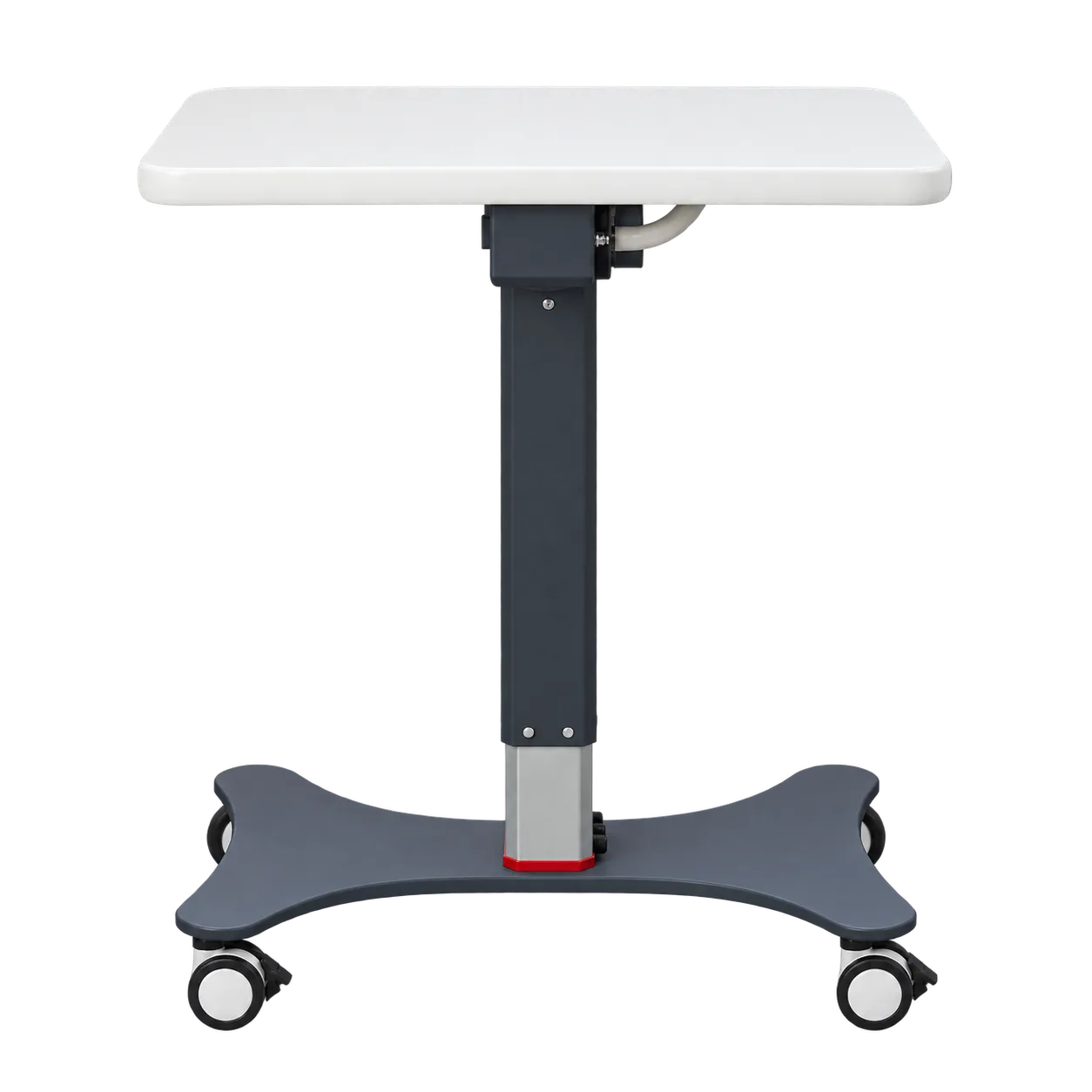
Rooms where patients sit close to the instrument benefit most. Autorefraction, tonometry and slit lamp work all bring the patient forward, and a base that keeps its metal at the diagonals rather than under the feet can make that approach easier. Trial it, since the gain depends on how the table is turned.
Wheelchair-adjacent positions may improve for the same reason, though the height range is unpublished and the column still occupies the centre, so this is not a substitute for a dedicated accessible position.
Contemporary practice interiors suit the charcoal finish, which reads differently from the white and pale grey used across most ophthalmic furniture. In rooms where patients see the equipment, that can matter to the overall scheme.
Connected pre-test positions gain from the 600 × 500 mm top, which holds an instrument with room beside it for a keyboard or a printout.
Deeper instruments fit more comfortably here than on shallower tables, since 500 mm front to back suits longer autorefractors and combined devices.
Multi-room practices can wheel the table at 25 kg on four castors when clinics are reconfigured.
Heavier imaging work is well within the 100 kg rating, subject to a lean test for movement-sensitive measurements.
Tight rooms need the base lobes checked against skirting, chair legs and door swings before the table is positioned.