
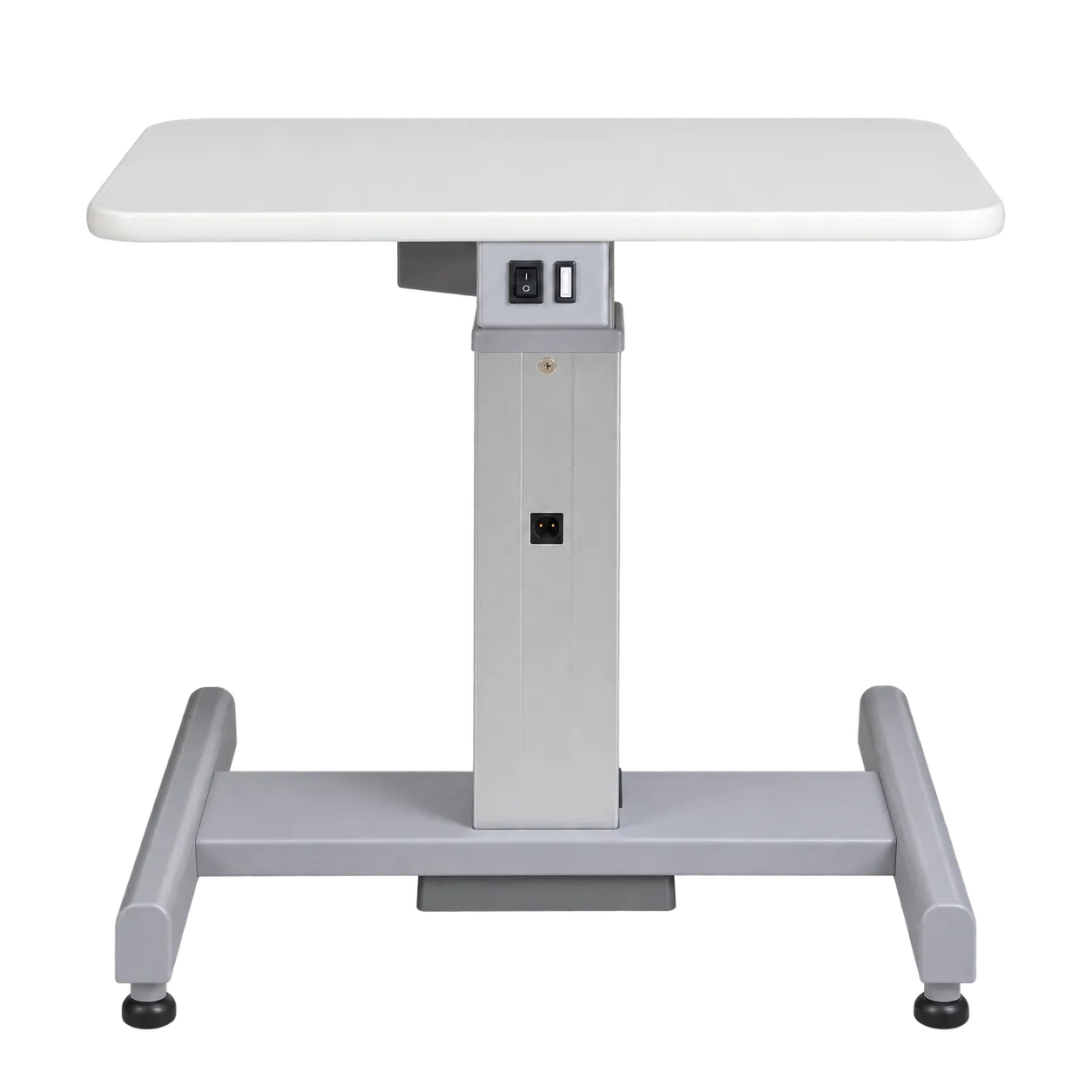
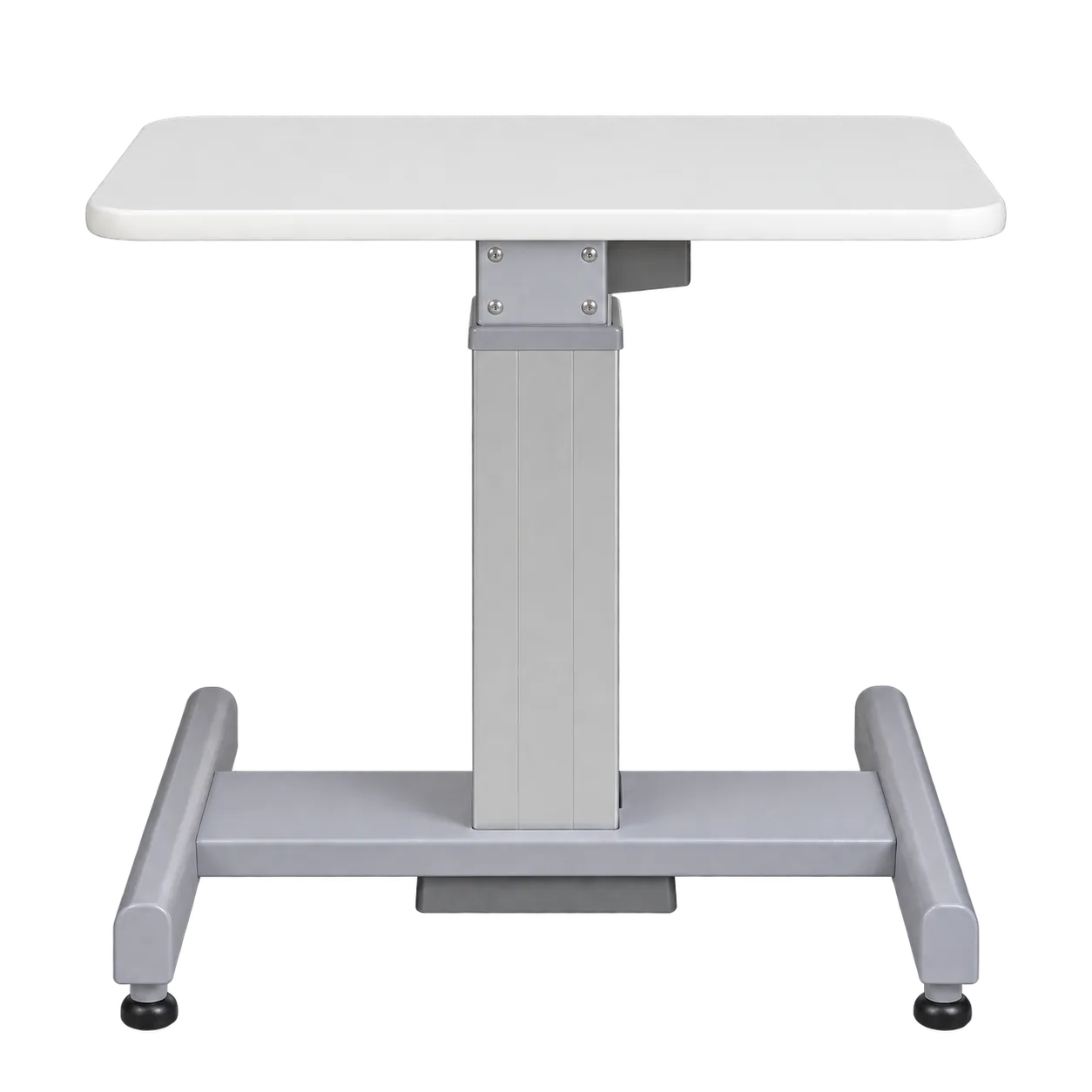
Two-instrument pre-test positions are the natural home. A lensmeter beside a keratometer, or a tonometer beside an autorefractor, lets an assistant complete both measurements from one position while the patient stays seated and simply turns their head.
Connected instruments benefit from the width, since a keyboard or a small printer can sit beside the device rather than on a separate surface. Results can be entered without leaving the patient, supporting the accurate, contemporaneous records the GOC expects.
Compact rooms gain the most. Where a second table would not fit against the wall, a single 680 mm top can carry what two tables would otherwise hold, using one socket and one lift.
Dispensaries can pair a lensmeter with frame tools and paperwork along the same surface, at a height set for the person using it.
Hospital eye service pre-assessment areas can standardise a two-measurement station, so patients pass a single point rather than moving between tables.
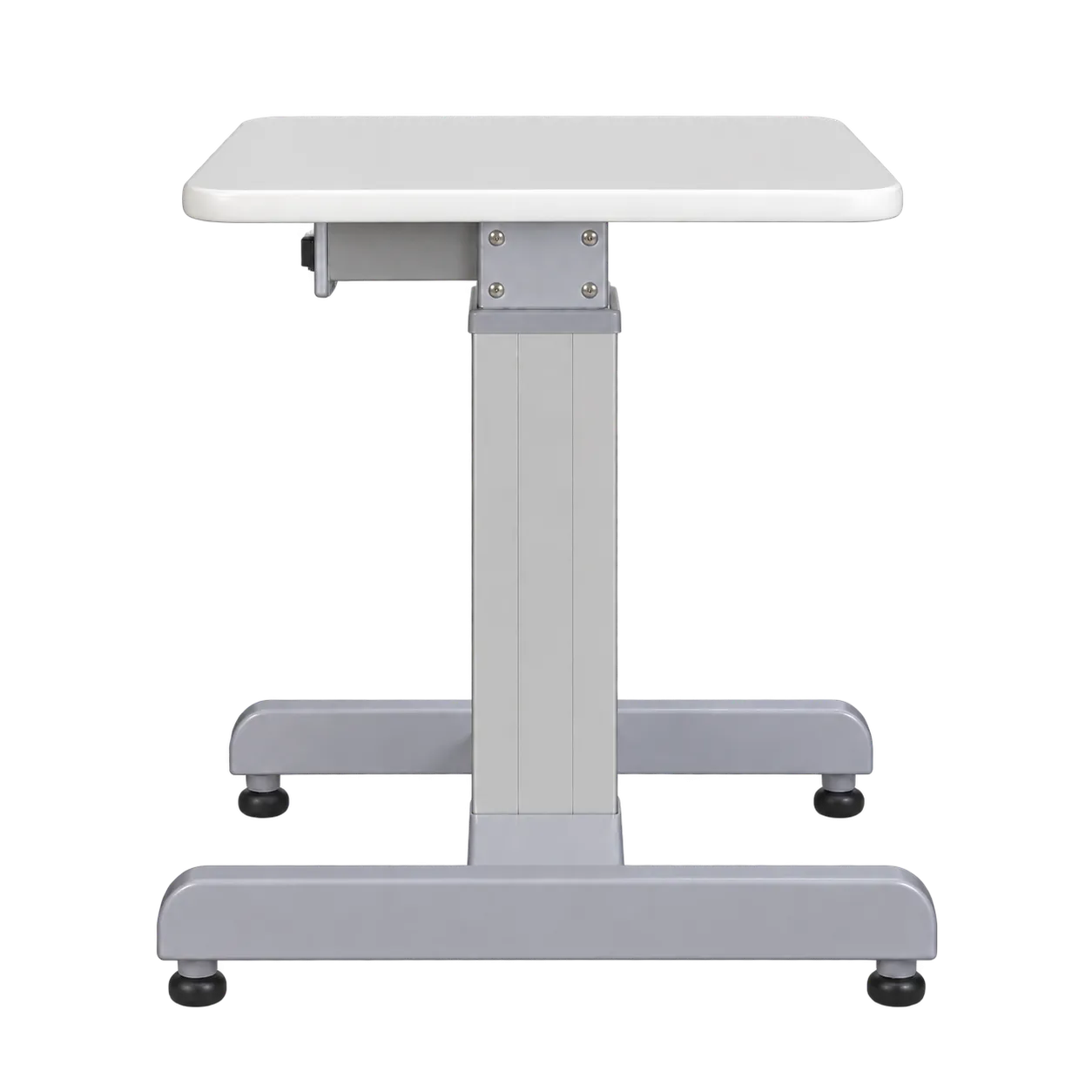
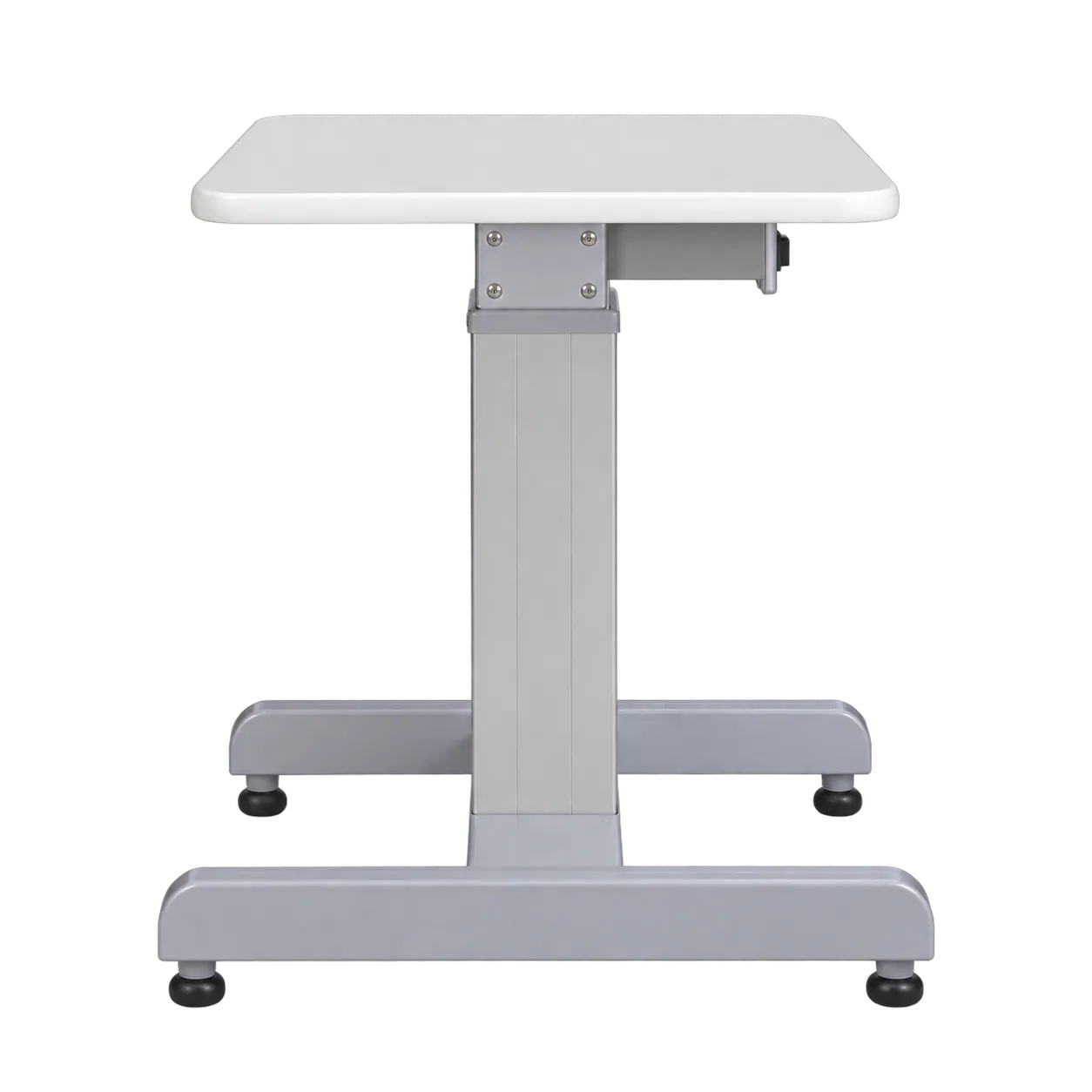
Deeper instruments need checking against the 420 mm depth before this table is specified, and imaging devices in particular are often too deep.
Instruments needing different heights are not well served by a shared top, since one lift sets both.
Wheelchair users need the height range confirmed first, as the datasheet does not publish it.