
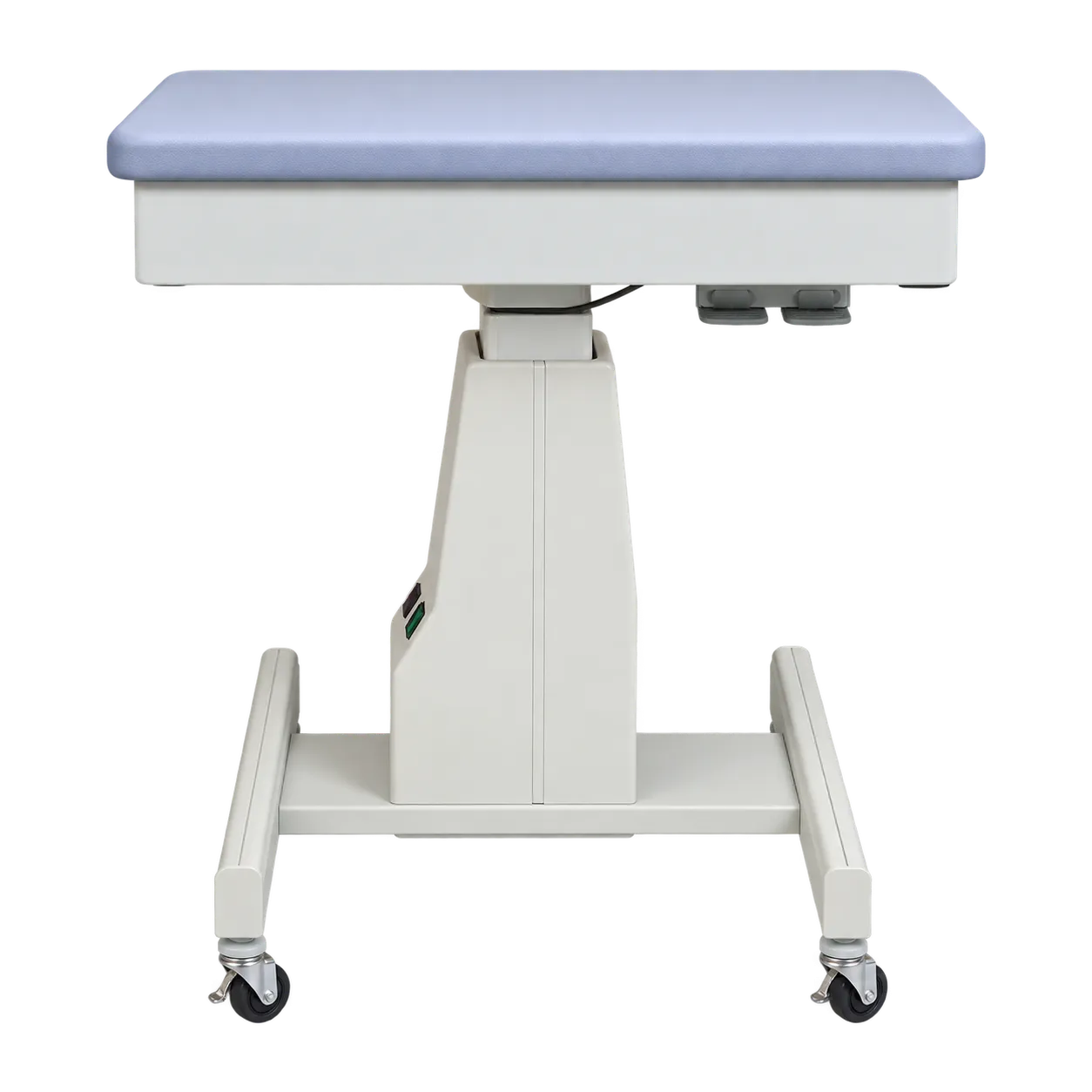
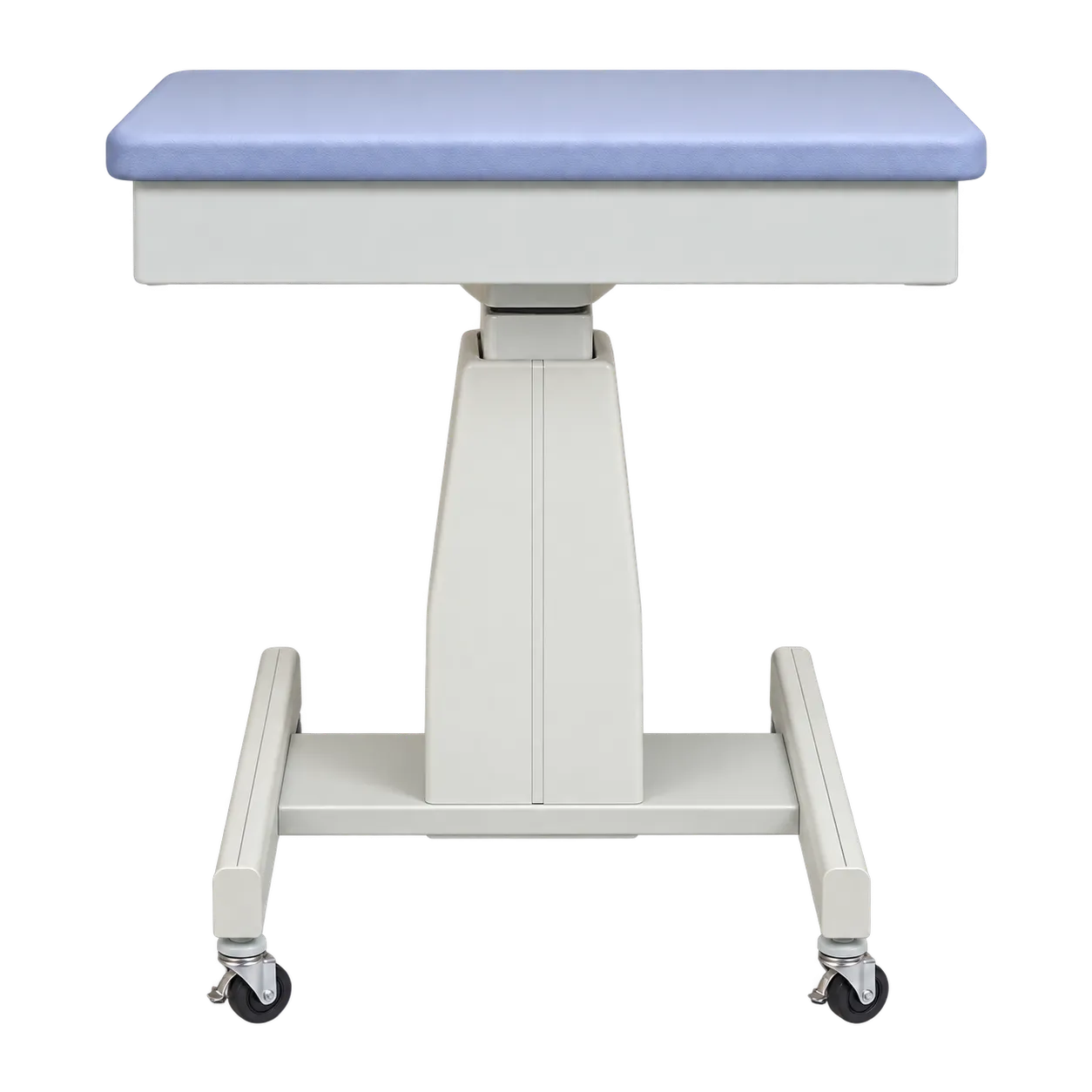
Everyday pre-test positions are the natural home. Autorefraction and tonometry consume chinrest papers, wipes and occluders continuously, and a drawer beneath the instrument keeps them within reach without cluttering the top or sending an assistant across the room.
Consulting rooms benefit from the same arrangement at a slit lamp or keratometer, with fluorescein strips, cloths and small tools stored below and the 85 kg rating covering an instrument with an imaging module.
Shared rooms gain from a drawer that holds a complete consumables set, so each clinician finds the room stocked at the start of a session.
Contact lens work suits the storage, with lens cases, removal tools and solutions kept beneath a keratometer or topographer position.
Patient-facing rooms suit the moulded base, which reads as furniture rather than as a steel frame, subject to confirming cleaning access beneath.
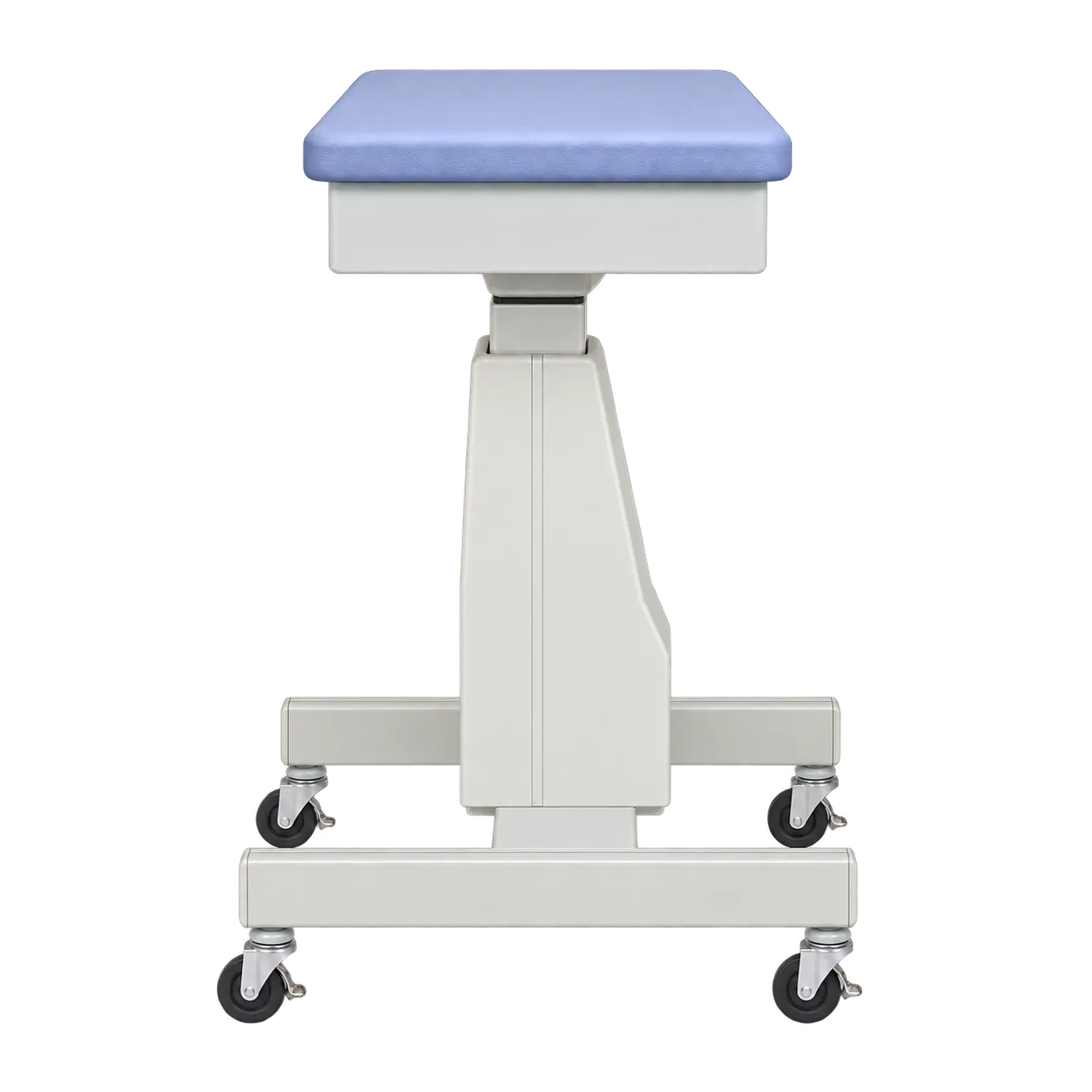
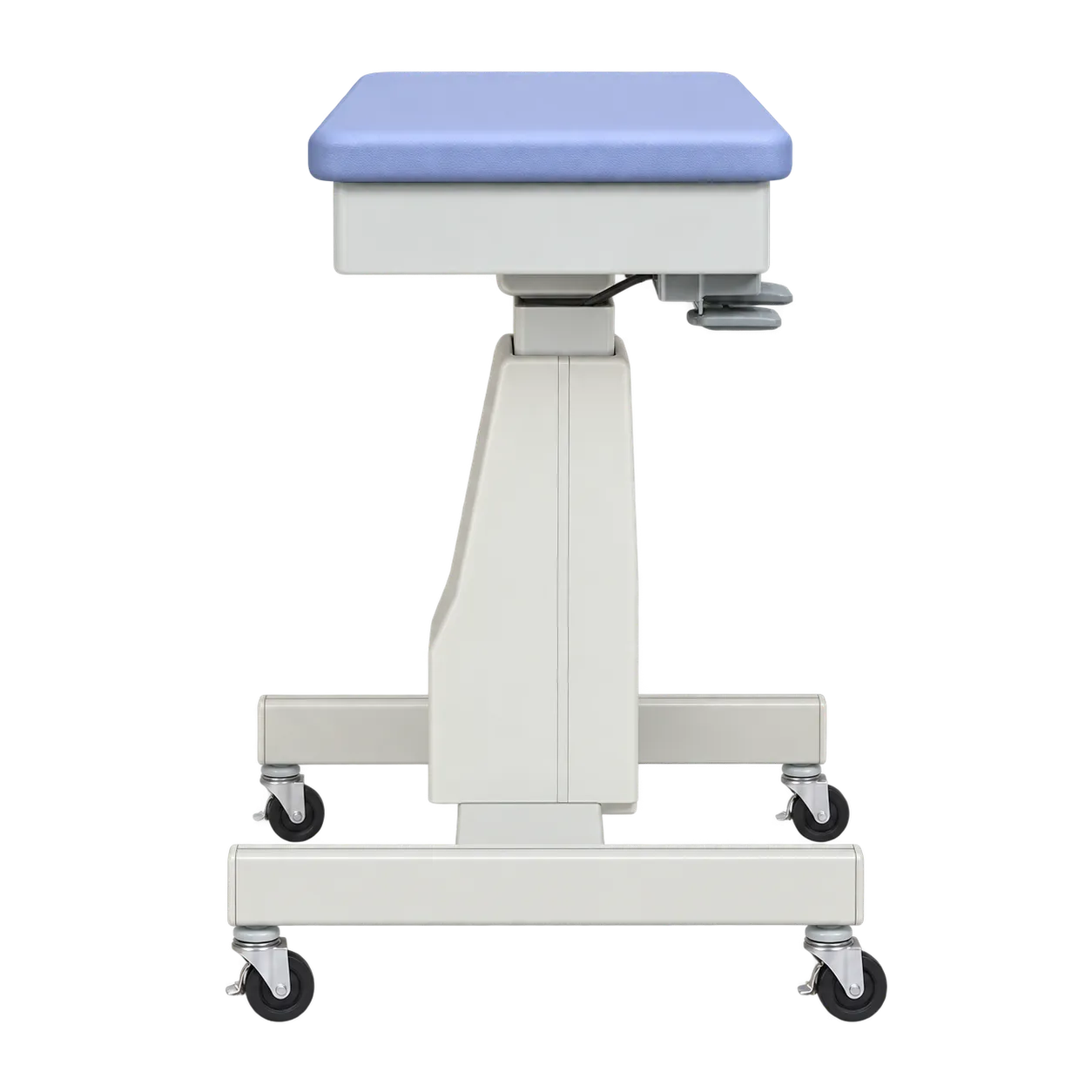
Multi-room practices can move the table on its castors, though at 35 kg it is a two-person lift rather than a one-person carry.
Paediatric use needs the height checked first, since the 665 mm lowest setting is a little above the lowest tables available and the drawer box reduces clearance.
Wheelchair users are less well served than at a drawerless table, so accessible provision should be planned elsewhere.