
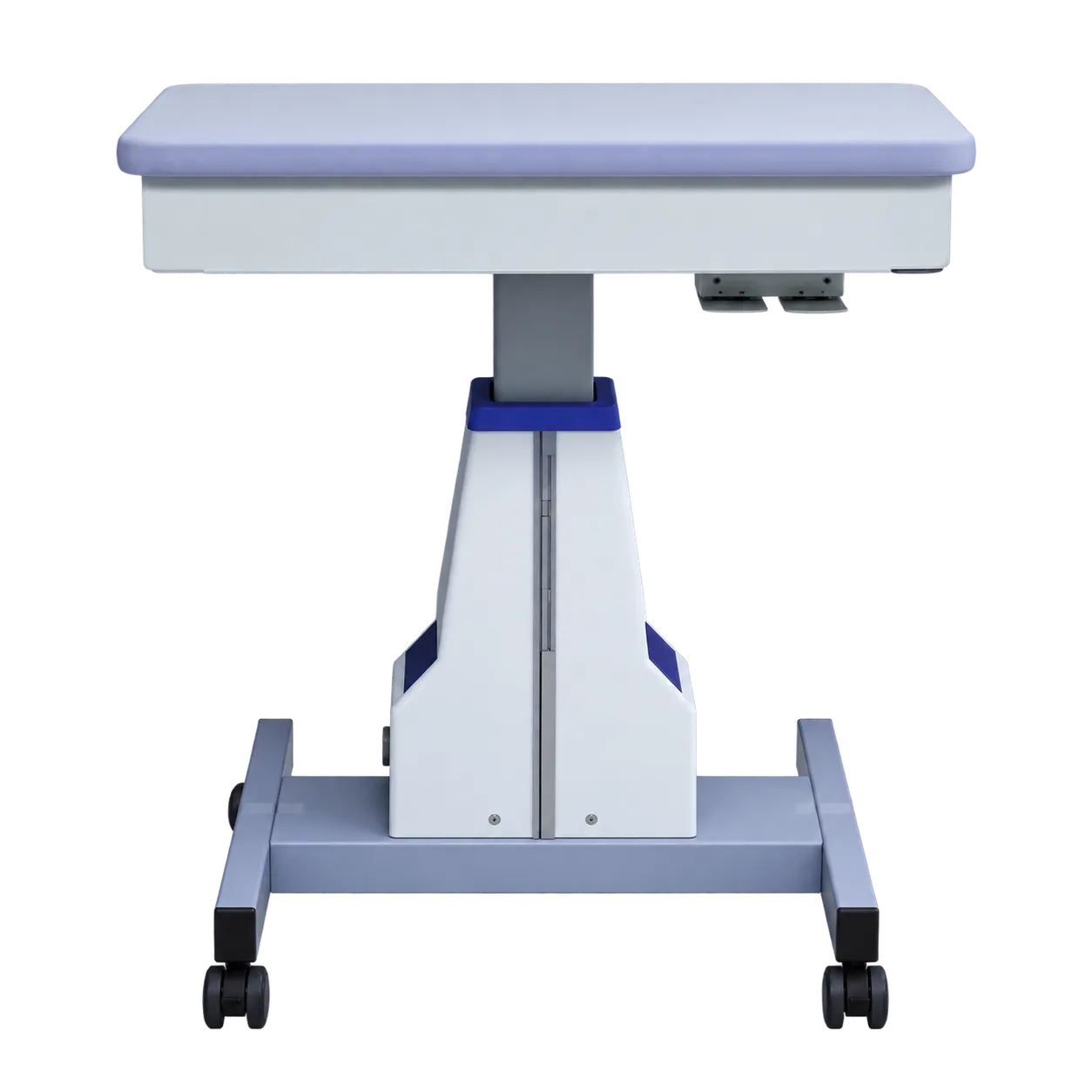
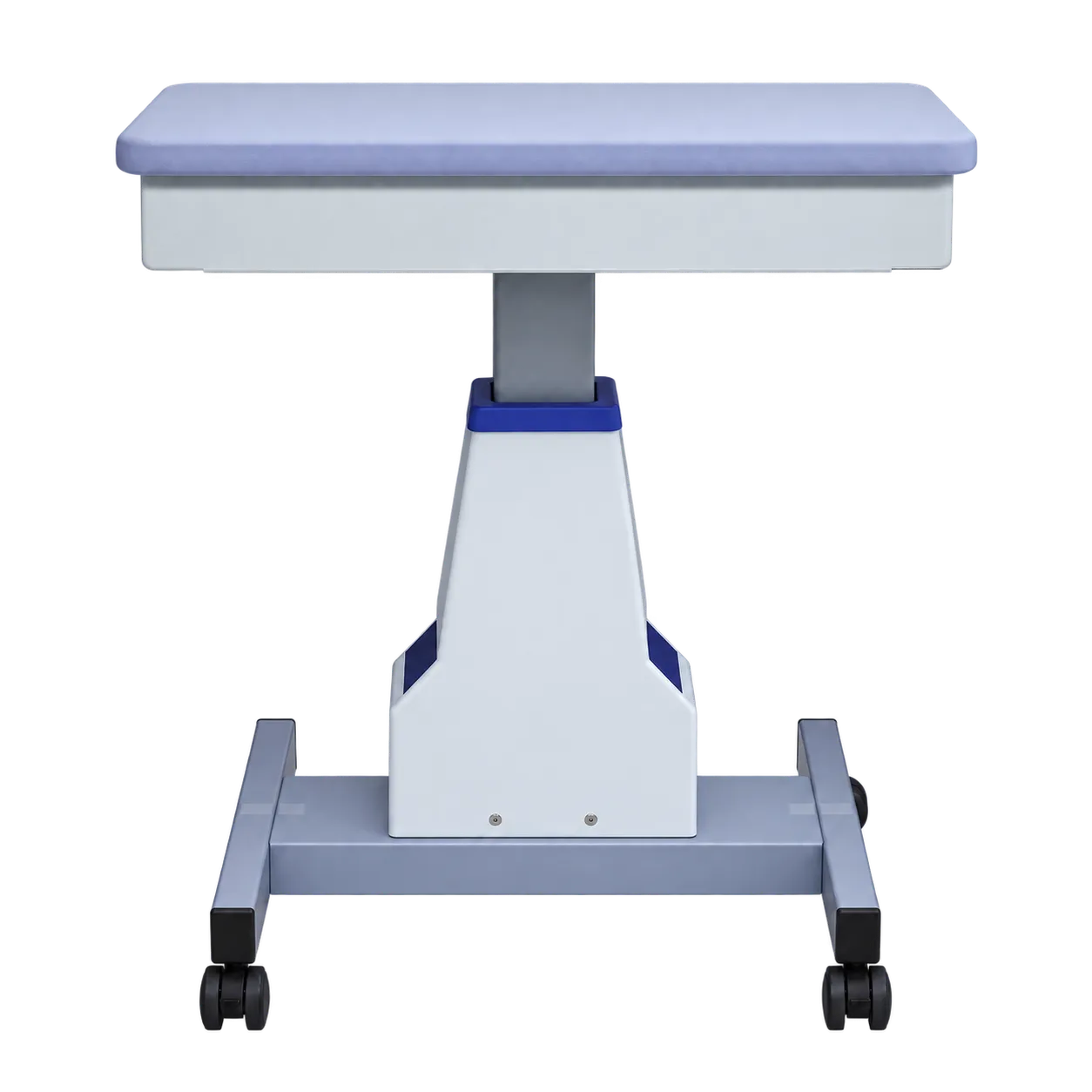
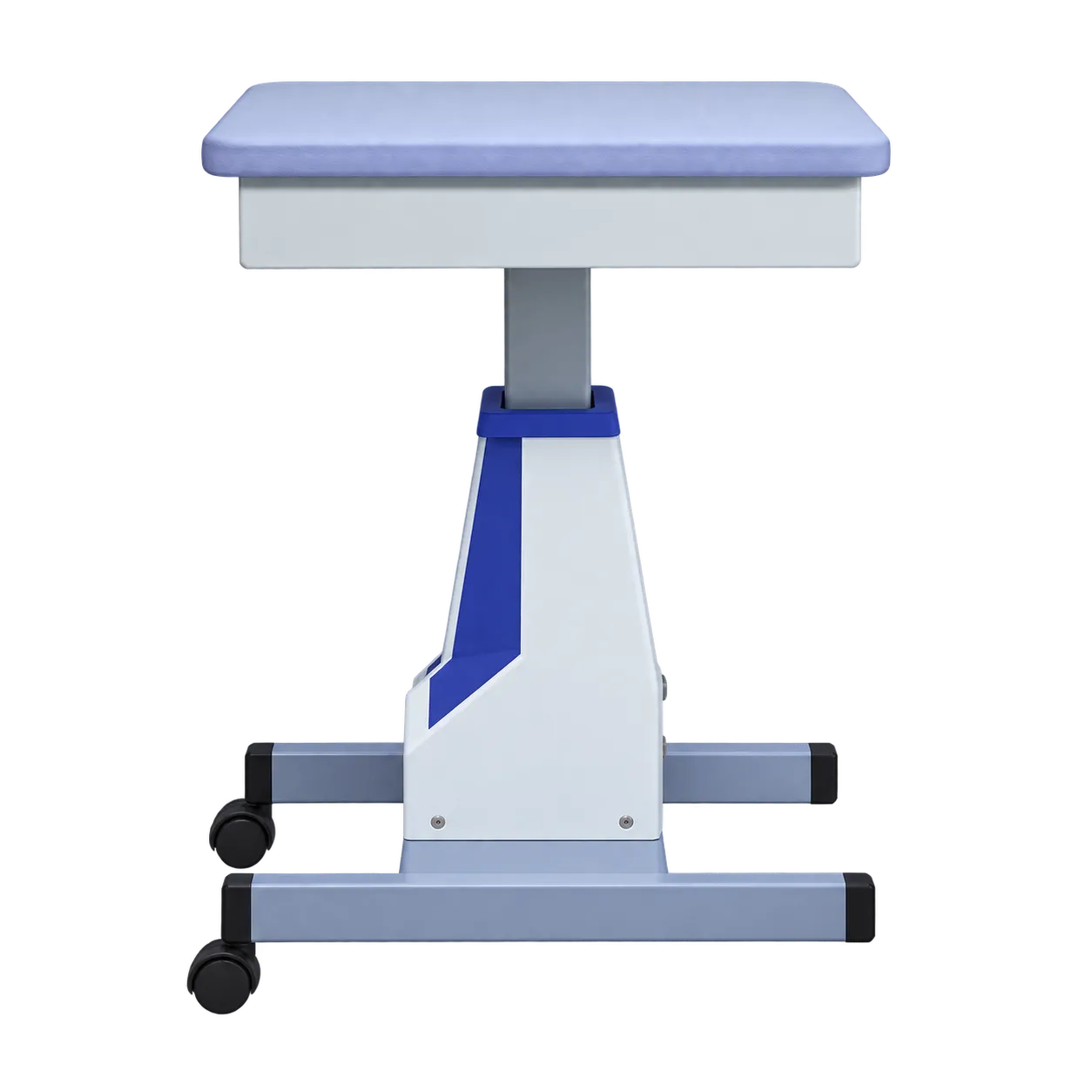
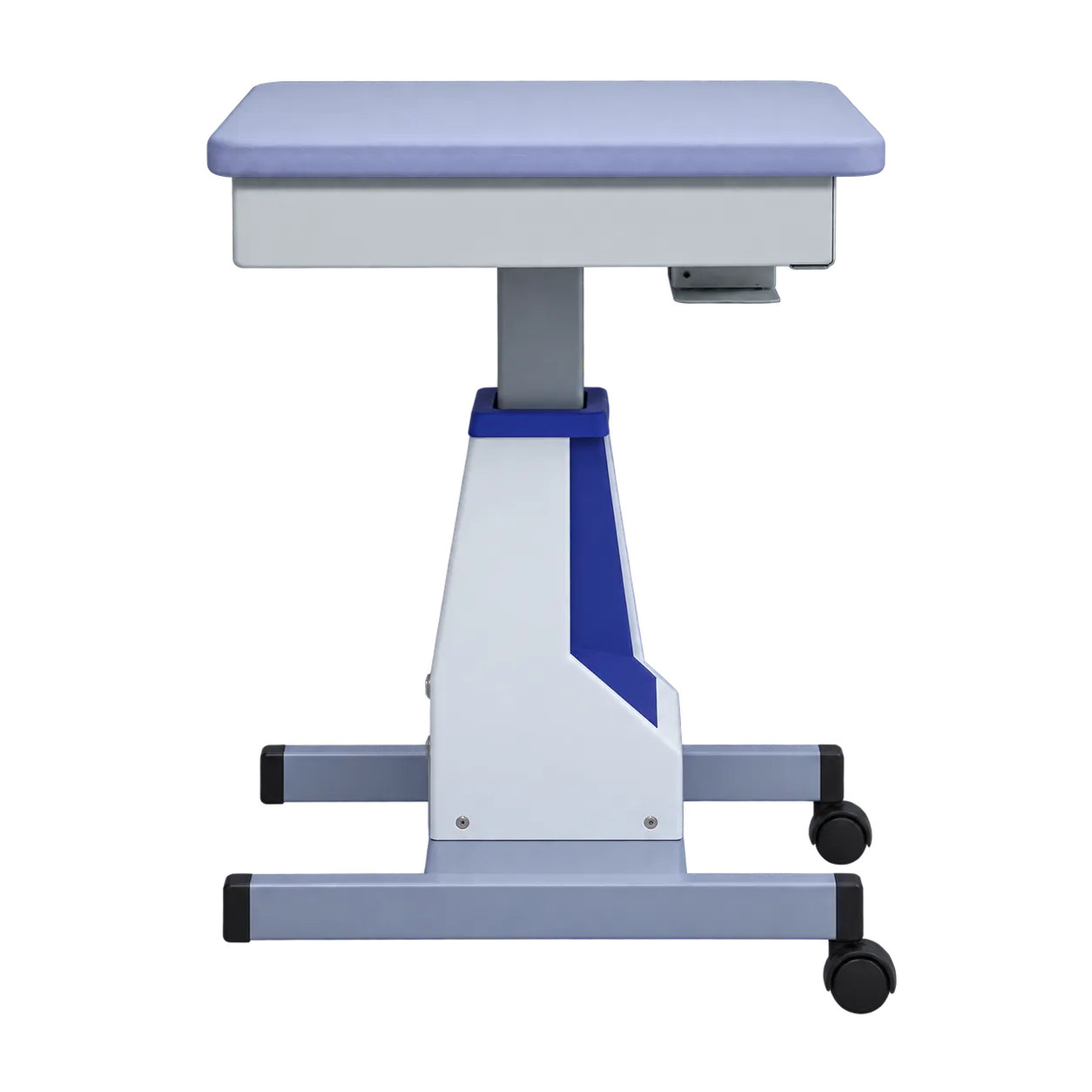
Dispensaries are the natural home. A lensmeter used standing, with frame rules and adjustment tools in the drawer, makes a verification station at the height a dispenser actually works. At 920 mm the top matches standard counter level, so it sits comfortably alongside existing dispensing furniture.
Optical workshops and glazing rooms suit the same arrangement, where staff verify prescriptions, check fittings and handle frames on their feet throughout the day.
Standing contact lens work benefits from a raised keratometer or topographer position, particularly where a practitioner moves between the patient and the instrument rather than sitting throughout.
Tall staff gain from a range that most tables cannot reach. Where a lensmeter or tonometer is used repeatedly by someone who finds standard furniture low, a table reaching 920 mm reduces stooping, which supports the sensible working postures employers are expected to provide.
Hospital eye service workshops and university teaching laboratories can use it as a standing verification or demonstration station, where students gather round rather than sit.
Seated pre-test is not its role. With a 740 mm lowest setting, most instruments will sit too high for a seated adult, so practices should choose a lower table for routine pre-test.
Children's examination is outside its range entirely, and practices seeing many children need a lower table.
Wheelchair users are not served by this height, so accessible provision should be made elsewhere.