
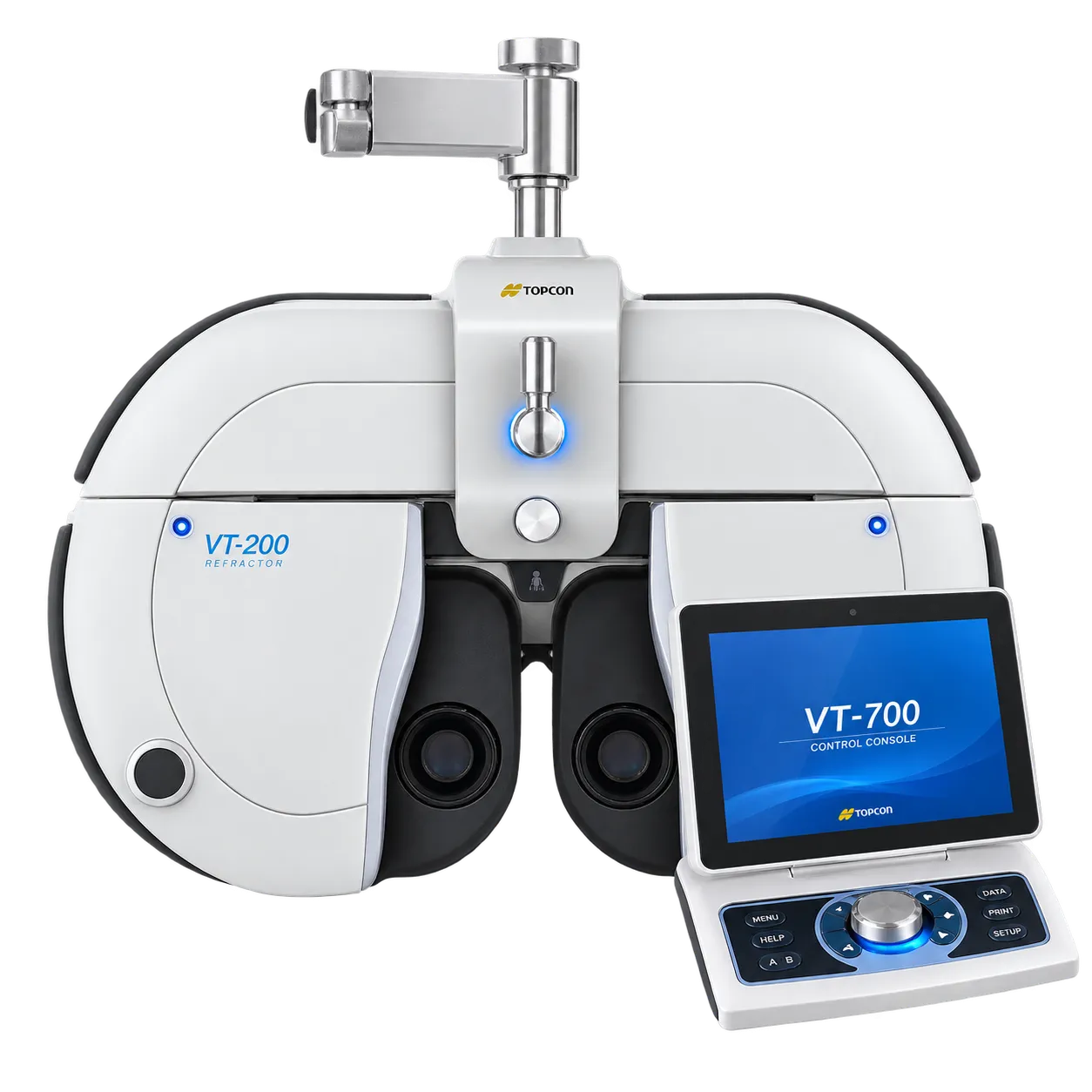
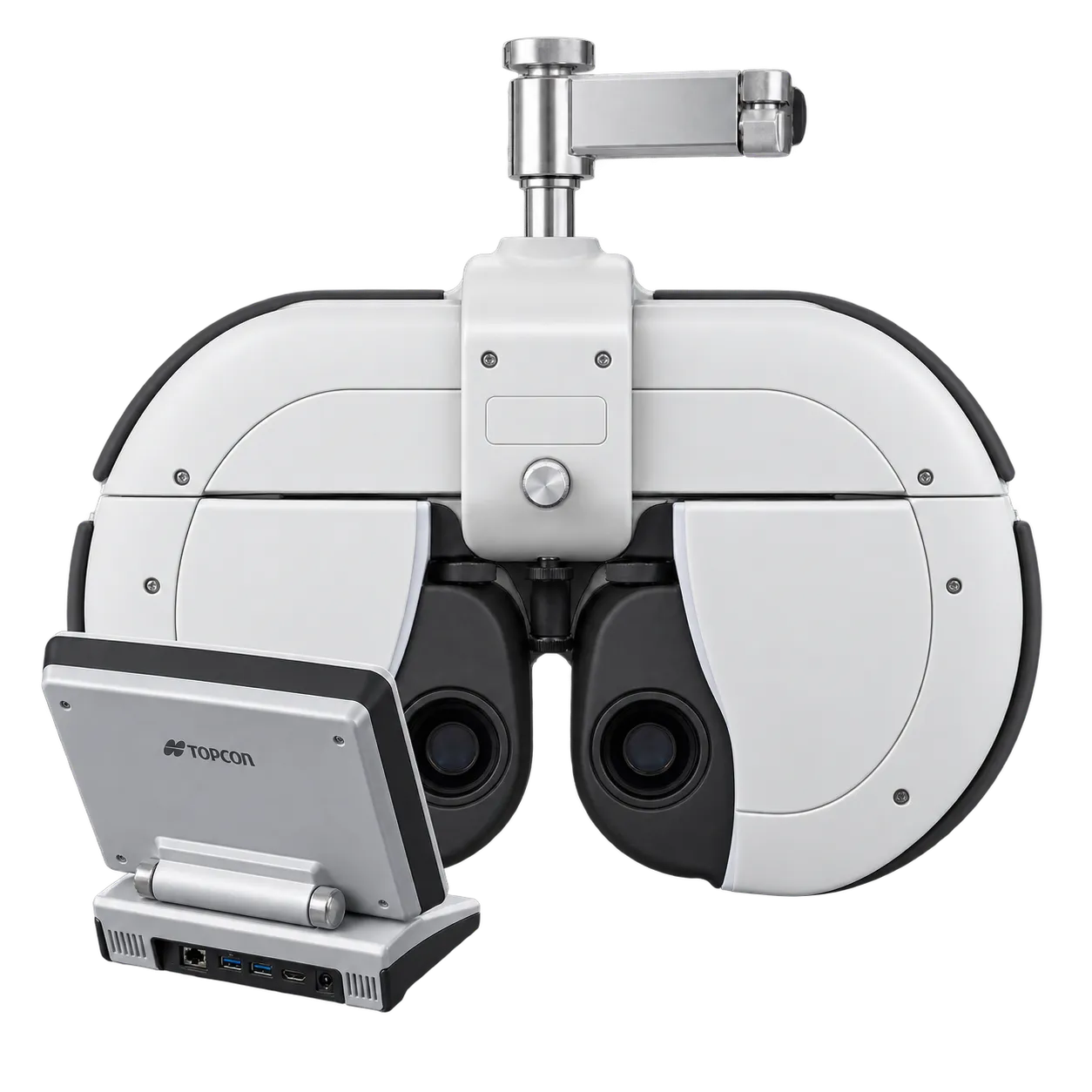
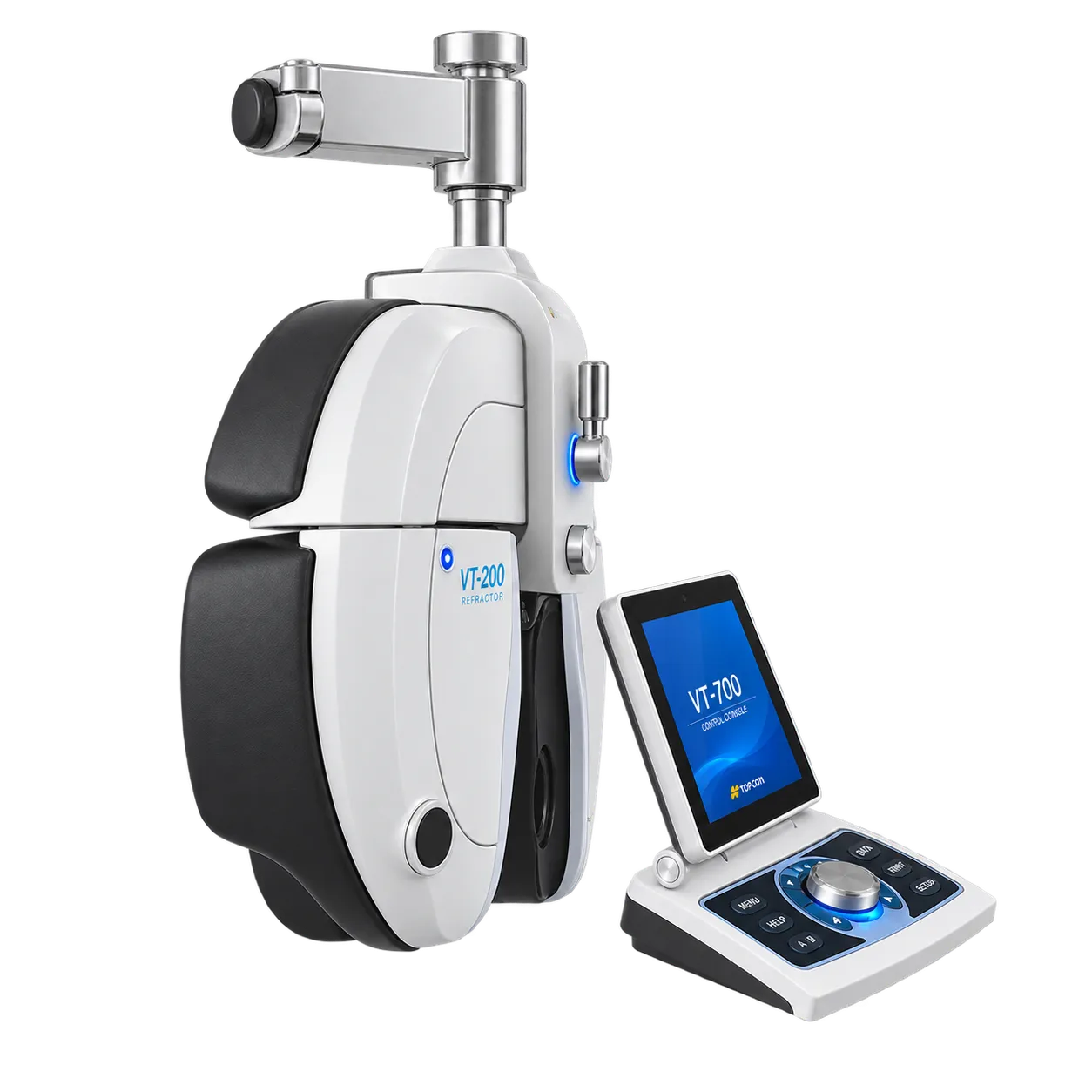
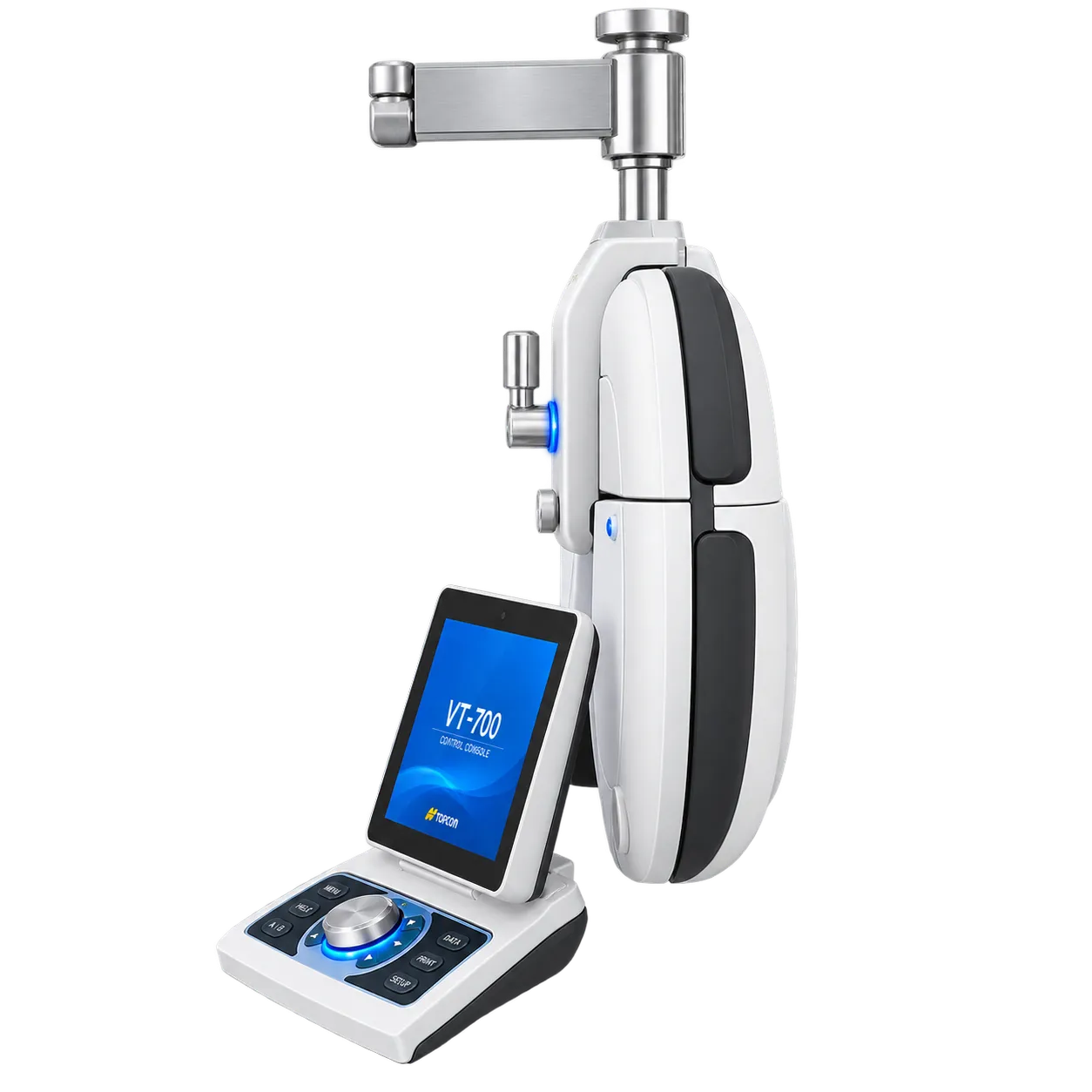
Patient communication is the application this instrument is built around, and it has a straightforward commercial dimension in UK optometry. A sight test that ends with a spoken prescription and a recommendation is a weaker proposition than one where the patient has seen the difference between their current correction and the new finding. Practices that convert well into dispensing generally do so because the patient understood what changed and why, and a display that turns to face the chair supports that conversation directly.
The same capability serves practices with communication-sensitive caseloads. Patients with hearing impairment, those for whom English is a second language, anxious patients and those attending with a family member or carer all benefit from a visual reference during the explanation. It is also useful in teaching, where a supervisor observing a trainee can see the full instrument state on a large colour display without leaning across the lane.
Occupational and intermediate prescribing is served by the 35 to 70 cm adjustable working distance. UK employers must arrange eye and eyesight tests for display screen equipment users on request and fund corrective appliances needed specifically for screen work; a monitor typically sits well beyond the 40 cm at which most phoropters offer near testing, and refracting at the true distance produces a prescription that works when the patient returns to their desk. Musicians, dentists, machinists and laboratory staff have equivalent defined intermediate demands.
The wide power range extends the instrument to aphakic refraction, high myopia, high corneal astigmatism and post-graft cases seen disproportionately in hospital eye service departments, corneal clinics and specialist contact lens practice. Practices should note the standing access limitation: a phoropter head requires an upright seated patient able to reach it, so young children and patients unable to hold position still need trial frame refraction, and that capability should be retained alongside.