

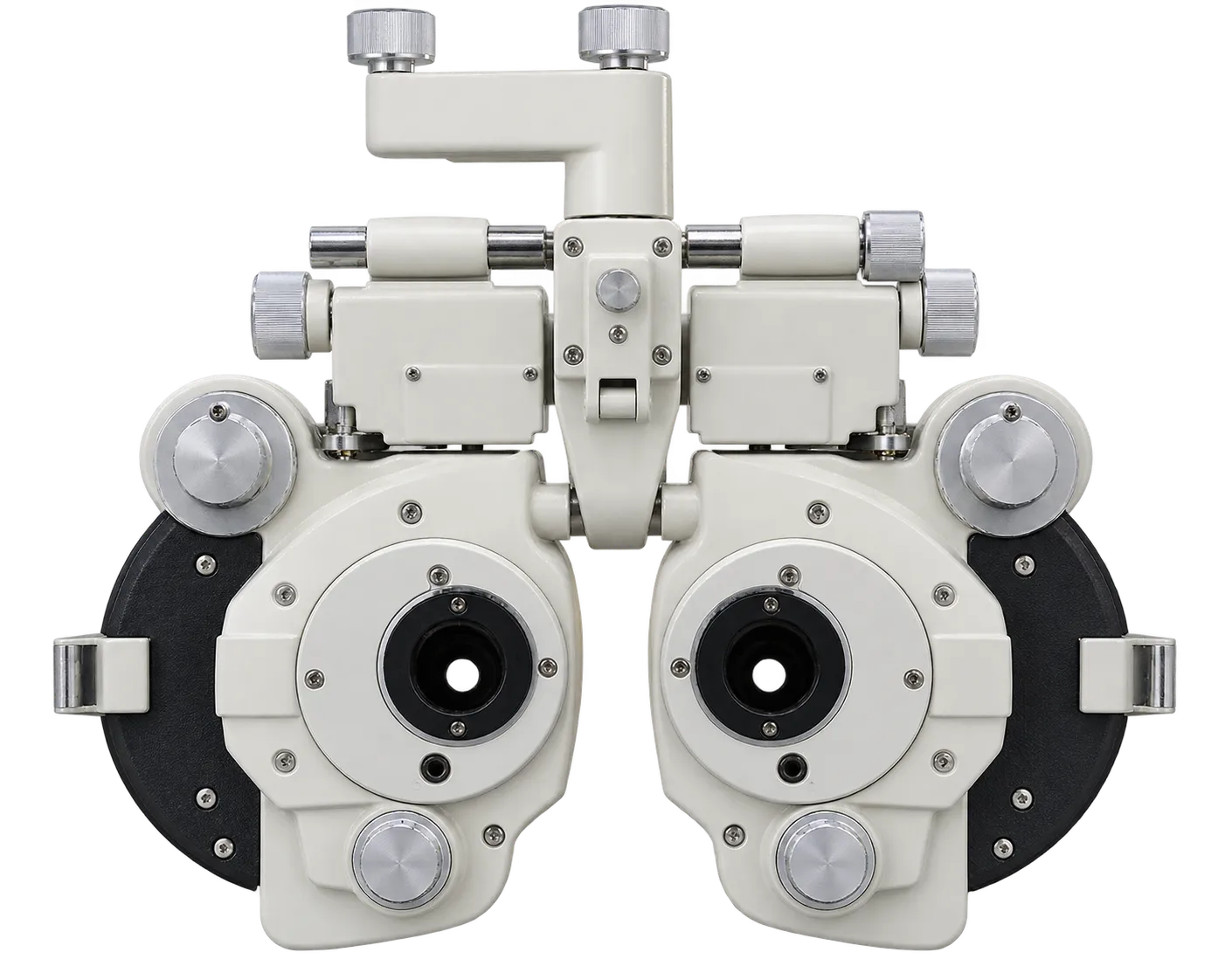
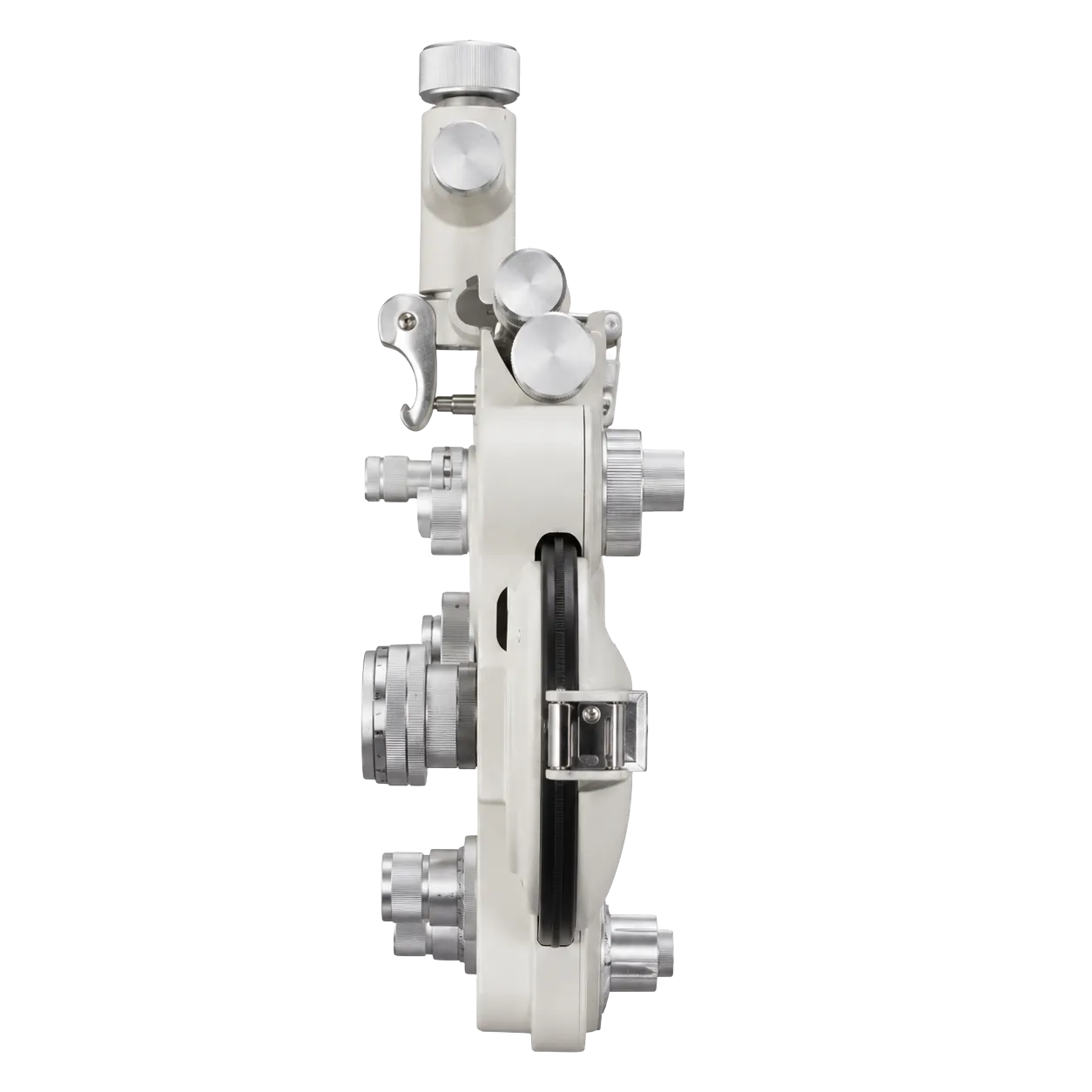
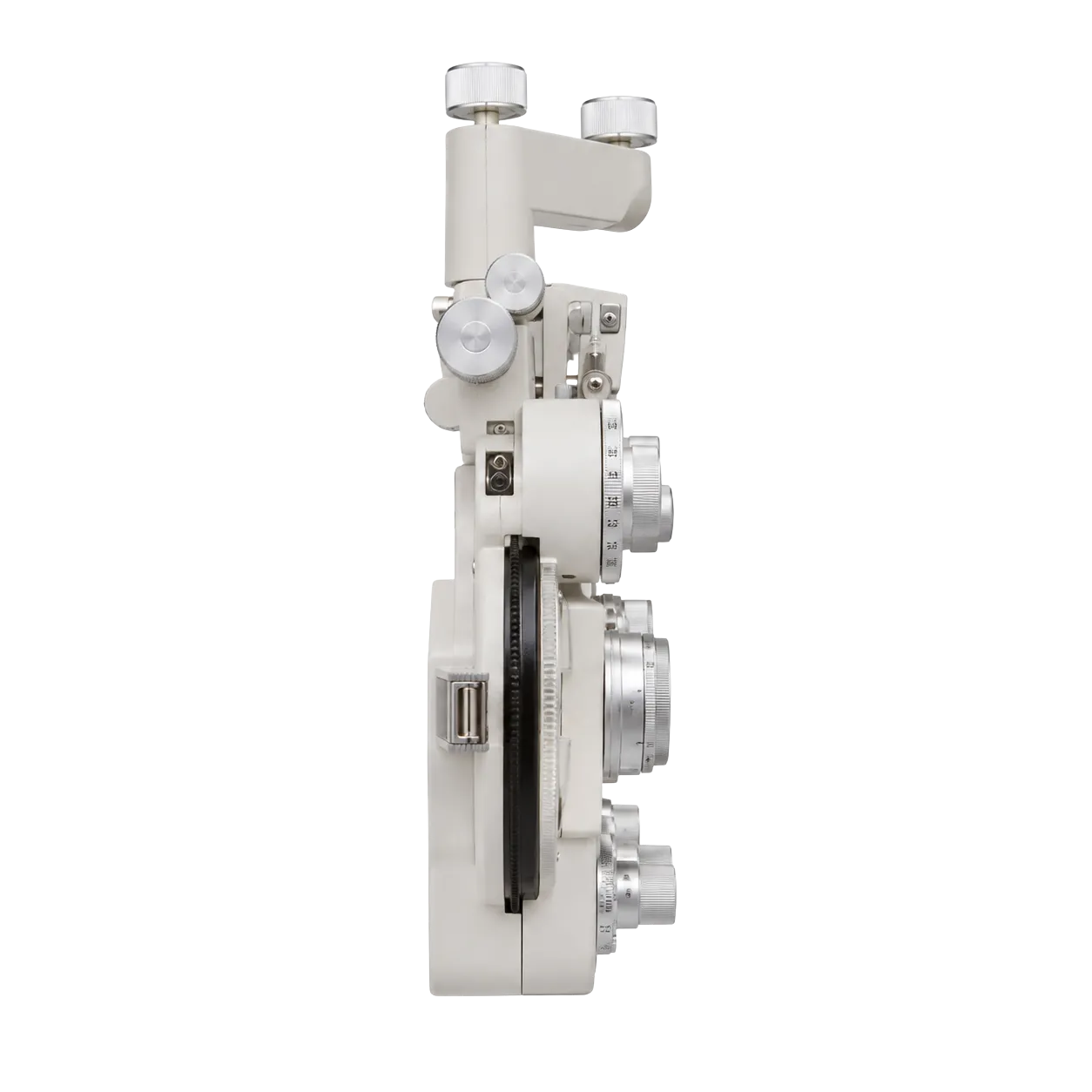
The instrument suits practices whose refractions are expected to be exact. Patients with a professional stake in their vision — pilots, drivers assessed against licensing standards, surgeons, musicians, competitive shooters and anyone whose occupation depends on fine visual discrimination — frequently discriminate below the quarter-dioptre step and are dissatisfied by a result that sits between two presentations they have already rejected. Having a genuine intermediate to offer changes those appointments substantially.
Private and specialist practice more broadly benefits from the same capability. A patient paying privately for a thorough examination and reporting that neither lens is right is not being difficult; they may be describing a discrimination finer than the instrument's standard step. Being able to go finer, and to do so on coated optics that preserve the contrast the judgement depends on, is what separates an examination that resolves from one that ends in compromise.
Optometric teaching uses fine-increment refraction differently but usefully. Demonstrating where a patient's discrimination genuinely ends — the point at which they can no longer reliably distinguish two presentations — teaches something about the limits of subjective testing that a coarser instrument cannot show. Practices hosting pre-registration placements gain from that.
General community refraction is served by the standard configuration throughout: sphere to +16.75D and -19.00D, cylinder to -6.00D or -8.00D with the auxiliary lens, synchronised cross cylinder refinement and rotary prism to 20Δ for phoria and vergence assessment. Two limitations should be weighed honestly. The 5° astigmatic axis scale is relatively coarse alongside the fine sphere resolution, so axis on high cylinders warrants trial frame confirmation. And any phoropter requires an upright seated patient able to reach the head, so paediatric and position-limited patients need trial frame refraction regardless.