
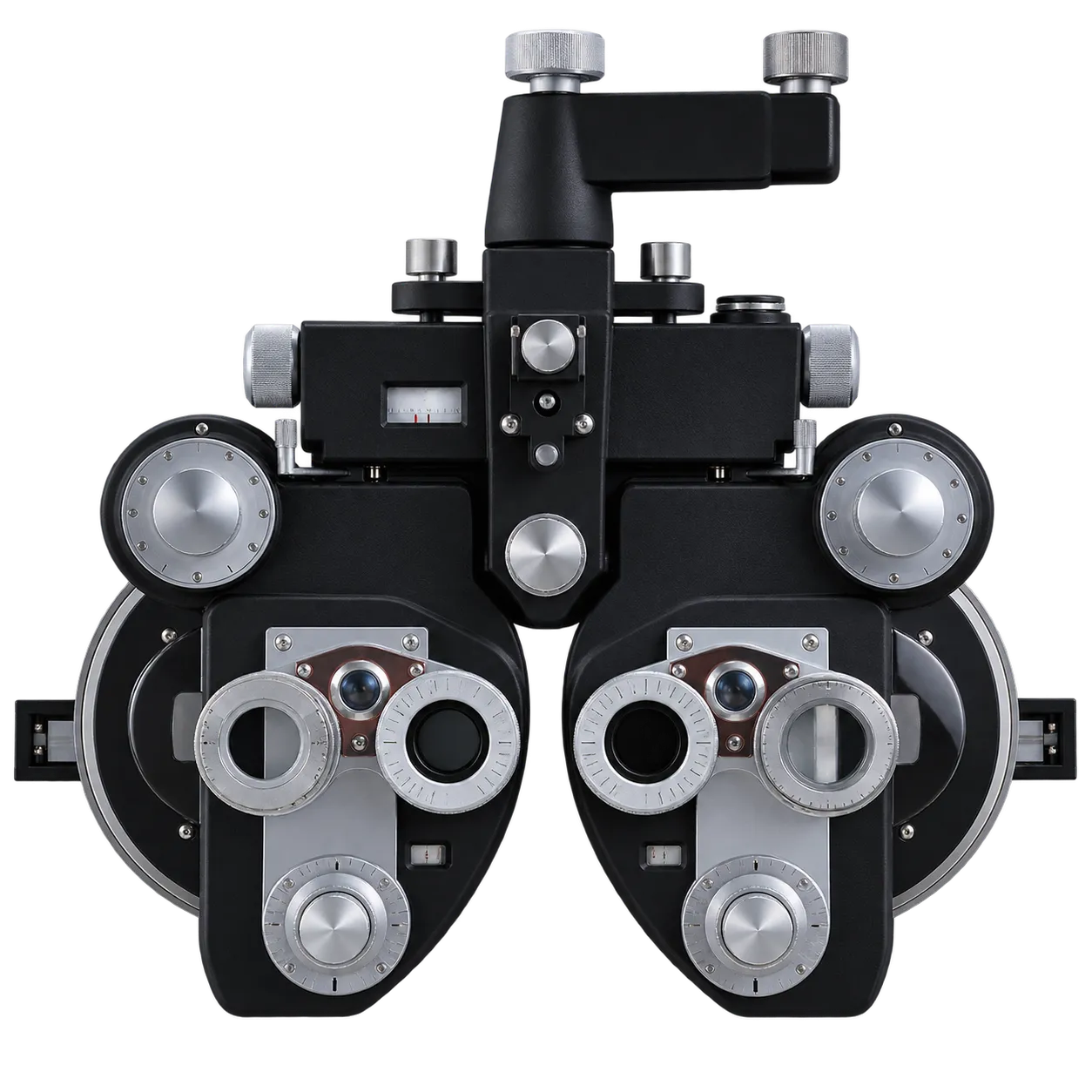
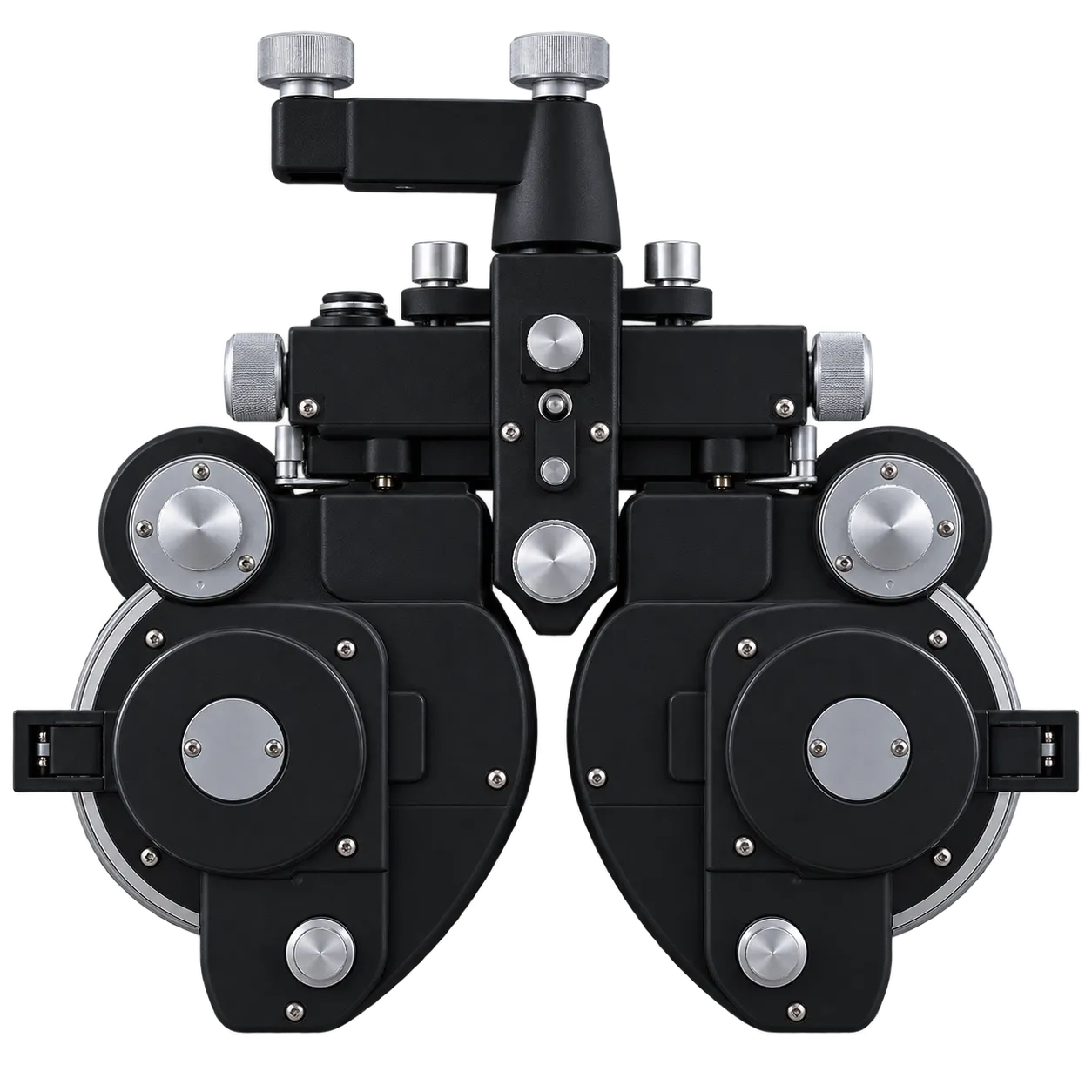
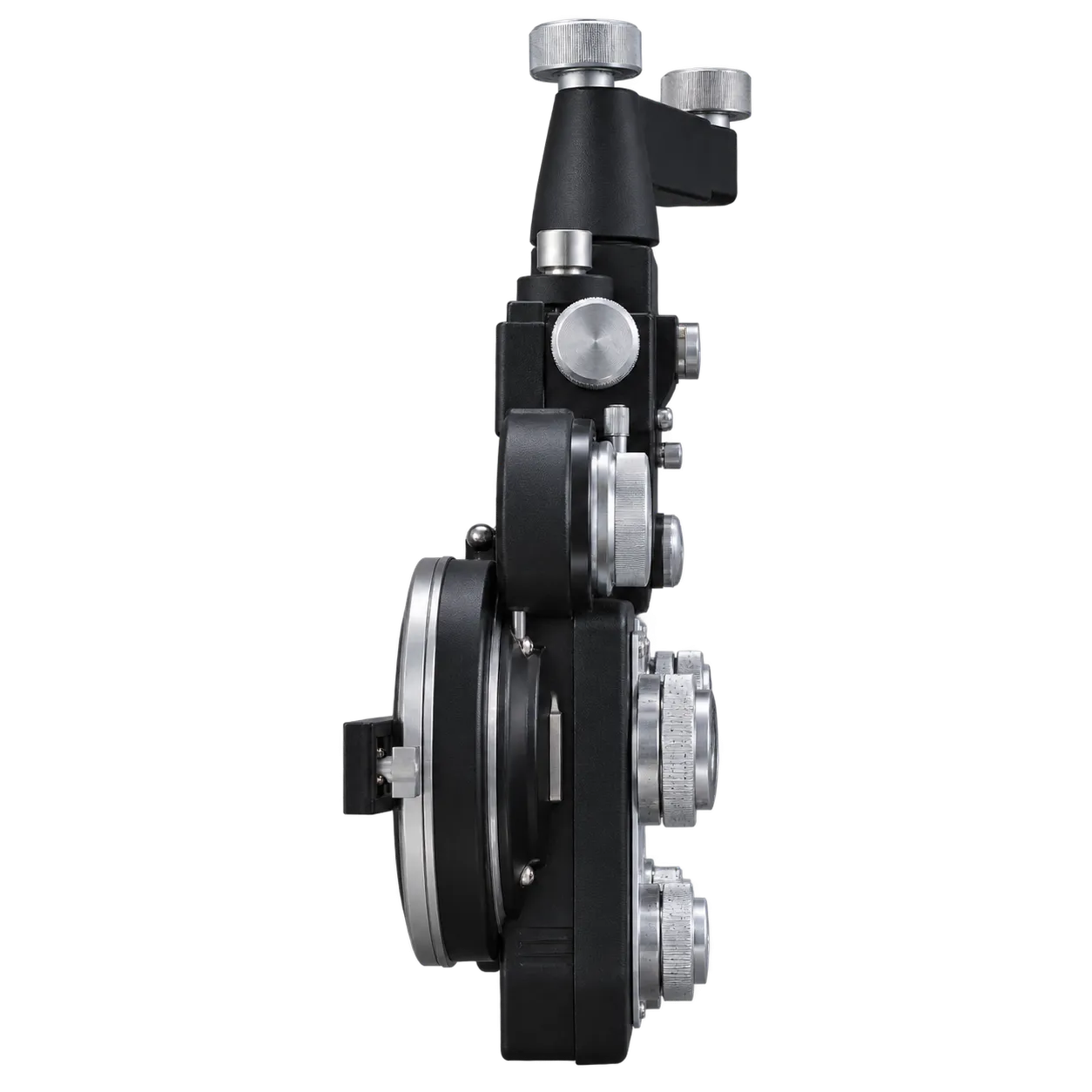
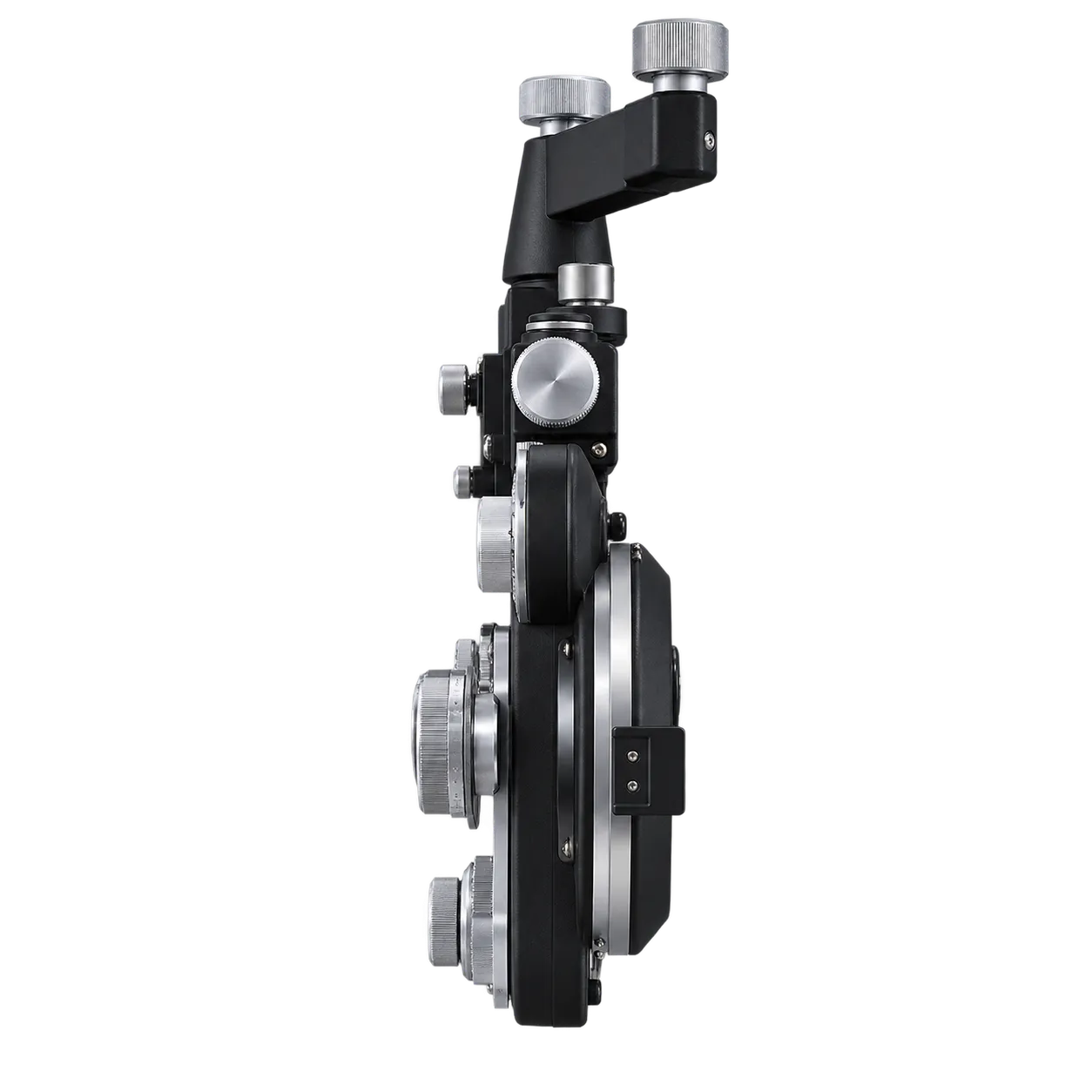
The synchronised reversal cross cylinder makes this instrument useful anywhere cylinder refinement is performed carefully and often. Cross cylinder technique is where subjective refraction is most easily compromised, and the requirement to reorient the cross cylinder by hand at each axis position is both a repeated task and a recognised error path. Community optometry practices running full lists, and any practice where several clinicians or locums share a lane, gain consistency from having that alignment handled mechanically rather than by individual habit.
The optional ±10.00D lens opens a second, narrower application. Aphakic patients — those without a crystalline lens and without an intraocular implant — routinely require corrections above +10.00D, and very high myopia beyond -20.00D occurs in any substantial patient base. Extending sphere to +26.75D and -29.00D brings those refractions inside a manual instrument, which matters for hospital eye service departments, specialist contact lens practices and corneal clinics that would otherwise reach for trial frame and loose lenses on every such patient.
The 0.12D minimum reading suits practices with demanding or articulate patients who discriminate finer differences reliably, and it has a place in teaching, where demonstrating the limit of a patient's discrimination is itself instructive.
General community refraction is served by the standard configuration: +16.75D to -19.00D sphere, cylinder to -6.00D or -8.00D with the auxiliary lens, 5° astigmatic axis and rotary prism to 20Δ for phoria and vergence assessment. Practices should note two things honestly. The 5° axis step limits recording precision on high cylinders regardless of how accurately the synchronised cross cylinder helps locate that axis, so trial frame confirmation remains advisable there. And any phoropter needs an upright seated patient able to reach the head, so paediatric and position-limited patients require trial frame refraction alongside.