
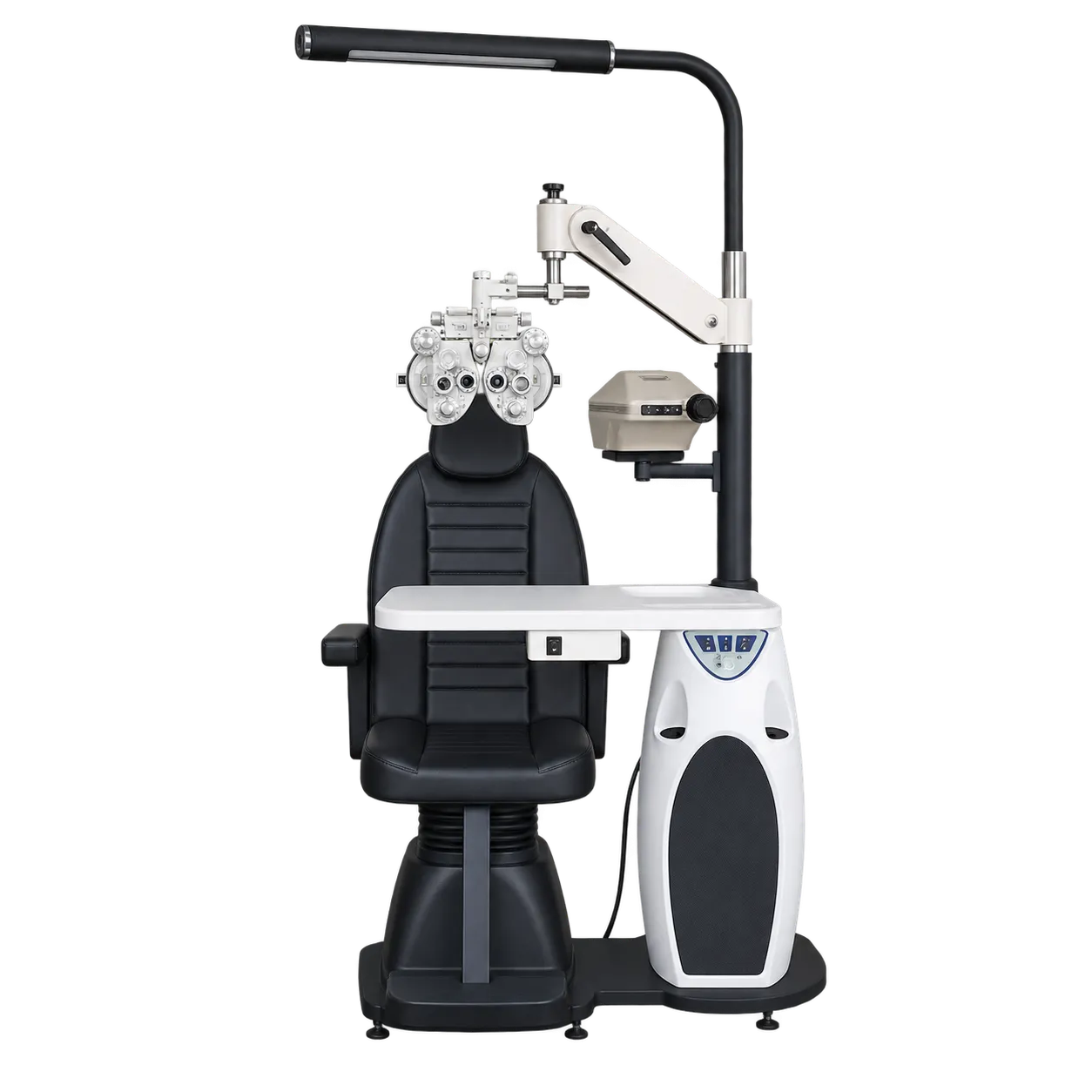
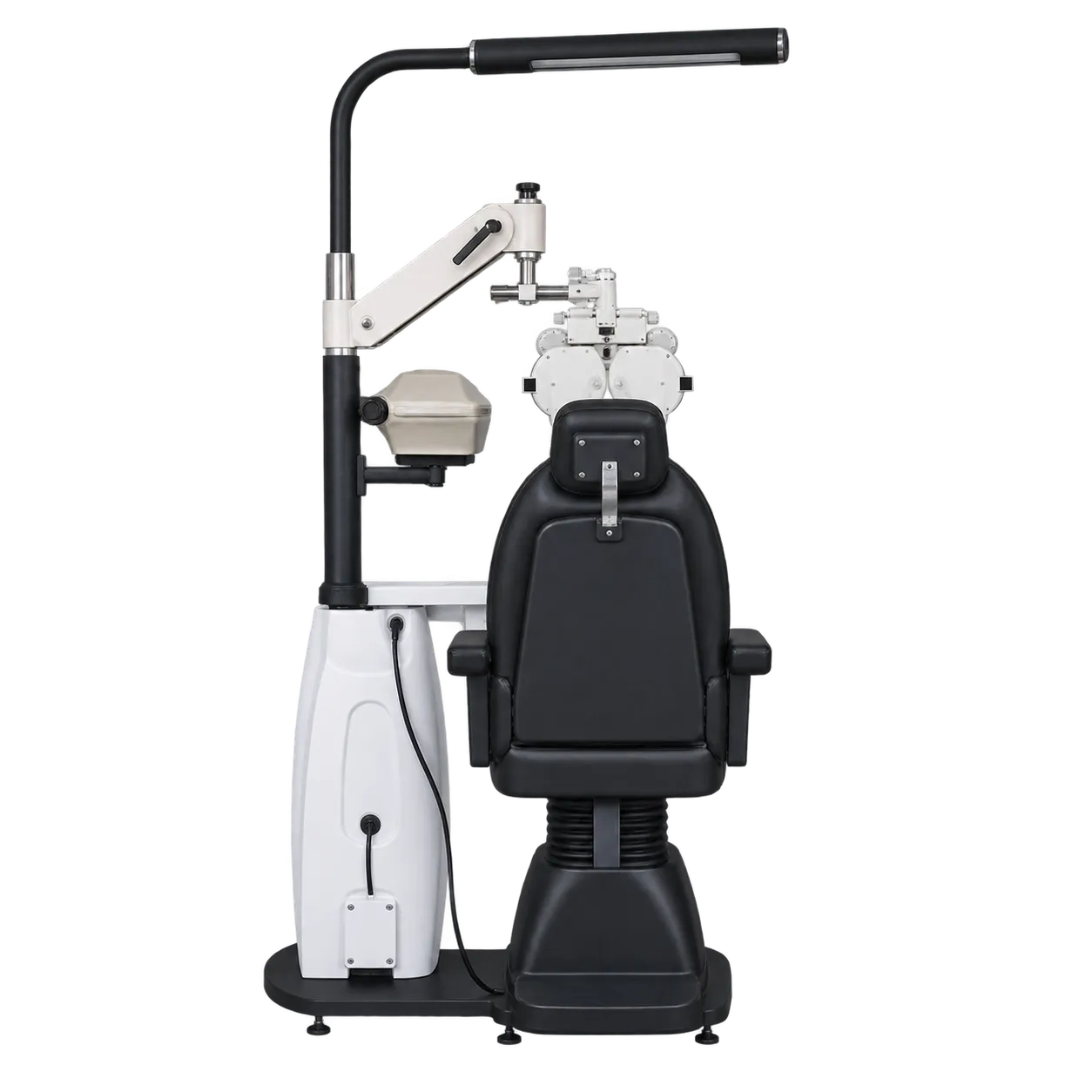
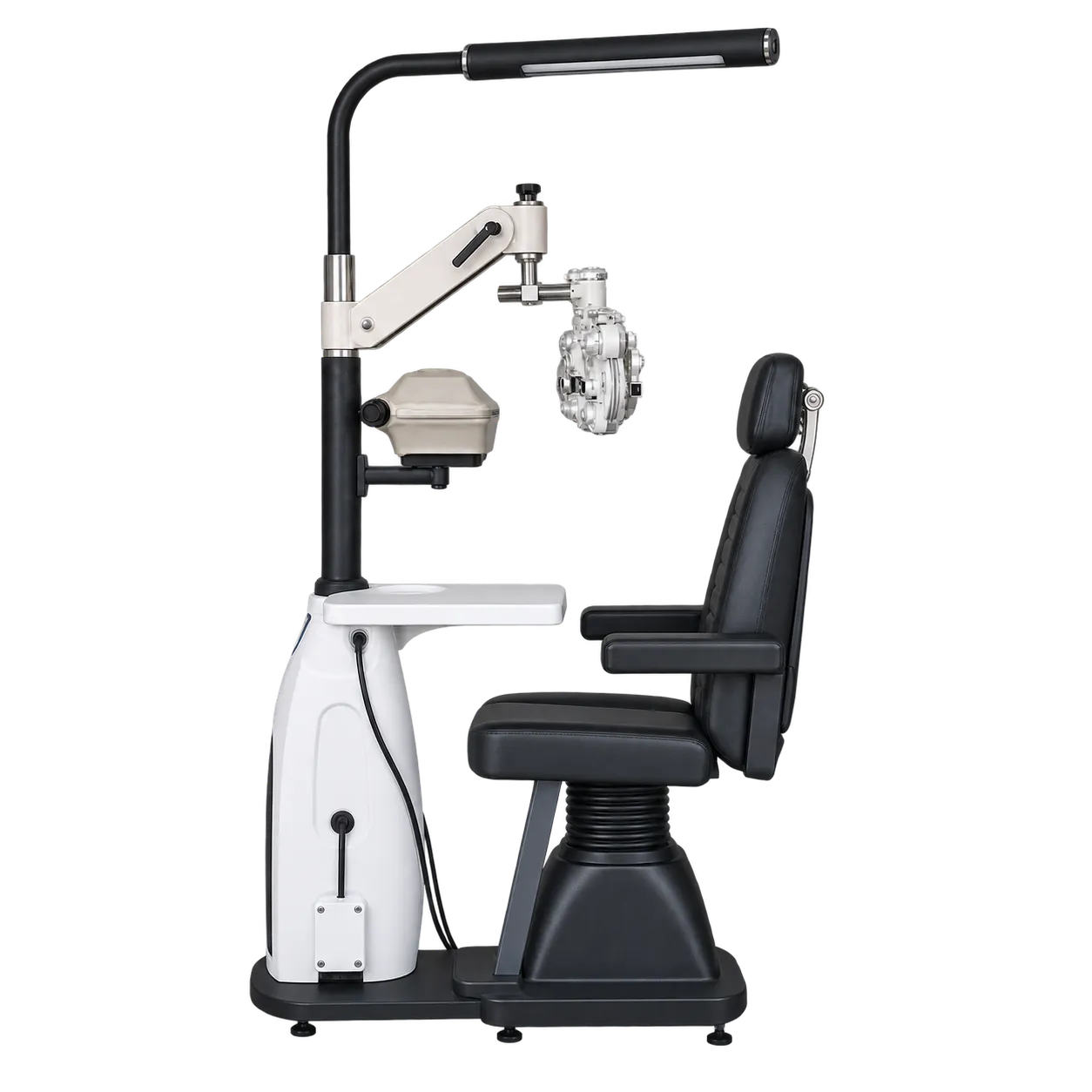
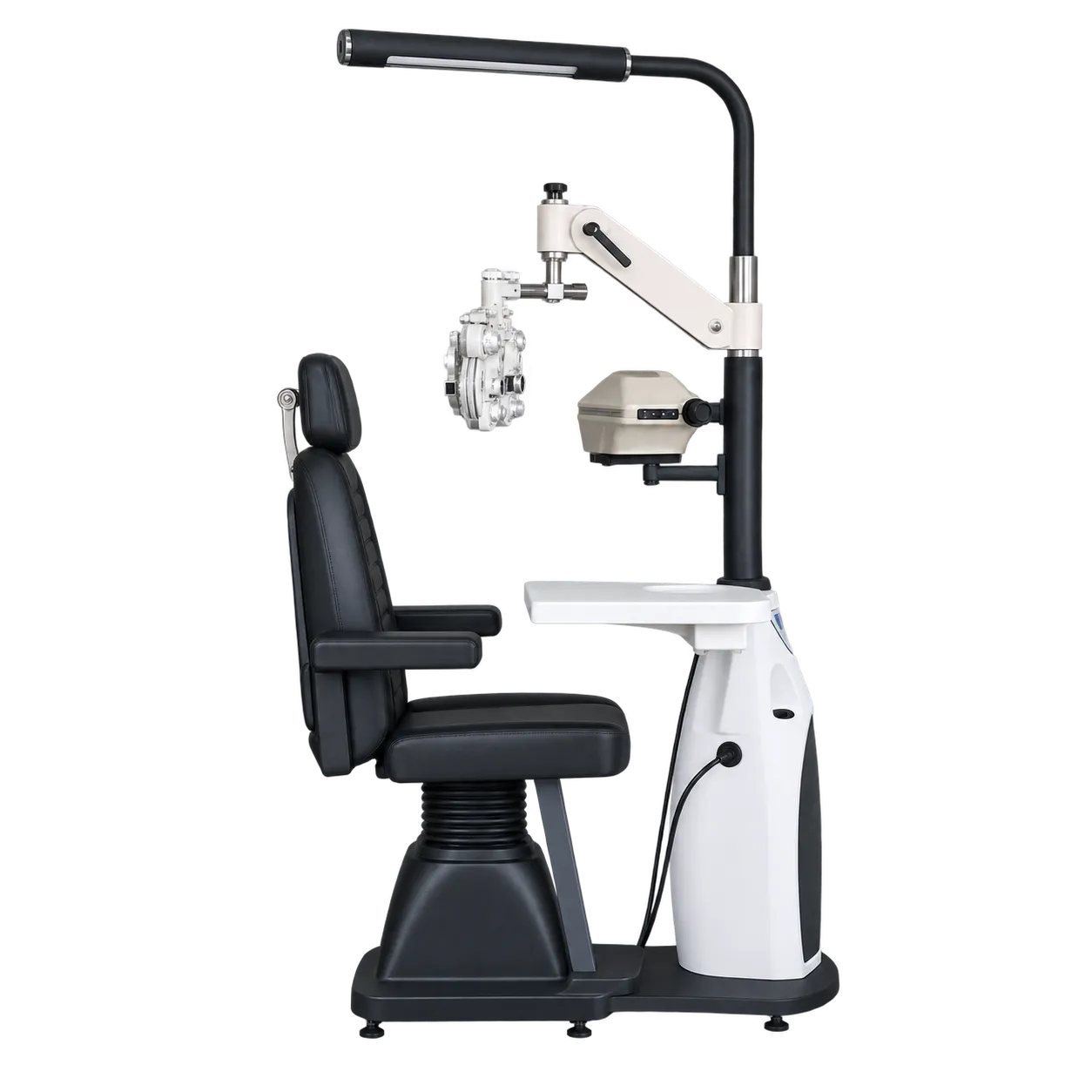
Fit-out planning is where the footprint shape earns attention. A rectangular unit has an orientation the room plan must commit to, and rotating it later changes the floor area claimed in each direction — which changes what fits beside it and frequently means redrawing. At 40 mm from square this unit removes that variable: turn it and the space it needs is identical. That is one fewer constraint rather than a dramatic saving, but constraints during a fit-out compound.
Rooms whose layout may be revisited benefit for the same reason. A practice that expects to change how a room works — adding an instrument, moving a door, reconfiguring around a second position — gains from equipment that does not fix the geometry.
General refraction is served by a conventional specification otherwise. The chair works between 450 and 590 mm with 150 kg loading, sitting between the low-band and standard units in this family, and the 40 W lamp is the higher output of the two available.
Fit-outs also benefit from the fully published electrical schedule, which allows a circuit to be specified and a compliance file completed before anyone attends.
Two things belong in the decision, and both are documentation matters rather than performance ones. This SKU shares a single technical data block with two others, differentiated in the manufacturer's illustrations by cabinet form and colourway only — so a functional difference, if one exists, is not documented and should be confirmed. And four figures published elsewhere in this family are absent here: table sliding range, chair rotation, pillow lift and backrest obliquity, with no indication whether the features or merely the figures are missing.