
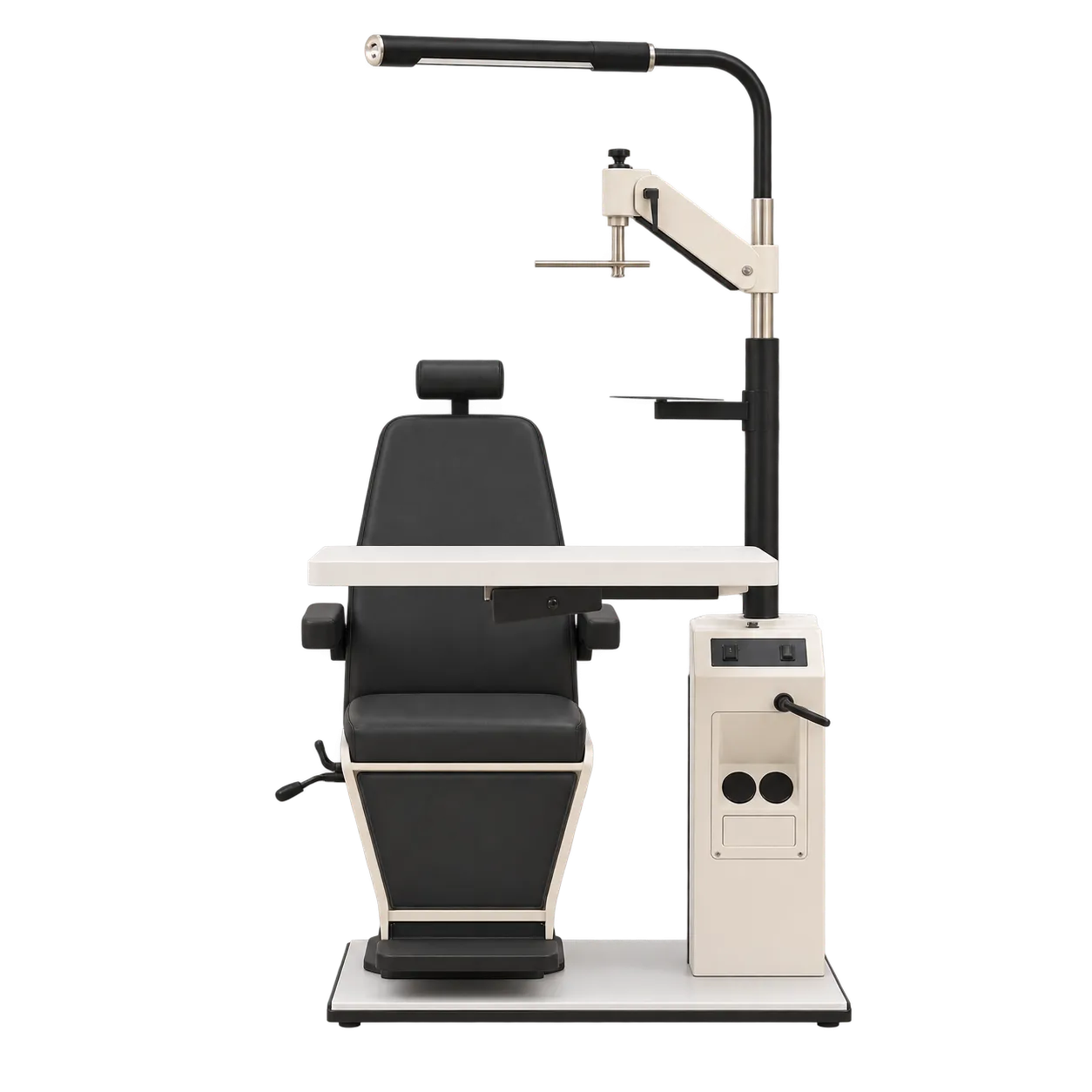
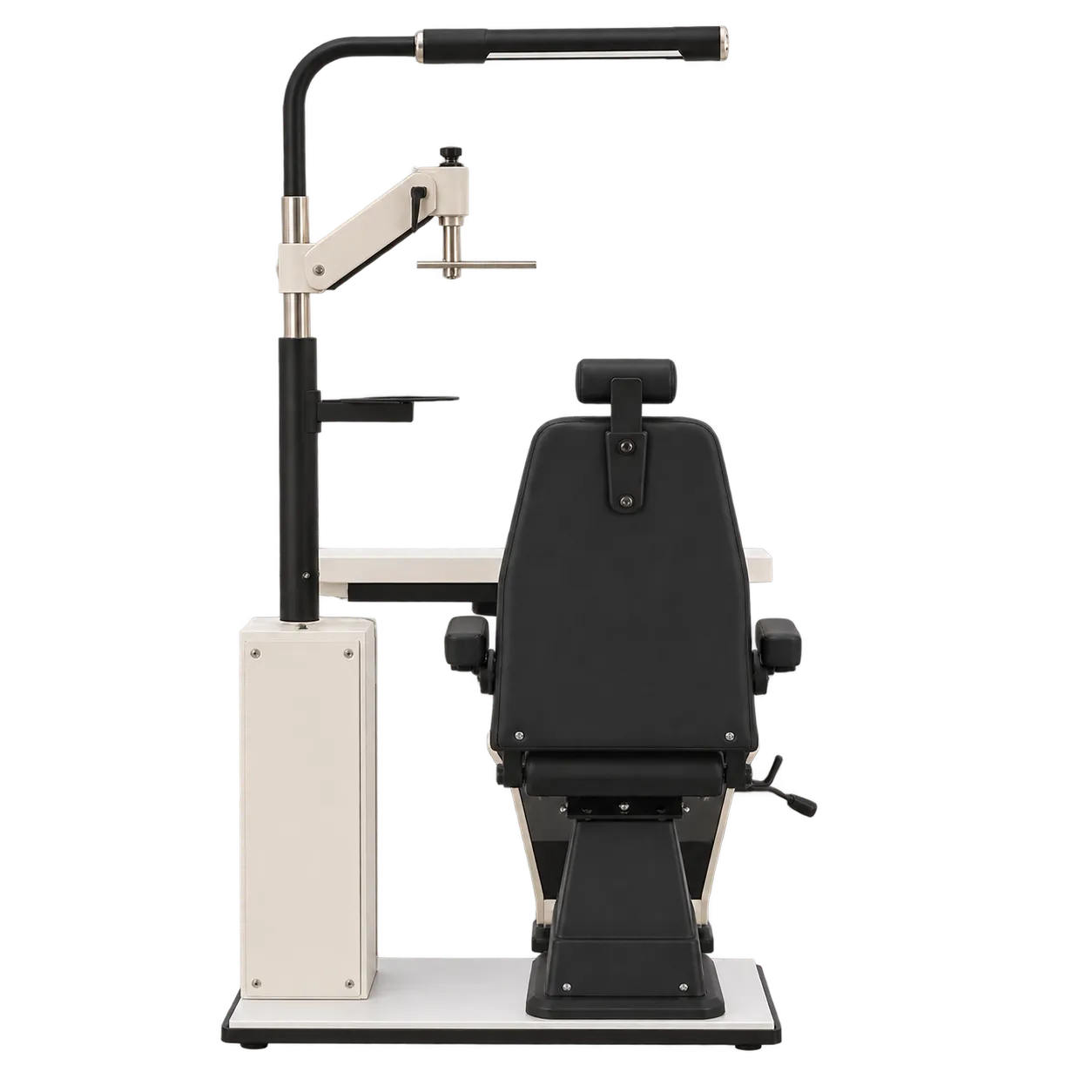
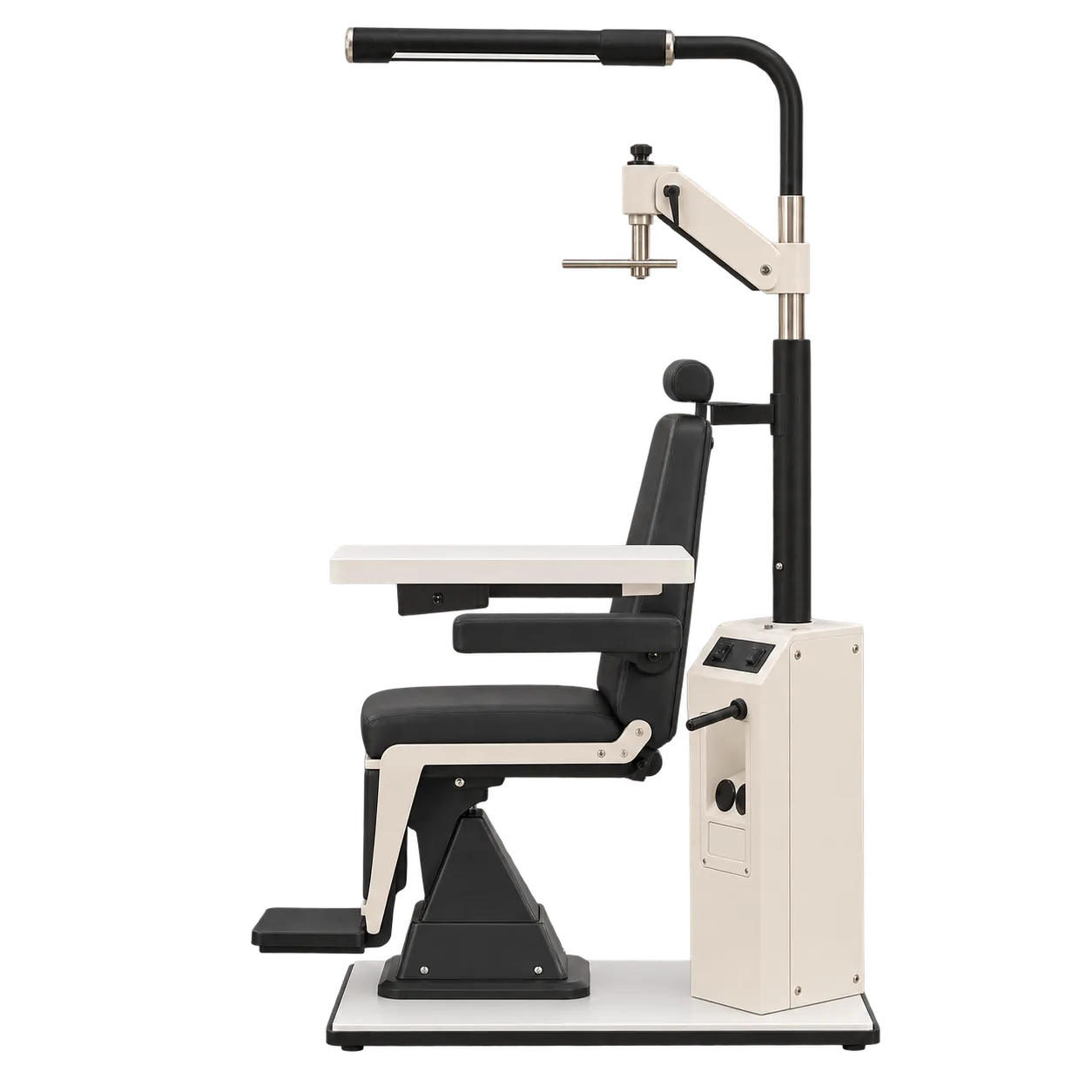
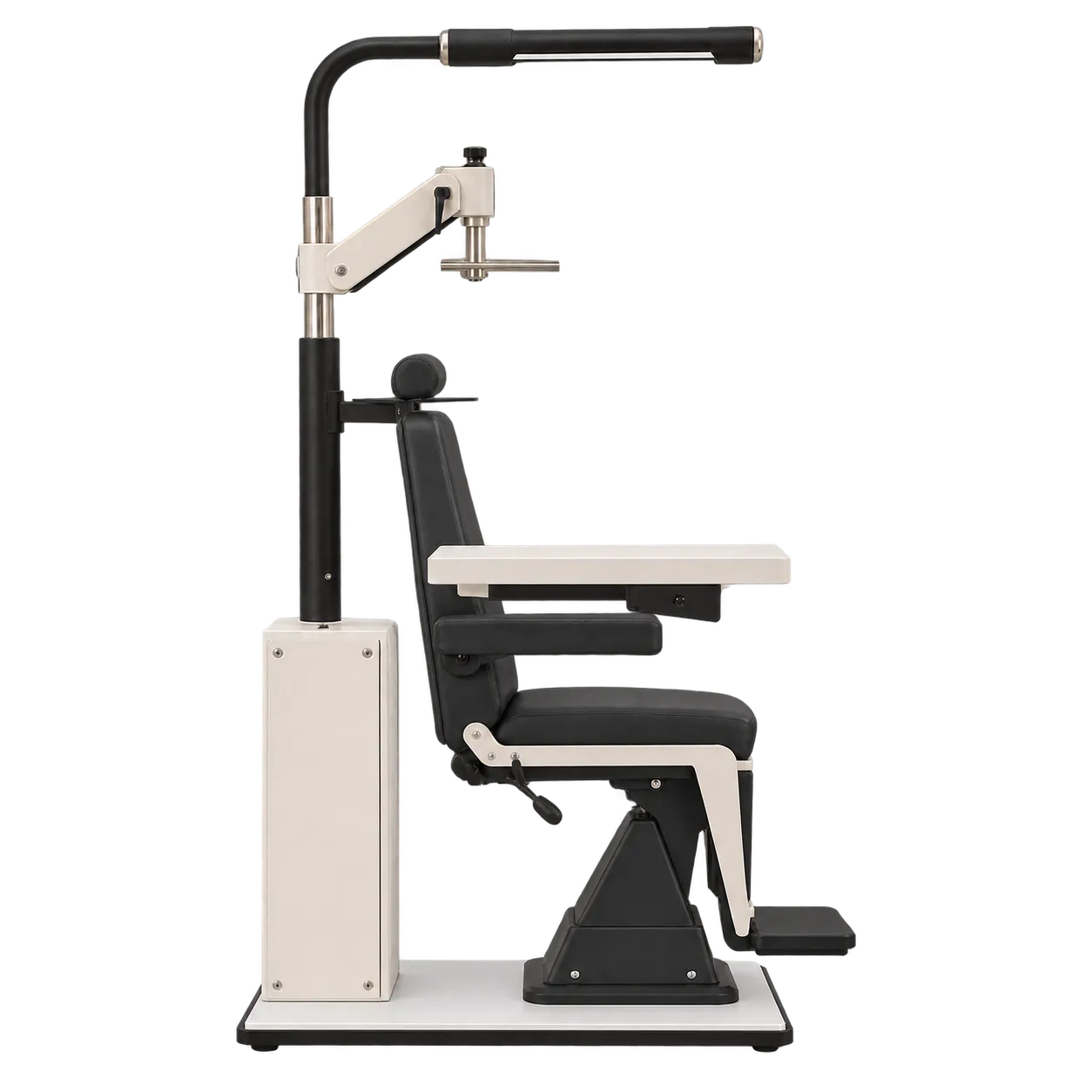
Examinations where light is the limiting factor benefit most, and they are commoner than the equipment usually acknowledges. Detail resolution at any magnification depends on how much light reaches the eye, and the shortfall appears exactly where it is least convenient: older patients with reduced media clarity, small pupils, dark irides, and anterior segment assessment where the finding is a subtle change rather than an obvious one. Inadequate illumination rarely announces itself — the clinician notices only that the examination took longer and felt less certain, not that something was missed.
Practices with an older caseload gain accordingly. Media changes with age, and the light that sufficed for a thirty-year-old eye does not necessarily suffice for a seventy-year-old one. Two and a half times the lamp input addresses that directly.
Irregular surfaces are served by the same increase. A brighter source at a given position gives better-defined illumination across a structure with depth and contour, where a weaker source leaves parts of it poorly resolved.
Everything else follows its family: a chair descending to 460 mm below wheelchair seat height, ±60° rotation, a 90° to 135° backrest range, a pillow adjusting up to 150 mm, and the fully published electrical schedule that allows an electrician to specify a circuit without enquiry.
Two things belong in the decision. At 2130 mm this is the tallest unit in the range, above even the 2100 mm models, so ceiling clearance must be measured at the exact position rather than assumed — and where height is marginal, the 16 W units in this family give the same mechanical specification lower. And chair loading is 150 kg, below several units elsewhere in this range, which should be weighed alongside the illumination advantage rather than separately.