
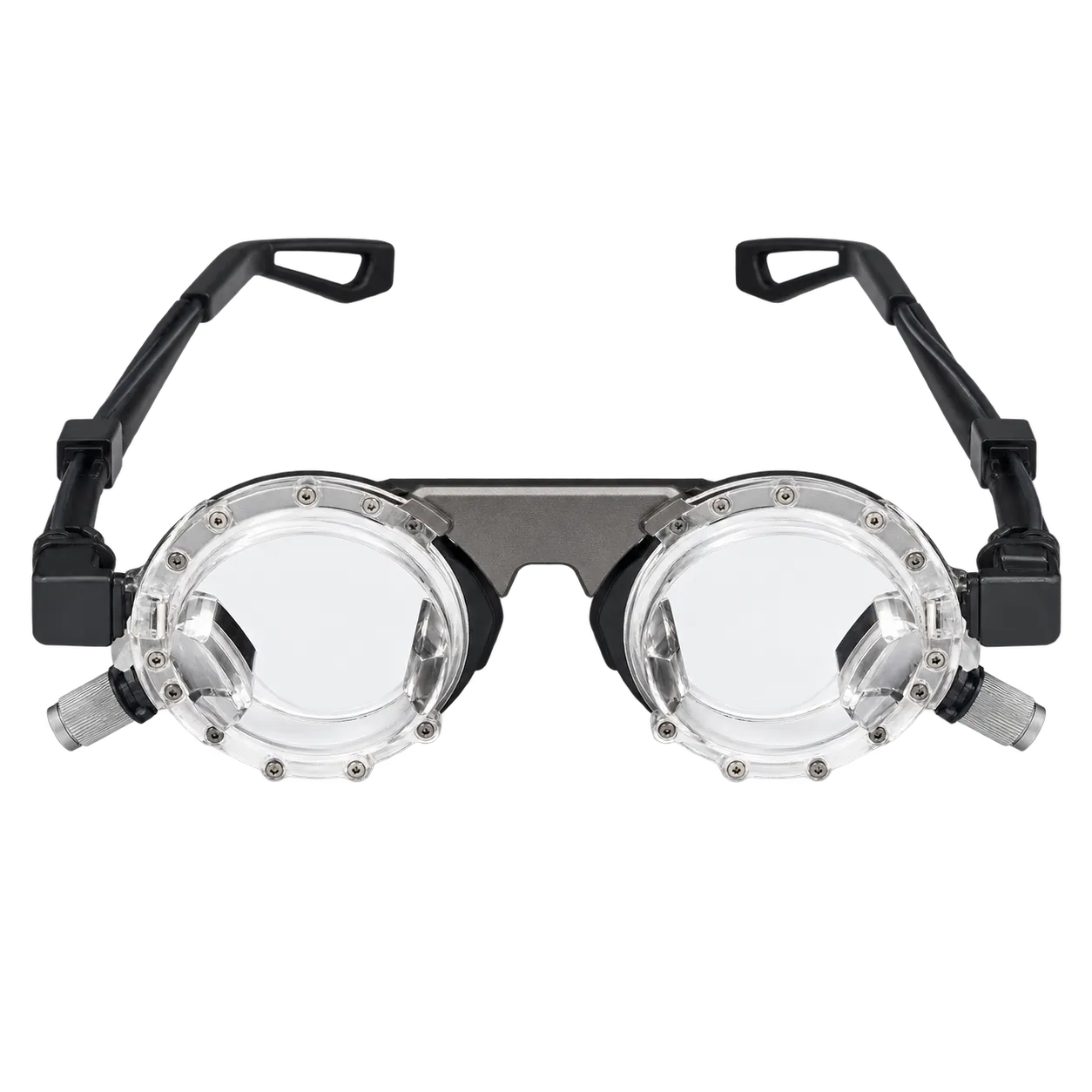
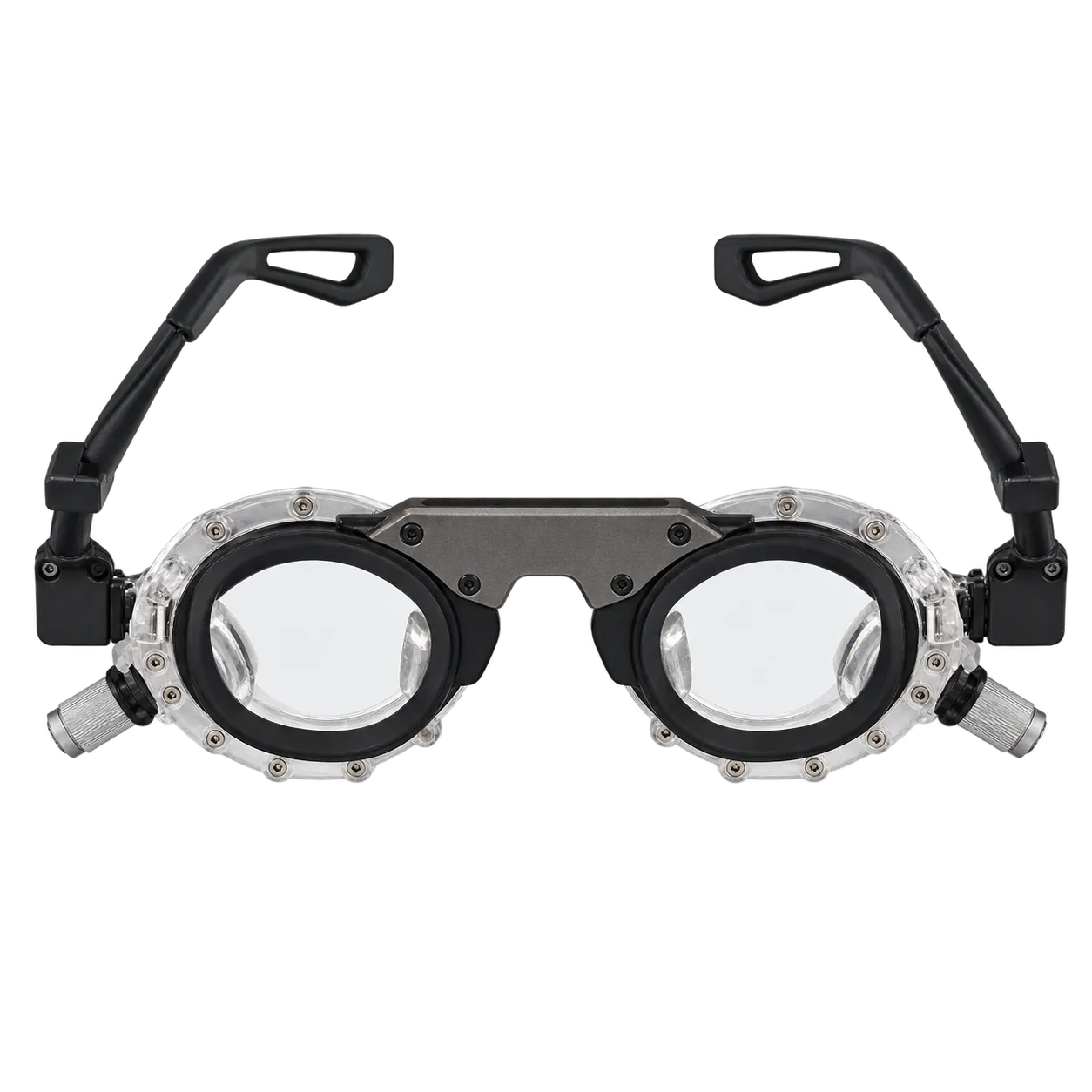

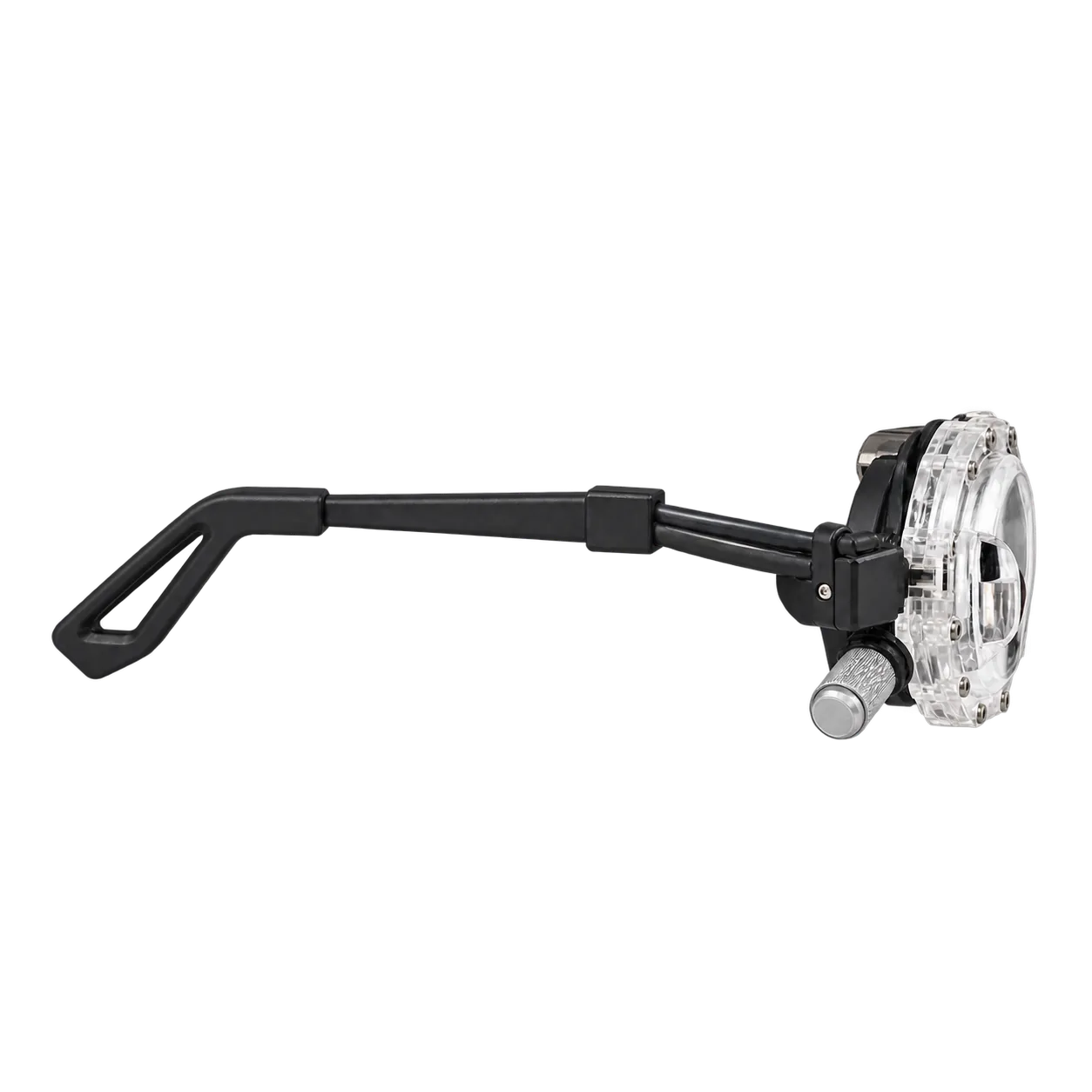
Clinicians trained on traditional trial frames are the clearest fit. The TF-T gives them fixed-size speed without asking them to work with something that looks and handles like spectacles.
Hospital eye services and teaching hospitals suit an instrument-like frame, where equipment is expected to look clinical and students learn on frames resembling standard trial equipment.
High-volume adult refraction benefits from fixed sizes and quick selection, with a frame that still conveys a thorough examination to the patient.
Patients who equate proper equipment with a proper test may find an instrument-style frame more reassuring than a bright or spectacle-shaped one.
Practices standardising their refraction kit can pair the TF-T with conventional adjustable frames and keep a consistent look across both.
Occupational health settings, where a clinical appearance is expected, suit the black and metallic finish.
Anxious or paediatric patients are usually better served by a spectacle-style or coloured frame, which feels less clinical.
Complex prescriptions depend on the lens capacity, which is not yet confirmed, so we establish it before recommending the frame for that work.