
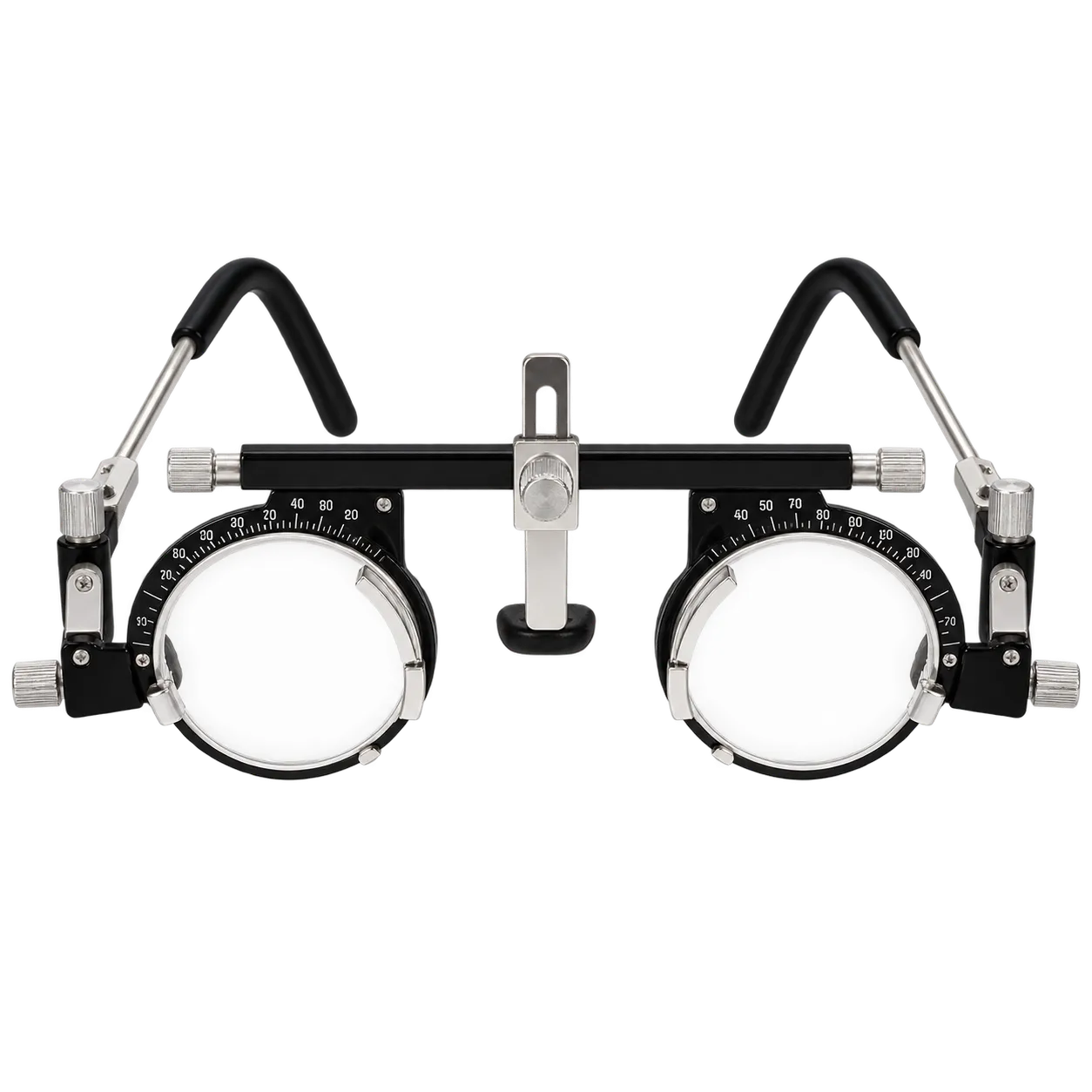
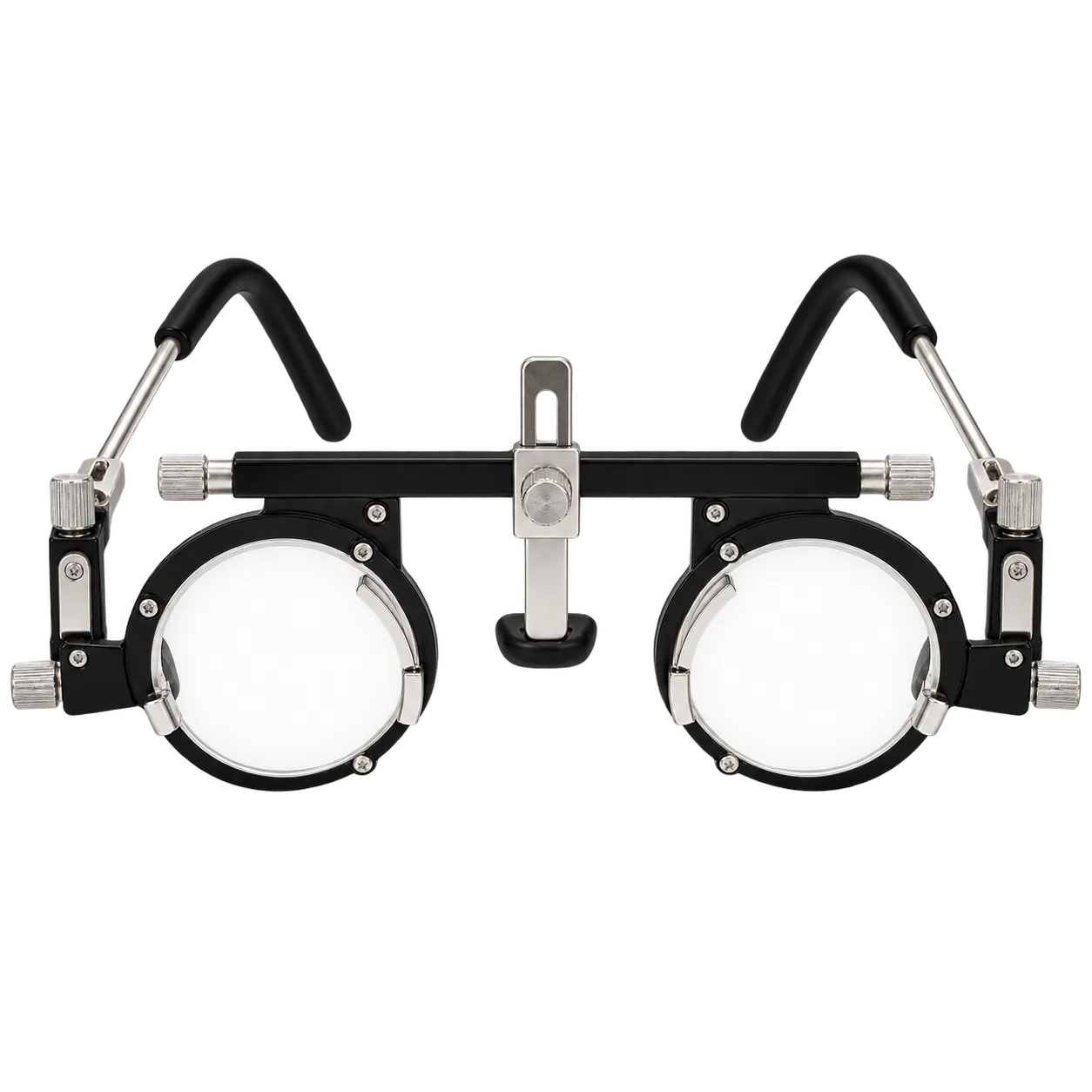
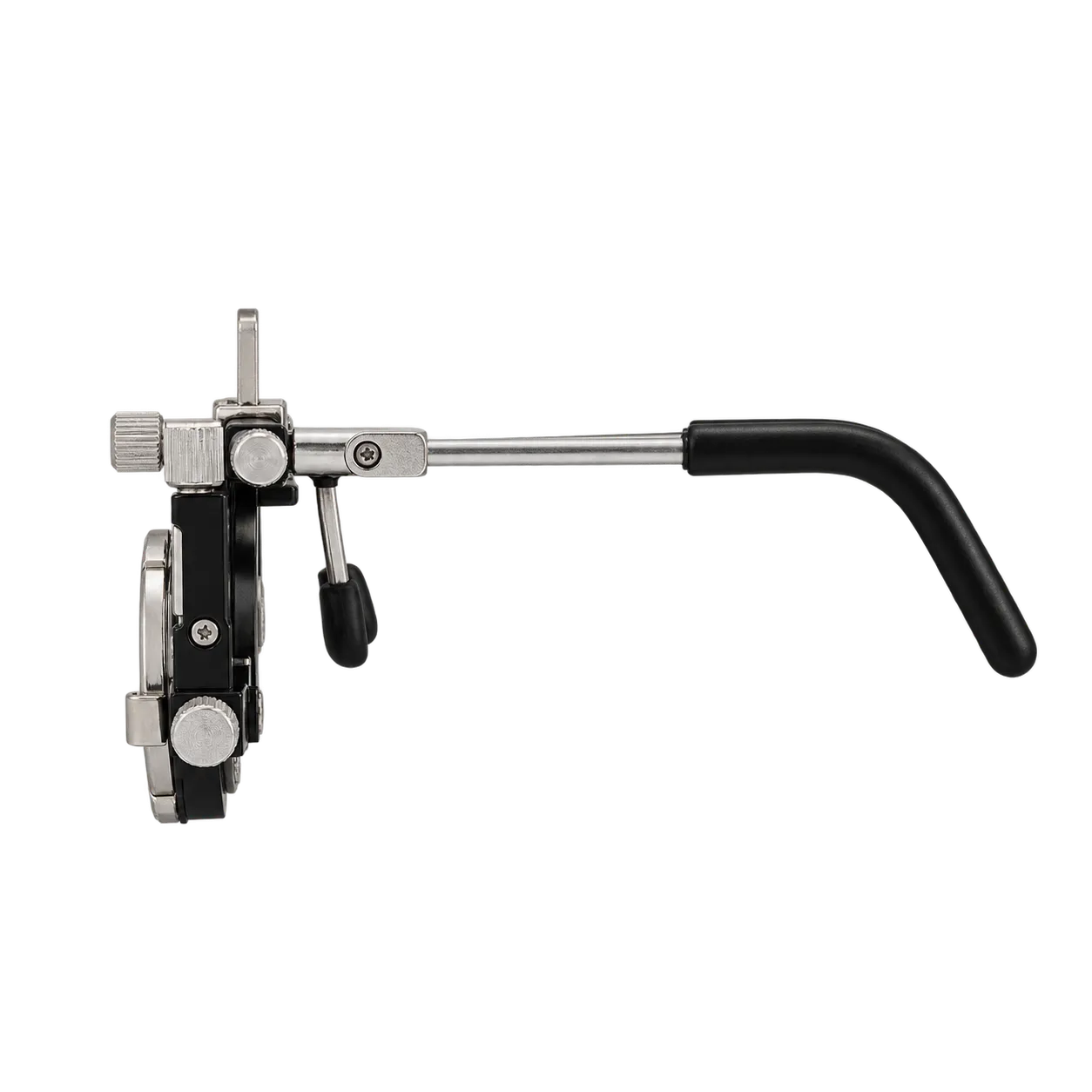
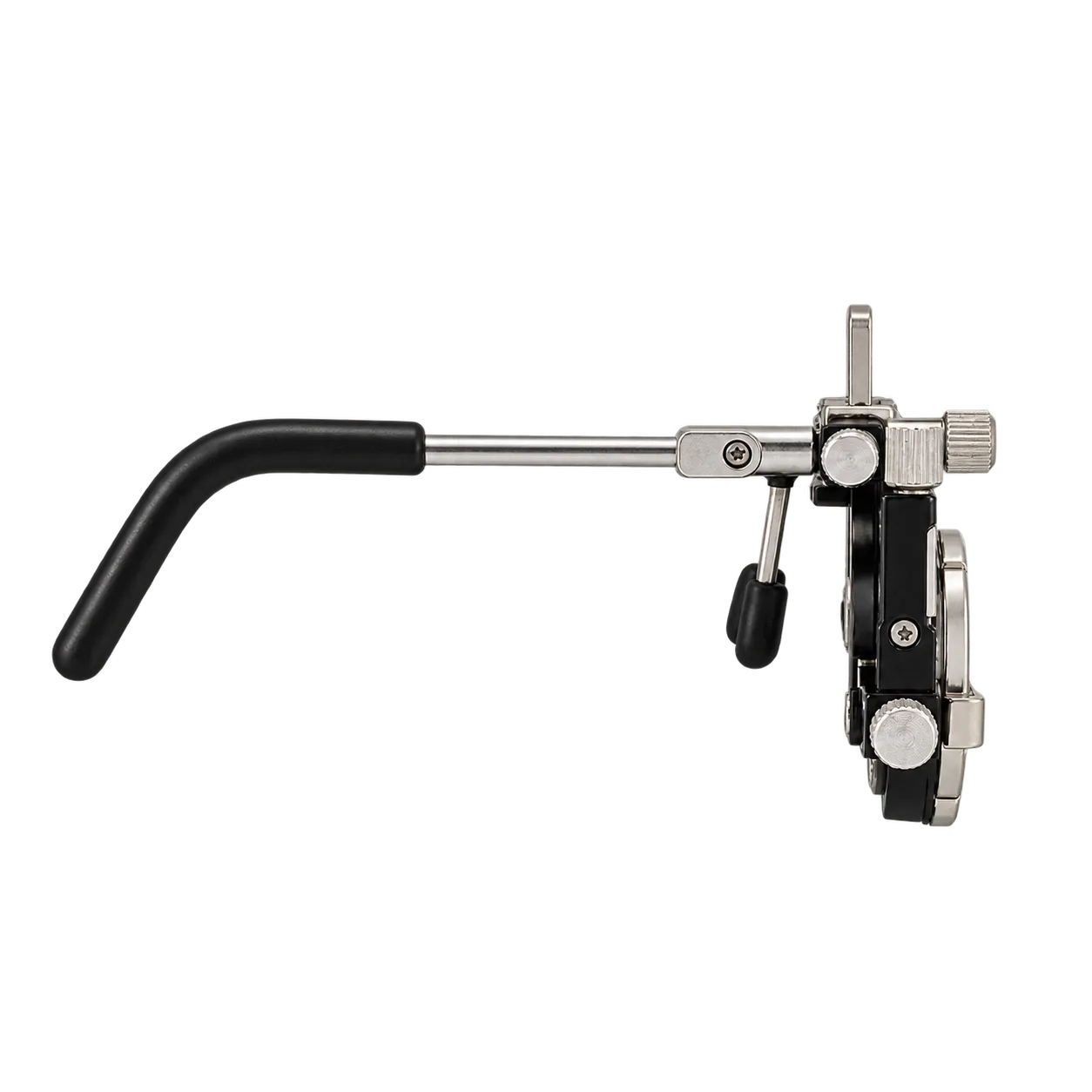
Higher prescriptions are the clearest fit. As power rises, small errors in lens height, distance and tilt produce measurable prism and effective power changes, and a fully adjustable frame lets the clinician remove them.
Anisometropia benefits similarly, since unequal powers between the eyes make any positional error unequal too, which confuses a binocular assessment.
Refraction for progressive and high-index lenses suits a frame that can mimic the fitted spectacles closely, with the lenses sitting where the final pair will.
Low vision assessment often involves strong corrections held for extended periods, where precise positioning matters more than usual.
Teaching clinics can use the extra adjusters to show students how each positional variable affects the refraction.
Complex cases referred from routine clinics suit a frame reserved for work that needs full control.
Routine low-power refraction gains little from the additional mechanisms, and a lighter, simpler frame may be more comfortable.
Elderly and frail patients having long tests may find the extra weight noticeable, which is worth weighing against the need for adjustment.