

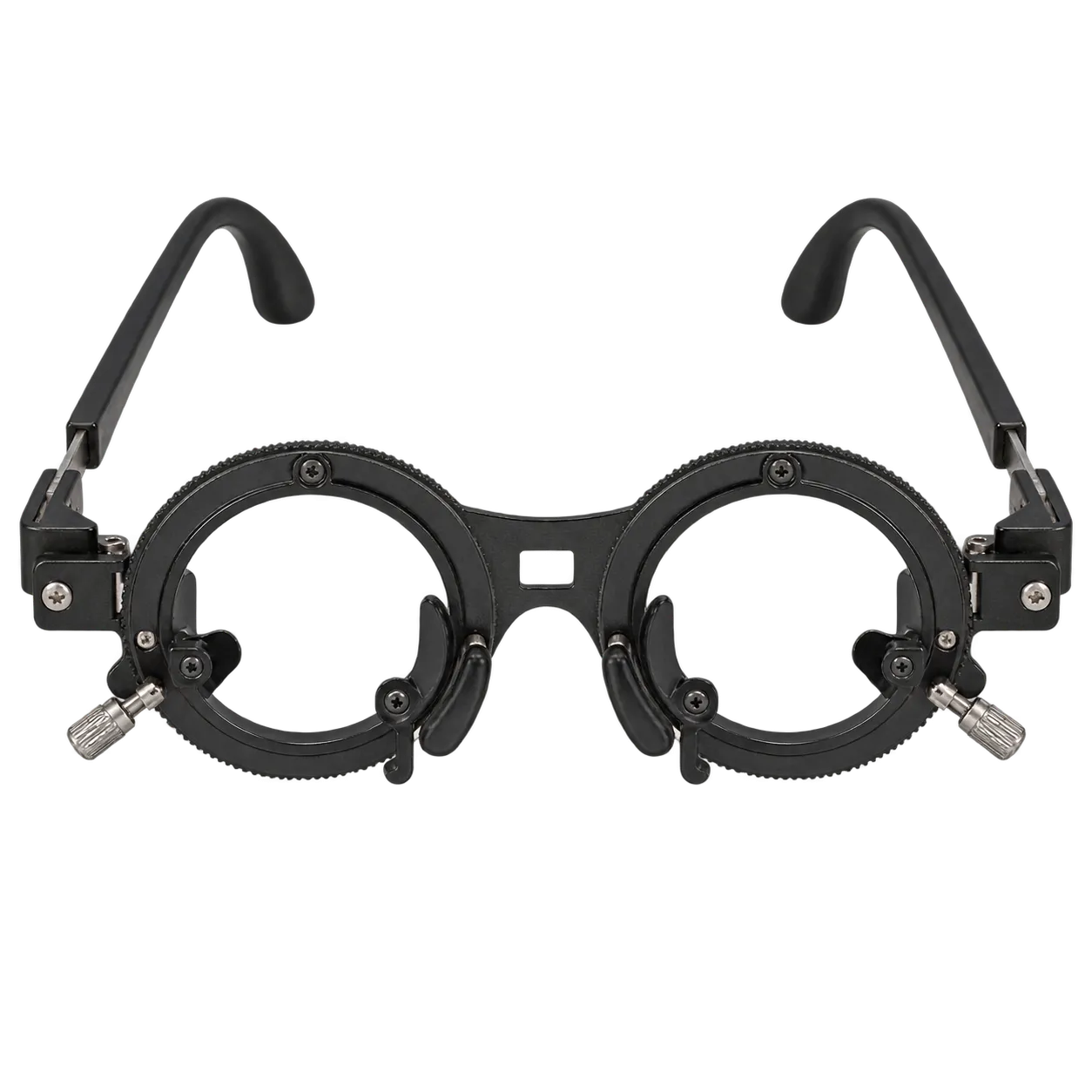
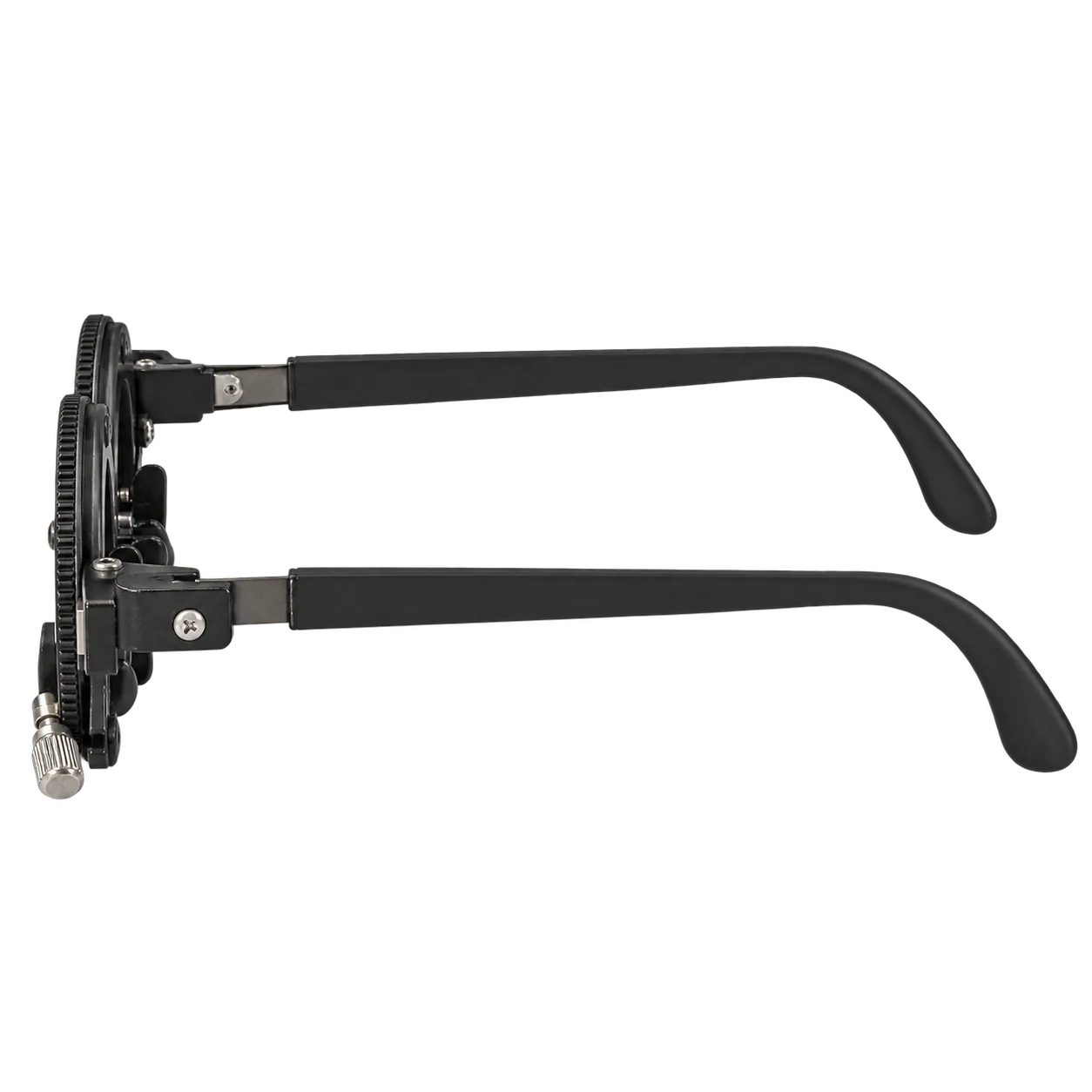

Anxious patients are the clearest fit. A first eye examination, a patient who dislikes clinical settings, or someone who has had a difficult experience before will often settle faster in a frame that looks like ordinary glasses.
Elderly patients benefit similarly, since unfamiliar equipment can be unsettling, and familiar-looking spectacle-style temples also sit in a way they recognise.
Domiciliary work suits a frame that feels like everyday eyewear, particularly in care homes, where the setting is already unfamiliar and residents may be anxious.
Learning disability services and patients with dementia often respond better to familiar objects, so a frame resembling their own glasses can make an examination possible.
High-volume adult refraction benefits from fixed sizes and quick selection across the 52 to 70 mm range.
Retail practices where patient experience is part of the offer can use the styling and colour option to make the test feel less clinical.
Complex prescriptions depend on the lens capacity, which is not yet confirmed, so we establish it before recommending the frame for that work.
Children below 52 mm fall outside the range and need a paediatric frame.