
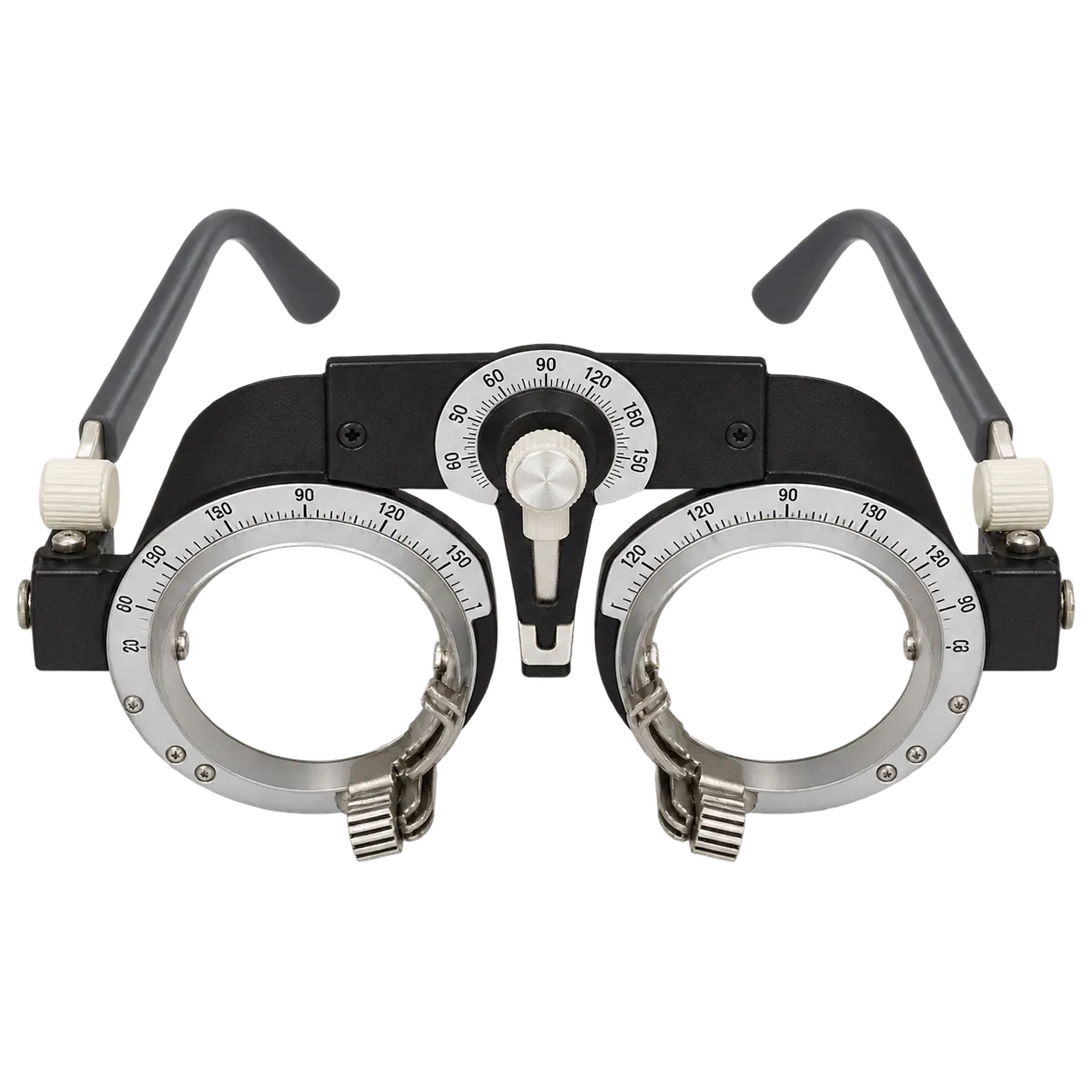
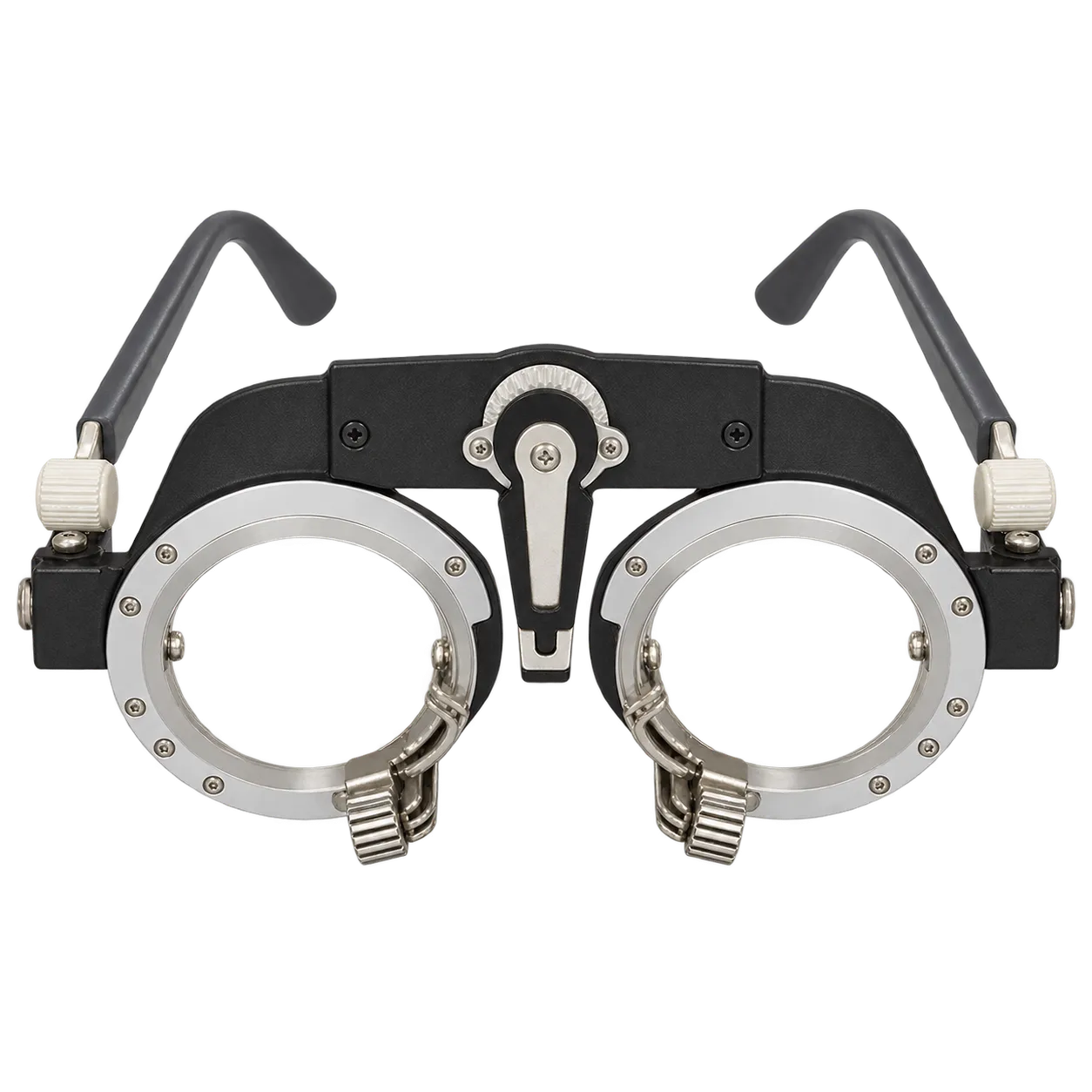
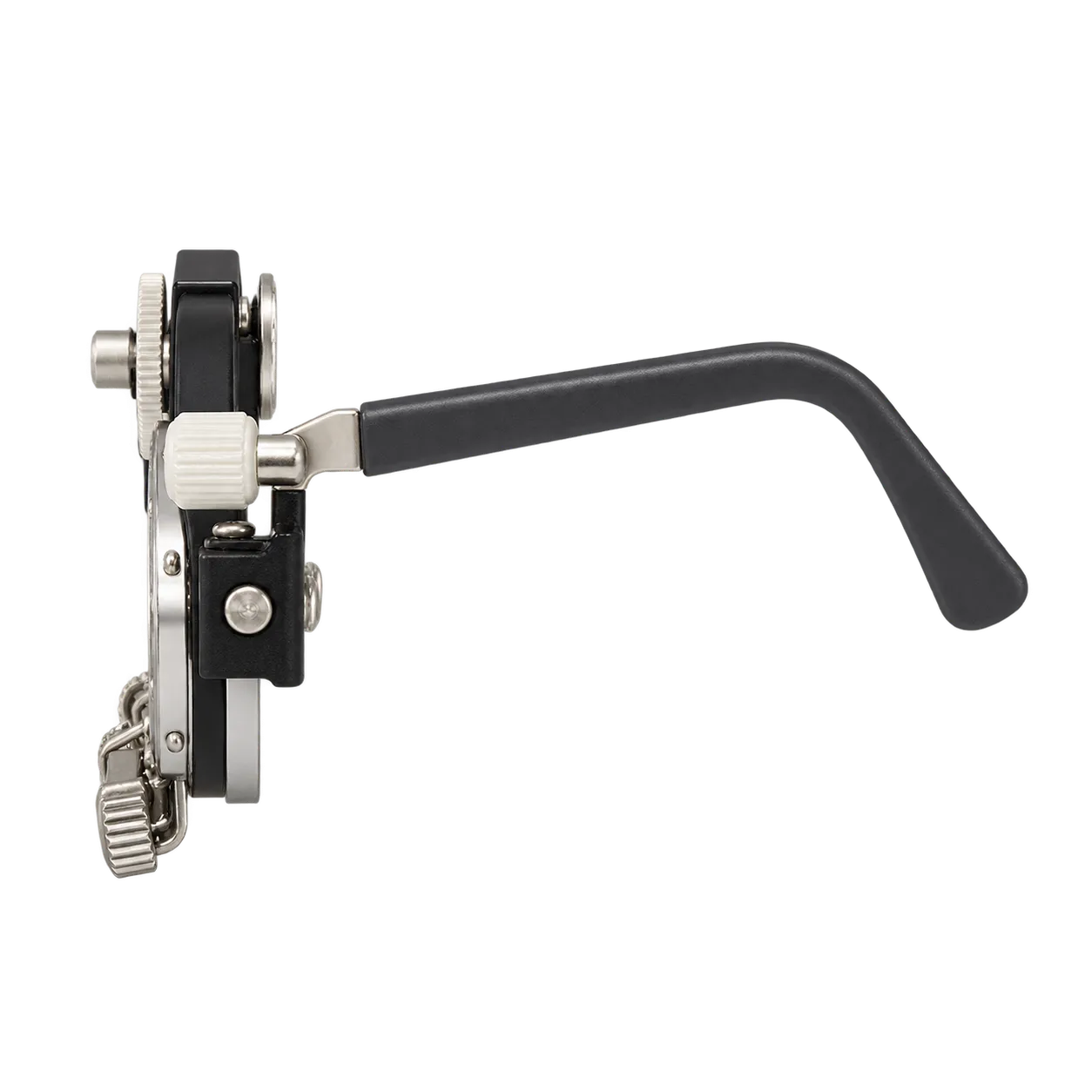
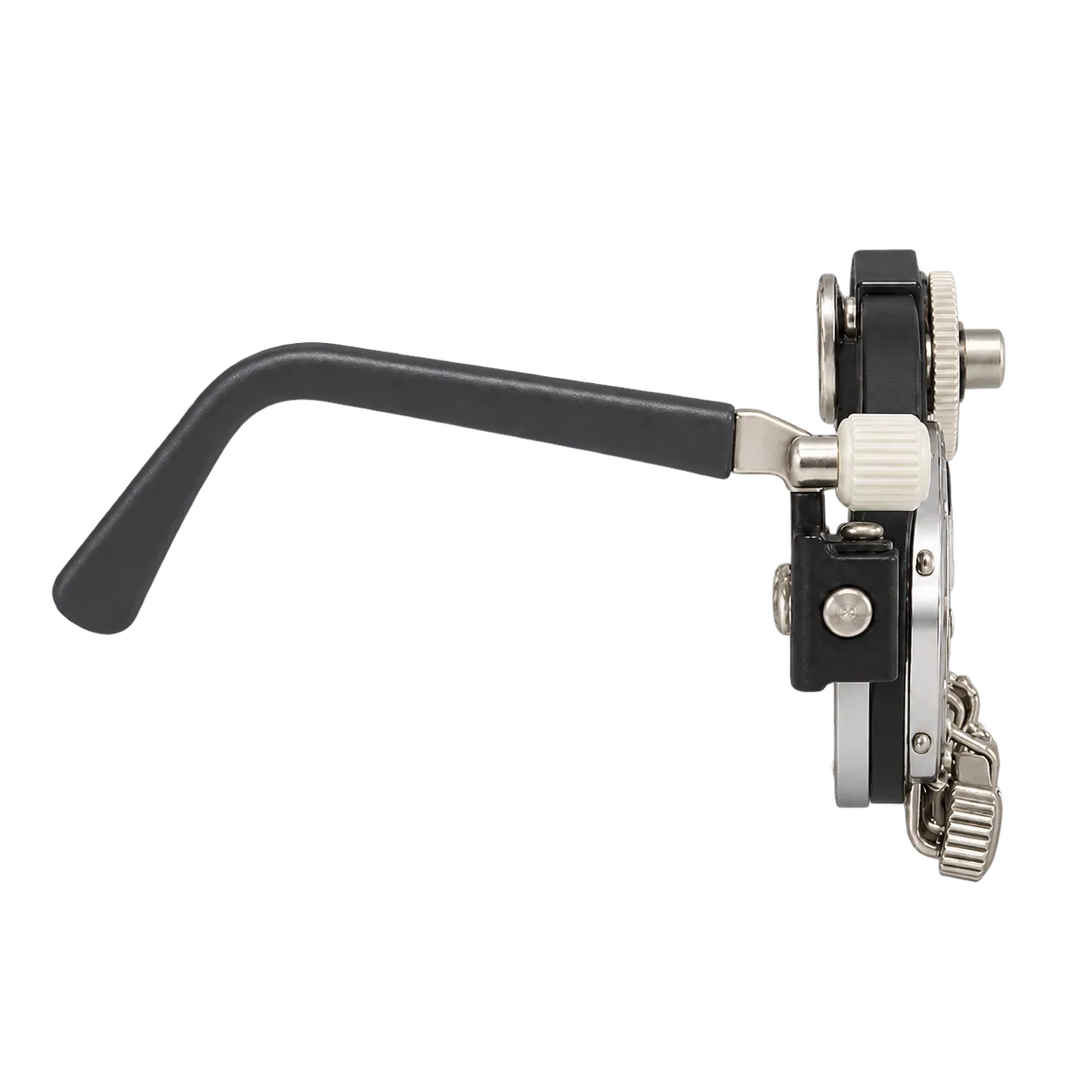
Long and repeated refractions gain the most. Cycloplegic refraction, complex prescriptions and cases needing several checks keep a frame on the face well past a routine test, and that is where weight turns into restlessness and restlessness into unreliable answers.
Elderly and frail patients benefit directly, since less weight presses on thin skin at the nose and temples and the frame is less likely to slide.
Low vision assessment keeps the correction in place while the patient reads, moves and looks around, so the lightest available frame is usually the right choice.
Domiciliary and outreach work suits it twice over: lighter to carry in a bag, and lighter on patients who are often elderly.
Paediatric patients are not served by the 54 mm lower limit, which will not centre on many children.
High prescriptions need vertex distance set accurately, so practices doing that work should confirm what this model adjusts before treating it as a primary frame.
Teaching clinics may prefer a fuller frame, since a simplified one demonstrates fewer of the adjustments students need to learn.
Practices holding one frame only should weigh the simplified build carefully, as a second, fuller frame is often the better pairing.