

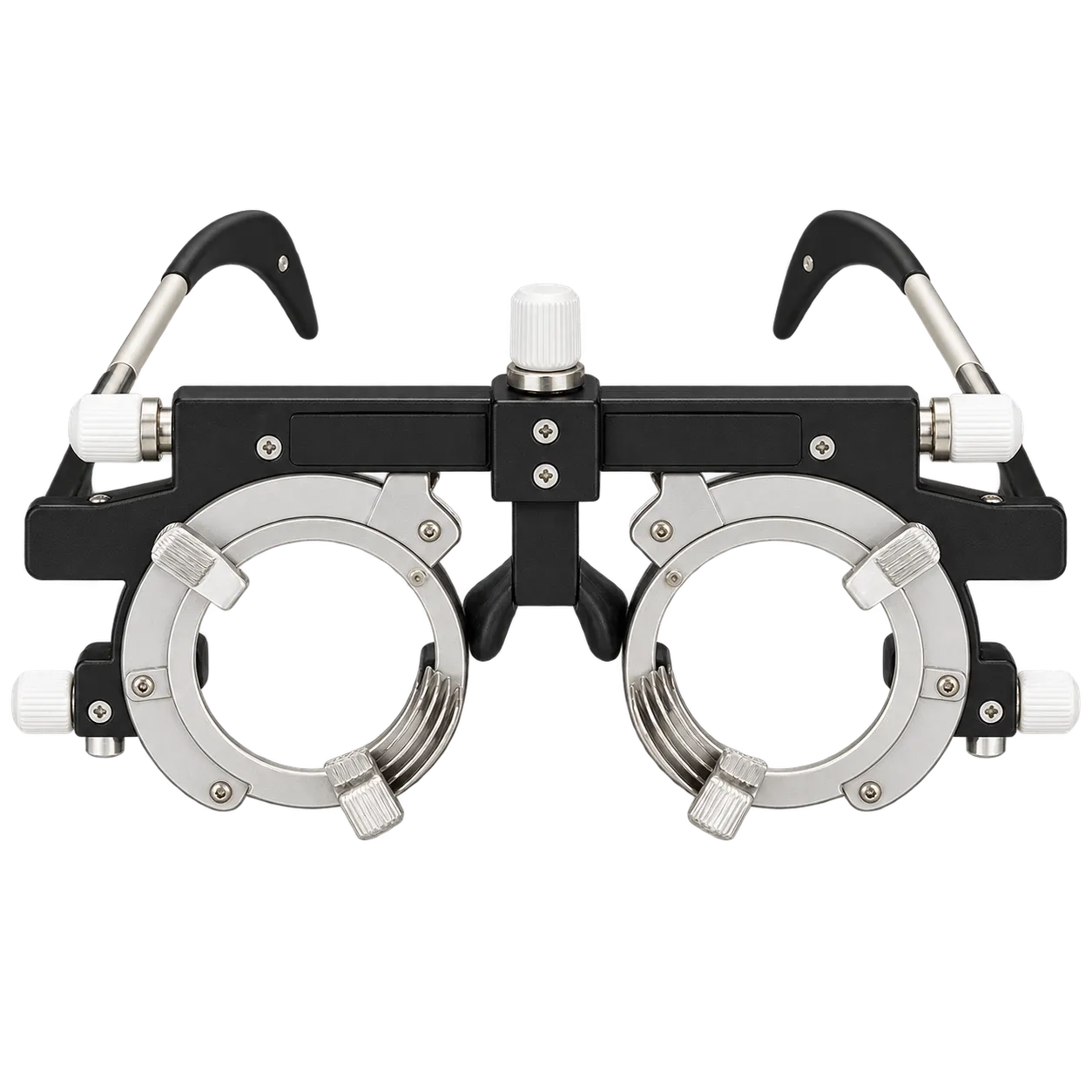
Practices holding one adjustable frame benefit most. A 48 to 80 mm span covers children, narrow-set adults and wide-set adults from a single frame, which is the case for buying this model rather than two.
Cylinder refinement suits the printed calibration and full rotation, since small axis changes can be made and read directly rather than estimated between marks.
Record-keeping is the underlying argument. The GOC expects clear, reproducible records, and an axis read from a scale is reproducible in a way an estimate is not.
Paediatric refraction is served by the 48 mm lower limit, with the leg adjustment helping the frame sit level on a smaller head.
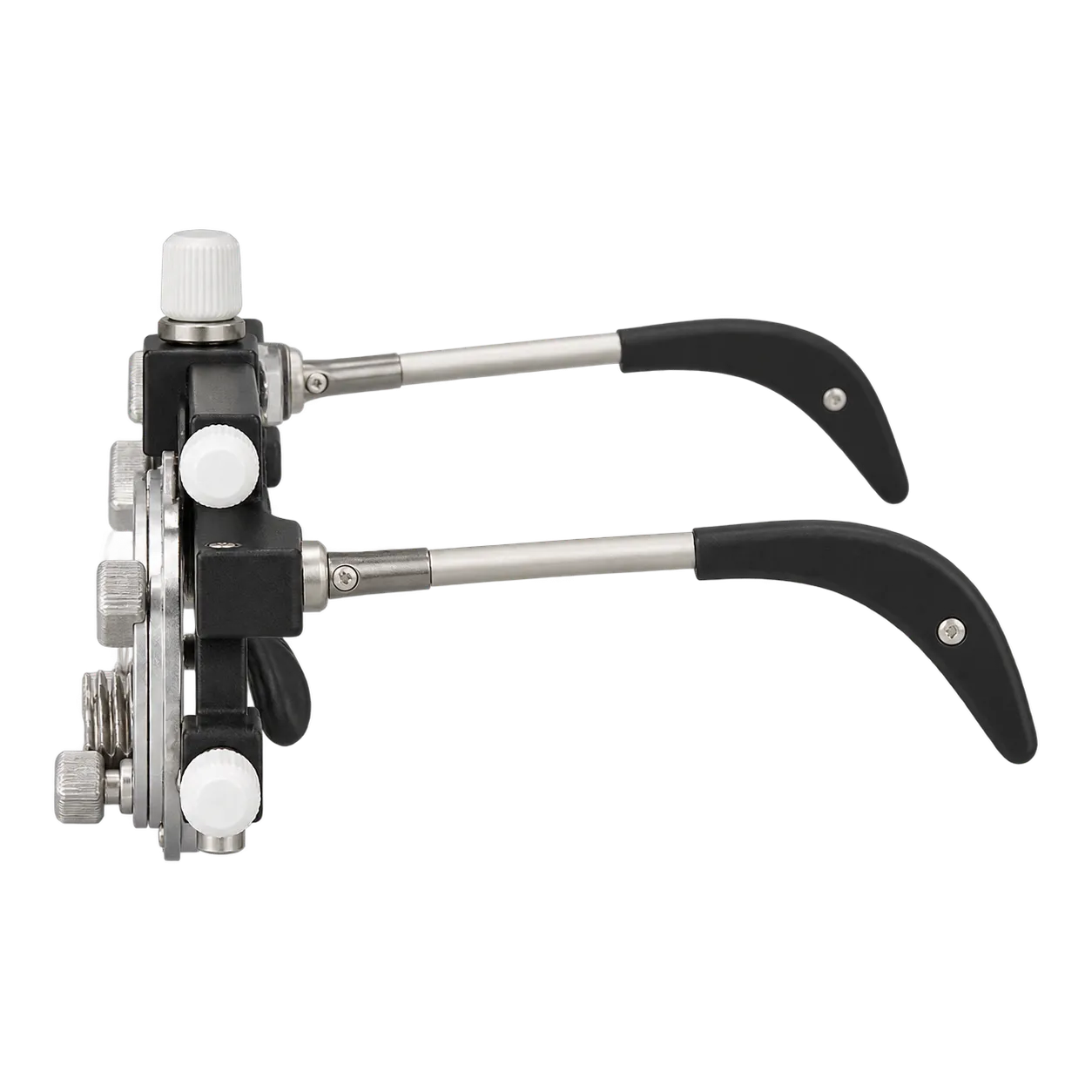
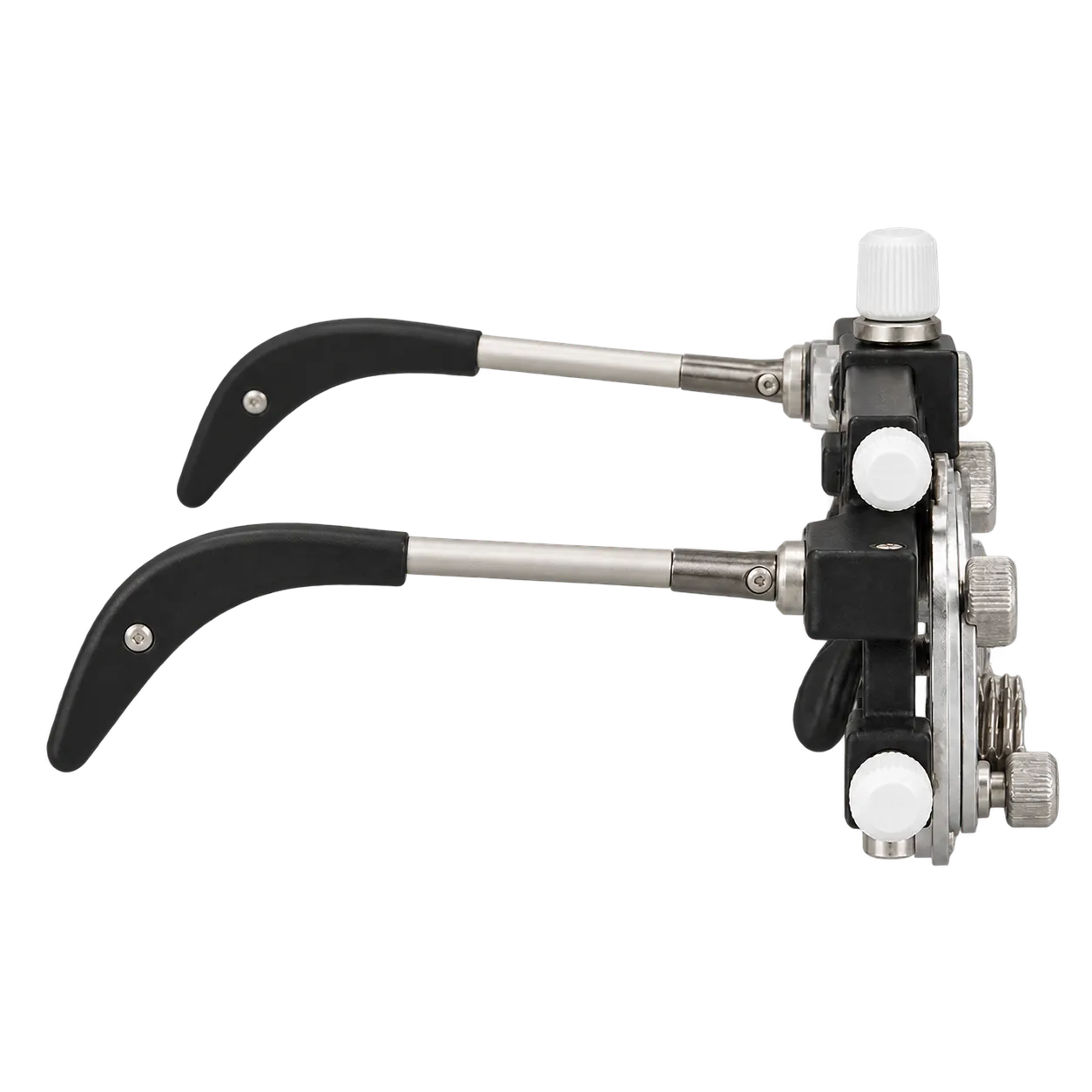
High prescriptions depend on the frame sitting correctly, so adjustable leg length matters alongside vertex distance, which we confirm separately.
Domiciliary and low vision work suit a frame that covers every patient a clinician might meet in a day without carrying alternatives.
Teaching clinics can use the visible scales to show students what axis setting means, which a phoropter hides inside the instrument.
Screening at speed is better served by a fixed-pupil set, since this frame is adjusted for each patient rather than selected.