

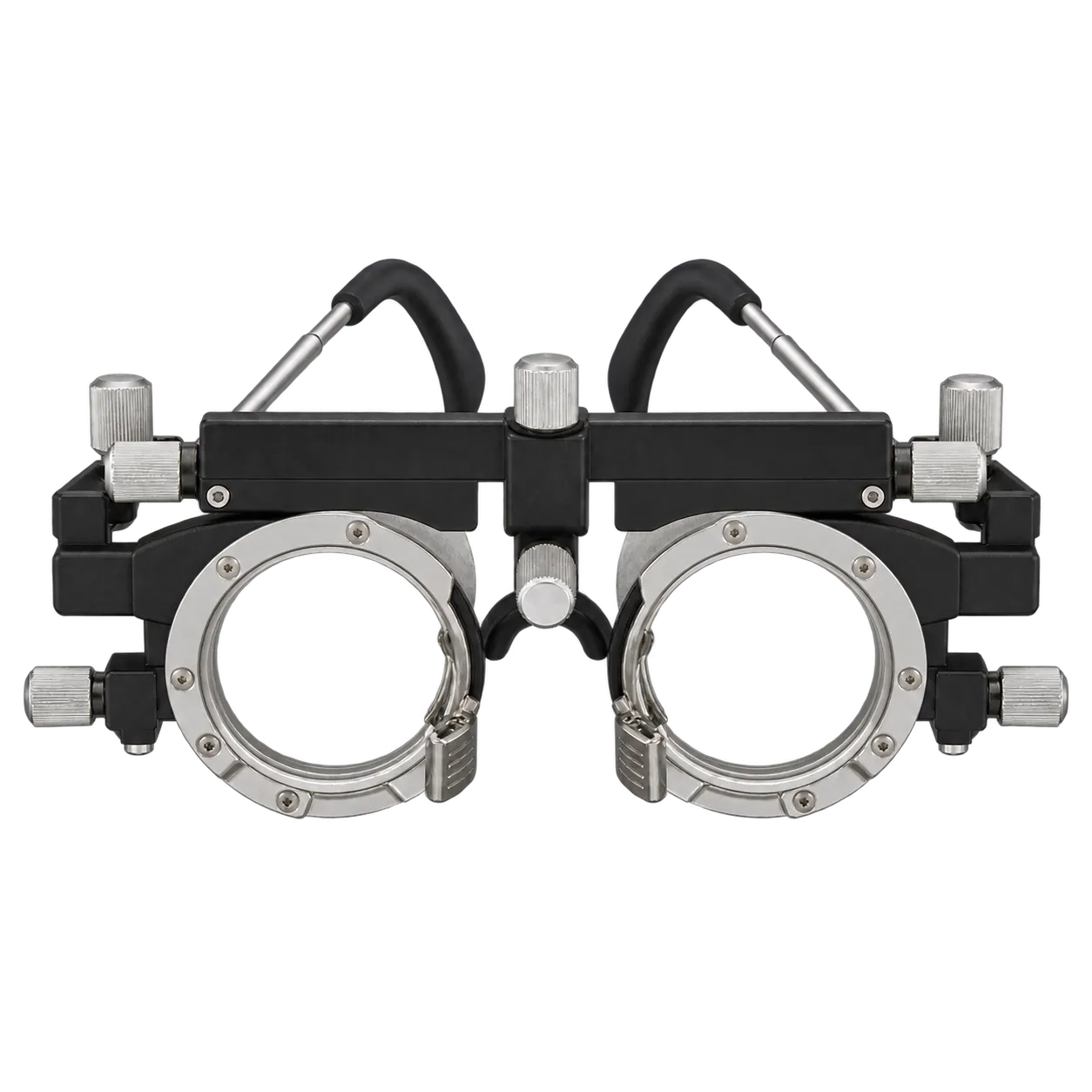
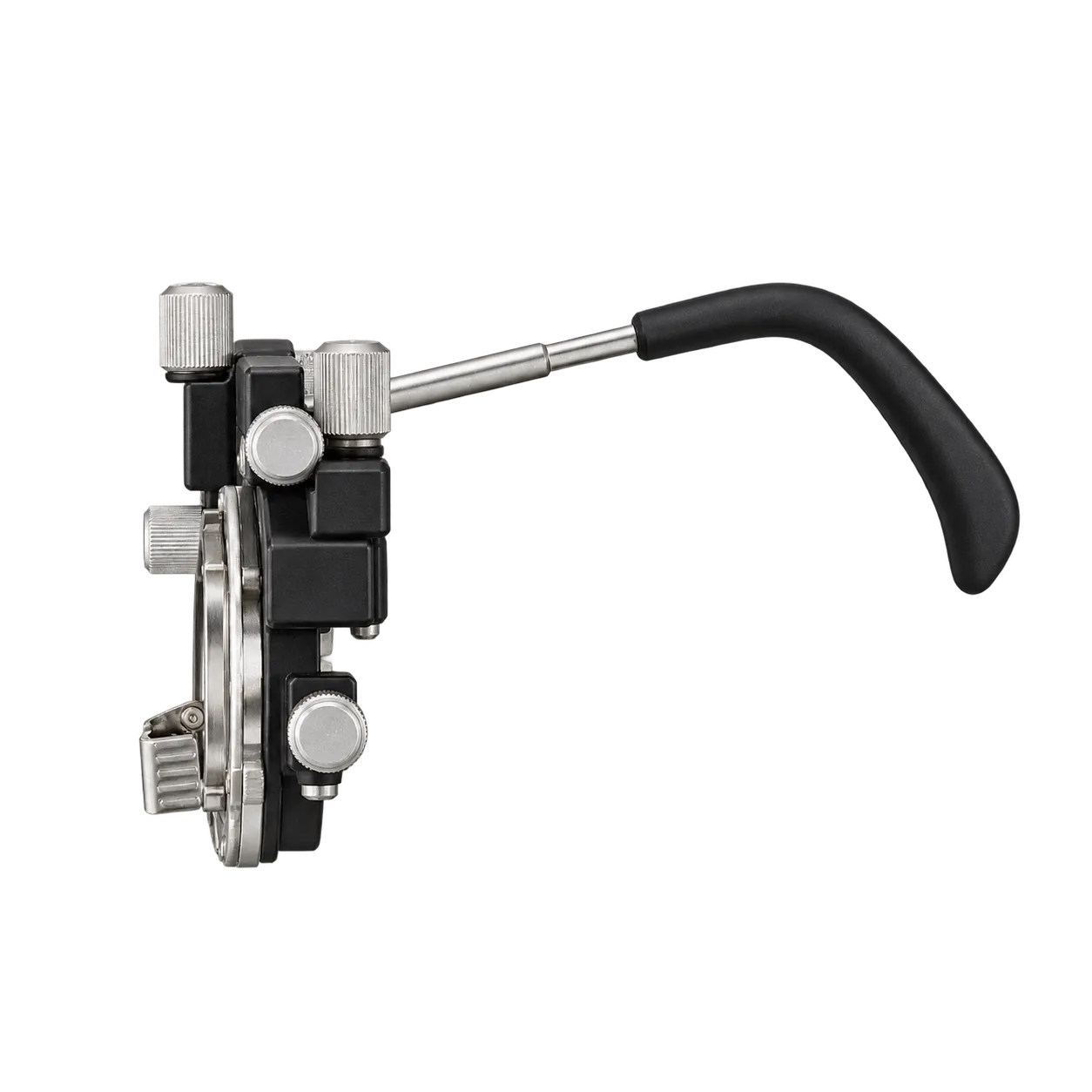
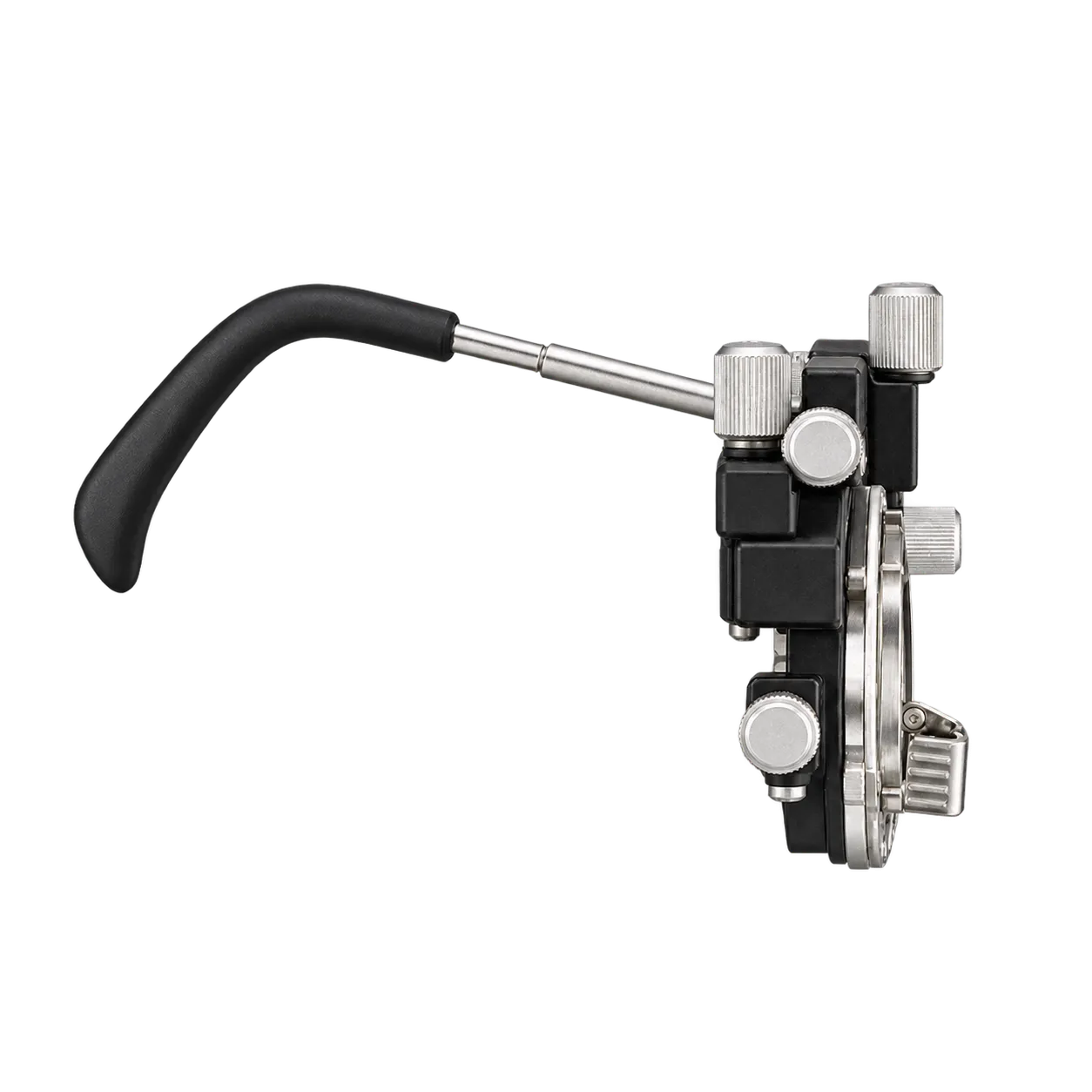
Domiciliary work is the clearest use. A trial frame is the only practical way to refract a patient in their own home or a care setting, and the published weight and adjustment range are what determine whether a long visit is comfortable.
Paediatric refraction benefits from the 48 mm lower limit, since a frame that will not narrow far enough cannot be centred on a child's eyes, and a decentred lens introduces unwanted prism.
Wheelchair users and patients who cannot reach a phoropter are served by a frame that goes to the patient rather than requiring the patient to come to an instrument.
Low vision assessment relies on trial frames, since patients need to look around, read and move while wearing the correction rather than through a fixed instrument.
High prescriptions are checked in a trial frame because vertex distance can be set and measured, which a phoropter approximates.
Four cells per eye suit complex prescriptions, where sphere, cylinder, prism and an auxiliary lens must be in place together.
Long or repeated refractions raise the weight question, and practices doing many of these may prefer a titanium frame at 40 to 50 g.
Teaching clinics use trial frames to demonstrate the components of a prescription in a way a phoropter conceals.