
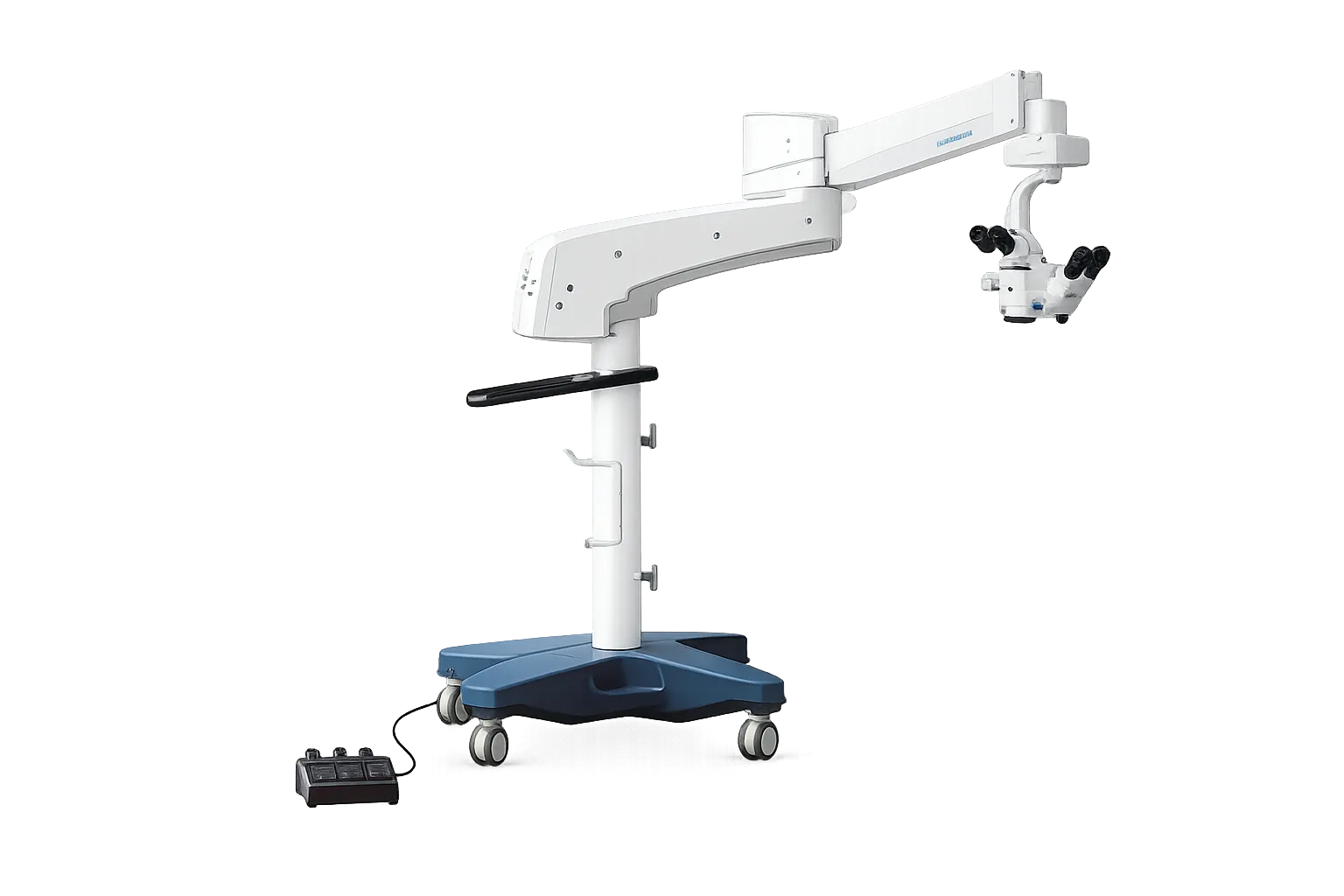
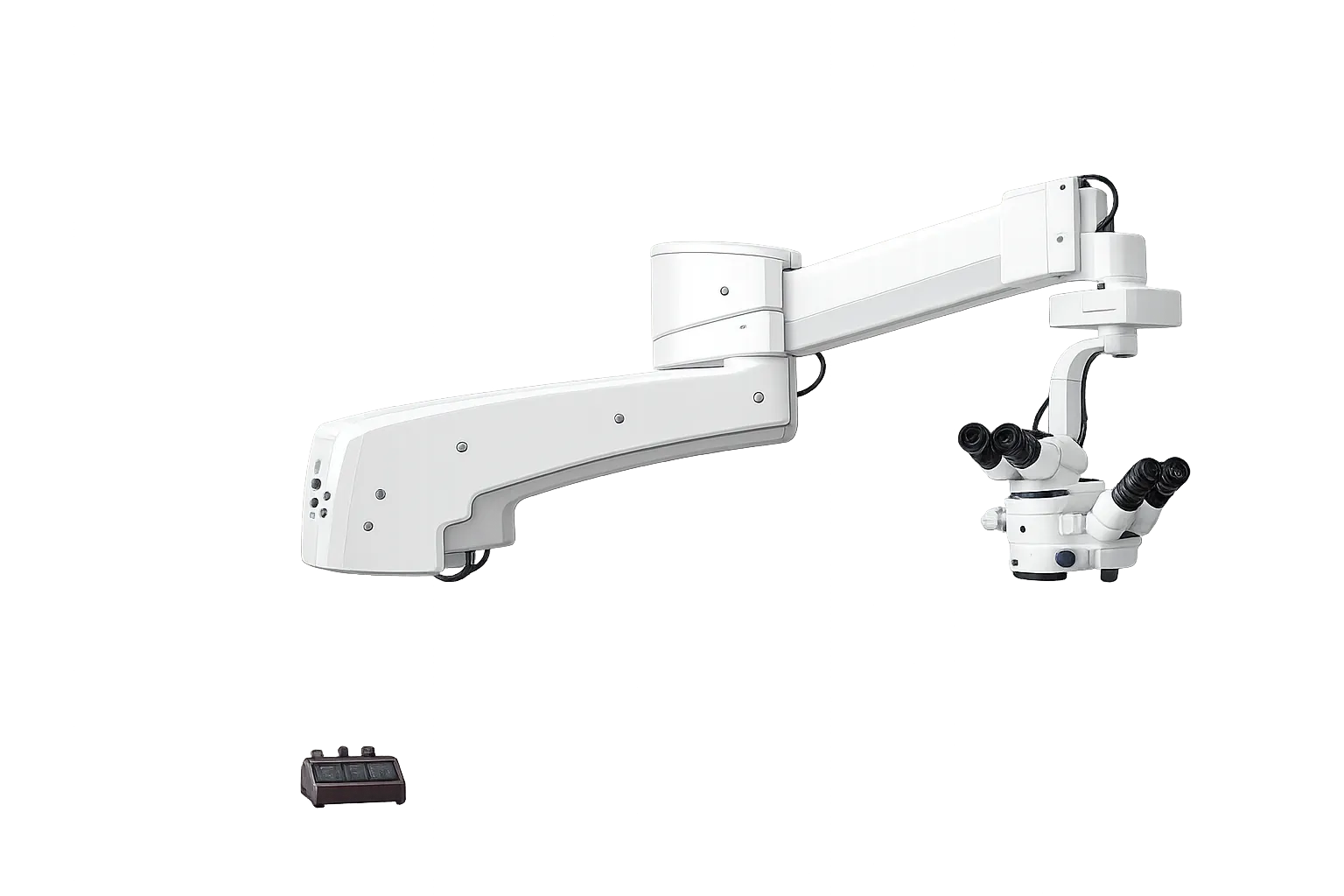
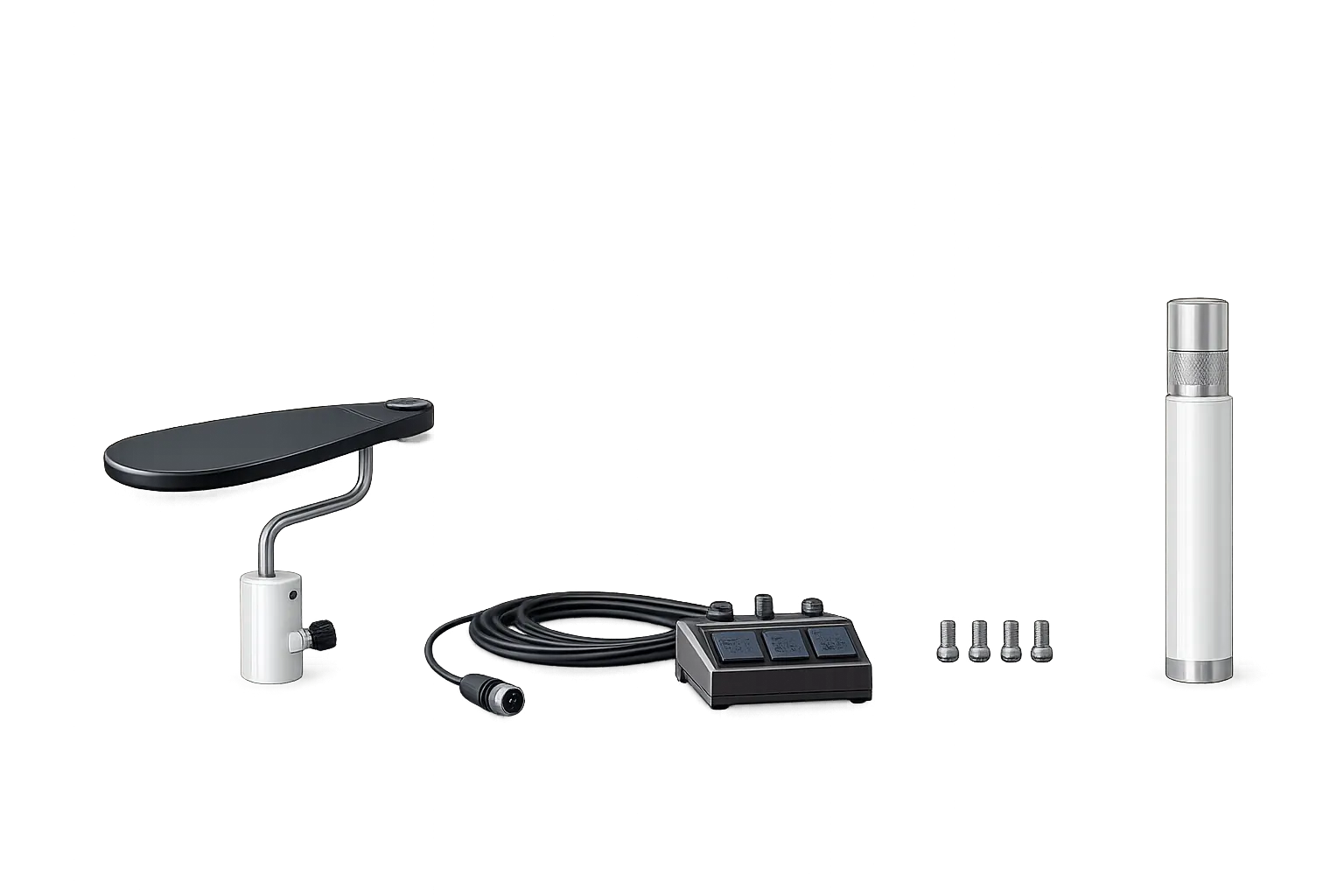
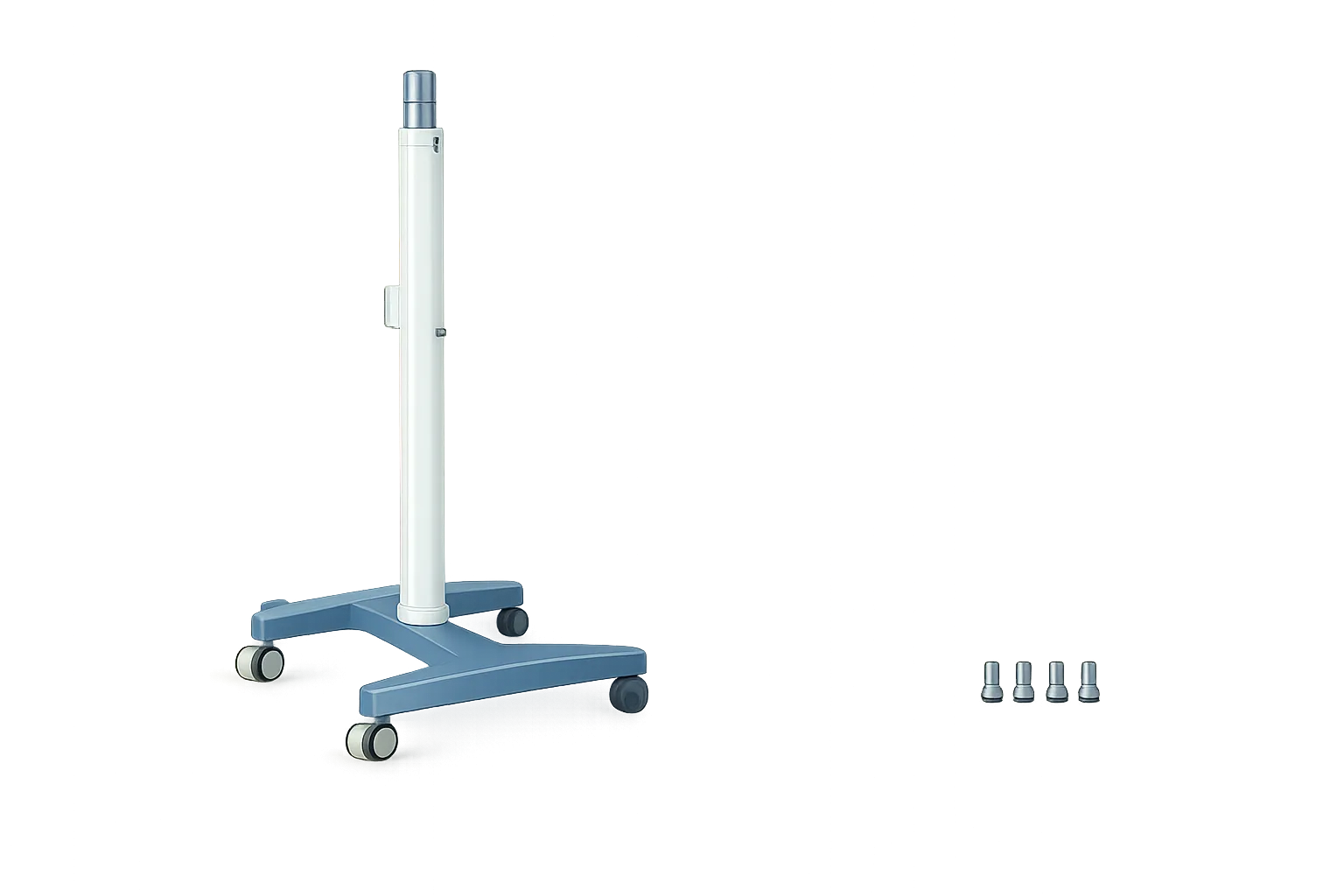
Cataract surgery is where the illumination angle earns its place. The red reflex a surgeon works by is light returned from the fundus through the viewing path, and how much returns depends on how closely the illumination axis aligns with the observation axis. Narrowing that angle to around 6 degrees yields more across a wider, more uniform field, and the published description reports a larger reflex area with clearer posterior capsule visibility during surgery. Cortical clean-up and capsule polishing are judged against the reflex rather than direct illumination, so this bears on the part of the procedure where visibility is most contested. Medigear.uk verifies the build against each stated feature before any procurement decision.
Vitreoretinal services should look closely at the optional BIOM mounting. A wide-angle indirect viewing system on the objective is what allows an operating microscope to image the posterior segment during vitrectomy; it is a capability rather than a refinement. A unit specified accordingly serves both anterior and posterior lists from a single capital purchase, which changes the business case for a service that is weighing whether to develop retinal work at all.
Services concerned with prolonged exposure benefit from the filter package. Infrared and ultraviolet filtering attenuates heat energy, a yellow spot filter guards the macula, and an illumination damage-prevention filter is listed alongside them, which together form the fullest protection set across these instruments.
Theatres running lists with frequent repositioning gain from electromagnetic locks, which release and hold the arm electrically rather than through mechanical knobs. Medigear.uk confirms what the pedal and panel controls are on the supplied build.