
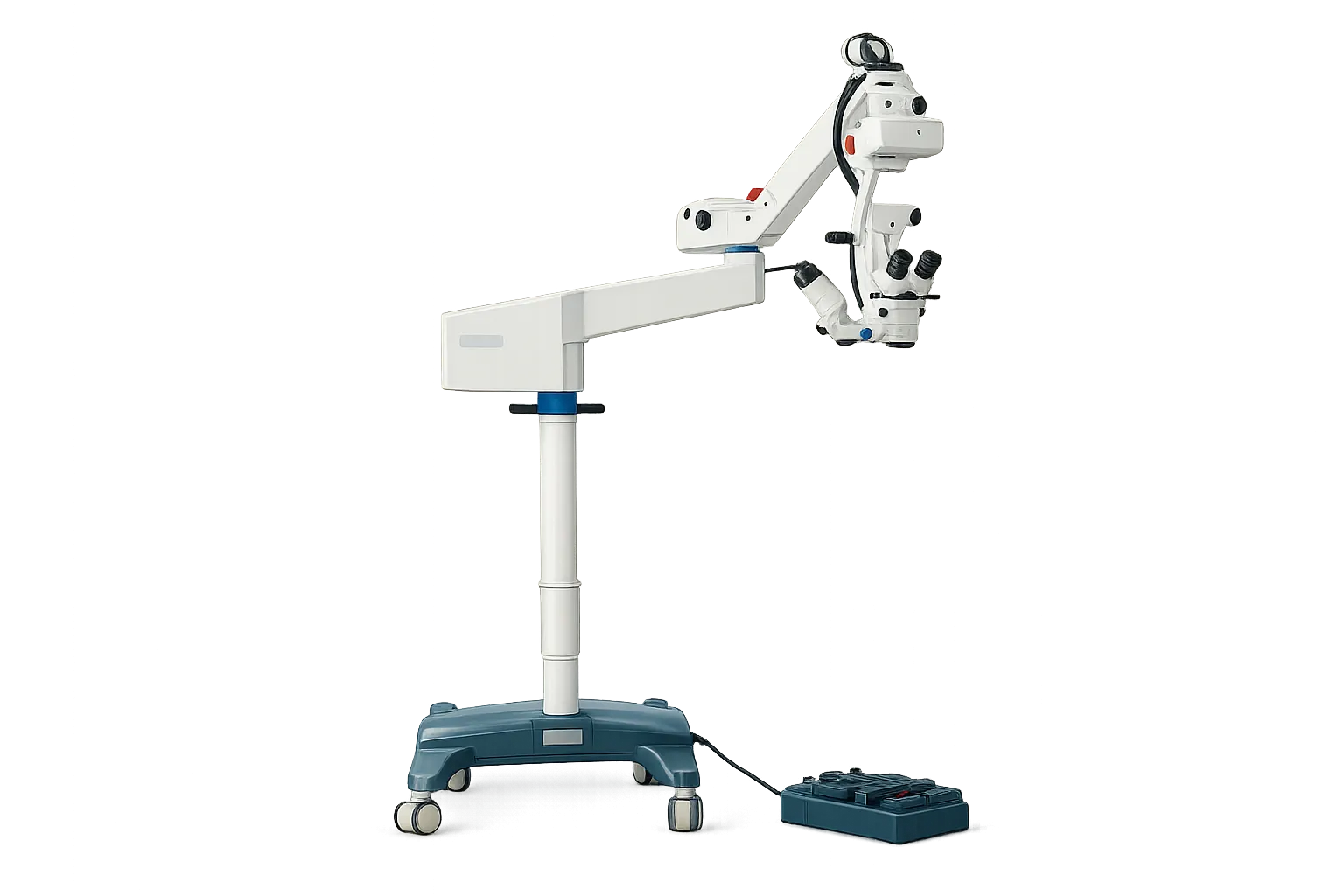
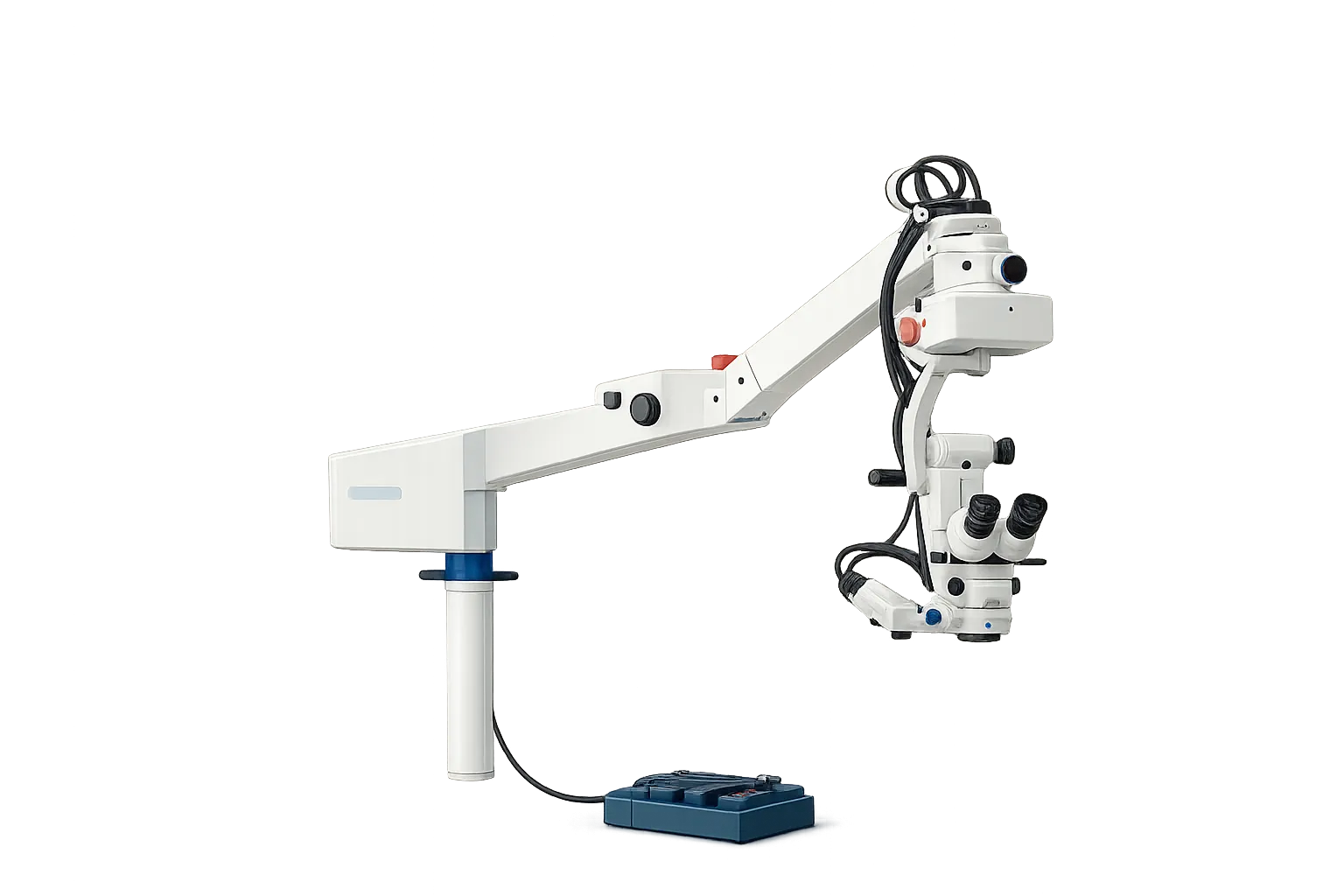
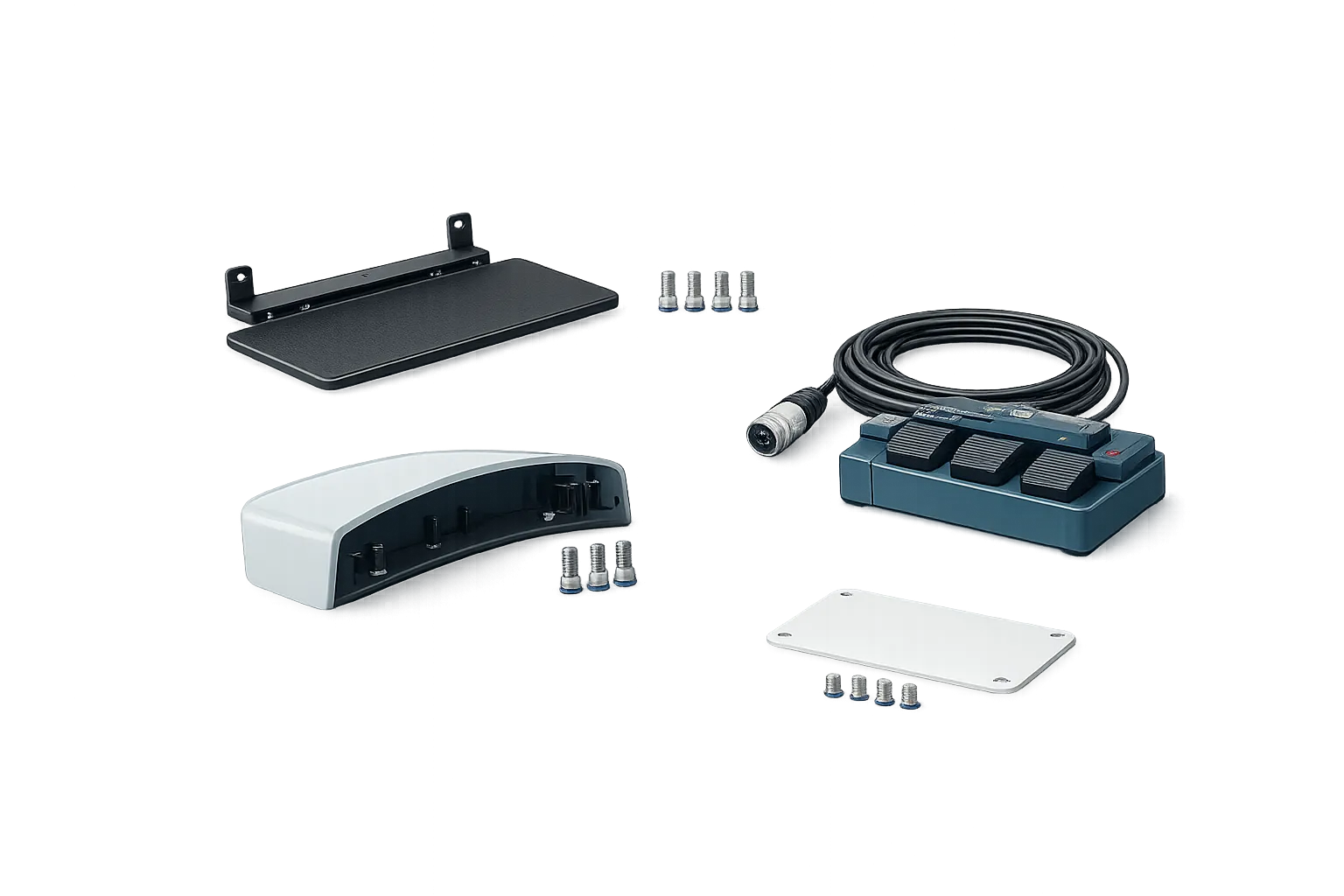

Theatres serving several surgeons benefit most from the interpupillary range. Where one instrument is used by a rota rather than an individual, the span it accommodates determines whether every surgeon can set the eyepieces properly or whether some work around a compromise. A range of 45 to 80 mm on the main head reaches operators that a conventional span of around 55 to 75 mm excludes, which matters more the larger the team. Medigear.uk confirms the specification before any procurement decision, and all surgical technique and clinical judgement remain with the operating surgeon.
Services concerned with surgeon fatigue should read the same figure differently. Eyepieces set away from a surgeon's actual interpupillary distance force the visual system to fuse two views that do not correspond. That effort accumulates through a list as strain rather than announcing itself. Correct setting removes the cause rather than managing the symptom, which is worth more over a career than any single session suggests.
Cataract lists where magnification is adjusted repeatedly gain from continuous zoom, which makes any magnification in the range available and keeps the field in view. At the same time, it changes, rather than indexing across fixed steps. Where a case repeatedly moves between broad orientation and fine detail, that continuity is felt across the whole list rather than at any one moment. The zoom range for the specific build is obtained in writing.
Units where an assistant scrubs regularly get both capabilities in one instrument. Medigear.uk confirms the optical arrangement between the main and assistant paths, since that determines how useful the second position is in practice rather than on paper.