
Settings for Three Implant Materials
PMMA, silicone and acrylic settings account for the different speeds at which ultrasound travels through each material, which matters whenever an eye already contains a lens.
Dual Propagation Velocities
Velocities of 1641 and 1532 metres per second are applied, letting differing ocular segments be measured according to how sound behaves in each rather than by a single average.
Standard Deviation Calculation
Across ten groups of data the console reports both average and standard deviation, so measurement consistency is visible to the operator rather than assumed.
Five Measured Parameters
Cornea, anterior chamber, lens, vitreous and axial length are all reported, feeding the calculations that require them and giving a full account of the eye measured.
Gain to 99 Decibels
High available gain helps recover a usable signal from eyes where opacity attenuates the return, which is where ultrasound retains its advantage.
Nine Eye Mode Settings
Normal, dense, aphakic, cataractous, PMMA, silicone and acrylic settings are joined by two customised modes, covering an unusually wide range of eye conditions.
Six Lens Power Formulas
SRK II, SRK/T, Binkhorst II, Hoffer Q, Holladay and Haigis are all provided, letting a surgeon apply whichever formula suits the eye in front of them.
200 Record Storage and Printer
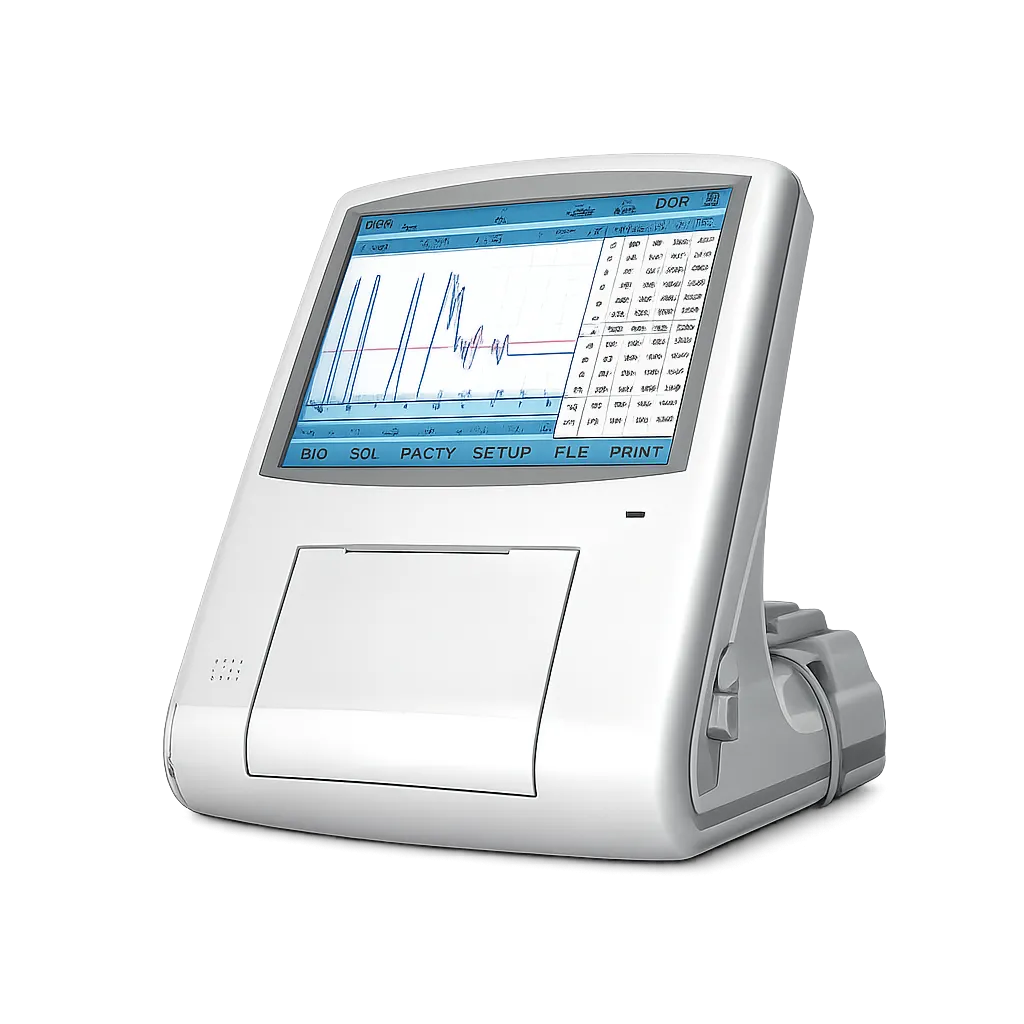
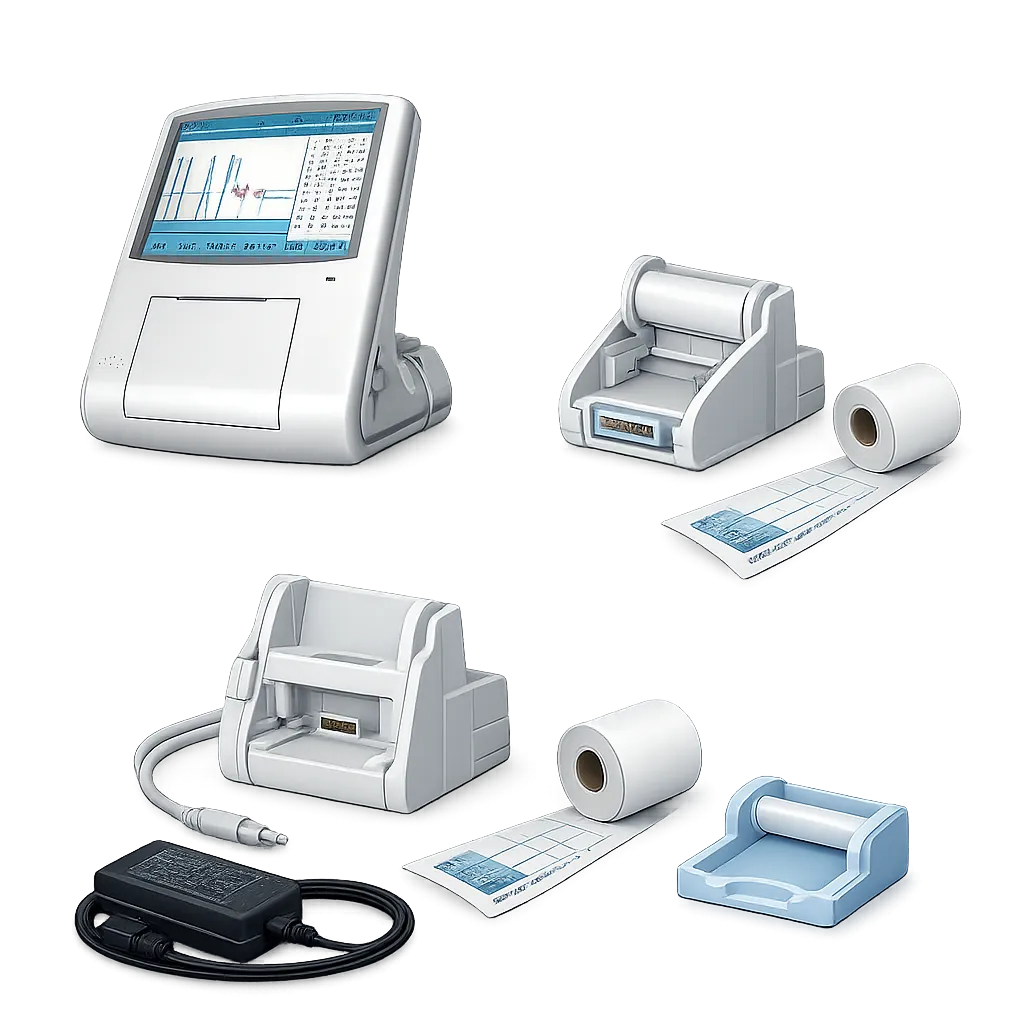
Two hundred examination records are held on the console, with a fast thermal printer built in and a 6.5 inch colour touchscreen driving operation.