
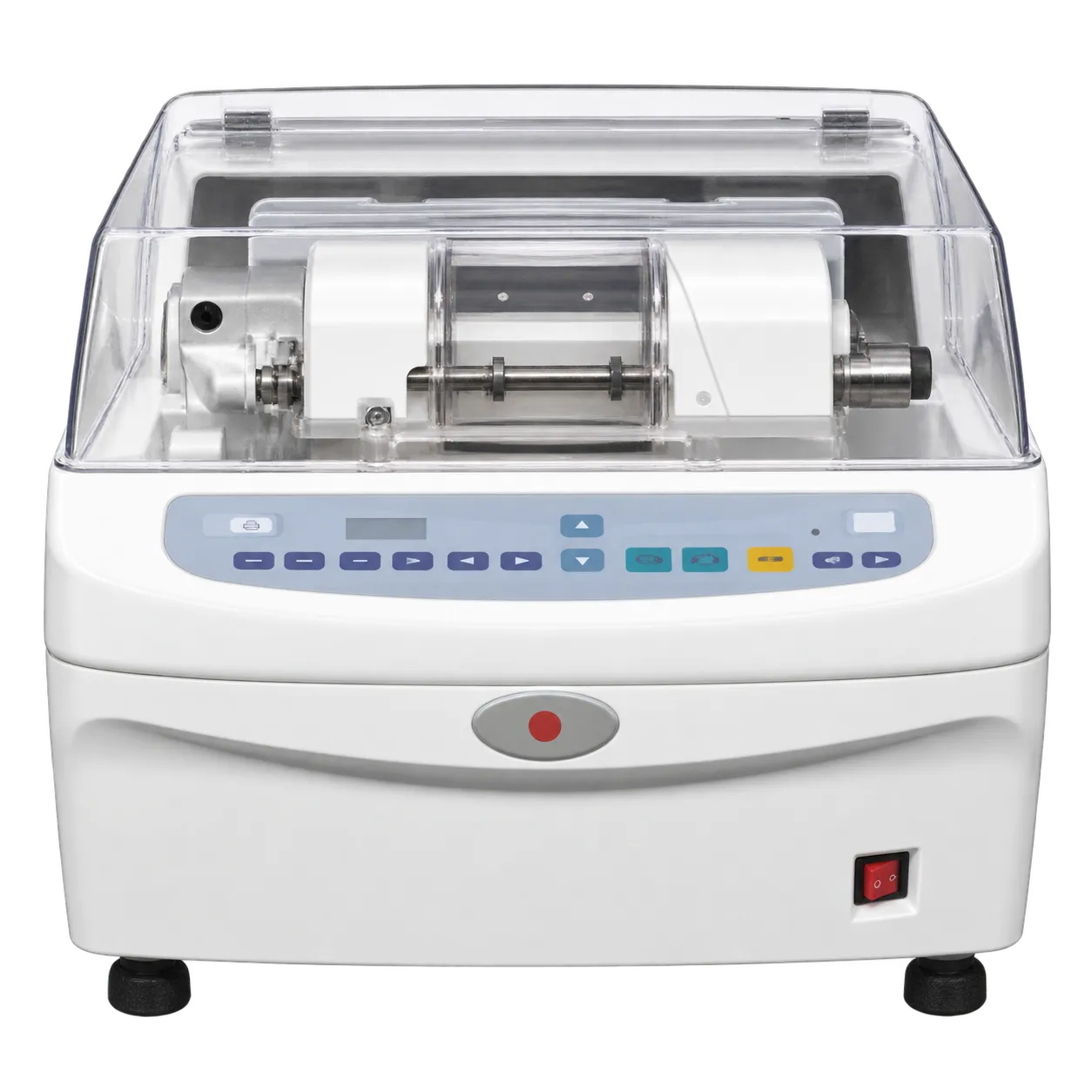
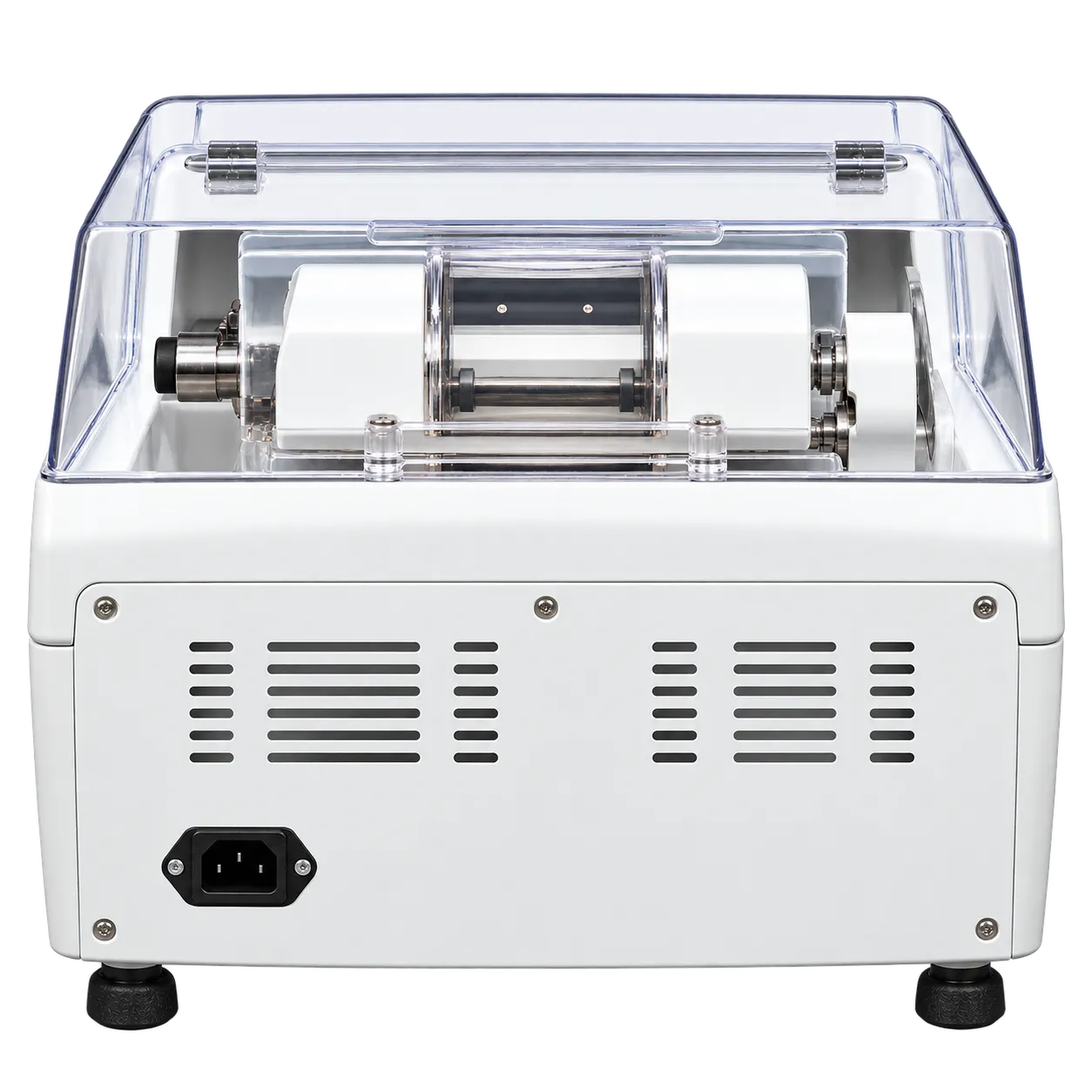
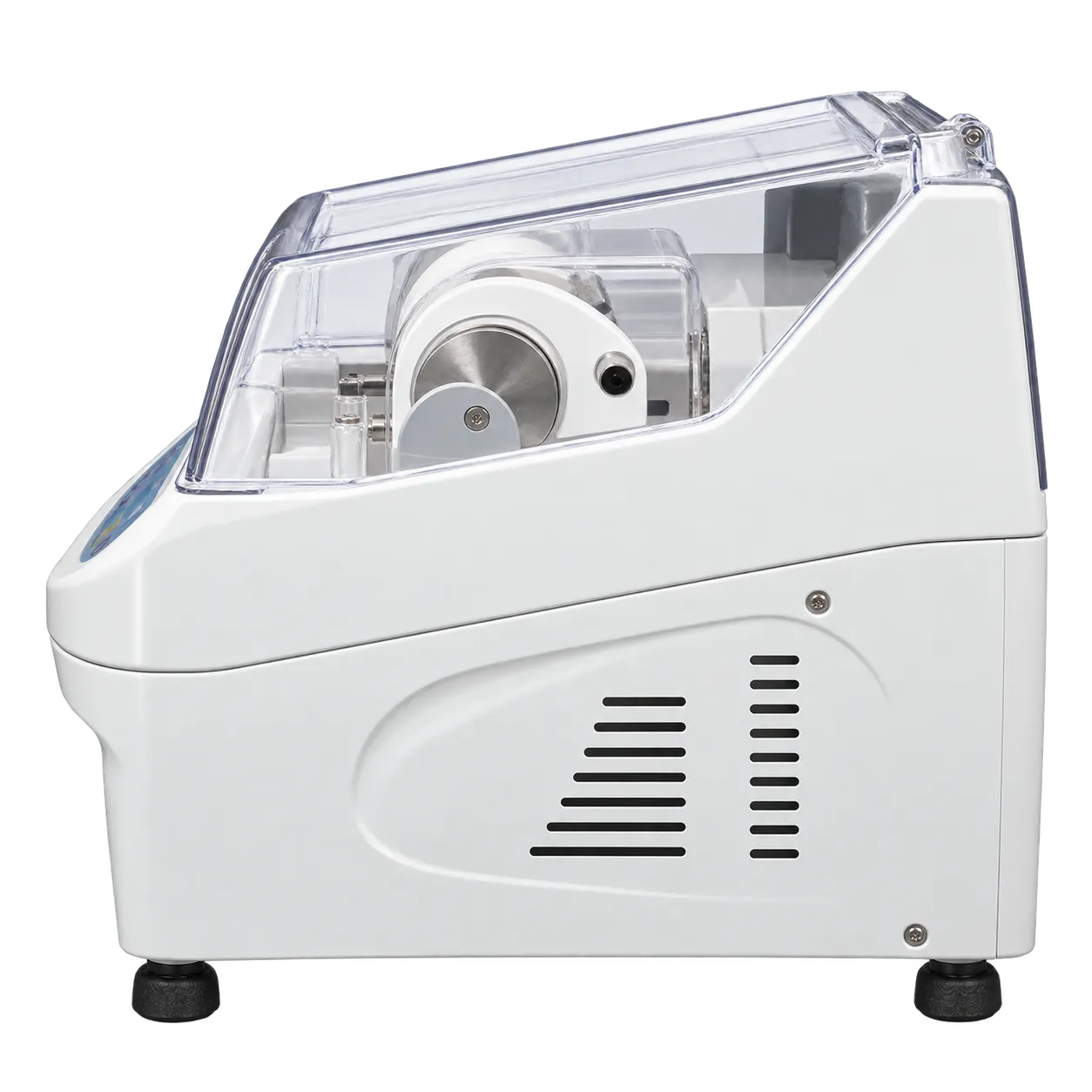
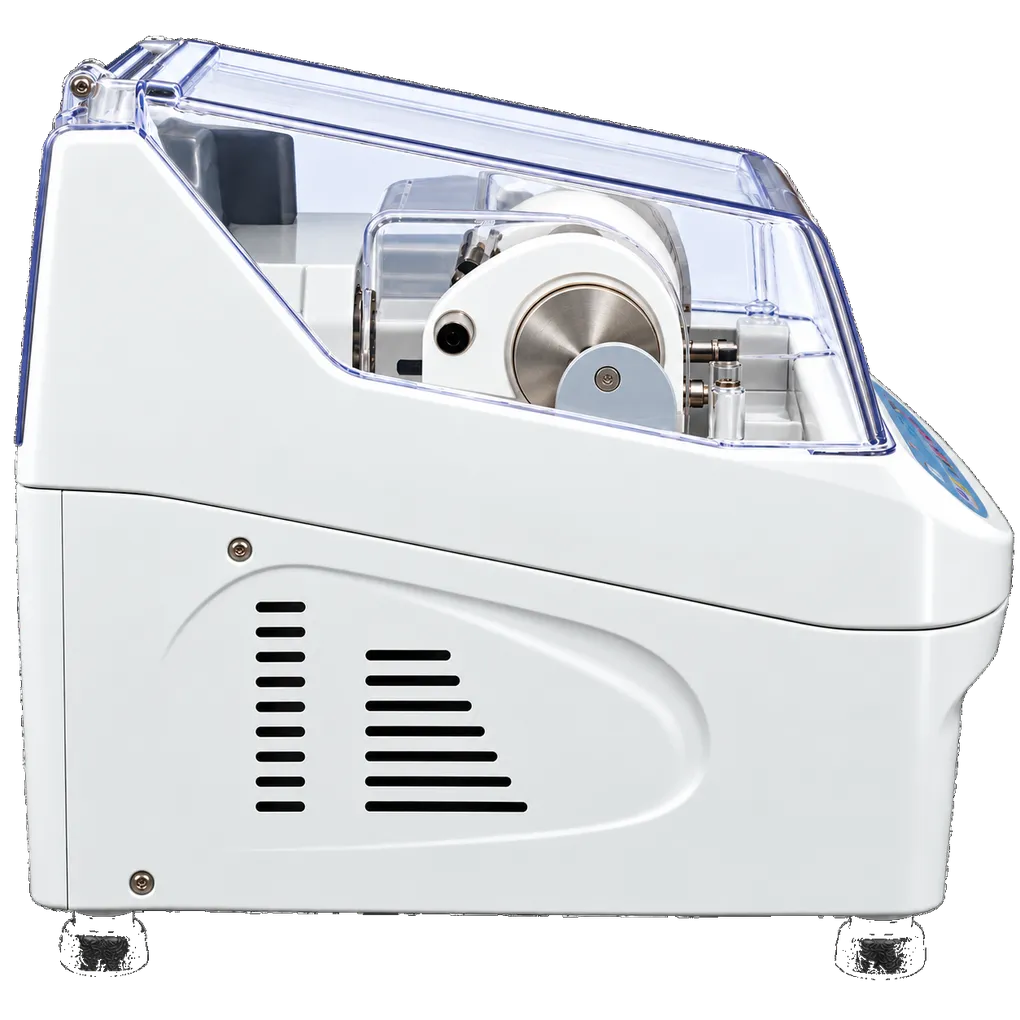
The SJG-6100 is aimed at optical practices and laboratories that want to bring edging in-house in rooms where a water supply is not to hand. Because water circulates from a reservoir, an independent optical practice can set the edger up in a first-floor workroom, a converted storeroom or the corner of a dispensary, as long as there is a bench and a socket.
Optical technicians and glazing staff work with twin clamping shafts and gripping force that adjusts in multiple steps. The 100 mm sand wheel turns at 16.7 m/s, and lenses from 22 to 80 mm can be processed. Under the clear dome, the operator can keep an eye on each lens throughout the cycle.
Practices that are new to glazing can treat the SJG-6100 as a first edger. It needs no plumbing work, and its controls sit together on a front membrane keypad, so set-up centres on placing the tank, connecting power and learning the panel.
Optical laboratories can add it as an extra station beside existing machines, using the circulating connection to avoid running another water line across the room.
Hospital eye departments and eye clinics with a small glazing room can use the edger to complete spectacles for patients in the building, even where the space was not fitted out with a sink.
Eyewear retailers opening a branch workshop can plan around its 520 × 480 mm footprint and 44 kg weight, with either the 220 V or 110 V version to match the site supply. Shop fit-outs then need only a bench, a socket and space for the water tank beside the machine.