
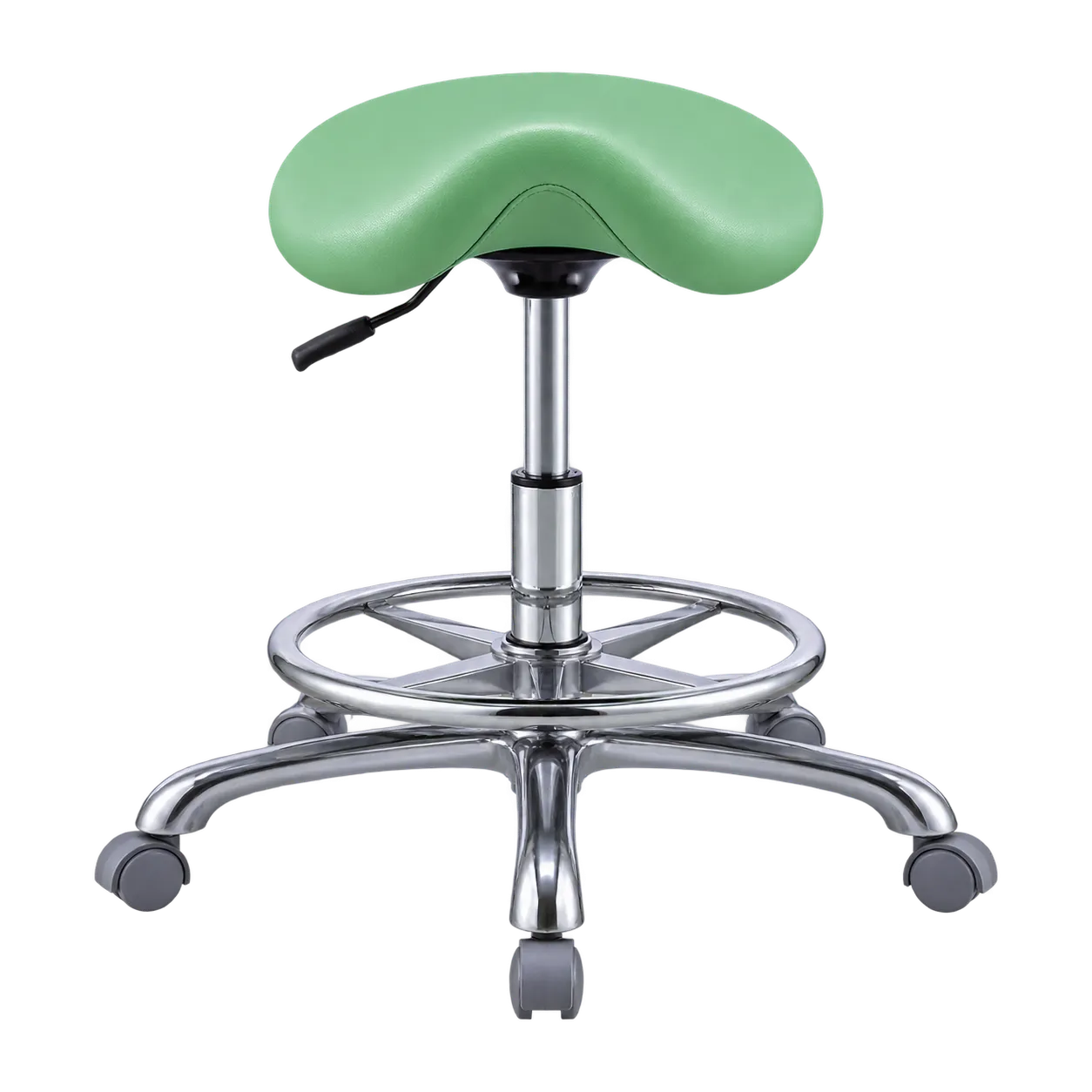
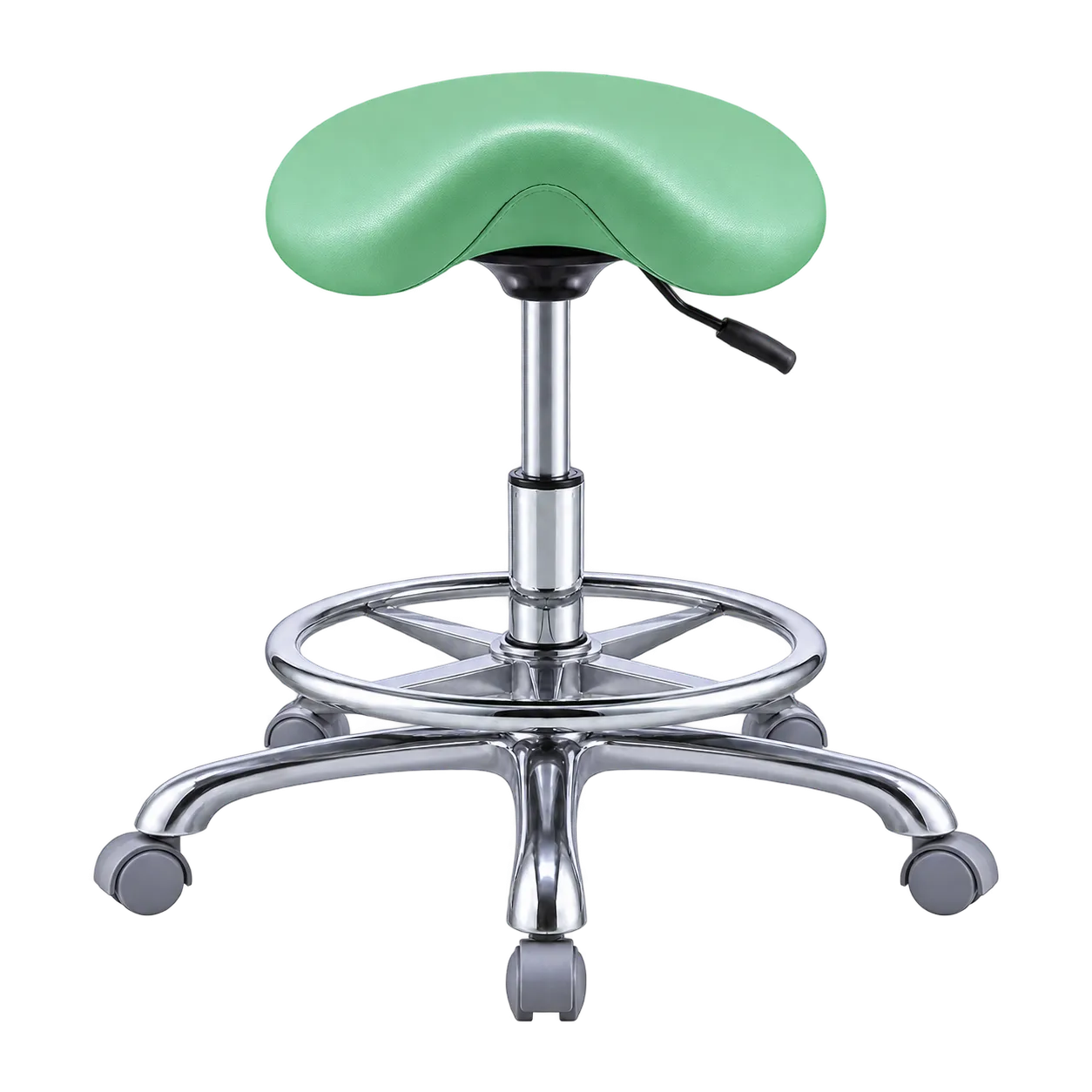
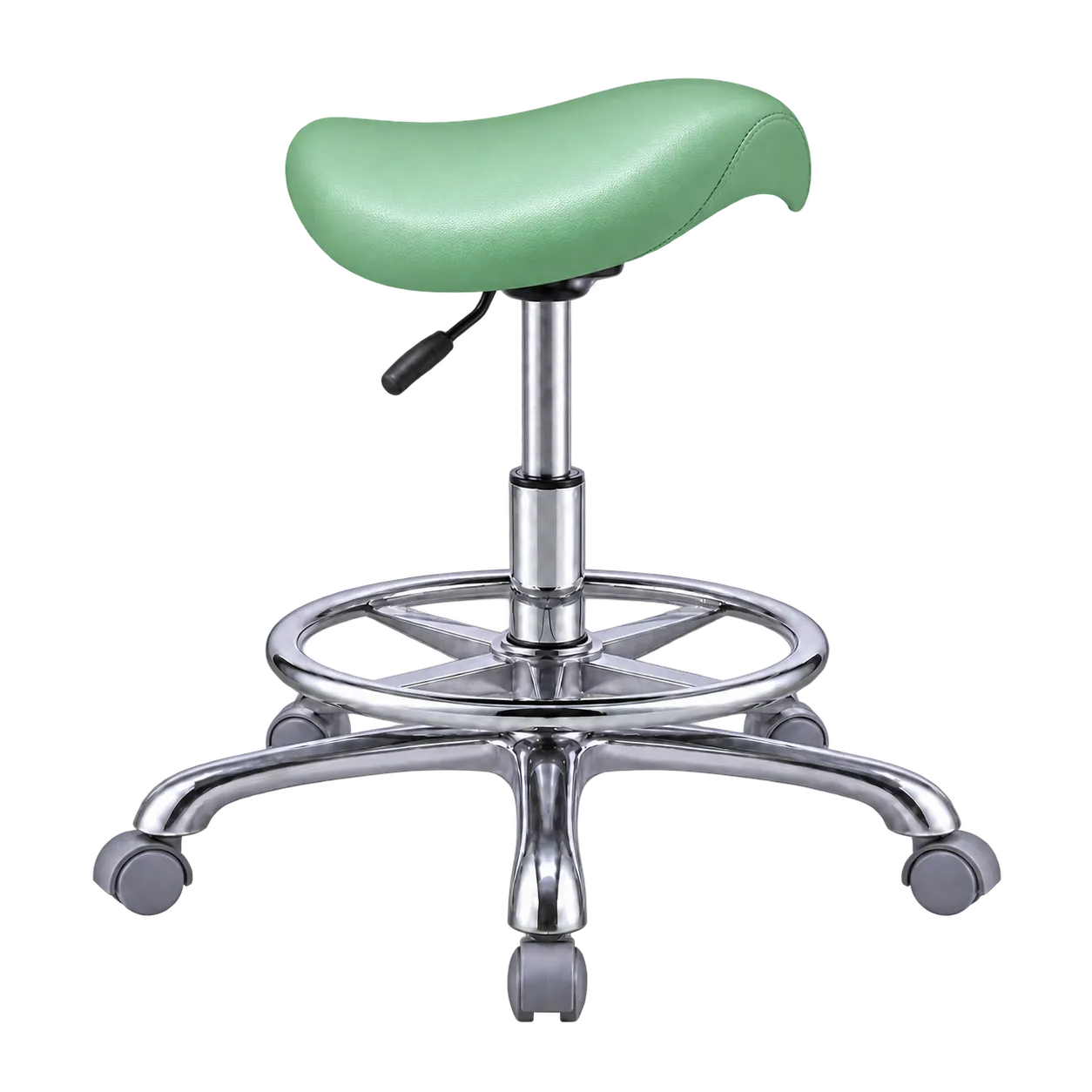
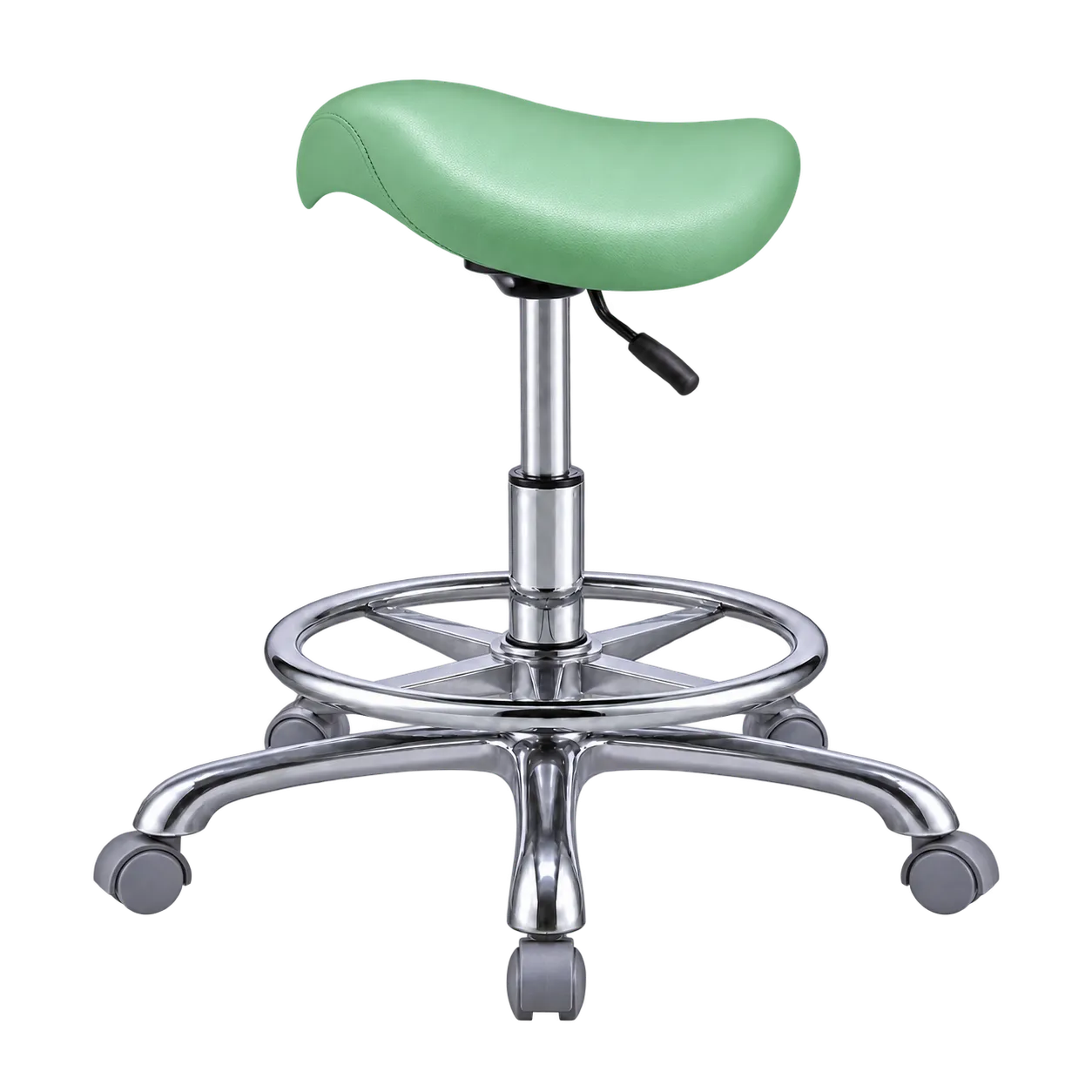
Raised instrument positions are the natural home. Where a slit lamp, a bench or a treatment position sits high, a saddle has to rise with it, and the rail is what makes that height usable across a full list rather than for a few minutes.
Forward-leaning examination suits the saddle posture, since the pelvis stays upright and the clinician leans from the hips rather than rounding the lower back.
Clinicians new to saddle seating often adapt more easily to a teardrop shape, as the narrowed front reduces the inner-thigh pressure that causes most early complaints.
Shorter clinicians benefit particularly from a rail, because the gap between a saddle-height seat and the floor is greatest for them.
Long lists compound the value, as the difference between braced and hanging legs accumulates over hours.
Staff moving between standing and sitting gain from the rail as a push-off point when rising from a raised seat.
Clinicians who lean back between patients should choose a model with a backrest, since there is nothing here to lean on.
Conventional desk-height work does not need a high saddle or a rail, and a plain stool will serve at lower cost.