
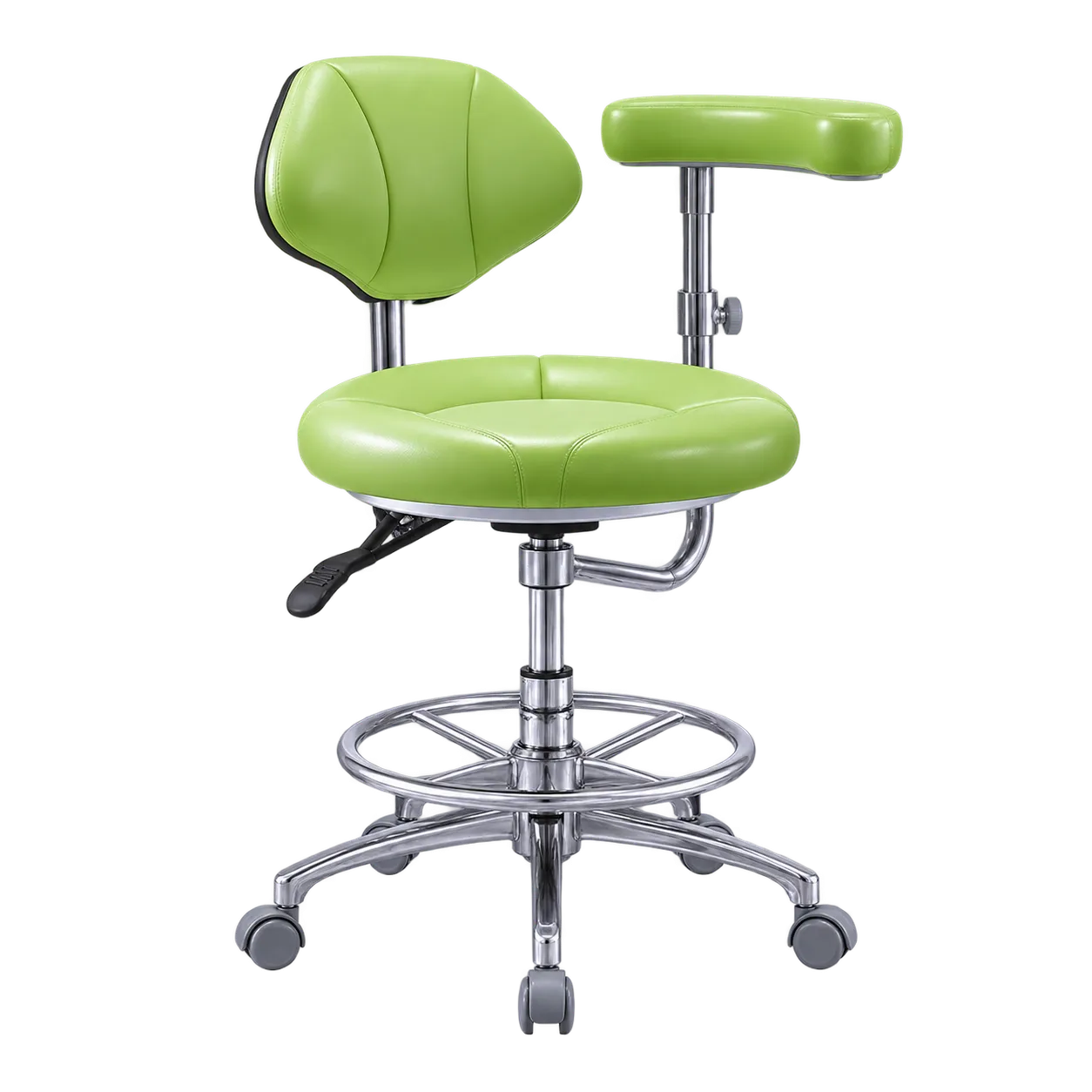
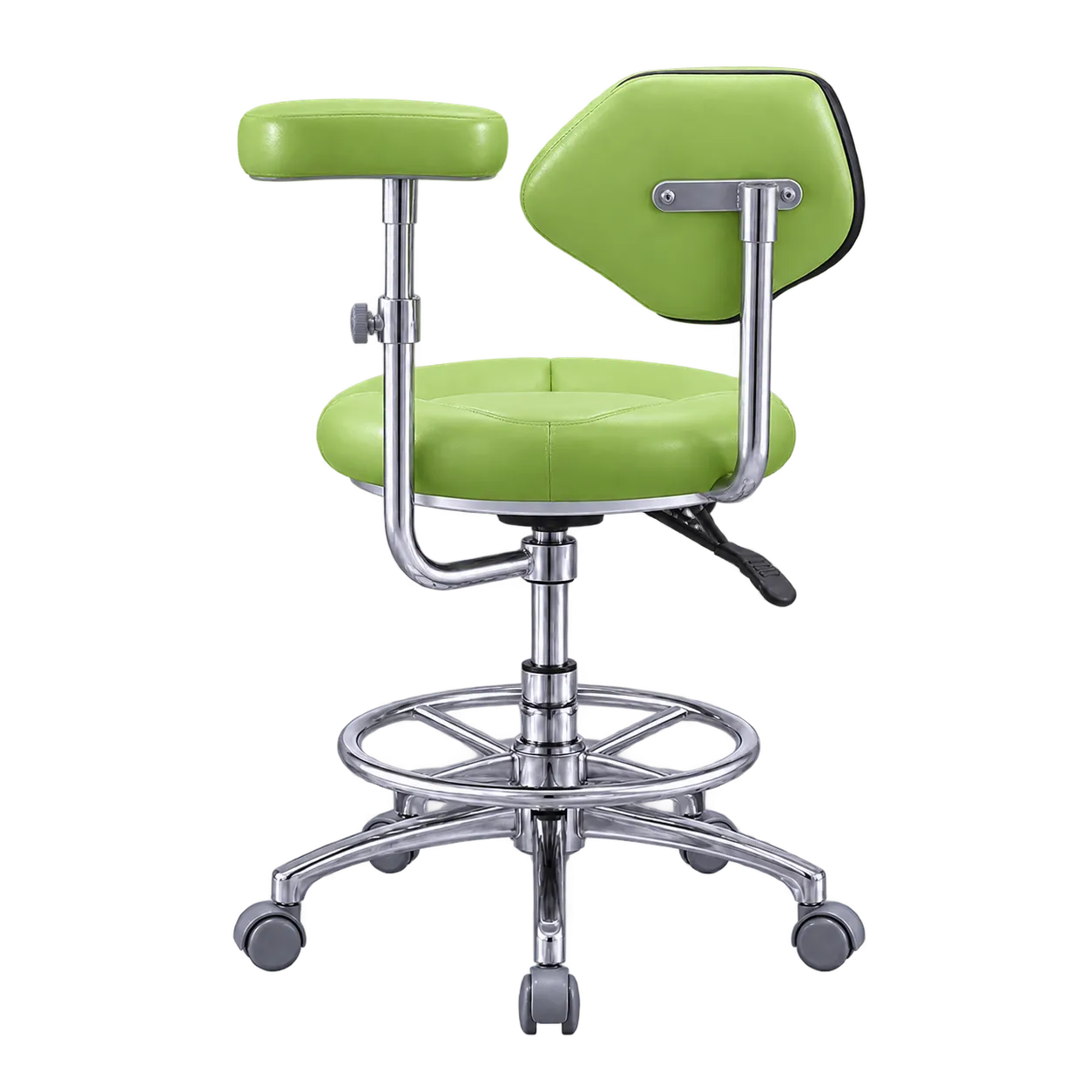
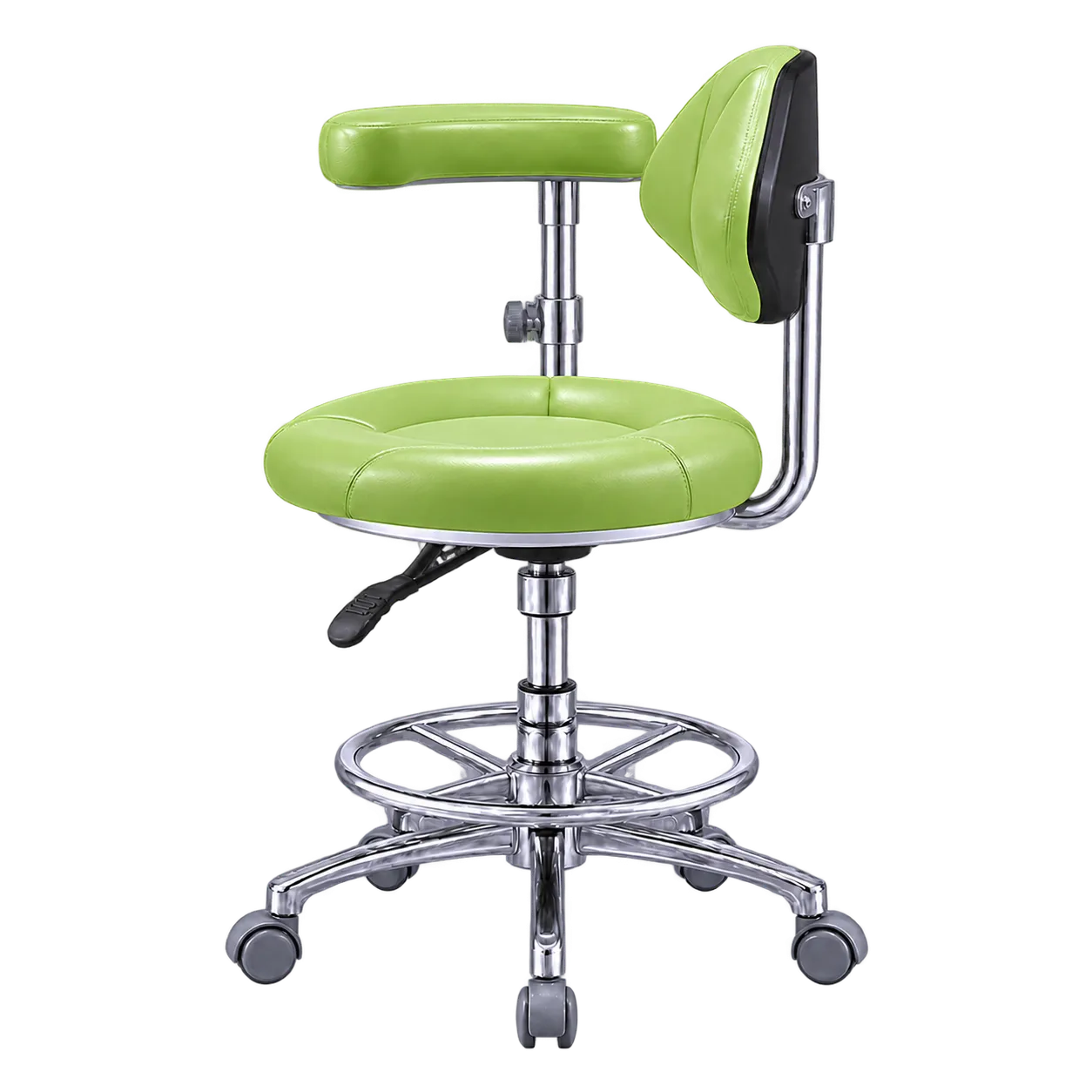
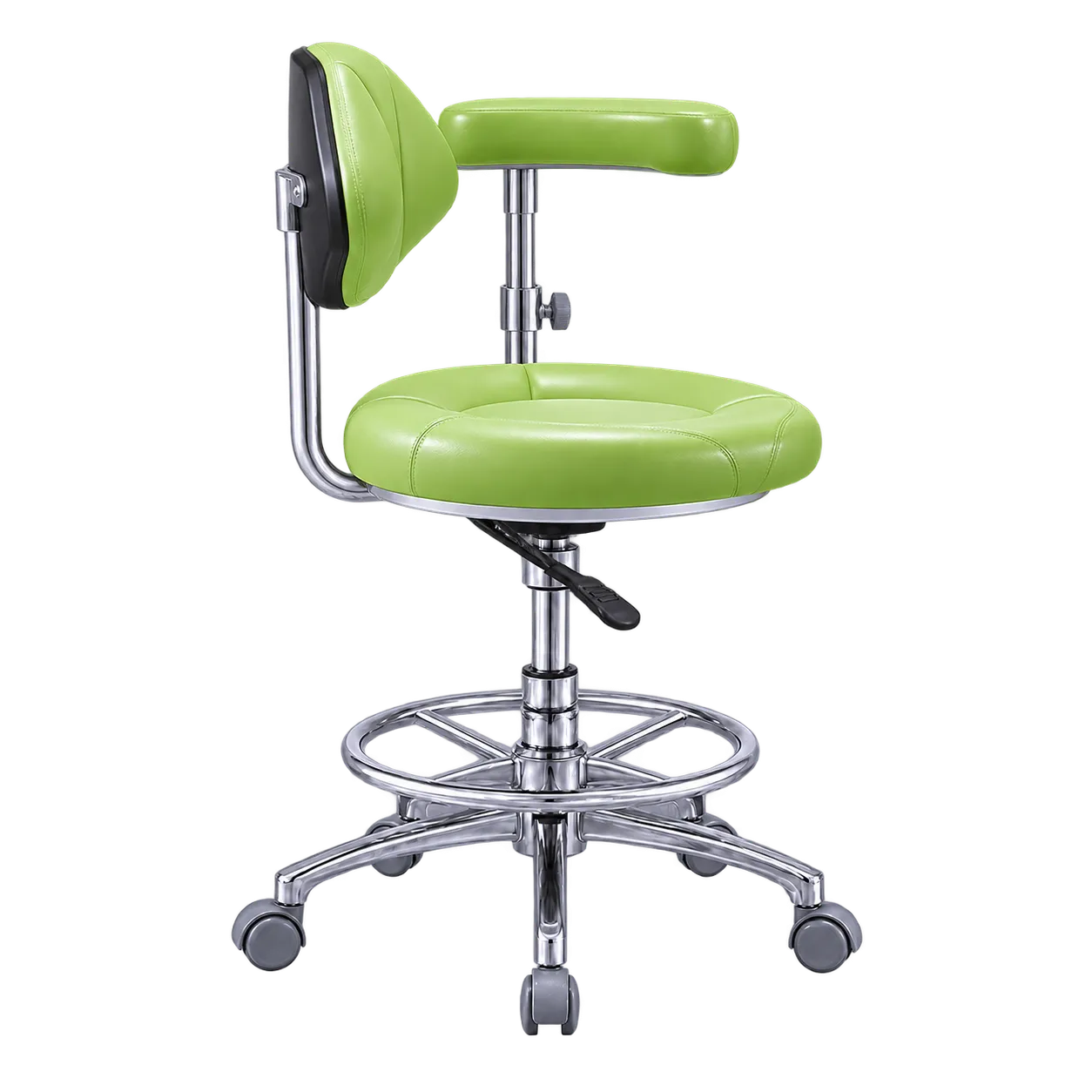
Support staff working alongside a clinician are the clearest fit. Positioning patients at instruments, holding equipment steady and assisting during procedures all involve leaning towards the patient rather than sitting upright, and that lean is held with the back unless something else carries it.
Extended procedures benefit most, since the cost of an unsupported forward posture accumulates over minutes rather than appearing at once.
Contact lens teaching and fitting keeps staff inclined towards the patient for long periods, often with both hands occupied.
Close instrument work suits the arm for clinicians as well as assistants, where the body can rest against the bar while the hands stay free.
Shared rooms need the pivot checked, since an arm that swings freely is easier to share than one fixed to a single position.
Practices addressing staff musculoskeletal discomfort have a specific option here, as sustained forward leaning is among the postures most associated with back and shoulder complaints in clinical work.
Upright desk work gains nothing from a body-support arm, and staff spending the day at a screen are better served by a conventional task chair.
Frequent standing suits the pivoting arm only if it swings clear easily, which should be confirmed before ordering for a role that involves constant getting up.