
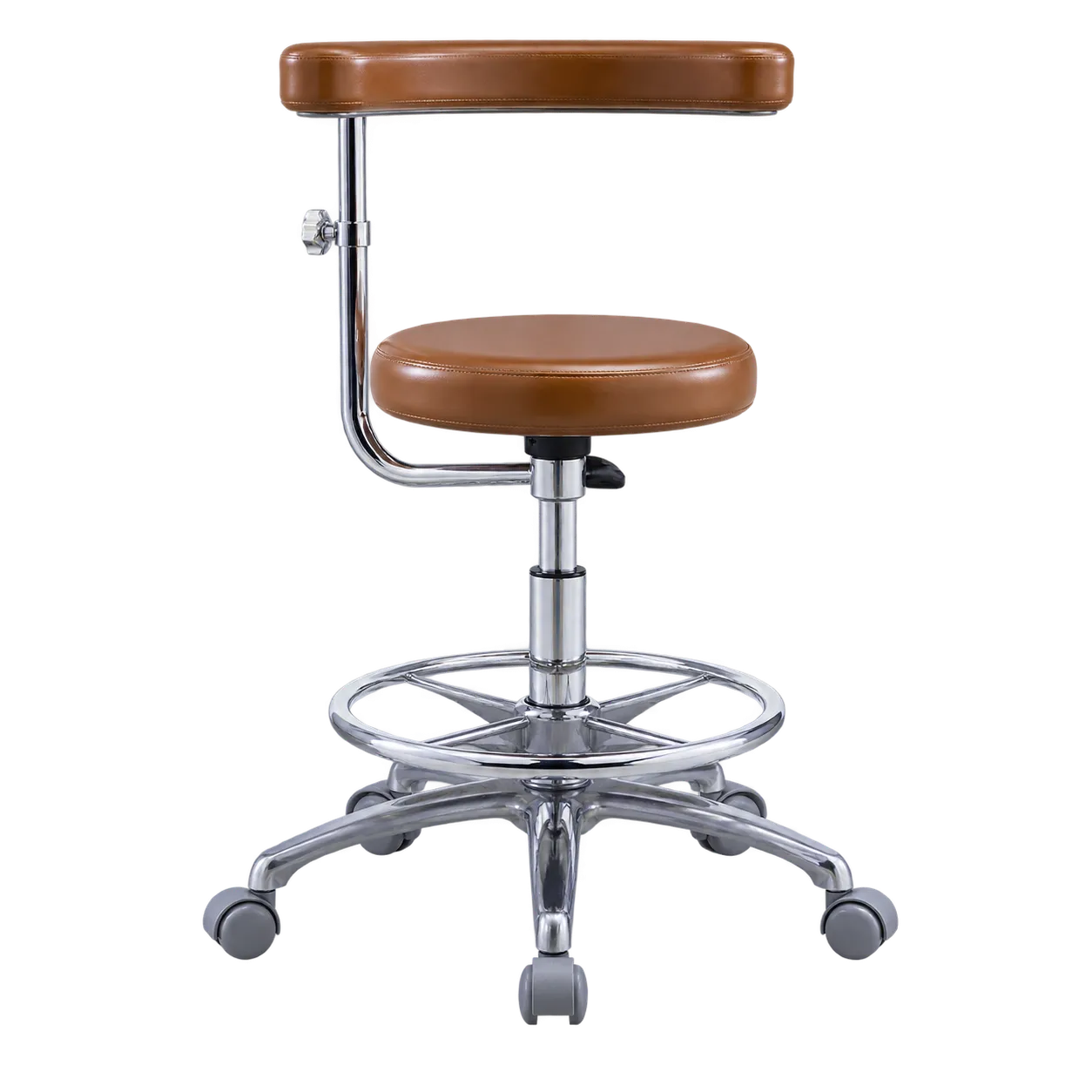
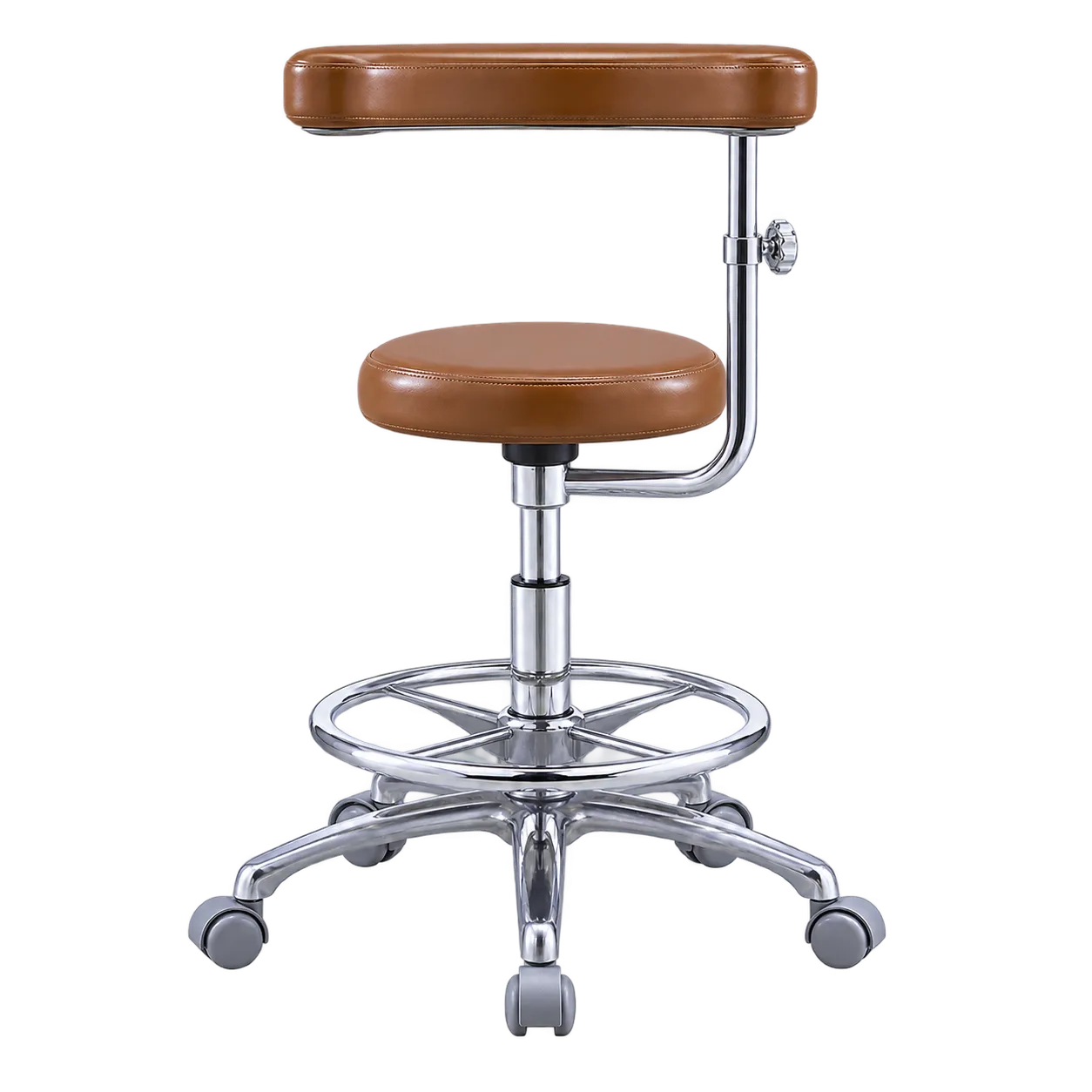
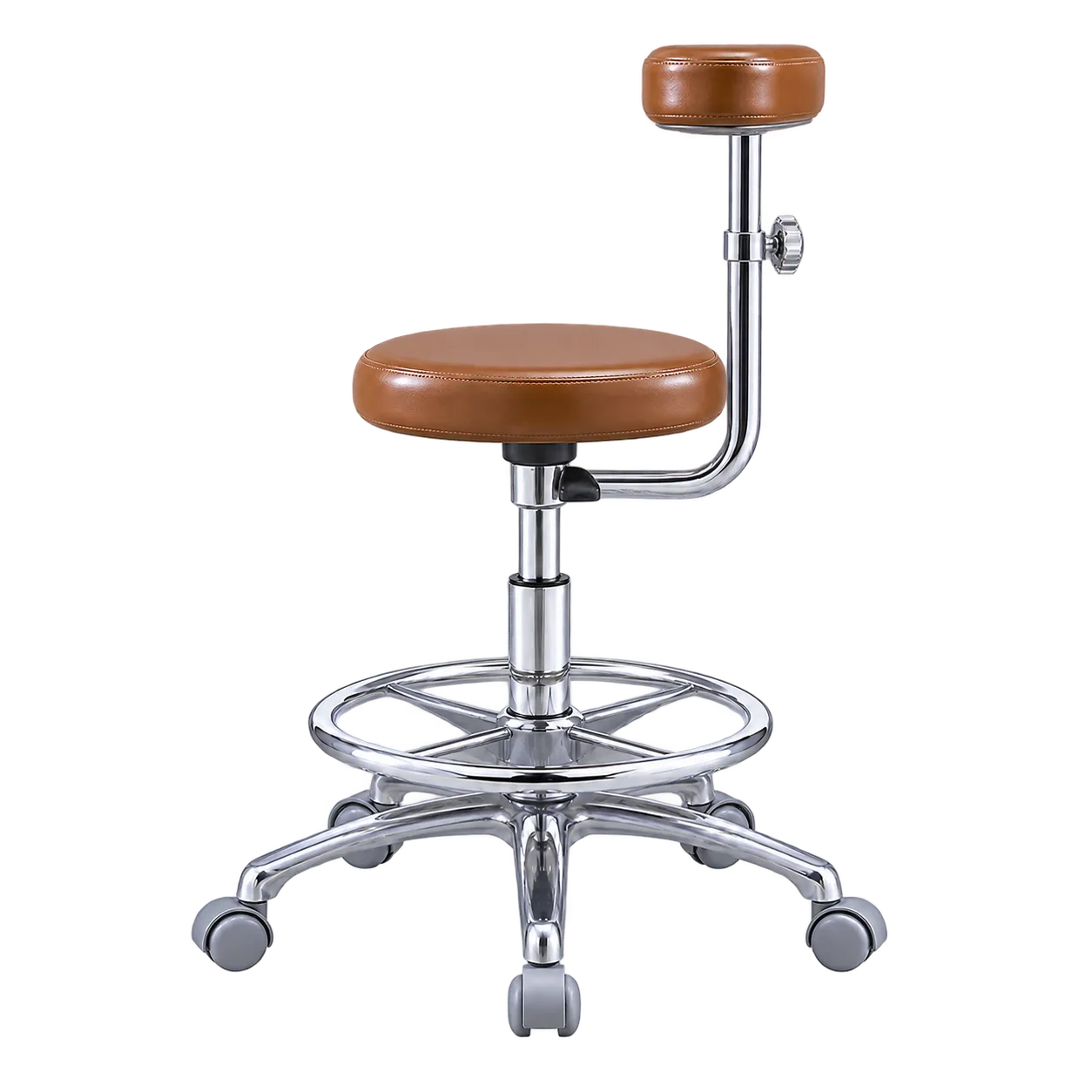
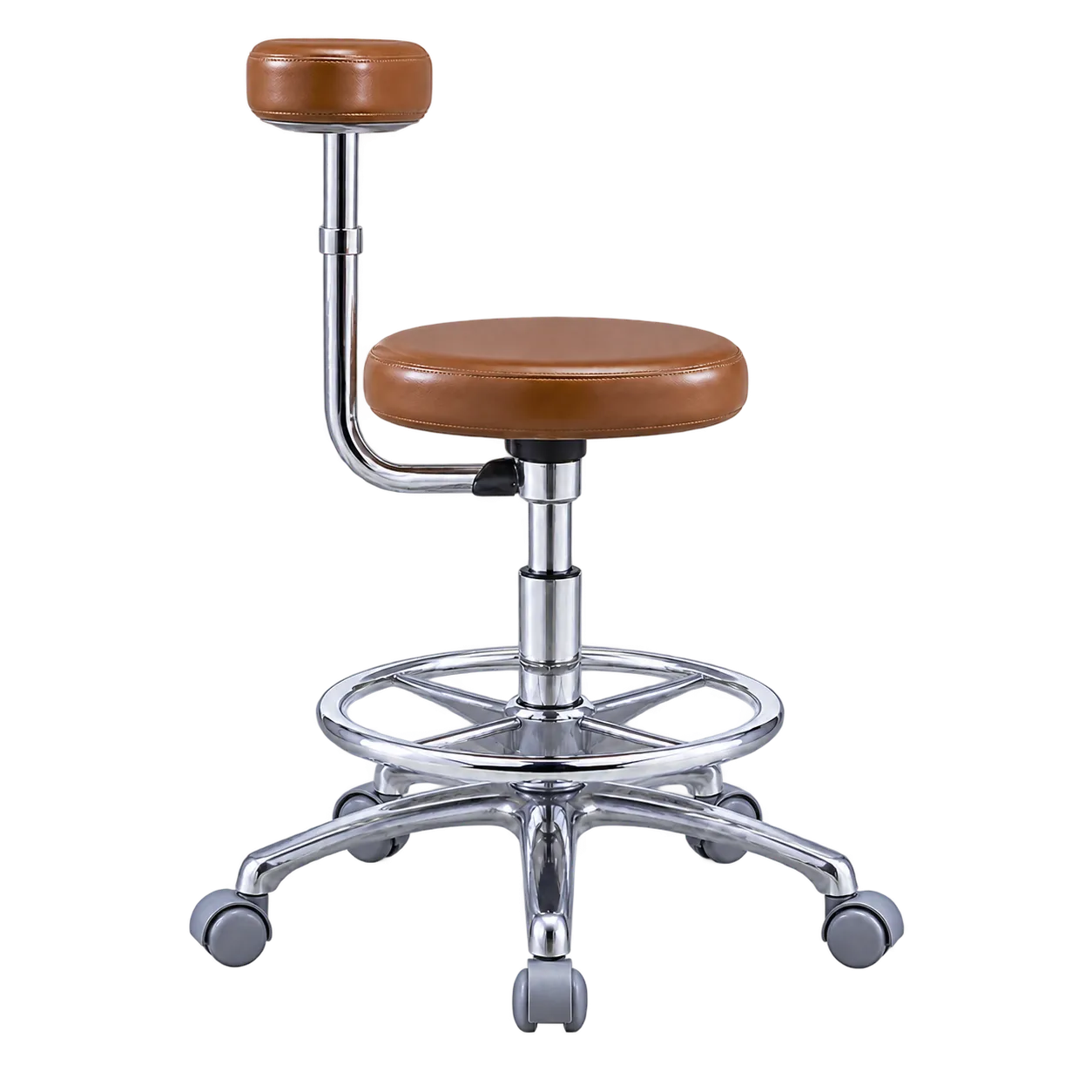
Shared consulting rooms are the strongest case. A visible clamp means a clinician arriving for a session can set the back to themselves in seconds, without being shown where a concealed lever is or accepting a colleague's setting for the day.
Locum and rotating staff gain for the same reason, since equipment they have never seen before is self-explanatory when the adjustment is in plain view.
Practices maintaining their own equipment benefit from a fitting that can be tightened with a hand rather than replaced. Over years, a clamp that works loose is a two-second fix instead of a service call.
Wide-ranging backrest positions suit clinicians of very different heights sharing one stool, since a rod usually offers more travel than a concealed stem.
Raised working heights suit the foot ring, which is fitted because the stool is meant to be used high enough that the feet would otherwise hang.
Teaching clinics can use the visible mechanism to demonstrate seating adjustment to students, which is harder with a sealed stem.
Patient-facing rooms with a carefully specified interior may prefer a concealed mechanism, since an exposed rod and knob read as more functional.
Infection control routines should note the joint where the post meets its collar, which needs wiping along with the rest of the stool.